
By: CHEN Ziyu、ZHENG XinyiEdited by: YANG Haicen

From concert dreams to criminal threats: Hong Kong students trapped in cross-border scams
- 2026-01-22
- Society
- The Young Reporter
- By: CHEN Ziyu、ZHENG XinyiEdited by: YANG Haicen
- 2026-01-22
When K-pop boy group Seventeen announced it was holding two concerts in Hong Kong in September, devoted fan Tsai Oi-wai, 20, knew it was an opportunity she couldn’t miss. But by the time she was online, tickets were sold out. Tsai scrolled endlessly on Instagram until she came across a second-hand ticket reseller who seemed trustworthy. “I even checked his profile, which had photos of everyday life—scenery, food, and other pictures—so I didn’t suspect anything,” Tsai said. Tsai’s ideal seat was priced at HK$2,099 on the official website, and the seller asked for HK$2,599. “I think the price was still within a reasonable range, so I transferred the money to him without further hesitation,” she said. The entire conversation and transaction took place over WhatsApp. “The seller told me that all payments and refunds had to go through a third-party partner company, which required additional verification procedures,” she added. “The scammer then asked me to enter a verification code, and I did so,” said Tsai. “Ever since then, I’ve never heard from that person again, nor any updates about my ticket.” She was scammed out of HK$42,034. Tsai’s experience is far from unique. According to the Hong Kong Police, fraud cases have surged dramatically, rising from 15,553 cases in 2020 to 444,480 in 2024, representing an increase of nearly thirtyfold, with the upward trend continuing in the first half of 2025. Students are easy targets for scammers. As of September, university students have reported 1,711 scam cases with total losses of HK$180 million, according to the Hong Kong police’s Anti-Deception Coordination Centre. Phone scams accounted for HK$16 million in losses among local students, while mainland students suffered significantly higher losses at HK$87 million. “Students are an ideal target for scammers, as their limited life experience and lack of familiarity with …

Hong Kong team ends journey in Milwaukee Squash Open 2025
- 2025-12-04
- Society
- The Young Reporter
- By: CHEN Xiyun、CHEN ZiyuEdited by: WANG Ludan、YANG Haicen
- 2025-12-04
Hong Kong’s Simmi Chan Sin-yuk, 23, lost to Belgium’s Tinne Gilis at the single-elimination round of the Milwaukee Squash Open 2025 on Dec. 3, ending the team’s journey at the tournament. As the tournament entered its third day, Chan was the only one among the six Hong Kong players to advance to the second round of the five-round competition. Chan, who claimed the silver medal at the inaugural Under-23 World Squash Championships this April, found her match when faced against the world’s No. 8 squash player, Tinne Gilis, falling to a defeat with 9–11, 7–11, and 12–14 in the three rounds of the match, respectively, at the Hong Kong Squash Centre. “I have given out everything I could to win the game, so I carry no regret regarding the defeat,” Chan said. The tournament is divided into men’s and women’s main draws, each only featuring the top 30 players worldwide, and the local host was awarded two unrestricted qualifying spots in each draw, granting entry to local players with no restrictions on their world ranking. “It will be a tough game for Chan since Gilis is a formidable opponent,” said Wong Tsz-hin, 30, Chan’s teammate, adding that he hopes Chan can enjoy the game before the match begins. Gilis took the leading position in both the first and second rounds, at one point holding a five‑point advantage in an 11‑point game. Despite reaching the match point at 10–9 in the third game, Chan missed several shots from the same spot on the right forecourt, allowing Gilis to reverse the momentum and win. “She was able to complete the defence when the situation was unfavourable for her,” Chan said, describing Gilis as a rival who combines physical strength with steady play in the post-game media conference. Chan’s rival Gilis just won her …
First-person shooter game leaves young Chinese players with heavy losses after the collapse of virtual trading market
- 2025-11-10
- Society
- The Young Reporter
- By: Lou Zhengzheng、Lan XinbeiEdited by: WANG Ludan
- 2025-11-10
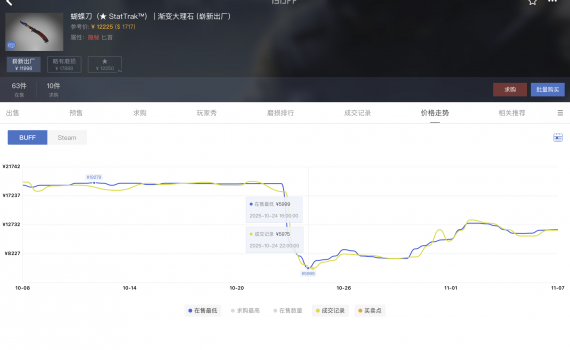
A developer update to the first-person shooter video game Counter-Strike 2 triggered a collapse in its virtual trading market on Oct 22, wiping out almost US$2 billion in real money. Valve, the American video game developer of Counter-Strike 2, released an update that allowed players to more easily craft rare weapon skins in the game, causing a plunge in the value of skins that are purchased and traded with real-world money. Although the value rebounded in November, it remains below most buyers’ original purchase price. Skins are virtual cosmetic items that change the appearance of weapons without affecting the gameplay. They are categorized by color, ranging from basic white to the rarest gold. The price of gold skins dropped by approximately 30% to 40% on the international third-party game trading platform Buff Market, hitting players who had collected them as virtual investment commodities for future resale and rental. Previously, the gold skins could only be obtained either by unlocking in-game loot boxes containing randomized virtual items such as skins, gloves, and other weapons, or by trading with other players through third-party online marketplaces, including NetEase Buff and Youyou Youpin, which are both platforms that primarily serve Chinese players. John Liu, 20, a mainland Chinese student at Lingnan University in Hong Kong, said he purchased a rare “marble fade” butterfly knife skin for approximately 13,000 yuan (HK$14,201.54) on NetEase Buff because he anticipated later reselling it at a higher price for a profit. After the update, the “marble fade” Butterfly knife’s skin value fell to 5,999 yuan (HK$6,553). “I just gave up on selling after seeing the price hit its lowest point a couple of days ago,” he said. According to data from Buff Market, several virtual items in the game, such as gloves and knives, experienced a price recovery in …

“Little Bangkok” in Kowloon City finds ways to keep its Thai flavors amid redevelopment
- 2025-10-28
- Society
- The Young Reporter
- By: Lou Zhengzheng、Li ZhongyiEdited by: WANG Ludan、AO Wei Ying Vinci
- 2025-10-28
In the bustling food court on the roof of the Kowloon City Municipal Services Building, the air is filled with the enticing aroma of food from 10 restaurant stalls. Sukulporn Paipha, 59, owner of Chiangrai Thai Food, a 27-year-old eatery, welcomed diners as they entered the cooked food centre. Her daughter served the Thai dishes while her grandson played with toys at a nearby table. This scene is set to disappear with the demolition of the building, which includes a wet market and the cooked food centre, sometime in the next few years under the government’s redevelopment plan for the neighborhood. Around 120 buildings will be demolished, including current public facilities such as the Kowloon City Municipal Services Building and the Kowloon City Lions Clubs Health Centre. According to the Urban Renewal Authority, the redevelopment scheme in the Lung Shing area is divided into three areas, including the replanning of Nga Tsin Wai and Carpenter roads. In July this year, the government reclaimed the land along the two roads, forcing the closure of dozens of businesses. Outside the municipal building, the streets are nearly desolate. Only a few shops remained open, with others busy packing up to relocate. Metal shutters were pulled down for most shops, displaying signs that read “Urban Renewal Authority Property: No Trespass or Unauthorized Entry.” Some simply note “Clearance Sale” or “Relocation Notice” in Chinese nearby. Approximately 140 floor shops across the three sites are affected. During a visit, TYR found that while most are looking for new premises, other businesses that have operated for decades are preparing for permanent closure. “I arrived in Hong Kong when I was just 20, and now at 59, my family has grown deep roots here, three generations in all,” Sukulporn said. “I started with one shop, then opened a …

Super Typhoon Ragasa lands in China from the southeast, bringing new experiences to cities’ new arrivals
- 2025-09-25
- Society
- The Young Reporter
- By: Fu RongEdited by: WANG Ludan
- 2025-09-25
The Greater Bay area takes the heat of super Typhoon Ragasa, the most intense storm in 2025, as it sweeps across all the regions on Wednesday, prompting a No. 10 hurricane signal in Hong Kong. The ferocious wind and sudden rainfall bring an unprecedented experience for cities’ newcomers. After Typhoon Mangkhut in 2018, Ragasa is expected to be the strongest typhoon in Hong Kong’s history, according to the former observatory director Shun Chi-ming on Tuesday. According to the Hong Kong Observatory, Typhoon Ragasa sustained a maximum wind speed of 195 kilometres per hour, which makes it more intense than Super Typhoon Mangkhut in 2018, which recorded a maximum wind speed of 185 kilometres per hour. Chen Guowei, a 24-year-old physiotherapist born and raised in Yunnan Dehong, came to Shenzhen Dapeng New Area after graduating last year. “I have never seen a real typhoon before. It’s really crazy,” said Chen, living in the hotel next to the beach provided by his company. Prompted by the weather forecast and messages from families and corporations, he decided to move into the hotel inside Taikang Home Penguyaun, the elderly community he works in. “I don’t really have to work during the typhoon and can live in this expensive hotel, which costs about 500 yuan a night,” Chen said in the video interview. Dubsy Eli, a Nigerian international student at City University of Hong Kong, is also experiencing his first T10 typhoon. “It’s not my first typhoon, but it’s the biggest one. I bought so many fruits to survive,” Dubsy said in a video interview, waking up several times at night to check the weather outside his apartment in Prince Edward. “Back in my hometown, we only experienced heavy winds. But raining with big winds is so exciting for me,” said Dubsy. He is …

Popularity soars amid the venue challenge for local pickleball and padel
- 2025-04-16
- Society
- The Young Reporter
- By: LIN Xiaoyou、YAM Long Hei JamieEdited by: WANG Ludan
- 2025-04-16
Chu Fuk-ling and Jack Zhu vigorously swung their paddles, and the ball swiftly crossed the net. They secured third place in the men's doubles at the Hong Kong round of the 2024 Pickleball World Championships in December. “Pickleball has evolved in terms of speed and technical variety in recent years, and players now not only master the standard forehand and backhand shots but also frequently employ techniques such as drop shots, which are used to surprise opponents,” said Ho King-choi, a coach with the Pickleball Association of Hong Kong, China. Racket sports, such as pickleball and padel, are gaining popularity among people of all ages, leading to an increase in various programmes and clubs aimed at promoting these emerging sports in Hong Kong. However, when it comes to venue allocation, pickleball benefits from government support, which provides more accessible public venues, while padel does not. Pickleball has been around since 1965, but it has picked up in popularity over the last few years. A bit like a combination of tennis and badminton, two or four players use a smooth-faced paddle to hit a hollow plastic ball over an 86-centimetre-high net until someone wins. In the US, pickleball is the fastest-growing sport, with more than one million children playing and has the largest participation rate from those aged 25 to 34, according to the Sports and Fitness Industry Association report in 2024. Hong Kong has more than 12 public venues for playing pickleball, and the city ranked among the top 11 in regional search popularity for pickleball, according to Google Trends. Joanna Hiew, a pickleball player, was watching the finals of a pickleball tournament and said anyone can participate in the competition as long as they form a team. “The tournament of pickleball is usually flexible, with the team of the …

Budget 2025: Hong Kong increases PhD fellowship quota to attract more outstanding non-local students
- 2025-02-26
- Society
- The Young Reporter
- By: FENG Zhenpeng、Li YinhengEdited by: LIU Yutong
- 2025-02-26
The government said it plans to increase the quota of the Hong Kong PhD Fellowship Scheme and continue its Belt and Road Scholarship to attract more talented international students under the “Study in Hong Kong” brand. The number of places for PhD students will increase from 300 to 400 per year, said Financial Secretary Paul Chan Mo-po in the budget address on Wednesday. The PhD fellowship provides an annual stipend of HK$337,200 and a conference and research-related travel allowance of HK$14,000 per year for a period of up to three years. “The cost of living in Hong Kong is extremely high. International students really need scholarships plus tuition to survive in Hong Kong,” said Felipe Kondo, 21, an undergraduate student from Brazil who received a University Grants Committee scholarship. Hong Kong is the most expensive city in the world for international employees, according to research from HR consulting firm Mercer. “Without the scholarship programs, I do not think I would have come to Hong Kong,” Kondo said. According to official figures, the Hong Kong government set up the Belt and Road Scholarship Scheme in 2016 for students from selected countries, including Indonesia, Malaysia, and Thailand. From 2016 to 2021, more than 330 students from countries along the Belt and Road have received this scholarship from the Hong Kong government, and this number is increasing year by year.

Budget 2025: Hong Kong unveils HK$10 billion drive for AI industry growth
- 2025-02-26
- The Young Reporter
- By: Ruoyu LI、CAO SiyuanEdited by: WANG Ludan
- 2025-02-26
The budget set aside HK$10 billion to establish an innovation and technology industry-oriented fund to channel investment toward the industries of the future. It is part of Financial Secretary Paul Chan Mo-po's strategy to “put AI at the core of developing new quality productive forces.” “The goal is to make Hong Kong an international exchange and cooperation centre for the artificial intelligence industry," Chan told the Legislative Council in his budget speech. Another HK$1 billion will go toward establishing the Hong Kong Artificial Intelligence Research and Development Centre, which will come under a new Digital Policy Office that will focus on research and development. “The Hong Kong Artificial Intelligence Research and Development Centre will contribute to the local AI ecology and provide jobs for Hong Kong AI talents if the plan can be implemented properly," said Wan Renjie, Professor of computer science at Hong Kong Baptist University who is familiar with the AI ecosystem in both Singapore and Hong Kong. Artificial intelligence and data science are listed as one of the three emerging industrial development sectors in Hong Kong, according to the Hong Kong AI Development Research. The report indicates that 41% of Hong Kong enterprises are currently or plan to adopt AI, while 32% have already applied AI across multiple levels, such as marketing and operations. “It is necessary to allocate part of the budget to invest in AI, though the Hong Kong government cannot predict when it will yield returns,” said Wan. “Once Hong Kong has nurtured an impressive, influential and independent AI enterprise, the return will be immeasurable,” he added. Rodas Sun, 24, Chief Technology Officer of aiKnow, a start-up that focuses on providing business AI models to large-scale companies, said many start-ups now rely on government funding, but they are not truly developing AI products with …
Luxury bags and wedding gowns lead the rental fashion craze
- 2025-02-23
- Society
- The Young Reporter
- By: XU Jingyi、ZHENG XinyiEdited by: WANG Ludan
- 2025-02-23
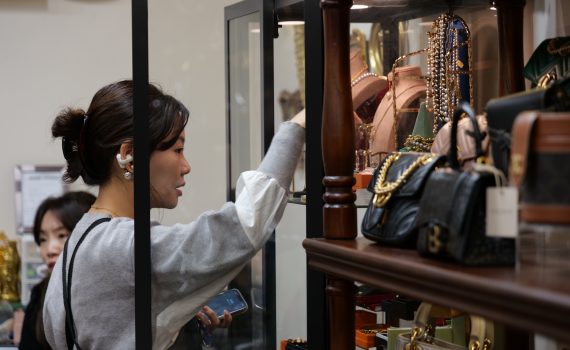
Cici Fan, 21, a university student, darts between various luxury handbag stores in Tsim Sha Tsui after receiving a last-minute notification to attend an important business dinner. She paced and occasionally looked inside from the shop window. Finally, she entered a store and secured a Dior handbag for HK$800. “I finally feel at ease because it solved my problem of not having enough money to buy a fancy tote bag for a dinner party,” Fan said. But from the moment she walked out of the store, she had to carefully look after the bag until it was safely returned to the store because it was rented. Fan is the small epitome of the Hong Kong clothing rental craze. More Hongkongers have started trying rental services in different boutiques in recent years. Renting clothing and accessories from luxury brands allows consumers to display high-end lifestyles in social settings without spending much money. It provides a cost-effective way for people to keep up with fashion trends. Some overseas luxury rental brands, such as Rent the Runway and Style Theory, are starting to emphasise the local market by offering online services for Hong Kong consumers. Kimi Lee, the owner of the 37-year-old luxury bag rental store Huiyuan, has been running it for six years. He said it was tough for the store to operate in its early days. “Very few people came to try this business at first because most people were not familiar with the concept of renting a bag,” he said. Lee said things have started to look different in recent years. “Now the number of monthly rental orders is more stable at more than 100, and the customer base has expanded from local Hong Kong office workers and fashion enthusiasts to mainland tourists,” Lee said. To satisfy the needs of …

Hindu devotees celebrate Thaipusam in Singapore
- 2025-02-16
- People
- The Young Reporter
- By: LIU Yutong、BO ChuxuanEdited by: WANG Ludan
- 2025-02-16
Around 16,000 Hindu devotees carried their Paal Kudam (pots of milk as offerings) or Kavadis (ornate structures that symbolise burden) in Singapore to mark the annual rite of Thaipusam, the sacred Hindu Thanksgiving Festival on Feb. 11. From 11:30 pm on Feb. 10, batches of devotees set off from Sri Srinivasa Perumal Temple and started a 3.2-kilometer barefoot walk to Sri Thendayuthapani Temple, together with friends and relatives chanting hymns and prayers to support them along the way. “Thaipusam is celebrated on the first full moon in the Tamil month of Thai, dedicated to the Hindu god Lord Murugan, who is the deity of courage, power, and virtue," said Edwin Tong, Minister for Culture, Community, and Youth, in his post on Facebook. Karthi Keyan, 24, a chef in an Indian restaurant, pierced his tongue, chest, and back with several rods as part of his Kavadi to express thanks to God. “I carry Kavadi to redeem a vow to god," he said. “I asked God to let me work in Singapore, and he gave it to me last year.” The Kavadi means “burden” in Hindu, elaborate metal structures adorned with spikes or hooks used to pierce the bodies symbolise "sacrifice at every step" and are borne as a vow to Murugan or as an act of gratitude. “When the Kavadi stings, there is pain, and after that, the pain is not known by God’s grace,” Keyan said. “It is very severe, and we have to bear the pain, leaving the burden on God,” he added. To prepare for the Thaipusam, devotees must be spiritually prepared and lead a life of abstinence, including a strict vegetarian diet for at least one month, according to the National Library Board of Singapore. Rajkirren, 31, had vegan meals cooked by his wife for the 21 …