
By: ZHOU ShiqingEdited by: MAO Anqi、CHEN Yik Nam
Local artsy businesses transform old district into trendy check-in spots
- 2025-10-30
- Society
- The Young Reporter
- By: ZHOU ShiqingEdited by: MAO Anqi、CHEN Yik Nam
- 2025-10-30
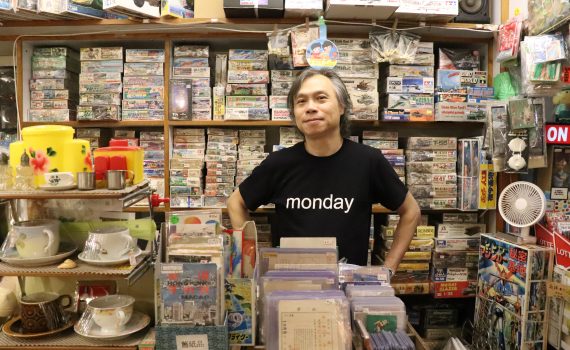
In the century-old neighbourhood of Sham Shui Po, a poster shop stands on the corner of Ki Lung Street. Its classic Hong Kong film posters tell the stories of the past. Wong Tak-hei, 32, has spent five years transforming his obsession with local films into a small shop called Moviemarks that sells what he calls collective memories. “Unlike those fancy shopping malls you wouldn’t visit every day, Sham Shui Po is the kind of place you can visit on two different days and have a completely different experience,” Wong said. Moviemarks is one of the small creative businesses located in Sham Shui Po, a district that was developed as early as the 1910s. A report by the Urban Renewal Authority in September 2023 highlighted the age of the area, as reflected in the old buildings, high population density and social problems related to subdivided residential houses. But recently, the community has nurtured creative local businesses and has become a haven for artistic shops. The area is bustling with trendy cafes and craft shops, and its themed streets have their own specialised categories of goods. Fuk Wing Street is the place for toy wholesale and retail, and Nam Cheong Street features ribbon selling. In October 2020, urban culture magazine TimeOut selected Sham Shui Po as the third coolest neighbourhood in the world, in recognition of its creativity. “The atmosphere here is unique, and I like it very much. These modern stores blend well with the old community, creating an interesting and fresh experience,” Wong added. Xie Yongqi, 18, who has been living in Sham Shui Po since she was born, said she visits boutiques and toy stores every two weeks. “I usually come here with my brother to pick out toys or buy gifts for friends. Sham Shui Po is undoubtedly …

Policy Address 2025: Hong Kong lowers house-purchasing money threshold to facilitate cross-border buyers
- 2025-09-17
- The Young Reporter
- By: Ye Enyi、Lan XinbeiEdited by: MAO Anqi
- 2025-09-17
Non-locals hoping to obtain Hong Kong residence through investment will be able to purchase residential property for a minimum of HK$30 million rather than the current HK$50 million, said Chief Executive John Lee Ka-chiu in Wednesday’s policy address. But the amount of the property purchase allowed to be counted towards the visa scheme eligibility of HK$30 million in investments will remain HK$10 million. This is under the New Capital Investment Entrant Scheme, which was launched on Mar. 1 last year, to help investors settle down in the city without the need to establish or join a business. As of February this year, the scheme has received 918 applications and expects to inject over HK$270 billion into the local market, according to the government’s press release in March. But among the approved applications, no applicant has made an investment in residential real estate. They all choose to invest in non-residential approved assets to meet the eligibility requirements. Wu Cheuk-him, district councillor of Tai Po, said the government’s move is positive. “I am confident that lowering the investment threshold for property purchases will draw more people to buy homes in Hong Kong, and as a result, to stimulate the local property market,” he added. Mainland residents face a stringent cap on foreign exchange conversion of US$50,000 (HK$389,000) a year, which means they cannot buy property that costs more than this with direct remittance. Viola, 26, from the mainland and working in a Hong Kong local school, said she purchased a residential property in Hong Kong at the end of 2023. She does not want to reveal her full name as she had to get creative, which may not be legal, with how she moved her money from a mainland bank into Hong Kong for the transaction. “I am constrained by the rule …
Room for improvement in protecting consumer rights in online shopping
- 2025-02-27
- Business
- The Young Reporter
- By: ZHANG Yiping、QIN ZiyangEdited by: WONG Hong Ni
- 2025-02-27
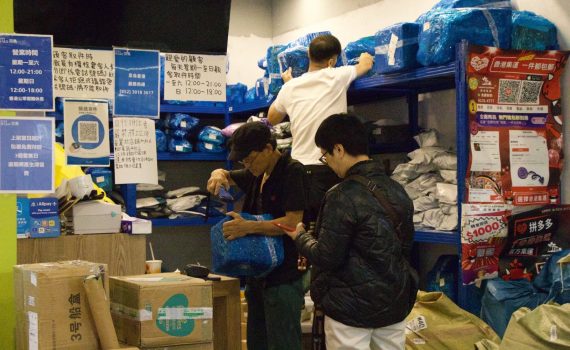
Jiong Jiali, 23, a Malaysian customer, was disappointed when she received a pair of trousers she bought from an Instagram shop in February last year. “This is nothing like the high-quality homemade trousers the shop claimed to sell,” she said on Rednote, a Chinese social media platform. The cutting of the trousers was awkward, and they hung loose around her waist and dragged on the floor. “What is worse is that the shop offered to change the trousers to a smaller size only if I cover the cost of shipping,” said Jiong. “It means I spent over HK$90 on this disappointing pair of trousers.” Despite the sluggish performance of the retail industry, online shopping has been blooming, as the total sales of Hong Kong stores without a physical storefront reached HK$1.41 billion in November 2024 after consecutive 17 months of year-on-year growth. However, the number of consumer complaints regarding online shopping are also on the rise. In 2023, online shopping complaints saw an increase of 19% from the previous year, reaching 12,696 cases and accounting for two-fifths of the total number of retail complaints received, according to the Consumer Council. The amount of money involved also increased by 20% from the previous year, exceeding $43 million. Online shopping consumers often face problems such as delayed delivery, goods not matching descriptions, counterfeit and copyright-infringing products, and difficulties in returning and exchanging goods. According to the Annual Report of the Consumer Council, in 2024, delays, non-delivery and loss of couriers was the most prominent issue, accounting for 24% of total complaints with 3,969 cases recorded. Dr. Yang Lin from the faculty of law at the University of Hong Kong, who specialises in dispute resolution and e-commerce law, said the rise in consumer complaints is a result of a lack of government regulations. …

Shenzhen restaurants win Hong Kong diners’ hearts
- 2025-02-23
- Society
- The Young Reporter
- By: FENG Zhenpeng、Li YinhengEdited by: MAO Anqi
- 2025-02-23
On a typical Sunday evening, Jack Kwan from Hong Kong, 32, is waiting to be seated at a well-known hot pot restaurant in Shenzhen. During peak dining hours, crowds gather at the restaurant’s entrance to look at the menu. They wait patiently until their queue number is called. Kwan sips on the chrysanthemum tea, provided by the restaurant for those who are waiting to be seated. “I feel time passes faster when queuing here with tea provided. It is much more relaxing. We do not experience this level of convenience while queuing in Hong Kong,” he said. Kwan goes to Shenzhen to try out different cuisines once or twice a month. After COVID-19, heading north to eat has become a popular trend for Hongkongers on weekends. Shenzhen restaurants often offer lower prices, which attracts more Hong Kong diners and makes them more competitive than restaurants in Hong Kong, especially during weekends and holidays. In 2024, over 52 million Hong Kong residents travelled through Lo Wu Port, one of the 16 border checkpoints connecting the two cities, an increase of 68% compared to the previous year, according to the Hong Kong Immigration Department. Jason Wu, 26, who went to Shenzhen for the first time during the recent Lunar New Year holidays, said the disparities in income and consumption levels in the two cities make cross-border dining a better choice for him. “Hong Kong has a higher wage level and a stronger consumption capacity than Shenzhen, but Shenzhen’s price level is lower than Hong Kong,” he said. Government data shows that the median monthly wage for a Hongkonger was HK$20,500 in 2024. On the ranking of cost of living of cities worldwide, Hong Kong tops the list while Shenzhen ranks 34th, according to Mercer’s report. “I am pretty attracted by the affordable …

Low rent at lunar new year fair helps small businesses
- 2025-01-25
- Culture & Leisure
- The Young Reporter
- By: CHENG Tsz Sen Sean、QIN ZiyangEdited by: MAO Anqi
- 2025-01-25
Stall owners at Hong Kong’s largest fair in Victoria Park are paying lower rent than last year. Successful bids for wet stalls ranged from HK$6,530 to HK$75,000, with the aggregate bidding price declining nearly 30% compared to last year, while rent for fast food stalls was reduced by around 20%, according to the government data. Cheung Hon-fung, 22, a university student, partnered with two friends to sell drinking board games and wooden decorations which they designed. “The rent was fortunately cheaper than last year which was good news to us. But I don’t think there will be a great growth in sales, due to the bad weather and people going to mainland China to spend their holidays,” he said. Adrian Choy, 22, is another business owner at Victoria Park. “I ran a store seven years ago selling New Year’s favourites, but I didn't keep it going because of the high rent. This year's rent in the market is HK$8,000 cheaper than what it was then,” he said. To usher in the Year of Snake, many dry stalls sell snake themed items such as cushions and accessories, attracting locals and foreign visitors to stop in the tracks. “It was a collective effort to come up with different products. Some came up with neck cushions and some promoted Fai Chun with snake puns,” Choy said. Visitors at the fair include locals and people from overseas. Sherry Stephany, 58, a former Hong Kong resident, came back from New Jersey in the US during the holiday to visit family members. “We find the fair very festive and hope to buy some souvenirs and clothings with snake patterns,” she said. The Victoria Park fair opens on Jan.23 and lasts for six days with free admission. On Jan.29, it will remain open to the public until …