
By: CHEN Xiyun、FENG Zhenpeng、Li YinhengEdited by: YANG Haicen
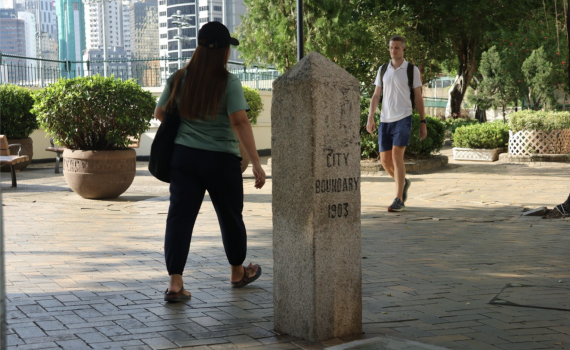
Remnants of the City of Victoria: from colonial boundary stones to modern hiking landmarks
- 2025-12-11
- Culture & Leisure
- The Young Reporter
- By: CHEN Xiyun、FENG Zhenpeng、Li YinhengEdited by: YANG Haicen
- 2025-12-11
Along the shaded fitness path on Broadwood Road in Happy Valley, a weathered stone stands quietly by the trail. “City Boundary, 1903,” reads its surface, reminding pedestrians of the remnants of Hong Kong’s colonial past. “I'm not sure what they are, but they lie along my running route, so I always treat them as rest stops and jogging milestones,” said Solo Chan, 56, a hiking fan who walks along Broadwood Road daily. “Every time I meet a new one, I pause and search for the recreational spot recommended nearby, so that I can decide the next leg of my trip,” Chan added. “It has become a great pleasure of mine during the daily morning runs.” These stone monuments, now over a century old, were erected in 1903 by the British colonial government to delineate the limits of the early developed administrative area on the north shore of Hong Kong Island, called the City of Victoria, according to the Development Bureau. The stones are crafted from hard granite, with a square columnar body and a pointed pyramidal top. They were originally designed to be approximately 1.3 meters high, but current records indicate that some stones are between 98 centimetres and 1 metre in height. The boundary the stones mark is still legally defined in the Interpretation and General Clauses Ordinance, and include what Chinese residents commonly refer to as the “Four Circuits and Nine Yeuks,” the colonial-era predecessor of today’s Central and Western District and Wan Chai District, according to official records from the Lands Department. Although the city’s boundaries have since expanded and no longer carry significance in city planning, they offer tangible links to the history of Hong Kong’s urban development, the Development Bureau added. Now, they have become landmarks for hikers to check in. “People look for boundary …

“I’m raising the child I once was”: why young Chinese find healing in personified pet parks
- 2025-12-11
- Society
- The Young Reporter
- By: Li ZhongyiEdited by: YANG Haicen
- 2025-12-11
Outside a small pet barbershop, a brown poodle stood on a grooming table while a groomer trimmed its coat. On the fresh grassland a short distance away, a Border Collie ran through a line of training obstacles, landing steadily after each jump. Nearby, a Teddy dog sat in a stroller, waiting for its afternoon snack as its owner stood beside it. This scenario was taking place in reality in a pet entertainment park named LOHAS located at the top floor of China plaza in China Guangzhou’s Yuexiu district. Opened at the end of 2025, the park is the first-of-its-kind in Guangzhou, pet-themed entertainment zone that comes with a hotel, club, barbershop, grocery store, coffee shop and even a “marriage corner” for pets. Hegla Li, 26, and her one-year-old Border Collie, Doubao, are one of the first customers at LOHAS. “I am always afraid my little one might get lonely and depressed at home, so I took him to the pet entertainment park, basically to help him make more furry friends,” she said. Li, single and unmarried, has no plan for having a child and recently put on hold her plans of furthering her studies of medicine and travelling around the world, all for her furry friends. “To me, my dog is the emotional anchor that brings me comfort. Doubao gives happiness, energy and vitality and I would like to give him my company, money and anything that I think is interesting and worthy to him in return,” She said. There are many young Chinese like Li who would much rather devote their energy and resources on pets rather than building a family. Since 2020, the birth rates of China have been continuously declining and dropped to an all-time low of 6.39% in 2023, according to the National Bureau of Statistics …

Policy Address 2025: Hetao Cooperation Park layout to be finalised as Hong Kong aims to speed up area development
- 2025-09-17
- Politics
- The Young Reporter
- By: WANG Ludan、Li ZhongyiEdited by: YANG Haicen
- 2025-09-17
Hong Kong hopes to speed up the development of a newly constructed park on the border that is cooperatively managed by Hong Kong and Shenzhen, as part of the government’s focus on innovation and technology, said John Lee Ka-chiu in today's Policy Address. The park’s layout has yet to be finalised even as the first batch of enterprises has already taken up residence in the Hetao Shenzhen-Hong Kong Science and Technology Innovation Cooperation Zone. “We will finalise the Park’s overall layout and consider offering workspaces flexibly to companies under the ‘moving in while construction is underway’ approach; that will enable them to move in earlier without having to wait for the completion of the entire park's construction,” said Lee. The new tenants include companies and talents specializing in life and health technology, microelectronics, new energy, AI and other pillar industries. This is connected to the government’s broader plan to develop Hong Kong into a global AI hub. The second phase of construction, which includes another five buildings in addition to the current three, will be completed progressively from 2027, Lee said. According to reports from Chinese state media, companies including The Hong Kong and China Gas Company, RoadAGI, Ping An Technology, and Siemens Energy have established a presence in the park. The Cooperation Zone will be used as a dedicated hub for cutting-edge research in biomedicine, artificial intelligence, applied mathematics and new materials. Earlier this year, Financial Secretary Paul Chan Mo-po highlighted in the 2025 budget plan that the government has earmarked HK$3.7 billion for the Hetao Innovation Zone, supporting the first-phase construction of infrastructure and public facilities, as it is one of the key projects in the Northern Metropolis development strategy. Chan estimated that upon the full completion of Hong Kong Park, it will contribute approximately HK$52 billion annually …
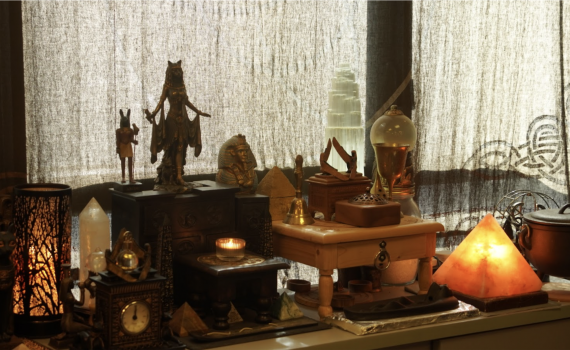
Divination or scam? The rising popularity of tarot cards reading
- 2025-04-16
- Culture & Leisure
- The Young Reporter
- By: ZHONG Xinyun、CAO SiyuanEdited by: YANG Haicen
- 2025-04-16
Nineteen-year-old Kimmy Wu Ching-tung was listening to her love prophecy at the Tarot Centre in Mongkok. “The Tarot reader said I will meet my next boyfriend in March,” Wu laughed, “He will be 175cm tall, meticulous in character, and have a tattoo on his left shoulder.” Wu is a barista at a coffee shop in Tai Wai, and this is the fourth year since she has started seeking tarot readings. “I usually seek metaphysical help for relationship issues or career paths,” said Wu. Wu is not alone. On Instagram, there are 29.9 million posts under the hashtag “tarot”, nearly 121,000 posts in #hktarot, and over 5,000 posts offering Tarot interpretation services in Hong Kong. The most popular divination bloggers on Instagram have over 40 million followers. Mani Cheung, 47, is the founder of the Hong Kong Tarot Association. The number of divination courses provided within her association has doubled since 2022. “Course services we offer are always full, with around 60 to 100 students a year,” she said, “and people from 20 to 50 years old love to participate in it.” The principle of tarot card interpretation is the customer’s subconscious projection. Usually, the tarotist would ask the client to randomly choose one of the Tarot cards spread out on the table based on their subconscious mind, and then the tarotist would interpret the card according to the pattern on it. The more cards drawn, the more information will be interpreted. “Tarot reading involves frequency. The cards customers pick can already reflect a certain state of their mind, which is similar to subconscious projection,” said by Diva Chugani, a 40-year-old Indian Tarot reader in Hong Kong. She is also the owner of a tarot shop l in Tsim Sha Tsui. Each card, the reader claims, can represent different meanings according …

Folk ritual that gets rid of pests and stress
- 2025-03-10
- Culture & Leisure
- The Young Reporter
- By: Li Yinheng、ZHENG XinyiEdited by: YANG Haicen
- 2025-03-10
Crowds seeking spiritual release queued up under the Canal Road Flyover in Causeway Bay on Mar.5. For only HK$50, the self-proclaimed psychic, also known as the “godmother”, can cast a spell on a villain of your choice. A client would write the name of the hated person on a piece of paper. The godmother would then fold the paper talisman, hit it viciously with a shoe then stuff it into the mouth of a paper tiger, which was then burned to ashes. The client would then offer incense to the god of the earth and the white tiger. The white tiger is the bogeyman in Chinese folklore and the offering, again is supposed to dispel bad luck. Finally, a piece of paper with a prayer on it would be offered to the deity. Clients would then use a divination block to ask the deity questions and then get responses through the divination block. The ritual called “villain hitting” is believed to take away bad luck, is a form of folk witchcraft practiced in the Cantonese-speaking regions of China. This activity is especially popular on the day of the “Awakening of Insects”, one of 24 solar terms in the Chinese calendar, which symbolises the revival of insects, as well as t pests. While Hong Kong is far from agricultural, the Awakening of Insects is also a time to ward off evil. Koline Kong, a 20-year-old local girl waited more than three hours for a five minute villain hitting session. “It's my first time at this event, “ she said. ‘My sister asked me to help her clear up her bad luck.” “I found this activity very interesting on Rednote, so I came to experience it with my good friend,” said Sylvia Wang, a 23-year-old Hong Kong University student. The “godmother” also …
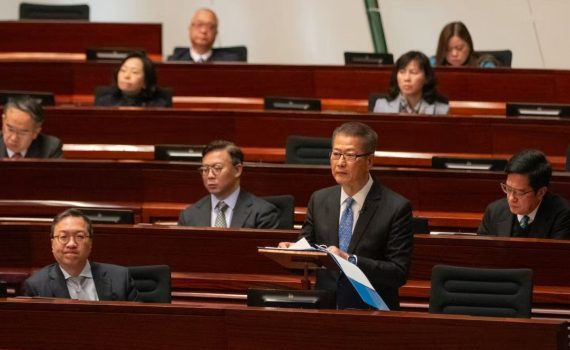
Budget 2025: Talent admission schemes receive over 430,000 applications
- 2025-02-26
- The Young Reporter
- By: ZHONG Xinyun、CHEN XiyunEdited by: YANG Haicen
- 2025-02-26
Various talent admission schemes have received more than 430,000 applications and approved more than 270,000 by the end of last year, said Financial Secretary Paul Chan Mo-po in the budget address today. “The budget is set to attract international talent and nurture local talent, reinforcing the city’s status as an international hub for high‑calibre talent,” Chan said. So far, 180,000 talents have arrived in Hong Kong since the scheme started two years ago. The budget also said Hong Kong will host the upcoming global talent summit early next year, and the government will introduce a scholarship targeting students from ASEAN and Belt & Road regions. “This equates to 10,000 new arrivals per month,” said Shang Hailong, Member of the Legislative Council and founder of the Top Talent Service Association. He added that because so many talents have arrived, some may have trouble finding jobs at first. Wan Jiachen, 26, settled in Hong Kong two years ago through the Top Talent Pass Scheme after graduating from Columbia University in the United States. It took him a few months to find work. “The house rent is really expensive and the cost of living is actually quite high,” said Wan, who found a job with the Bank of China. “It would be better if the government could arrange more similar accommodation for foreign talents or provide rental subsidies for foreign talents.” “It is hard to provide direct fiscal support for talents like housing welfare,” said Shang. “Because the median wage level of top talents is HK$50,000, which surpasses the requirements of incentives set for assisting local residents.” Non-local students who graduate from five of the city’s universities are also eligible for the top talent visa. Some of these students said it has been difficult to find a job in Hong Kong. “Hong Kong …

Hongkongers' northbound dental journey to better smiles
- 2025-02-23
- Society
- The Young Reporter
- By: ZHONG Xinyun、CHEN XiyunEdited by: YANG Haicen
- 2025-02-23
A typical weekend for Wan Jiachen begins with a 40-minute subway ride through the bustling Futian Port, heading to the Shenzhen Second People's Hospital to get a check-up on his latest dental fillings. “Dental service in Shenzhen is my first choice,” said Wan. He is a bank worker with a Shanghai household registration (hukou) and a Hong Kong identity card. He now lives in Hong Kong because of his new job. The long journey crossing the border can be exhausting, but Wan said it is worth it. “In Hong Kong, it has become more difficult to secure an appointment with a public dental clinic, and the price is unaffordable for ordinary wage earners,” he said. In Shenzhen, he pays HK$100 to HK$200 for teeth cleaning, but in Hong Kong it’s around HK$800. Wan is not the only Hong Kong resident traveling north to seek dental treatments. According to Shenzhen government figures, in 2023, Shenzhen provided 700,000 cases of medical treatment for Hong Kong residents. Currently, Hong Kong has only 0.37 dentists per 1,000 people, which falls behind many countries worldwide, according to Lo Chung-Mau, the Secretary for Health of Hong Kong. Limited local public and private healthcare resources is a major issue. “The service quality and professionalism vary significantly between clinics,” said Daniel Wong, a 57-year-old local Hong Kong resident. “Hong Kong lacks private clinics. Their small scale is also a problem.” Private clinics also tend to be more expensive. According to the clinic’s price list, Nixon Dental at Mongkok charges HK$6,000 for one-time full mouth root planing. For the clinic’s branch in Central, the same service costs even higher at HK$8,000. According to Hong Kong government statistics, as of December 31, 2023, Hong Kong has 2,876 registered dentists, with around 700 working in the public sector. “The scarcity of …

Jellycat selling emotions: how plush toys become an adult fad
- 2025-02-12
- Society
- The Young Reporter
- By: YANG HaicenEdited by: WANG Ludan
- 2025-02-12
As Christmas approached, Causeway Bay was bustling with activity, offering a dazzling array of sights. A long queue formed at Jellycat, a British soft toy shop, in the atrium of the Lane Crawford department store. Angelina Tang Jiayue, 20, weaved around the large displays, eyeing the pink rabbit with long droopy ears, the grey smiling seal and the fluffy white lamb. She finally picked up a festive red-scarfed dachshund, which will be a Christmas present to reward herself for a year of hard work. “Jellycat is my favorite toy brand, which is very cute-looking, and the fur is so soft and cozy,” she said. “Till now, I have three plush toys, two plush bags and three plush keychains.” As a devoted fan of Jellycat, Tang made a point to visit the pop-up store on its opening day in Causeway Bay. She is not the only one captivated by Jellycat. Founded in London in 1999, Jellycat is a relatively young brand compared to toy giants like Lego and Mattel, but it has quickly gained a foothold in the market, selling emotional value to young consumers with its anthropomorphic designs featuring tiny eyes, small feet and smiling faces. In the past five years, Jellycat has seen a meteoric rise in global sales. In 2022, the company’s revenue was £146 million (HK$1.504 billion), and by 2023, revenue had exceeded £200 million (HK$2.06 billion), with a gross margin consistently above 60%, according to Jellycat’s financial reports. Jellycat’s journey in China began in 2006 with the opening of its first counter in Shanghai, and by 2015, it had entered Chinese e-commerce platforms. Since 2021, Jellycat has exploded in popularity in China, and it became the best-selling brand in China’s plush fabric category in 2024, according to the China Toy and Baby Products Association. On Xiaohongshu, …