
By: XIA Fan、WANG RuoshuiEdited by: BO Chuxuan

Chinese Gen Z shifts focus to lesser-known European destinations amid social media trend
- 2026-01-23
- Business
- By: XIA Fan、WANG RuoshuiEdited by: BO Chuxuan
- 2026-01-23
Big city lights? Too mainstream. Young Chinese travellers now prefer to crave the road less travelled. Chinese Gen Z travellers are ditching crowded classics for off-the-beaten-path destinations in Europe. The hunt is on for niche places that promise more profound, more authentic local experiences, turning once-mainstream spots into personalised immersions. Gen Z travellers, generally defined as those born from the mid-to-late 1990s to the early 2010s, favour cultural deep dives over cash-splashing consumption. They seek stories and experiences that resonate long after the trip ends. Wang Yang, 28, came to the Netherlands to visit the Van Gogh Museum on October 1 after learning on social media that the museum faced the risk of closure due to budget constraints. His reservation wouldn't load on his phone at first, but a tip from Rednote, a popular Chinese social media, helped him purchase a ticket at the entrance. “Enjoy your visits!” chirped the staff as Wang secured his ticket, sharing a warm grin with the ticket inspector—a moment that felt like a heartfelt welcome to this 28-year-old adventurer. His 22-day European odyssey, blending annual leave with the National Day Golden Week, cost him roughly 50,000 RMB—about a quarter of his yearly income. Departing from Xi’an, China, Wang and his friends didn’t book any travel agent’s service or pay for a local guide; instead, they followed tips and routines shared on social media platforms as a way to craft their personalised journey. “Europe’s cities pulse with a deeper cultural and historical soul than most places,” Wang explained. “That’s why I came back.” Ditching the well-trodden Barcelona-Paris-Rome circuit, Wang and his friends ventured to Europe’s hidden gems—the Czech Republic, Greece, Portugal, and the Netherlands—while revisiting Spain, a nostalgic nod to a trip six years prior. “Golden Week outbound demand in China is breaking records. We …
2025 Japan World Expo: Kawaii culture fuels consumer spending
- 2025-06-07
- Business
- By: XIA Fan、ZHAO Runtong、WANG RuoshuiEdited by: WANG Ruoshui、ZHAO Runtong、XIA Fan
- 2025-06-07
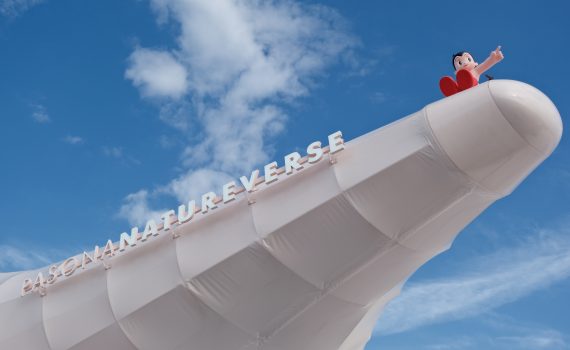
The Osaka Expo 2025 kicked off on April 13 under the theme 'Designing Future Society for Our Lives,' featuring Myaku-Myaku, a multi-eyed, red-and-blue blob as its official mascot along with other global partners’ mascots reflecting their home countries’ culture, highlighting Japan's renowned and thriving ACG (anime, comics, and games) industry. Japan’s unique animation-producing environment catalyses “Kawaii Culture” (かわいい文化), which emphasizes appealing characters. The "performativity of cute," as anthropologist Christine Yano describes it, is deeply embedded in contemporary Japanese culture. In her book Pink Globalization: Hello Kitty’s Trek Across the Pacific, Yano explains that kawaii culture serves multiple roles: it’s a playful, personal mode of self-expression and identity, while also functioning as a potent tool for branding and cultural diplomacy. While Japan has this unique cultural phenomenon, many countries around the globe also have their mascot traditions, leading them to bring their mascots to the party. Outstanding examples ranged from the host country, Japan, to European countries such as Italy and Germany, as well as Asia, including China. Designed by children’s book author Kohei Yamashita through the government’s open call to the Japanese public, Japan’s mascot’s name—an onomatopoeia evoking a pulse — was also chosen from public submissions. Described as "creepy but cute", MYAKU-MYAKU has already sparked significant economic activity through popular merchandise and has greatly enhanced the exhibition's global visibility. At the spot, people lined up for hours to get official plush toys or related items. Visitors poured in to take group photos with the mascot. Elements of Myaku-Myaku can be seen around the exhibition, being part of the whole event. Sato Ryoko rushed to the satellite store of MARUZEN JUNKUDO right after her visit to the Japan Pavilion, spent over one hour waiting in line to get in, and won the first prize of a giant MYAKU-MYAKU plush toy …