
By: Yutong SuEdited by: YANG Shuyi

Po Pin Chau visitor cap overrun on National Day, almost half absent
- 2026-10-03
- Health & Environment
- The Young Reporter
- By: Yutong SuEdited by: YANG Shuyi
- 2026-10-03
The number of reserved visitors for Sai Kung’s Po Pin Chau on National Day reached 2,420, exceeding the original official capacity limit of 2,000, yet only 1,160 people visited the spot, according to the Agriculture, Fisheries and Conservation Department. That came as the department announced on Aug. 21 that during the weekends, the Mid-Autumn Festival, and the National Day “golden week” from Sept. 5 to Oct. 7, visitors must make an appointment in advance to visit the High Island Geo Trail-Po Pin Chau Section of the High Island Reservoir East Dam in Sai Kung. Visitors must make a reservation via online travel agency Klook and present both the electronic confirmation and proof of identity to gain entry on the day of visit. On the National Day, environmental NGO Greenpeace conducted a field visit, and said crowding and trail damage remained serious despite the booking system, it said in a statement. Greenpeace called on the authorities to lower the daily quota of 2,000, prioritise repairs to damaged sections of the trail, and consider stronger measures such as seasonal closures or closing degraded segments during peak periods. “In the long run, the Culture, Sports and Tourism Bureau and the Environment Bureau should implement cross-departmental cooperation to carry out carrying-capacity studies on ecologically sensitive sites across Hong Kong and formulate a conservation-first ecotourism policy,” it wrote. Peng Liqing, Assistant Professor in the Department of Geography at the University of Hong Kong, said while visitor caps are direct management tools, their actual effectiveness ultimately depends on quota calibration and visitor behavior management. Before the policy was implemented, the East Dam—the starting point of Po Pin Chau—recorded a daily average of 2,900 visitors during this year’s May Day holiday, peaking at 5,700 in a single day, the AFCD said. According to the Policy Address 2026, …

Policy Address 2026: Government to step up Chinese-language support for ethnic minority students
- 2026-09-16
- Society
- The Young Reporter
- By: Cao Beiyu、Man Cheok Lam LorraineEdited by: FENG Zhenpeng
- 2026-09-16
Chief Executive John Lee Ka-chiu said the government will adopt learning materials tailored for non-Chinese-speaking students and also provide them after-school Chinese language courses from Primary One to Secondary Three. The materials will help them pass two Chinese language standardised tests, which will help them integrate into the community and have more job opportunities. Based on the 2021 Population Census, ethnic minorities make up 8.4% of the population in Hong Kong. Among ethnic minorities under the age of 14, 35% to 38% are unable to read or write Chinese. Bahart Nangia, former director of the Support Service Centre for Ethnic Minorities and an Indian-Hong Konger, said, “language is the biggest barrier amongst ethnic minorities. Cantonese is not easy to learn.” He said for example, MTR staff may not be able to communicate in English if they need help. Chinese classes in schools are not “fully equipped to be teaching minorities with a cultural dynamic difference,” said Jeffery Andrews, one of the founders of the Diversity Hub, a multi-cultural community space in Hong Kong, as well as the first ethnic minority social worker in Hong Kong. Andrews said the government has put many resources into ethnic minority policies for the last 15 to 20 years but the framework for implementing Chinese as a second language in schools is still weak. Alishiba Matloob Aloosh, a Pakistani Hongkonger podcaster and a former TYR reporter who now works for RTHK Radio 3, said the government should put more effort into tackling the real adjustment issues behind why, even after learning the language, some people still find it hard to adapt in daily life. Discrimination, workplace barriers and difficulties with inclusion in schools and the community are all issues that need addressing. In the policy address, Lee said the scheme for ethnic minorities to serve …

Policy Address 2026: Hong Kong to support AI training for employees and SMEs
- 2026-09-16
- Society
- The Young Reporter
- By: YANG Shuyi、Yutong SuEdited by: Lou Zhengzheng、QIN Ziyang
- 2026-09-16
The policy address proposed several AI training programs to support employees in enhancing practical AI skills and optimized the existing AI support program for small and medium-sized enterprises. The government will release more than 200 training courses and activities under the “AI for All” programme before the first quarter of 2028. The government’s Employees Retraining Board will release an 18-month AI upskilling campaign in the first half of 2027, offering free online courses on workplace AI applications, expected to benefit at least 40,000 employees. Calvin Cheng, the Executive President of the Hong Kong Small and Medium Enterprises Association, said that with subsidies from the government and corporate training, employees would be more willing to spend time learning how to use AI. “Many employees hold conservative views against AI, fearing job displacement,” Cheng said. “Companies need to educate their employees that AI is not meant to replace them, but to help improve their work efficiency.” According to Peter Shum, Deputy Chairman of the Federation of Hong Kong Industries, a lack of clear AI strategies from management creates a gap with employees keen to adopt AI but remaining cautious due to data leakage and security risks. Microsoft’s May 2026 Work Trend Index reveals that only 19% of AI users in Hong Kong believe their leadership has set a clear and consistent AI strategy. “The market is flooded with information about AI for SMEs, leaving them confused and unsure of what to do,” said Cheng. “The government can provide some successful showcases as guidance for them.” According to the Census and Statistics Department, as of March 2026, there were approximately 360,000 SMEs, accounting for more than 98% of the enterprises in Hong Kong. “The government needs to prioritize supporting SMEs in the field of AI, because large companies have substantial financial resources to …
Youth summit focuses on opportunities for HK ethnic minority youth
- 2026-09-13
- Society
- The Young Reporter
- By: YANG Shuyi、XIE Xinni CindyEdited by: Lou Zhengzheng
- 2026-09-13
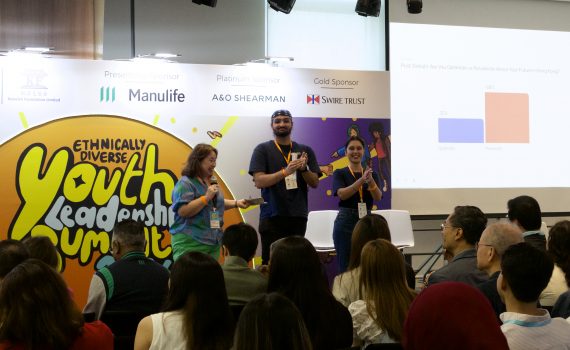
More than 300 ethnically diverse people aged 18 to 30 gathered on Saturday at a youth leadership Summit, which centred on prospective opportunities and challenges for ethnic minority youth in Hong Kong. The Ethnically Diverse Youth Leadership Summit 2026 was the second edition of the summit held by the Zubin Foundation in Ngau Tau Kok. The summit aimed to focus more on job opportunities, although much of the discussion about diverse ethnic communities centers on the negative barriers and challenges, said Shalini Mahtani, Founder and CEO of the foundation. “We're not downplaying them, but we also wanted to focus on something like your aspirations, leadership, and future in Hong Kong,” she said. Delivering his opening remarks as a guest speaker, Chris Sun Yuk-han, Secretary for the Labor and Welfare Bureau, said that as a policymaker, he is keen to listen to the group’s passion and concern. Sun encouraged young minorities to overcome difficulties in their work and said it was a great opportunity for him to hear the participants' thoughts. The summit revolves around the challenges and opportunities of the ethnically diverse community and features a debate titled “Are you optimistic or pessimistic about your future in Hong Kong?” Arvind Singh Dhaliwal, 23, an engineering student at the University of Hong Kong, is of Indian descent and grew up in Hong Kong. He speaks some everyday Cantonese and English, and represented the opposition side in debate. “A lot of engineering companies prefer people who can speak Mandarin, since many firms and departments are moving head to the mainland,” said Dhaliwal. “For Cantonese, I can speak enough to get by, but it is too stressful for me to speak Mandarin.” Subha Abedin, 21, a member of the Foundation for Youth Development—a youth-led non-governmental organisation—who graduated this year, said “Language can be …
Back or stay? balancing mainland student integration with school language policy
- 2026-03-09
- Society
- The Young Reporter
- By: LIU Rui Reena、PENG Yixin NaomiEdited by: YANG Shuyi
- 2026-03-09
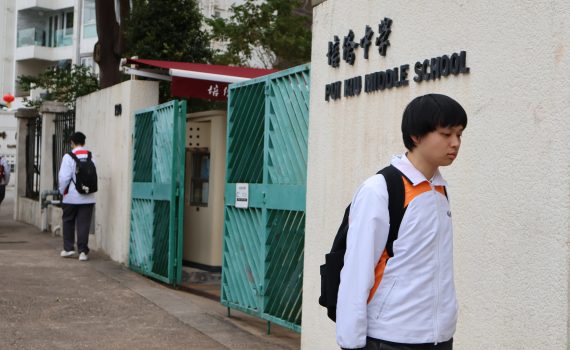
Last September, the 14-year-old Wang Yuqi moved from Beijing to Hong Kong to study in Hong Kong, hoping a new environment would offer a gentler and more balanced approach than the mainland’s exam-driven system. But her stint in the city only lasted two months before Wang returned to Beijing, citing her inability to cope with classes being taught in Cantonese at her Pui Kiu Middle School. Something similar happened to the 13-year-old Zhao Ziheng, a top math student from Wuhan who ranked last in his class at Tseung Kwan O’s Heung To Middle School after struggling for six-months with English as the medium of instruction. As Hong Kong strives to position itself as an international education hub, experts criticize the government and local schools for failing to provide adequate transitional support. This affects retaining mainland students arriving in large batches with parents under the Top Talent Pass Scheme amid other pathways. While non-government organizations offer limited Cantonese help, it remains poorly marketed. Wang arrived with her publisher father under the Top Talent Pass Scheme. She couldn’t fathom how the lack of Cantonese would paralyze her daily life. Since 2022, the scheme has allowed high earners and top university graduates worldwide to bring their children under 18 to live and study in Hong Kong. As of February 2025, a total of 131,818 such children had arrived. Wang’s first lesson at Pui Kiu Middle School was Chinese history, taught mostly in Cantonese. “By the end of the class, the teacher asked if we could all understand what was delivered in class, and if anyone didn’t understand Cantonese. I raised my hand, but I was the only one,” Wang said. Her teacher offered her some tutorials during lunch hours, in Putonghua. Similar help was also available by appointment for other subjects. Still, the …