
By: LEUNG Chi Ngai、CHAN Hiu YingEdited by: ZHANG Yiping
Abused and abandoned, shared bikes raise questions of accountability
- 2026-04-29
- Society
- The Young Reporter
- By: LEUNG Chi Ngai、CHAN Hiu YingEdited by: ZHANG Yiping
- 2026-04-29
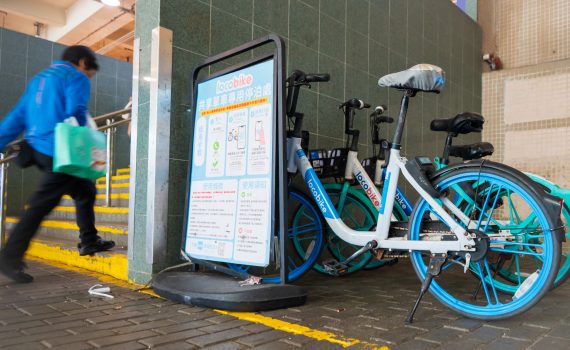
The scene at Tsuen Wan Riviera Park on Feb. 18 was not what morning joggers expected. 13 shared bikes from Locobike, the city’s largest bike-sharing operator, were found soaking in sea water, lodged against the breakwaters. This is not an isolated incident. On Jan. 15, video footage went viral on Threads showing a cyclist deliberately throwing a Locobike into a river. “These are basically rubbish,” said Wong Wai‑tung, a Tai Po district councillor. "The way you leave bikes like this; I no longer see them as something valuable.” Vandalism of shared bikes has been a recurring problem in Hong Kong since 2017, when the first shared-bike service, Gobee.bike, launched in the New Territories – the city’s largest region with the most extensive network of cycling tracks. Within four days of launch, four bikes were found dumped in the Shing Mun River. The operator shut down a year later, citing lack of profit. Shared bikes offer a greener transport mode for residents, but regulating shared bikes remains an uphill battle. Wong helps handle complaints regarding dumped and illegally parked shared bikes in Tai Po. “We sometimes receive reports from residents, especially at weekends, saying they’ve seen shared bikes in the river or left blocking pavements,” Wong said. “There are about two to three such complaints every month.” The problem is more severe in districts with larger cycling networks in the New Territories, such as Tuen Mun, Tseung Kwan O and Shatin, he added. There are now two active shared bike operators in Hong Kong — LocoBike, which has operated since 2017, and HelloRide, launched in 2025. According to Echo Lu, a HelloRide spokesperson, more than 300 HelloRide bikes have been damaged in the past year, about 10% of its fleet. “The challenges in Hong Kong are more complex than in other …

“Too big and too difficult”: fire officers defend response as Tai Po Fire hearing continues
- 2026-04-14
- The Young Reporter
- By: Dake LiuEdited by: LAI Uen Ling
- 2026-04-14
Senior firefighters testified Monday at the Tai Po Fire public hearing, describing how the rapid spread of the blaze and the absence of working building alarms created major challenges in coordinating rescues during the inferno that killed 168 people. Senior Station Officer Hui Kin-on, the first commander on the scene from Tai Po Fire Station’s B Team, told the committee he arrived at 2:56 p.m., just five minutes after the initial call reported scaffolding fire and explosions at Wang Cheong House. He said the flames spread “extremely fast", shooting straight to the roof with loud explosions and collapsing bamboo scaffolding. “When we arrived at the scene, we did not see any property management staff, nor did we hear the fire alarm bells ringing,” Hui said. The public's reliability of on-site firefighting information systems has also been concerned. Hui said it is a common practice to install the mobile data terminal on every fire engine, which displays real-time incident details, including specific building information. “During this fire, however, I cannot recall whether the terminal indicated exactly which fire safety installations had failed,” Hui said. “In every other incident I have attended, the terminal would always specify the faulty equipment.” Hui said when he arrived on spot, he saw all exits were blocked by falling debris and bamboos, which prevented firefighters from entering to activate the internal alarm system. “The entire building was surrounded by thick smoke and fire,” he recalled. The team attempted to activate the fire alarm bells in nearby buildings but none of them were functioning properly, Hui added. Hui also said firefighters had to rely on police assistance for evacuation and on radio communications with the control centre, while the committee counsel noted that there was no specific guidance for the estate’s pre-arranged fire plan for situations where the alarm failed to activate. As fire alarm upgraded to fourth level in an hour, the Fire Services Department was in effort to arrange more manpower. Wong King-man, Deputy Director of Fire Services in New Territories North, said the command centre received over 300 help …

Budget 2026: Hong Kong to continue to attract global talent while nurturing locals
- 2026-02-25
- Society
- The Young Reporter
- By: SHI Puxuan Amy、WU Sitan ElaineEdited by: ZHANG Yiping
- 2026-02-25
Hong Kong will step up efforts in attracting top global talents while nurturing local talents, said Financial Secretary Paul Chan Mo-po in his budget speech on Wednesday. Chan said that the government would continue to advance the current scheme. But gave no details on how they would increase recruitment. Critics of the government’s Top Talent Pass Scheme, a mechanism targeting high-income earners and top graduates, say the scheme takes jobs away from locals, while nearly half of external talents didn’t choose to extend their visas. “The Top Talent Pass Scheme draws over 100,000 global elites, contributing to Hong Kong's economic development,” Chan said, adding that the government particularly seeks to attract leading scientific research experts. The Top Talent Scheme was estimated to contribute about HK$34 billion to Hong Kong’s economy annually, equivalent to around 1.2% of the city’s GDP, according to the Labour and Welfare Bureau. Bibi Lam, 26, said that when she first arrived in Hong Kong through the Top Talent Pass Scheme after graduating from a university in Australia three years ago, she felt a great deal of pressure in finding affordable housing and a job. “I need to pay HK$8,500 per month for a small flat of less than 20 square metres while everything is expensive. It felt suffocating,” said Lam. “I think the biggest difficulty when I just arrived in Hong Kong was finding my first job,” Lam said, adding that many people she knows eventually had to leave Hong Kong after failing to secure employment. Her first job as an administrative assistant required frequent overtime and involved work unrelated to her marketing background. “It felt like being boiled slowly in warm water,” she said. She finally found a satisfactory job in marketing in August last year after several job changes and said she will stay …

Lunar New Year flower market kicks off in Mong Kok
- 2026-02-14
- Culture & Leisure
- The Young Reporter
- By: CHEUNG Ka Yi Ann、ZHANG Jiahe RoysEdited by: ZHANG Yiping
- 2026-02-14
The Mong Kok Lunar New Year flower market opened today at Fa Hui Park. This fair will run for 7 days until 1 February, the first day of the Lunar New Year. The fair features a total of 136 stalls, including 64 flower stalls, 66 decoration stalls, and 16 fast-food stalls. Follow the link below to watch the full reel: https://youtube.com/shorts/YC8vugA2QpI?feature=share
Kowloon City's Tei Mou Koon closes after 42 years in business
- 2026-02-10
- Society
- The Young Reporter
- By: SHI Puxuan Amy、WU Sitan ElaineEdited by: Fu Rong
- 2026-02-10
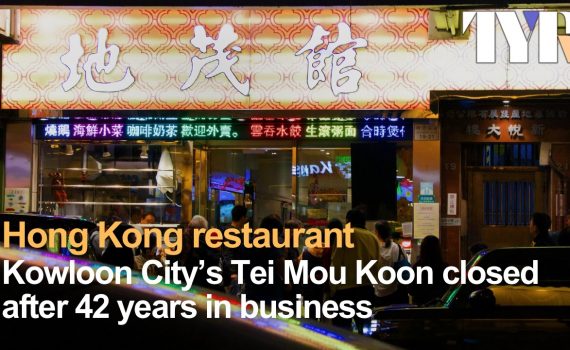
After 42 years of catering for Kowloon City residents, Tei Mou Koon closed on Jan. 31. The restaurant closed due to the increase in rent and the development scheme of Kowloon City. Many people expressed their reluctance. For local residents, coming to this restaurant gives them a sense of being back home.
Passengers and drivers doubt effectiveness and fairness of the new seatbelt rules
- 2026-01-28
- Society
- The Young Reporter
- By: Cao Beiyu、Ng Wing Sum JodieEdited by: LEUNG Chi Ngai
- 2026-01-28
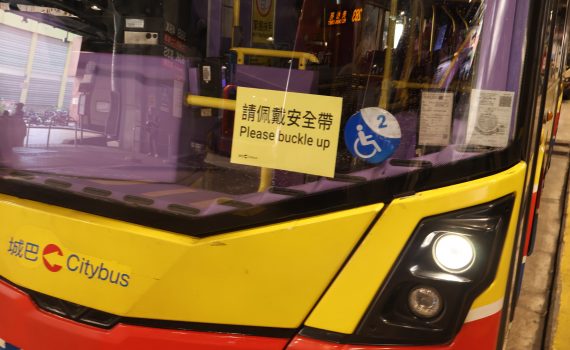
Passengers and drivers are concerned about the fairness and effectiveness of the seatbelt amendment that officially took effect on Jan. 25. All passengers on public transport and drivers who fail to wear seatbelts without a reasonable excuse are now liable to a maximum fine of HK$5,000 and up to 3 months’ imprisonment, according to the new amendment. “I think there is enough publicity for this new rule. I’ve been seeing the government’s promotion on TV since December,” said Ng Siu-leung, 58, a passenger at Sha Tin bus terminus. Another passenger, Wong Tsui-yim, 90, said she was aware of the new rule after seeing the news on TV, and her elderly friends would remind one another of the new seatbelt rules via WhatsApp groups. Despite the notice signs, Zhang Lan, a mainland Chinese tourist who had just arrived in Hong Kong for a vacation, said she had heard nothing about the amendment of the new rules. “I don’t think they are talking about it enough,” said Noa Navet, 19, a French woman living in Hong Kong. Although the new seatbelt rule can better protect passenger safety, the government should promote the new rules for younger people and foreigners via social media, she added. The new amendment also states that drivers will receive an HK$2,000 fine if they have more than two technology devices placed in front of them while driving. Local resident Chan Chung-kei, 31, said it is unfair to have a higher penalty for passengers not wearing seatbelts compared to drivers who look at their digital devices while driving. “It is the driver's responsibility to ensure the passengers’ safety, but why should inattentive drivers be fined less than passengers without seatbelts?” she said. Kong Pak-tung, 24, a Kowloon bus driver of route 289R, said he saw some passengers who didn’t …
Live: Policy Address 2025
- 2025-09-17
- By: MA Tsz Chiu Oscar、ZHANG YipingEdited by: MA Tsz Chiu Oscar、ZHANG Yiping
- 2025-09-17
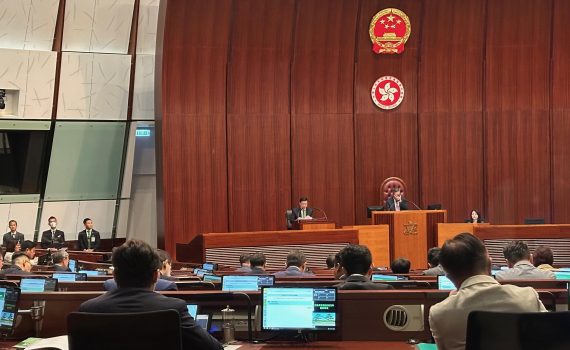
Chief Executive John Lee Ka-chiu is announcing his fourth policy address at 11am today. As in the past three years, Lee continues to stick with green as the theme colour. TYR reporters will be covering today’s policy address live. Stay tuned for more. 1:54 PM Lee concludes this year’s Policy Address, the second longest in history at 174 minutes. 1:53 PM Lee emphasised that ethnic minorities are important members of the Hong Kong community, and the Home Affairs Department will set up one additional care team each to serve the Northern and Island Districts. The government will also establish a Youth Network and a Women's Network at the 10 Support Service Centres for ethnic minorities to organise activities. An additional Interpretation and Translation Service Centre will be established in December. 1:51 PM The additional tax exemption for newborns is set to be extended from the first year to the first two years of the child's life. The tax exemption for parents with newborns will double from HK$130,000 to HK$260,000. The policy is implemented to encourage childbirth. According to the Census and Statistics Department, the total fertility rate in 2024 is 841 births per 1,000 women, lower than the government wants. 1:47 PM Lee just passed the 2 hour 45 min mark, making this his longest policy address yet. 1:35 PM The government will introduce a licensing scheme that permits dogs to enter designated restaurants. Approved eateries will display clear signage indicating that customers are allowed to bring dogs inside. According to government statistics, the total number of pets in Hong Kong exceeds 400,000, which has generated significant consumer spending. The government supports the business sector in launching various pet-friendly activities and spaces to create new consumption scenarios. 1:32 PM Victoria Harbour, Mirs Bay, and …

Holi Festival: “The most fun event” in Brisbane
- 2025-03-29
- Photo Essay
- The Young Reporter
- By: CHAU Wing YauEdited by: ZHANG Yiping
- 2025-03-29
Hundreds of students, with their faces and white clothes smeared with coloured power, gathered at Forgan Smith Lawns of the University of Queensland on March 14 to celebrate Holi, the Hindu festival of colours, love and spring dedicated to the deities Radha and Krishna. It’s the third year the event is held at the college. Participants wore white, which acts as a canvas for the colours. The powders, a mixture of cornflour and colourings, symbolise different blessings: red for love, green for new beginnings and blue for Krishna, according to the National Geographic. Students smeared and threw the coloured powders either in the air or at each other. “The Holi is the only event you will attend where you will leave looking completely different to how you arrived,” said the Student Union of the University of Queensland, in a post on Instagram. DJ Gaurav Bose and Martin Garrix played music in the middle of the lawn, while students slipped and slid in water pools to the beat of Hindu music. “I think it is fantastic, this is the most fun event that I have had in university so far,” said Camille Bloomfield, an 18-year-old student. “I love seeing all the people being so friendly with each other. It just feels like a community being able to come together to celebrate.” The University of Queensland set up a Cultural Inclusion Council in 2021 that has been holding events with different cultures, such as Chinese New Year, Holi Festival and Toga Party. But Shaktika Malhotr, 25, an Indian student, thought the event may not help to spread her culture. “This event is not preaching about Hinduism. People are just coming here to have fun,” said Malhotr. Despite that, Malhotr said this kind of event helps drive away the homesick. “But being an …

Flowers bloom on Valentine’s Day, but not the sales
- 2025-02-17
- Society
- The Young Reporter
- By: CHAU Wing YauEdited by: ZHANG Yiping
- 2025-02-17
Flowers sales for Valentine’s Day fell short of expectations, as florists at Mong Kong Flower Market reported a decrease in sales compared to last year. With roses, sunflowers and white gypsophila decorating the streets, the Mong Kok Flower Market, a well-known area for buying flowers and plants, was crowded with people on Valentine's Day. However, sales were not ideal for florists. Chris Ng, who is in her thirties and working in a flower shop called “Floralwords”, said that the sales were 30% less than last year. “Only around 80 bouquets have been ordered so far,” said Ng. “The economy is worse right now, so our store did not raise prices for Valentine’s Day.” The price for a bouquet of 20 roses at their store was HK$880. Rex Cheung, who works at Some Flower in Mong Kok, also reported a 30% sales decrease compared with last year. “There were only around 10 customers who bought flowers the day before Valentine’s Day, and the customer flow is even worse on Valentine’s Day,” said Cheung. Cheung agreed with Ng that the decline in flower sales is related to the sluggish performance of the Hong Kong economy. “The economy is poor this year, so cost has become a concern of customers,” he added. Brandon Qin, a 19-year-old secondary student, bought his girlfriend a bouquet in a Mong Kok flower shop. “I bought this for around HK$30, which is a bargain for Valentine’s Day,” said Qin. “But if I have time, I will buy flowers in Shenzhen,” Qin added. “The flowers in Shenzhen are less expensive. Flowers at HK$300 in Hong Kong may only be 200 yuan (HK$215) in Shenzhen, so it is more affordable.” In a bid to increase sales, flower shops came up with various marketing strategies. Some of them made romantic quotes …