
By: Lou ZhengzhengEdited by: LIU Yutong

Hong Kong’s last Eurasian otters spark a conservation race
- 2025-12-26
- Health & Environment
- The Young Reporter
- By: Lou ZhengzhengEdited by: LIU Yutong
- 2025-12-26
North of Lantau Island, waves crashed against coastal rocks. In February 2024, a team from Kadoorie Farm and Botanic Garden discovered a white, crumbly solid — the first Eurasian otter feces recorded there in half a century. Back at the lab, Aiko Leong Kwok-yi, a 30-year-old conservation staff at the Fauna Conservation Department under the KFBG, handled the sample for DNA testing, leaning in to sniff its scent. “Otter faeces do not smell foul, they smell salty like dried salted fish. When fresh, it smells like tea, jasmine tea, not stinky at all,” Leong said. The discovery on Lantau Island has ignited a fragile hope for Eurasian otters clinging to survival in the city. With only seven individuals remaining, primarily in the Mai Po and Inner Deep Bay Wetlands, the otters are at extremely high risk of extinction. In response, KFBG, the only local team dedicated to otter conservation, launched a two-and-a-half-year Eurasian otters research project on Dec. 1 this year. The project received HK$2.2 million funding from the Civil Engineering and Development Department. The study will deepen understanding of the distribution and status of otters, identify habitats and threats of it within Lantau Island, beginning with the collection of feces samples. Leong, who joined the team in 2020 and now leads the project, set her sights on animal research after reading about legendary conservationist Jane Goodall at the age of 11. “Jane Goodall’s story just hit me that there are people who can work with animals every day. I found my life’s purpose at that moment,” Leong said. “From that day on, I've been heading straight in this way, never turning any corners,” Leong added. The path has been physically demanding. During early fieldwork, she navigated slippery coastal rocks, once nearly falling into the sea. “I asked myself, why …
Shatin hostel scramble, housing quagmire under Hong Kong's policy of expanding non-local student enrolment
- 2025-11-05
- Society
- The Young Reporter
- By: Lan XinbeiEdited by: LIU Yutong
- 2025-11-05
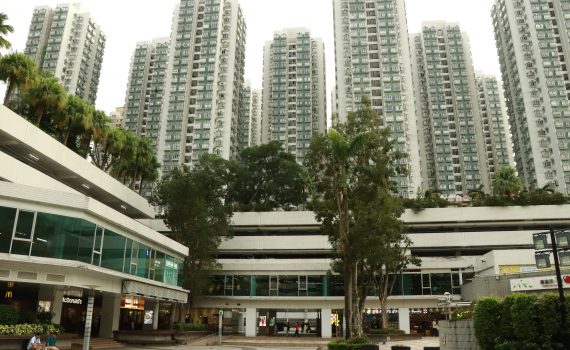
Joey Li's dream of studying in Hong Kong is confined to a 10-square-meter room barely larger than a parking space. The 21-year-old undergraduate from Guangdong, who majors in Integrated Communication Management at Hong Kong Baptist University’s College of International Education, paid HK$4,000 monthly for this partitioned corner in a shared 30-square-meter apartment. She shares this apartment at a cost of HK$15,500 a month with two other roommates, each of whom has a private bedroom. The sacrifice is a loss of privacy, where she is constantly accompanied by the noises of roommates cooking or using the bathroom. "It makes me feel bad, but I have no choice," Li said. To save more money, she mainly cooks at her residence and resorts to McDonald's and frozen food. Li is one of nearly 89,000 non-local students studying in Hong Kong, a number set to grow dramatically as the government pushes its “Study in Hong Kong” brand. Non-local student quotas have been doubled by 40% and are set to hit 50% next academic year. However, the city’s eight top universities are only offering about 42,000 dormitory places. This severe shortage forces the majority of non-local students into the private rental market, where soaring demand squeezes prices in university-adjacent districts like Shatin. According to the University Grants Committee, all full-time UGC-funded undergraduate students are only eligible for one year of on-campus housing during their studies at universities. Starting from the second year, both non-local and local students must apply for on-campus accommodation, with allocation subject to a screening process. The school considers factors such as commuting time, academic performance, and participation in student activities when assessing applications, according to the official websites of HKBU, CUHK and HSU. For postgraduate students, on-campus housing is not guaranteed, especially when the number of applicants exceeds available places. At …
Policy Address 2025: Pundits criticised industry mismatch despite the city’s Top Talent Scheme has contributed HK$34 billion to local economy
- 2025-09-17
- Society
- The Young Reporter
- By: FENG Zhenpeng、Li YinhengEdited by: LIU Yutong
- 2025-09-17
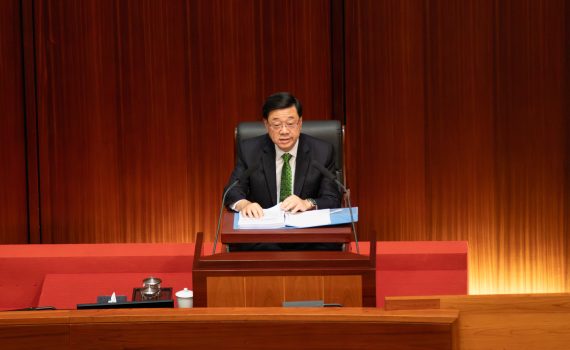
Chief executive John Lee Ka-chiu defended the controversial top talent scheme in his latest policy address but observers urged the government to address the talent mismatch by bringing in more high-tech elites. The Top Talent Pass Scheme generated around HK$34 billion a year for the local economy, accounting for approximately 1.2% of economic growth, said Chief Executive John Lee Ka-chiu, in the policy address on Wednesday. This is the first time the Hong Kong government has quantified the scheme’s economic contribution to the city in light of mounting criticism against the scheme being abused. Former chief executive Leung Chun-ying criticised last month that most applicants did not settle in Hong Kong, but returned to the mainland with their families after obtaining Hong Kong identity cards. When delivering the 2025 Policy Address, Lee said Hong Kong attracted over 230, 000 talents to work and live in the city under a number of new talent talent admission policies, including the TTPS. About 14,000 of TTPS applicants, or 54%, had their visas renewed. “Of them, 95% receive a monthly income higher than the local median income of about $20,000, and 50% earn a monthly income nearly double that amount. This reflects a strong demand for TTPS talents and the market's willingness to offer higher salaries to attract them,” Lee said most of the admitted talents to Hong Kong are relatively young, with 70% being under 40 years old, which helps to address the challenge of the aging population. However, observers did not see a picture-perfect reality. Lawmaker Wendy Hong Wen said Hong Kong lacks high-end tech talents but the TTPS is mainly bringing in talents from the finance sector. “To address the mismatch between the talent supply and industry demand, the government should adopt a demand-driven approach by enabling companies to directly search for …

College students are obsessed with playing mahjong to relieve stress and build friendships
- 2025-04-07
- Society
- The Young Reporter
- By: ZHENG Xinyi、Li YinhengEdited by: LIU Yutong
- 2025-04-07
The rhythmic clatter of mahjong tiles mixed with laughter as four students play a heated round of the traditional game late-night in a Hong Kong Baptist University dormitory. "Midterm exams stressed me out last week," said a local hall tutor at HKBU. "After that, I played mahjong two nights in a row to relax myself." "People will join the game whether they know each other or not. Mahjong has boosted friendships in the building," the tutor added. The student requested not to be named as student hall rules prohibit the playing of mahjong in the building. Amid academic pressure and digital isolation, university students are reviving the nearly 200-year-old Chinese game of mahjong, usually associated with older people, for mental wellness and community-building. At the Hong Kong University of Science and Technology, the mahjong club, which was founded in 2022, has about 1,000 active members and more than 1,700 Instagram followers, said Rex Chow, 20, president of the club. “Our community not only attracts local students but also those from mainland China and internationally,” Chow said. “Some new members even did not know how to play mahjong, but they can learn from our free mentor courses.” According to Google Trends, the number of web searches for mahjong in Hong Kong has increased in fluctuation since December 2024, and peaked late January 2025. “Compared with shopping which is tiring and expensive, playing mahjong is a better way to relax,”said Winnie Leung, 20, a local student at HKBU, who plays mahjong at least once a week. Research in China shows that frequent playing of mahjong as a form of social participation can reduce symptoms of depression. “Maintaining a good mental state is important for coping with a busy life," the tutor said.“I would sometimes sacrifice some of my sleep to play mahjong.” …

Health-seeking shoppers pick balanced meals via labeled diet boxes
- 2025-03-04
- Society
- The Young Reporter
- By: Fu Rong、Wong Kit YingEdited by: LIU Yutong
- 2025-03-04
Marimo Lai, a 53-year-old clerk in Hong Kong, sat in the canteen and took out a blood glucose monitor from her bag before having lunch. Since being diagnosed with type 2 diabetes two years ago, testing her blood sugar level has become part of her daily routine. The results showed her blood sugar was stable. Marimo has been ordering her food under a personalized meal plan for two years. “Ever since I found this kind of lunch box, it has been much easier to control my blood sugar,” she said. Marimo’s food is from Nutribute, a catering company that claims to provide a balanced diet. A typical meal costs $63 per set and more for special needs such as diabetes and pregnancy. Nutribite has sold 22 million meal boxes in 2024, and sold their products at more than 100 Pacific Coffee shops and Hung Fook Tong shops in Hong Kong, showing more Hongkongers want to embrace a healthier diet with convenience labeled nutritional lunch boxes, said Susan So, the general manager of Nutribite. At present, about 700,000 people in Hong Kong suffer from diabetes, according to the Hong Kong Diabetes Federation, and it will surge to 920 ,000 by 2030, accounting for 13% of the total population. Terry Ting, 50, is a registered dietitian. “As more people recognize the importance of a balanced diet especially after the pandemic but lack the time and money to cook for themselves, the demand for such services will grow,” he said. He thinks these food companies should follow government guidelines in their nutrition labels. Other healthy food delivery platforms in Hong Kong include WeBite, Eatology, Fittery, Nosh and Calfit. WeBite specialises in group meal deliveries to offices and campuses. “They started to provide this service to Hong Kong Baptist University in November 2024, and …