
By: CHENG Tsz Sen SeanEdited by: CHENG Tsz Sen Sean
Holocaust remembrance and education in Hong Kong
- 2026-10-29
- Society
- The Young Reporter
- By: CHENG Tsz Sen SeanEdited by: CHENG Tsz Sen Sean
- 2026-10-29
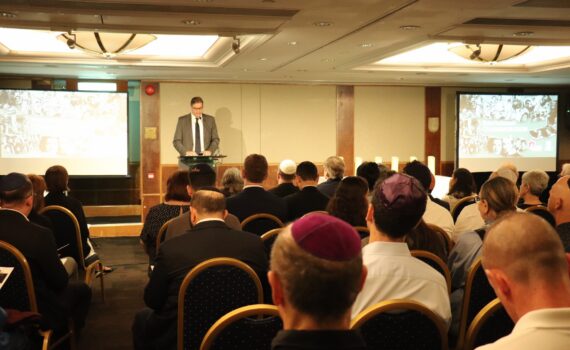
Around 60 people rose for a minute of silence at this year´s Holocaust commemoration at the Jewish Community Centre in the Hong Kong Midlevels on April 13. Also called Yom HaShoah, the global annual event commemorates the murder of six million jews by Nazi Germany. The word “shoah” means “catastrophe“ in Hebrew. The Hong Kong Holocaust and Tolerance Centre and the Israel Consulate General organised the event which features songs, speeches and personal stories of family separations, endurance and survival. The event has been commemorated in Hong Kong for 15 years. Australian journalist Jill Margo, who wrote the biography of holocaust survivor Frank Lowy, spoke on the “enduring duty of remembrance.” Roland Vogt, chairman of the centre, said April is genocide awareness month and represents the shared commitment to stand against hate and prejudice in all its forms today. At the event, six candles represent the six million lives lost. As members of the community light each candle, they dedicate it to one individual family member. David Kudan, Rabbi of the Liberal Jewish Community in Hong Kong, said his candle stood as a symbol against hatred. “As we light candles and reflect on their absence, we affirm our responsibility to preserve their memory. Their stories remain a guiding presence, calling us to confront hatred, to defend human dignity, and to uphold the values they were denied the chance to pass on. May their memory be a blessing, and may our remembrance on this day strengthen our commitment to justice,” Kudan said. “The organisers of this event did well not to focus too much on sadness. There were also nice messages of hope and calls for social justice,” said Jonathan Feuer, 34, a postdoctoral fellow at the University of Hong Kong. He said Holocaust remembrance in Hong Kong is a unique …
Independent committee commences Wang Fuk Court fire public hearing
- 2026-03-19
- Society
- The Young Reporter
- By: ZHANG Jiahe Roys、CHENG Tsz Sen SeanEdited by: SIU Tsz Hang
- 2026-03-19
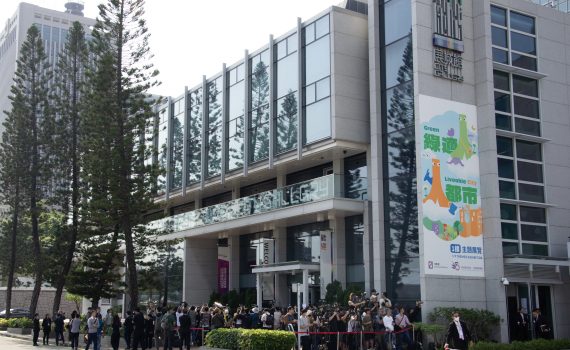
The Independent Committee in relation to the fire at Wang Fuk Court in Tai Po had their first evidential hearing this morning at City Gallery in Central. The committee's lead barrister Victor Dawes said the fire was a consequence of multiple overlapping human errors. “All fire safety measures were unavailable at the day of the fire, due to human wrongdoings,” Dawes said. Fire footage from the residents, passersby and media outlets were displayed at the hearing. Dawes said multiple CCTV footage from the buildings and the constructor indicate that cigarette butts are the fire’s main cause — engulfing the substandard combustible nets and bamboo scaffolding within 15 minutes. Evidence also showed failures in the fire alarms system, which affected the residents’ escape. Smoke was able to enter the buildings more easily since windows at the stairwells were replaced by wooden boards, for the convenience of construction workers. CCTV footage also showed residents were unable to put out the fire, as the hoses were not connected to any water tanks. Some audience cried during the hearing. Former Wang Tai House resident, 69-year-old Law, who lost a relative from the fire, said he wants the hearings to reconstruct what happened. “I think the government has to take responsibility. There are strict rules, but they were not executed with caution,” he said. Seven more hearings will be held on Mar. 20, 24, 26, 30, 31 and Apr. 1, 2. The hearing for the deadly fire on Nov. 26 — which took 168 lives — requires a pre-registration. Prioritised quotas are given to Wang Fuk Court residents, while members of the public and media are also welcomed. Registrations are now closed.
Elderly Hong Kong caregivers bear crushing load amid service gaps
- 2026-03-12
- Society
- The Young Reporter
- By: SIU Tsz Hang、CHENG Tsz Sen SeanEdited by: CHAN Hiu Ying
- 2026-03-12
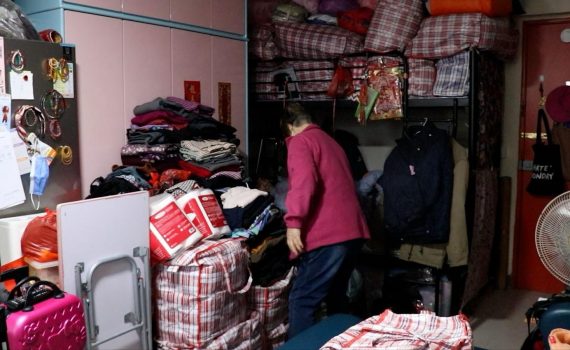
In a cramped public housing flat in Wong Tai Sin, Li Yuet-siu, 74, spends almost every hour of her day caring for her 89-year-old husband, who has been bedridden since he broke bones in both hips and legs in 2018. He can still stand and walk a few steps with a cane, but only as far as the toilet, clinging to furniture and walls for support. After the accident, Li said her husband was hospitalised and moved into two different government-funded care homes. But he repeatedly shouted and begged to go home, making it impossible for carers to help him. Since he has moved home, every need – from getting out of bed to going to the bathroom – has rested on Li’s shoulders. “Every day, I help him eat, wash and use the toilet. He refuses to wear adult diapers, saying they’re too hot and uncomfortable, so I have to wake up at midnight when he needs to urinate,” Li said, adding that her husband sometimes gets up by himself but falls. “Lifting him hurts my back badly, but if I drop him, it’s worse... Once when he fell, I couldn’t lift him, so I called the ambulance service. The staff said moving him could dislocate bones or injure him further, but I had no choice. I had no training and no one to help,” she said. Hong Kong’s rapidly aging population is straining family caregivers, many of whom are elderly themselves and face chronic exhaustion, injuries and emotional turmoil without adequate support. An expert estimates there are around 180,000 elderly caregivers in Hong Kong. According to the Census and Statistics Department, the number of elderly persons aged 65 and over is projected to nearly double over a 25-year period, from 1.45 million in 2021 to 2.74 million in …
Budget 2026: Paul Chan addresses concerns in press conference
- 2026-02-26
- The Young Reporter
- By: ZHENG WU Anny、SIU Tsz HangEdited by: SIU Tsz Hang
- 2026-02-26
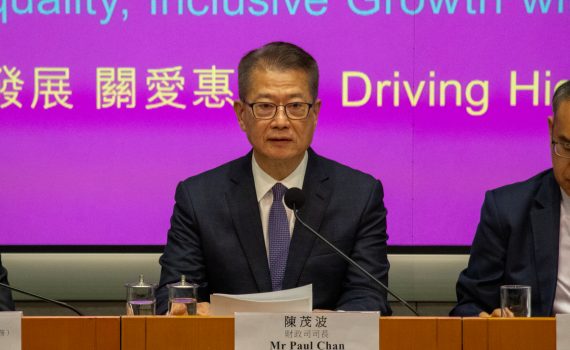
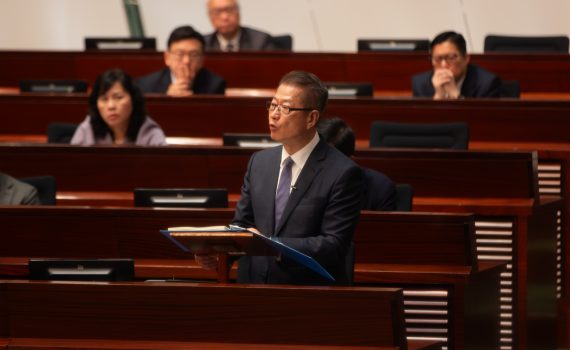
Financial Secretary Paul Chan Mo-po announced the 2026 Budget Plan on Feb. 25. During a press conference, Chan and the permanent secretary for the Financial Services and the Treasury Andrew Lai Chi-wah, responded to concerns over the newborn baby schemes, absence of consumption vouchers, civil servants’ pay review, and policies on the MPF and Exchange Fund.
Budget 2026: Consolidate account records surplus ahead of reinforcing fiscal programme
- 2026-02-25
- The Young Reporter
- By: Chun Lim LEUNGEdited by: CHENG Tsz Sen Sean
- 2026-02-25
Hong Kong government cashed in a HK$2.9 billion surplus in the last fiscal year sustaining a three-year deficit. Speaking in his budget speech Wednesday, Financial Secretary Paul Chan Mo-po attributed the surplus to a surge of HK$50 billion revenue from stamp duty and profit tax as the stock market and local economy rebounded. This surplus came a year earlier than expected which is expected to remain until 2028. Chan added that the city would issue an additional HK$160 to 220 billion worth of government bonds every year, in the course of next five years. Another HK$150 billion from Hong Kong’s foreign exchange fund would be earmarked to pay for the Northern Metropolis project. Edward Lau Kwok-fan, advisory committee on Northern Metropolis, said in a statement that the issuance of bonds can help fund mega infrastructure. “It allows the government to advance strategic projects such as the Northern Metropolis while maintaining fiscal stability and aligning long-term investment with long-term returns,” Lau stated. Billy Mak Sui-choi, associate professor of the department of accountancy, economics and finance at Hong Kong Baptist University, said the government can consider developing the infrastructure in phases to prevent another deficit. “Investing infrastructure is mandatory to boost economic activity as it supports a variety of industries of talent, land and property,” Mak said. “If we divide the mega construction in five years, the spending will be relatively lower than paying it all at once. The government may then sell the land or property in the same district to achieve financial sustainability," Mak said. In his budget speech, Chan said the government has to strictly control the government expenditure by reducing 10,000 civil servant hires before June 2027. Adrian Pedro Ho King-hong, LegCo member for the New People’s party, said he was not surprised to see the surplus earlier …
Financial Secretary delivers 2026-27 budget speech
- 2026-02-25
- The Young Reporter
- By: ZHENG WU Anny、SIU Tsz HangEdited by: SIU Tsz Hang
- 2026-02-25
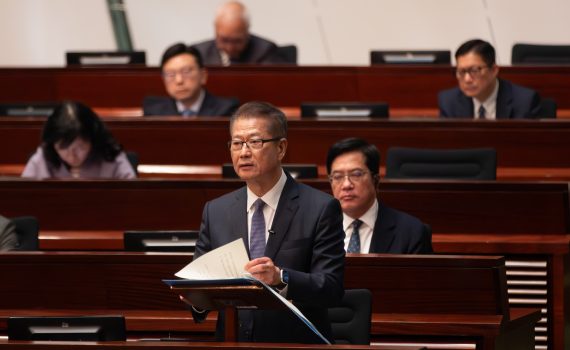
Financial Secretary Paul Chan Mo-po on Wednesday delivered his budget speech to the Legislative Council. This year’s budget mainly focuses on several areas including promoting technology and artificial intelligence development, deepening financial co‑operation in the Greater Bay Area, consolidating the SAR’s position as a gold trading hub and strengthening the market system. New initiatives include a new light festival show, first registration tax concessions for electric private cars, as well as Wang Fuk Court fire support programmes. The secretary started his speech by noting the tax revenue has increased over the past year due to a booming stock and capital market. He forecasted the economic growth for this fiscal year would be 2.5% to 3.5%, slightly lower than last year's 3.5%. It also covers measures for trade, logistics, aviation, tourism, culture and sports, creative industries, intellectual property trading and nurturing talent, funding for tourism projects and training schemes, land and housing policies, as well as Wang Fuk Court fire support programmes.
Dry stall rent reaches three-year high in lunar new year fair
- 2026-02-12
- Culture & Leisure
- The Young Reporter
- By: Man Cheok Lam Lorraine、Baguio AnneEdited by: CHENG Tsz Sen Sean
- 2026-02-12
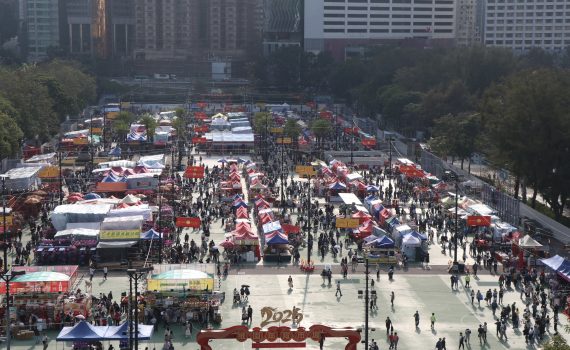
Dry stall holders at the city’s largest Lunar New Year Fair at Victoria Park are facing the highest rent since the return of dry goods stalls in the 2024 fair. The government reintroduced dry goods booths after a four-year suspension after the dry stalls were canceled due to crowd control reasons in 2020. In the following years, they were canceled due to the pandemic. According to the Food and Environmental Hygiene Department, this year’s fair had an average bid of HK$17,847 for a regular-sized dry stall, a 52.5% increase compared to last year. Icy Lo, 22, a Japanese goods seller, has been at the fair since last year. Lo said her rent this year has increased by around HK$4000-$5000. She added her sales on the first day were fine, and more people will be at the fair after normal working hours. Belle Chan, 25, a local nursing student, sells traditional Hong Kong snacks with her family. This is her fourth time holding a stall at Victoria Park. “The rent has gone up. Last year's rent was just around HK$8,000.” Chan said. Chan said more people are going to the fair when compared to the early post-COVID years, leading to higher bidding prices for a store. This year, her stall moved from the corner to the aisle and she worried this would worsen their sales. Despite the increased cost, some still wanted to try running a store. Kenny Cheung, 25, returned to Victoria Park to sell lion dance-themed merchandise after a seven-year absence. He said the rent was similar when he was last here. “I didn’t come to make a lot of money, but to enjoy the atmosphere and promote traditional culture,” Cheung said. Yeung Ying-kei, 18, a local student, visiting the fair for the first time with her friend from …