
By: PENG Yixin Naomi、WU Sitan ElaineEdited by: ZHENG Xinyi

Despite fines, visitors keep bringing e-cigarettes into Hong Kong
- 2026-11-04
- Society
- The Young Reporter
- By: PENG Yixin Naomi、WU Sitan ElaineEdited by: ZHENG Xinyi
- 2026-11-04
With a border checkpoint only a few hundred metres away, Jennifer Jiang, 20, a mainland university undergraduate visiting Hong Kong, hurriedly hid two e-cigarettes in her boots after a friend told her that possessing alternative smoking products was legally prohibited in Hong Kong and may result in a heavy fine. “I felt really nervous. After confirming the law online, my first idea was to throw away my two e-cigarettes, but they were brand new and kind of expensive…. So I thought I’d take a gamble," Jiang said. Finally, Jiang slipped through customs luckily with her e-cigarettes intact. In 2022, the Department of Health banned alternative smoking products, prohibiting the import, manufacture, sale, and commercial possession of e-cigarettes and heated tobacco products. This April, it extended the ban to public possession. Anyone found carrying more than five e-cigarette capsules or 100 heating sticks in public places faces a maximum fine of HK$50,000 and up to 6 months’ imprisonment. Those carrying smaller amounts face a fixed penalty of HK$3,000. Under the Import and Export Ordinance, importing e-cigarettes and other prohibited smoking products remains a criminal offence carrying a maximum fine of HK$2 million and seven years’ imprisonment. Despite the penalties, some travellers still bring e-cigarettes into Hong Kong. The Customs and Excise Department detected 2,600 cases of illegal importation involving alternative smoking products and seized about 9.35 million items last year. “Although public education has been conducted, the relatively new legislation still leaves room for improvement in timing and reach, particularly for cross-boundary visitors,” said Kelvin Wang Man-ping, professor at the University of Hong Kong’s School of Nursing, who has more than 15 years of experience in tobacco-control research. Hong Kong’s control points handled a record 334.6 million passenger trips in 2025, according to the Immigration Department. Amid such heavy flows, Customs …
Prolonged waiting for treatment worsens mental illness sufferings
- 2026-05-03
- Society
- The Young Reporter
- By: MA Yifan Chloe、SHI Puxuan AmyEdited by: CHEN Xiyun
- 2026-05-03
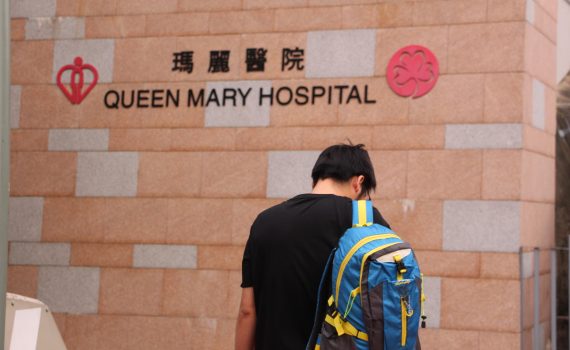
Vivian Chan, a 16-year-old Form Five student in Wong Chuk Hang, had her life trajectory changed three years ago when she was bullied and sexually harassed at just 12 years old. The incident left her isolated, led to suicide attempts, and resulted in a year-long struggle with mental health symptoms before she finally received a diagnosis and started treatment at Queen Mary Hospital. Chan was diagnosed with moderate depression in early 2024, one year after her depression began to arise, which gradually worsened due to extended outpatient waiting times and delayed community intervention, she said. Hong Kong’s public hospital psychiatric clinics have long been plagued by lengthy waiting times and a severely imbalanced doctor-patient ratio, with the longest waiting time for new outpatient cases reaching up to 101 weeks in 2025. While the government seeks to strengthen community mental health interventions in the hope of shortening clinical waiting lists, the effort is hampered by a shortage of resources for social workers’ early identification and prevention services training. The number of new psychiatric outpatient cases at public clinics has continuously increased from 47,879 in 2022 to 53,353 in 2025, according to the Hospital Authority. Around one in five urgent patients faces a median waiting time of one to three weeks for treatment, while the median waiting period for most non-urgent patients ranges from 17 to 76 weeks. After joining Queen Mary Hospital’s waiting list in 2024, Chan eagerly awaited professional medical help, only to endure a 28-week delay. Chan felt intense pain and helplessness during the waiting period. “Without a diagnosis, I kept overthinking if I was truly sick,” she added. She once locked herself in her bedroom for weeks to escape from the painful reality. “I pulled the curtains to block out sunlight, wrapped myself in blankets, and couldn’t hold …
Budget 2026: Hong Kong to increase elderly care vouchers, but long waiting list persists
- 2026-02-25
- Society
- The Young Reporter
- By: MA Yifan Chloe、LIU Rui ReenaEdited by: CHEN Xiyun
- 2026-02-25
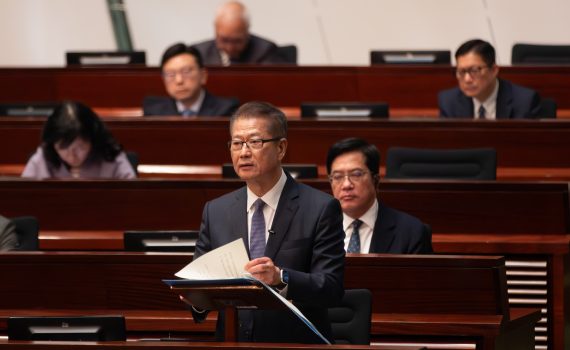
Hong Kong is set to increase funding to boost capacity for elderly community and home care vouchers by up to 33% which could benefit more citizens but shortage of service provision remains. Speaking in his budget speech on Wednesday, Secretary of Finance Paul Chan Mo-po said the increase will allow 4,000 more elderly citizens to receive subsidised community care and another 1,000 people to receive discounted residential care services. Sze Lai-shan, deputy director of the Society for Community Organisation, welcomed the move as previous provisions could hardly meet the demand of Hong Kong elderly people’s needs. “But the problem of inadequate service provision remains,” Sze said, referring to service waiting time continuing to be an issue. “The government has made significant efforts to assist the elderly but caregivers of elderly people also need support,” said Wong Lai-ying, 59, who is for her 98-year-old mother. Wong’s mom lives alone in Kwun Tong with a urinary catheter attached, which requires Wong to take her to the hospital twice a week for kidney check-ups. Each visit could take up four hours as she works in the Hong Kong International Airport. It’s the fifth year that Wong’s mom has failed to gain eligibility for residential care services. Last year, 14,346 applicants were on the waiting list for subsidised community care services, and 17,664 queued to enter the nursing homes that are covered by the current vouchers schemes, according to the Social Welfare Department. According to the 2021 Population Census, 16.6% of persons aged 60 and over living in households require long-term care. “We hope the government can continue to increase funding for more elderly community care vouchers in order to cut down waiting time of elderly homes, ” Sze said.

International Education Fair Myanmar records lowest turnout since relaunch in 2023
- 2026-02-04
- Society
- The Young Reporter
- By: Pann Hnin Nay ChiEdited by: CHEN Xiyun
- 2026-02-04
Yangon, Myanmar - The International Education Fair Myanmar 2026 drew around 300 registered visitors, a 40% decline compared to last year and the lowest turnout since the event resumed in 2023, according to the fair’s public menu. Aimed at connecting local students with both domestic and international institutions, the fair falls Jan. 31 to Feb. 1 in Yangon, organised by Dagon Exhibition Limited. “Some institutions are strong at marketing but may offer a different experience after enrolment, ” said Phoo Sone Nyi Tun, 24, who came to seek a potential university for her younger sister. “We don’t have the chance to visit the campuses in person now, so this is the only way to check,” Phoo Sone Nyi Tun said. Naing Lin Tun, 17, said, “I came to the fair to look for alternative universities and understand what options are still open for this year's intake.” He dropped out of a “2+2 degree” programme at INTI International University in Malaysia, which promised students the opportunity to complete the final two years of college in the United States. “The main reason I enrolled was the transfer pathway. I expected the programme to be a stepping stone, but without the chance to transfer to the United States, I felt the education I was receiving wasn’t strong enough for me to continue,” Naing Lin Tun said. According to the National Immigration Forum, Burmese residents were no longer eligible to obtain a student visa to the United States after a travel ban announced in 2025. To address families’ concerns and the long-term loss of talents, the local community hopes more international institutions establish their branches in Myanmar, said Nay Oke, 82, patron of College and University Association Myanmar. “If these schools establish local campuses, young people won’t need to leave the country to access …