
By: CHU Ka Ying Ashley 朱家瀅、GUO Tongyao 郭童瑶、TANG Choi Luen 鄧載鑾Edited by: LIN Xiaoyou、TANG Siqi、Wang Yunqi

Hong Kong FinTech Week 2026 puts tokenisation and agentic commerce in focus
- 2026-11-06
- Business
- By: CHU Ka Ying Ashley 朱家瀅、GUO Tongyao 郭童瑶、TANG Choi Luen 鄧載鑾Edited by: LIN Xiaoyou、TANG Siqi、Wang Yunqi
- 2026-11-06
AI summary: Hong Kong is advancing tokenisation and AI agent applications in financial services through initiatives like EnsembleTX and Project SAGE. Industry leaders emphasise that tokenisation provides the payment infrastructure for autonomous AI agents to drive the next wave of agentic commerce. Officials and experts raised concerns about deepfakes, faster fund outflows during market panics and unclear responsibility when autonomous agents cause problems. Hong Kong FinTech Week, running from November 2 to 6, entered its final day on Friday, after a week of discussions highlighting the importance of tokenisation for agentic commerce. Eddie Yue Wai-man, Chief Executive of the Hong Kong Monetary Authority (HKMA), said on Monday more financial institutions are studying and exploring agentic finance, which could change the financial services model. The HKMA has advanced its tokenisation pilot EnsembleTX to a new stage, supporting 24/7 interbank settlement of tokenised deposit transactions using tokenised central bank money. The number of participating banks and industry pioneers has increased to 12 and 20, respectively. The HKMA said the upgrade would help scale up transactions, expand tokenisation use cases and support the development of a sustainable tokenisation market. On the AI front, the HKMA also launched Project SAGE (Securing Agentic Finance with Governance and Enablement) to enable the industry to explore and advance agentic finance applications, while ensuring a commensurate governance framework. Industry leaders echoed the regulator’s focus. “The next wave is agentic commerce, which relies on AI engines and tokenised digital money,” said Bill Winters, group chief executive of Standard Chartered, during a Monday panel. Forest Lin, head of Tencent Financial Technology, said, “Tokenisation establishes the payment and clearing infrastructure, while agentic AI operates on top of it.” Tencent is currently piloting agentic payment products under two principles, Lin said. Agents must use dedicated, separate accounts, and users must explicitly authorise …
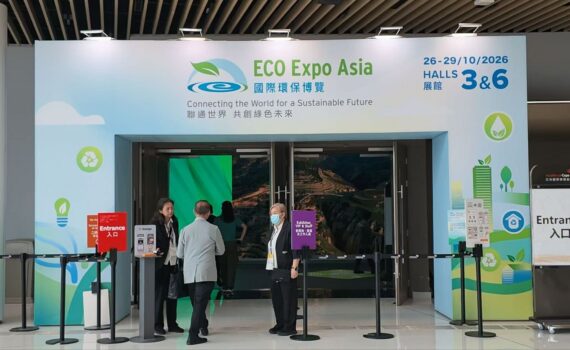
AI recycling takes spotlight at Hong Kong Eco Expo Asia amid local processing challenges
- 2026-10-30
- Business
- By: CHAN Cheuk Kiu 陳芍僑、LI Yuzhou Asher、LIU Yingxi 劉穎熙Edited by: ZHOU Yun、CHEN Yongru、Wang Yunqi
- 2026-10-30
AI Summary: The 21st Eco Expo Asia showcased AI-powered recycling solutions aimed at improving commercial viability for local operators. Green AI Technology launched its REV unmanned station, while showcasing how its smart recycling system uses computer vision to enhance sorting accuracy and reduce manual checks. Despite technological gains, experts said AI faces limits in addressing low recyclable prices, land constraints, and the need to control its own energy use. The 21st Eco Expo Asia 2026, held at Hong Kong’s AsiaWorld-Expo from Monday to Thursday (Oct 26-29), saw tech exhibitors highlighting artificial intelligence (AI) as a crucial solution for local recyclers to cut processing costs and achieve commercial viability. Under the theme “Connecting the World for a Sustainable Future”, this year’s edition featured four tracks: Green Energy in Motion, Frontier Green Tech, Building for a Greener City, and From Waste to Worth, showcasing the latest innovative green technologies, products, and solutions. In an interview at the expo, Freeman Cheung, President of the Hong Kong Institute of Qualified Environmental Professionals, stressed the importance of lifecycle assessment when evaluating green technologies and circular economy solutions. A full “cradle‑to‑grave” assessment is needed, he said, calculating the energy required and benefits generated from the beginning of a product’s life to its end. Hong Kong-based Green AI Technology Limited, a local green-tech start-up incubated by the Hong Kong Polytechnic University, launched REV, its new generation, 24-hour unmanned recycling station, at the Expo, demonstrating how AI and automation can transform recycling operations. Dennis Mak, Chief Executive Officer of Green AI Technology Limited, said its smart recycling system pairs barcode scanning with AI computer vision to automatically identify recyclables, removing reliance on pre-updated barcode database entries. Mak said that while an on-board edge computer pushes up hardware costs, pairing AI with IoT sensors triggers alerts when bins are …
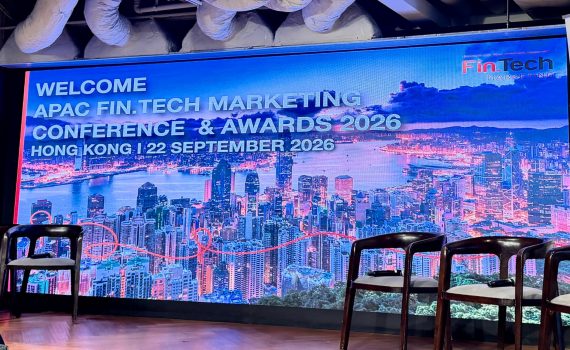
Fintech leaders weigh AI returns as Hong Kong steps up support under Five-Year Plan
- 2026-09-23
- Business
- By: GUO Tongyao 郭童瑶、Zhang Xuan、CHU Ka Ying Ashley 朱家瀅Edited by: ZHOU Yun、LIN Xiaoyou、Wang Yunqi
- 2026-09-23
AI summary: Fintech leaders said AI adoption must deliver business value, with growth, revenue and margins remaining key priorities. Speakers highlighted AI’s potential to personalise marketing while acknowledging its limitations and the need to manage risks. Hong Kong’s First Five-Year Plan supports AI development and adoption by SMEs, while industry leaders see mainland connections as a potential advantage. The APAC Fin.Tech Marketing Conference 2026, held in Central on Tuesday, covered the growing use of AI in marketing, including how fintech marketing executives translate its use into measurable return on investment (ROI). Benjamin Quinlan, chief executive officer (CEO) and managing partner of Quinlan & Associates, said investors and buyers still focus on business fundamentals when assessing companies, despite the growing importance of AI. Growth, recurring revenue, and margins remain key factors, he said. Quinlan added that organic reach has collapsed amid the rapid increase in AI-generated content, as everyone is competing for the same limited amount of human attention and screen time. Addressing the operational side, Carrie Law, CEO and director of WOW Impact Group, said ROI includes both tangible and intangible benefits. Law said companies that send large volumes of generic or poorly targeted emails risk low returns on investment, open rates and engagement. She said AI could help marketers use customer behaviour data to tailor messages to individual customers rather than sending the same content to everyone. Stephen Wong, head of regional business solutions for Hong Kong, Macao and Taiwan at Xiaohongshu, said that authentic data can help brands identify the customer segments they need to reach. He added that AI could help users complete roughly the first 70% of a task. While AI can efficiently assist in those initial stages, moving from 70% to 90% remains exceptionally challenging because of the frameworks and logic within which AI models …
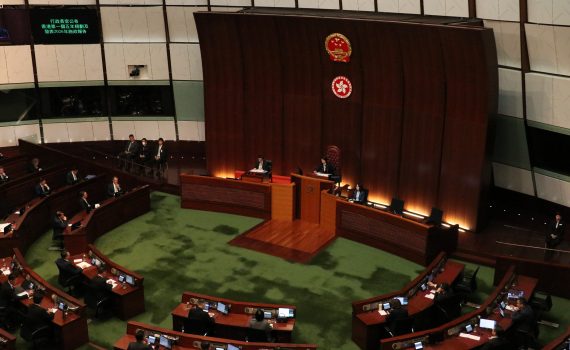
Policy Address 2026: Hong Kong targets over 35,000 public housing units a year
- 2026-09-17
- Business
- By: LI Yuzhou Asher、HU Mudi 胡沐迪、GUO Tongyao 郭童瑶Edited by: Zhou Xinying、LIN Xiaoyou、Wang Yunqi
- 2026-09-17
AI summary: Hong Kong plans to produce over 35,000 public housing units a year on average over five years starting in 2027/28. Increased supply could shorten housing queues, but one academic said tackling wealth and income inequality is also essential. The government is also tackling public housing abuse. Hong Kong will continue to increase public housing supply and combat public rental housing (PRH) abuse, Chief Executive John Lee Ka‑chiu said in his Policy Address 2026 on Wednesday. “The current-term Government has laid a solid foundation for, and is entering the harvesting phase of, public housing production, ” Lee said. “In the next five years, from 2027-28, public housing production will exceed 35,000 units a year on average.” HO Hang-kei, an Adjunct Associate Professor in the Department of Anthropology at The Chinese University of Hong Kong whose research interests include housing policy, commented that ramping up PRH supply is a positive measure. “I think this is great because, as we know, Hong Kong has been experiencing a shortage of public housing units, so as you can see from previous figures, the queue was very long,” Ho said. “And I think by having more supply, I think it's going to decrease the waiting time for many people actually need them, especially a lot of people are now kind of in the use of temporary housing.” Ho said that there would be some short-term kind of pain, such as a fiscal deficit. But over the medium to long term, he thought the increase in housing supply would benefit Hong Kong. More stable housing could help residents feel more secure about their work, education and other aspects of their lives, he said. However, Dong Ding, an Assistant Professor in the Department of Accountancy, Economics and Finance at Hong Kong Baptist University, said that more …

Policy Address 2026: Two AI models identify Offshore RMB business as a key theme
- 2026-09-17
- Business
- By: Xi Yuke Jackie、CHU Ka Ying Ashley 朱家瀅、CHAN Cheuk Kiu 陳芍僑Edited by: ZHOU Yun、ZHONG Xinyun、Wang Yunqi
- 2026-09-17
Hong Kong will consolidate its status as a global financial centre by deepening offshore renminbi (RMB) business and capital markets, said Chief Executive John Lee Ka-chiu during his Policy Address speech on Wednesday. When used to analyze the international financial centre sector, AI models Gemini and Doubao converged on consolidating Hong Kong's role as a global offshore RMB hub as the premier priority within this domain. Doubao prioritised the offshore RMB hub for its immediate, actionable measures, whereas Gemini framed it as Hong Kong’s core strategic advantage amid shifting global trade patterns and emerging-market de-dollarisation. Hong Kong is the world’s largest offshore RMB business hub, Lee said in the policy address. He also said the government will continue to boost market development in the following five areas: Enhance Liquidity, Expand the Dim Sum Bond Market, Diversified Products, Diversify Risk Management Tools and Asset Uses and Deepen External Collaboration and Promotion. On new initiatives, Doubao and Gemini identified identical core upgrades. These include expanding the RMB Business Facility to RMB 500 billion with tenors of up to three years , introducing the Hong Kong Monetary Authority’s seven-day liquidity tender, launching the Hong Kong Exchanges and Clearing Limited Offshore RMB Bond Index, and adding RMB counters to Southbound Stock Connect. According to data from the Hong Kong Monetary Authority (HKMA), the size of the RMB business facility increased fivefold from October 2025 to July 2026. The Policy Address mentioned that the facility channels funds to regions such as the Association of Southeast Asian Nations (ASEAN), the Middle East and Europe. Alongside the 2026 Policy Address, Lee also released Hong Kong’s First Five-Year Plan (2026–2030), which establishes the medium-to-long-term blueprint to strengthen governance, accelerate Northern Metropolis development, align with national strategies, and drive sustainable economic and social growth. Both AIs agreed that the …
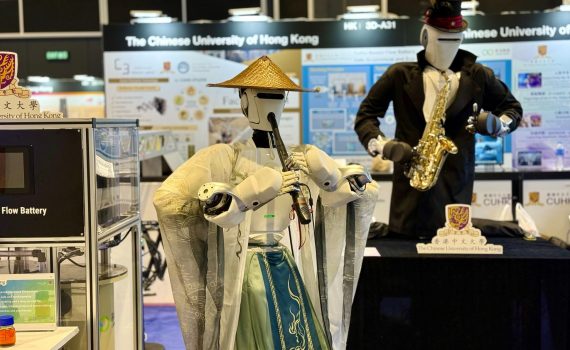
InnoEX 2026: Hong Kong ramps up AI spending, but industry warns adoption still lags
- 2026-04-16
- Business
- By: TANG Siqi、Zhou XinyingEdited by: ZHONG Xinyun、ZHOU Yun
- 2026-04-16
The Hong Kong government is ramping up its artificial intelligence (AI) development through massive new computing capacity and funding, but industry players raised concerns that AI adoption levels in the city remain too low. Lillian Cheong Man-lei, Under Secretary for Innovation, Technology and Industry of the Hong Kong SAR Government, said at a thematic seminar during InnoEX 2026 on Tuesday that AI is a key driving force for industrial transformation. Hong Kong has been taking a multi-pronged approach to building its AI ecosystem, she said, covering research and development (R&D), computing power, data infrastructure, talent and funding. She mentioned that to accelerate the R&D and commercialization of AI workflows and drive industry empowerment in AI, Hong Kong is moving forward with the establishment of a dedicated AI research and development center. On the data infrastructure front, the city plans to build a data center cluster in Sha Ling, which is expected to boost total computing power from the current 5,000 petaflops to 180,000 petaflops by 2032, a 36‑fold increase. Furthermore, an array of key funding programs has been launched to bolster the AI ecosystem, including the HK$3 billion AI Subsidy Scheme, which assists local institutions, R&D centers and enterprises in advancing AI research and applications. Henry Mak, the Assistant Marketing Manager of Ricoh Hong Kong Limited, a provider of workplace technology, said the HK$3 billion government subsidy is a source of sales opportunities for technology providers like his company. He explained that amid economic uncertainty, clients such as businesses and schools rely on government funding to adopt technology solutions. Anthony Ribout, a French startup Founder and CEO of ARSK in Hong Kong, also highlighted the value of government support, noting that Hong Kong’s AI support policies are more efficient than those in France, with clearer funding schemes and stronger financial …
Art Basel Hong Kong logs seven-figure deals and crypto sales amid global market rebound
- 2026-04-06
- Business
- By: ZHOU YunEdited by: Wang Yunqi
- 2026-04-06
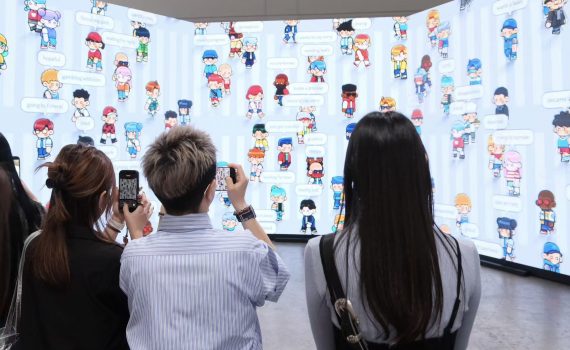
Art Basel Hong Kong recorded multiple seven-figure transactions and completed its first Ether-denominated sales through a new digital art sector, as the global art market ended a two-year sales decline. The five-day fair at the Hong Kong Convention and Exhibition Centre drew 91,000 visitors and featured 240 galleries from 41 countries and regions, including Gagosian, David Zwirner, and Tang Contemporary. David Zwirner sold a 2006 Liu Ye painting for $3.8 million and a 2002 Marlene Dumas work for $3.5 million, according to the fair's website. The fair's strong results came amid a broader market rebound. According to the Art Basel and UBS Global Art Market Report 2026, global art market sales rose four percent to $59.6 billion last year, with the U.S., U.K., and China accounting for a combined 76 percent of revenue. https://playful-khapse-3e93c2.netlify.app/ Auction sales climbed six percent to $24.8 billion, driven by high-value works. Transactions above $1 million rose 21 percent year-on-year, while those above $10 million gained 30 percent. Dealer sales rose two percent to $34.8 billion, constrained by rising operating costs. Zero 10, Art Basel's global digital art initiative, made its Asian debut at the fair, featuring 14 institutions presenting works using artificial intelligence, algorithms, and immersive technology. Korean digital artist DeeKay Kwon's work I WANNA RUN sold multiple editions at 6 Ether (ETH), approximately $13,000 each, according to his gallery, AOTM. The gallery said the transactions reflect growing collector demand for digital art. Digital, film, and video art represented three percent of total dealer sales in 2025, up two percentage points from 2024 but still below the five percent peak recorded in 2022, the report said. Reporters: Zhou Yun, Hui Tsun Ka, Li Ka Yu, Gu Chun Kai Editor: Wang Yunqi
Hong Kong office market active on relocations, but recovery fragile
- 2026-04-01
- Business
- By: LIN Xiaoyou、ZHONG XinyunEdited by: Zhou Xinying、ZHOU Yun
- 2026-04-01
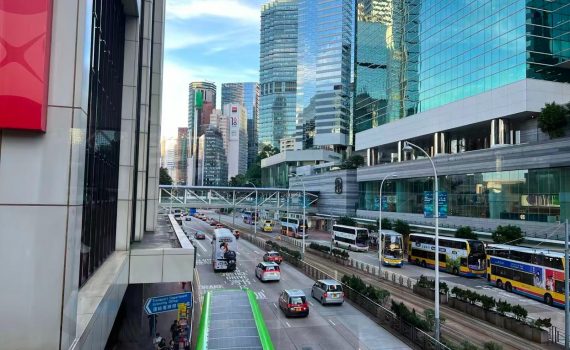
Zhou Haoming, a marketing and editing position in a publishing company at Park Commercial Centre in Tin Hau, observed that an increasing number of companies had moved out of the building over the past six months, leaving the premises noticeably quieter and less populated. After the companies moved away, the number of partner businesses in the office building, with which Zhou’s company could jointly carry out promotional activities, decreased significantly. Corporate relocation activity was active in 2025. AIA Hong Kong announced in 2024 that it would expand into AIRSIDE, an A-grade commercial building in Kai Tak, as a new operations and training base for its financial planners. Activities gradually moved into the new office in 2025. Cory Tsai, a financial planner at AIA, said the new location offers better transport connectivity and amenities, as Kai Tak is now regarded as Hong Kong’s new economic centre. AIA’s relocation to new business areas is not an isolated case. Since the second half of 2025, Hong Kong’s office market has seen a period of heightened activity driven by large-scale leasing transactions and relocations. Among the more notable cases is UBS, which announced on February 3, 2026, that it would relocate and consolidate all of its Hong Kong offices into a single hub at the International Gateway Centre in West Kowloon. Sam Gourlay, JLL Head of Office Leasing Advisory, also noted that more firms are expanding to emerging business centers such as West Kowloon and Tsim Sha Tsui, drawn by their strategic connectivity and access to the high-speed rail link to mainland China. While Hong Kong’s office market has found some stability supported by such high-profile leasing deals, the improvement has come mostly from corporate relocations, Gourlay said. JLL said in its press release that the office market showed a gradual recovery in the …
Singapore’s dining shake-up: How a wave of foreign brands is reshaping the food scene
- 2026-04-01
- Business
- By: CHEN Yongru、Wang YunqiEdited by: TANG Siqi、ZHOU Yun
- 2026-04-01
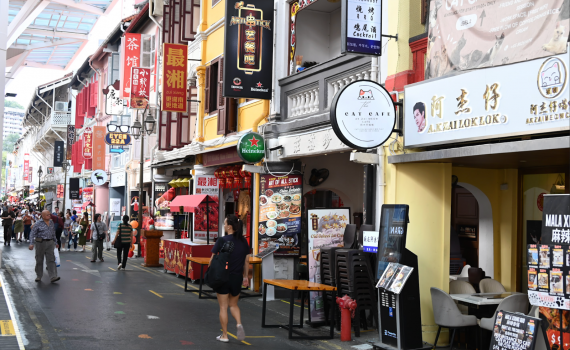
At 11 pm on a weeknight, Reenice Lim was still on her feet. The head of House of Roasted Meats, a homegrown roasted meat brand, was juggling walk-in customers and a stream of online delivery orders. Even with four outlets in Singapore, Lim stressed that running the business still comes with significant challenges. In 2025, Singapore’s dining scene underwent a major shake-up. Between Jan. 1 and Oct. 23, 2,431 food and beverage (F&B) outlets shuttered, while 3,357 new ones opened. Among those bowing out were homegrown brands like Fluff Stack, a six-year-old Japanese-style soufflé pancake chain that closed all five of its outlets in May, citing a challenging F&B environment in Singapore. Accounting and Corporate Regulatory Authority (ACRA) data shows that over 60% of 2025’s shuttered F&B outlets had operated for fewer than five years. Amid the fierce market competition marked by a major reshuffle, Lim said for local operators like herself, “the biggest difficulties are the increasing rental costs and manpower costs”. This struggle is echoed by 33-year-old Xia Ziwen, a veteran Chengdu restaurateur turned Singapore entrepreneur, who noted that a local labor shortage has pushed manpower costs to 30% of total operating costs. Starting in March 2025, Ministry of Manpower (MOM) regulations further mandate a minimum gross monthly wage of S$2,080 (HKD 12,850) for F&B stall assistants, intensifying the financial pressure on small-scale operators. To comply with the manpower quotas set by MOM, businesses must hire a specific number of locals to “unlock” foreign work permits. Xia noted that this regulatory obligation can push the total monthly cost of employing a single Malaysian retail assistant to S$5,000 (HKD 30,900). Businesses heavily reliant on migrant workers, such as Lim’s roasted meat stalls, are especially hard hit by the mounting costs brought by higher government levies and stricter wage requirements. …

Record gold prices push mainland firms to seek overseas markets at Hong Kong International Jewellery Show
- 2026-03-08
- Business
- By: CHEN Yongru、LIN XiaoyouEdited by: Wang Yunqi、ZHOU Yun
- 2026-03-08
Mainland Chinese gold manufacturers are increasingly looking to expand overseas through Hong Kong, as record-high gold prices squeeze domestic consumption, exhibitors said at the five-day 42nd Hong Kong International Jewellery Show, which wrapped up today (Mar 8). The World Gold Council rolled out its Hard Pure Gold Pavilion at the show this year, bringing together 10 leading mainland gold manufacturers to showcase innovative gold technologies and explore global business opportunities via the exhibition platform. Chen Yujie, General Manager of Trade of Shenzhen Guanhua Jewelry Co. Ltd., has observed a growing trend of many mainland gold brands expanding their footprint in overseas markets. As a supplier, Chen said that given falling consumption caused by sustained high gold prices, the company is also expanding overseas, with Hong Kong as a strategic hub to understand international market demand, develop tailored products for overseas markets, and seek new market breakthroughs. The World Gold Council’s Q4 2025 Global Gold Demand Trends report shows that total global gold demand surged to US$550 billion last year, up 45% year-on-year. The average gold price reached US$4,135 per ounce in Q4 2025, up 55% year-on-year. This drove the full-year average to a record US$3,431 per ounce, a 44% increase. Chen added that as elevated gold prices deter consumers, turnover volumes have fallen, eroding the cost advantage that high-volume production once provided. With costs increasingly difficult to control, manufacturers have raised selling prices across the board over the past two years. On Jan. 26, the Financial Services and the Treasury Bureau signed a co-operation agreement with the Shanghai Gold Exchange, with the government’s gold central clearing system scheduled to launch trial operations this year. In the 2026-27 Budget, Financial Secretary Paul Chan Mo-po also unveiled plans to explore tax incentives for gold trading institutions, assist in establishing a trade association, …