
By: ZHENG Yuan ElaineEdited by: QIN Ziyang

Giant fairy-tale puppets parade lights up Causeway Bay
- 2026-11-17
- Society
- The Young Reporter
- By: ZHENG Yuan ElaineEdited by: QIN Ziyang
- 2026-11-17
Reported by: ZHENG Yuan Elaine, Tang Ho Chung Harris Edited by: QIN Ziyang The Standard Chartered Arts in the Park returned to Causeway Bay from Nov. 14 to Nov. 15, bringing fairy tales to life through illuminated puppets, performances, and interactive art. The Night Parade was a highlight, with the largest scale in the event’s history. Visitors could also enjoy the grand final parade and interactive art stalls. Follow the link below to watch the full reel: https://youtube.com/shorts/WQ7K2UqVFVY?si=WuHWGhc5uIGtmUHM

Craft, play and discover HK’s intangible cultural heritage
- 2026-11-11
- Society
- The Young Reporter
- By: Yutong Su、WU Sitan ElaineEdited by: QIN Ziyang
- 2026-11-11
The Intangible Cultural Heritage Mart 2026 opens in Tsim Sha Tsui from Nov. 6 to 8. Visitors can create traditional crafts firsthand, join free workshops in sugar sculpting, paper cutting and button-knot making alongside interactive stalls and games. The organisers use games about specific cultural heritage to draw the public closer to living heritage and try to deepen their understanding of these traditions. Follow the link below to watch the full reel: https://www.youtube.com/shorts/3_0mYpuyBko

Can Hong Kong make room for everyday cyclists?
- 2026-11-07
- Society
- The Young Reporter
- By: Yutong Su、Pann Hnin Nay ChiEdited by: QIN Ziyang
- 2026-11-07
For Martin Turner, the chairman of the Hong Kong Cycling Alliance, a trip to the bakery, a visit to a friend, and a stop to pay a bill can all fit into one bicycle journey. “When you’re on a bike, you’re part of the world,” said Turner, who cycles around Hong Kong nearly every day. “You’re out there, you’re in it, you can do all those things, and it’s enjoyable, healthy, and fun,” he added. Turner sees cycling as a practical way to navigate the city, not simply a recreational activity. But Turner’s experience is not the norm. In Hong Kong’s dense urban districts, fragmented cycle paths, steep slopes and roads shared with motor vehicles make everyday cycling difficult for many residents. That leaves dense areas, especially Hong Kong Island and Kowloon – areas with high population density and many short journeys – dependent on disconnected paths and roads shared with cars. For residents making short trips within these districts, cycling often remains an impractical option. “The city’s cycling infrastructure has largely been designed for recreation rather than commuting,” said Wang Donggen, Chair Professor and Head of the Department of Geography at Hong Kong Baptist University. Wang added that climatic conditions, which are usually hot and rainy, land limitations, and residents’ habits also hinder daily cycling commutes in Hong Kong. “For many people in Hong Kong, bicycles have mainly been leisure or sports equipment, not a means of daily transport,” Wang said. Government data support that point. According to the Transport Department’s Travel Characteristics Survey 2022 Final Report, 70% of cycling-only trips and 73% of cycling legs connected to other transport modes took place within the same district. The survey also found that 86% of cycling-only trips lasted 30 minutes or less. Yet most new cycle tracks are planned outside …

Zero 10 makes its Asian debut at Art Basel Hong Kong
- 2026-03-31
- Culture & Leisure
- The Young Reporter
- By: YANG Shuyi、Li YinhengEdited by: QIN Ziyang
- 2026-03-31
Art Basel Hong Kong 2026, the annual art event, returned on March 27 at the Hong Kong Convention and Exhibition Centre and will run for three days. This year's exhibition introduces the “Zero 10” digital art zone – its first appearance in Asia. The zone focuses on the use of technology in art, with 14 exhibitors showcasing how new tools are changing the way artists create. According to the Art Basel and UBS Global Art Market Report 2026, digital art is the third-largest category in total expenditure. And the expert said that with Zero 10 in Hong Kong and heading to Art Basel Switzerland this June, watchers expect digital wave growth through 2026. Follow the link below to watch the full reel: https://youtube.com/shorts/IkZ7smdla6k?si=sUcoGRbA6Qd92MWf
Long queues for special child care centres: what does over a year’s wait mean for families?
- 2026-03-11
- Society
- The Young Reporter
- By: SHI Puxuan Amy、MA Yifan ChloeEdited by: QIN Ziyang
- 2026-03-11
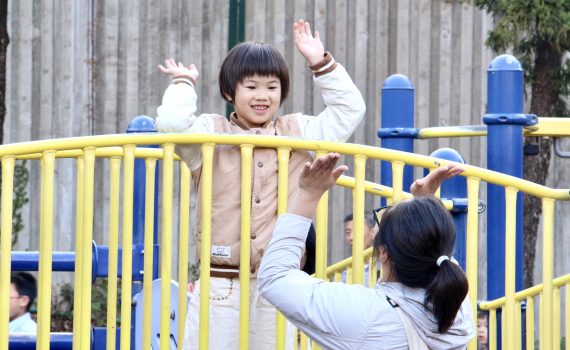
In a sunlit activity room of the Cheung Sha Wan Special Child Care Centre, young children are drawing with a therapist’s help. Nearby, another repeats words prompted by a speech therapist. These simple moments are government-subsidised intensive rehabilitation training for children with disabilities. Cherry Lee, 41, waited nearly two years for her daughter with moderate autism to access such a facility and receive intensive training. “It would have been better if my daughter could have entered the centre sooner,” she said. “At the very least, she could have had an earlier opportunity to develop essential self-care skills.” Hong Kong’s 52 government-funded Special Child Care Centres provide full-day centre-based care and cognitive training, speech, occupational and physiotherapy programmes for children with moderate to severe disabilities aged 2 to 6 before they enter primary school. Lee’s two-year wait is far from an isolated case. According to the Social Welfare Department, the average waiting time for the centres is 19.1 months in 2024. Experts and NGOs say that this wait means a delay in development for special needs children, while families are burdened with extra costs and stress in taking care of children. The government added 64 centre quotas for a total of 2,580 places in 2025, with 513 children on the waiting list, according to the Social Welfare Department. “The supply of places cannot keep up with the speed of increasing demand; it is not enough for those special needs children,” a representative from Hong Chi Association, an NGO operating three Special Child Care Centres, confirmed. “This is the core reason for the long wait.” Lee’s daughter, Sakina Muk, was placed in a centre run by NGO Heep Hong Society when she was 5 in August 2025, meaning she only has about a year she can use the service. “Even with early …
Budget 2026: Hong Kong reduces taxes to attract enterprises and investment
- 2026-02-25
- Business
- The Young Reporter
- By: YANG Shuyi、Cao BeiyuEdited by: QIN Ziyang
- 2026-02-25
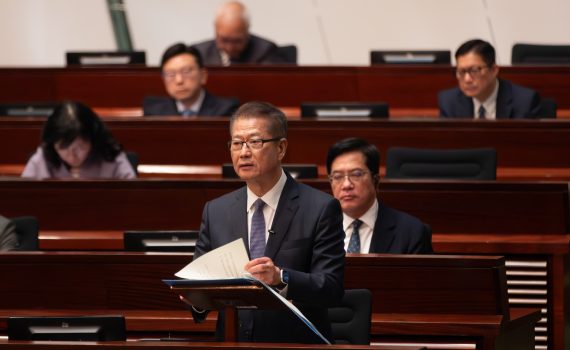
To further attract enterprises to Hong Kong, the government will adjust preferential tax rates to 8.25% or 5%, depending on the company. Financial Secretary Paul Chan Mo-po said that the government will introduce policy tools, which also include land grant arrangements and financial subsidies, for new enterprises. The amendment bill will be introduced this year. The government introduced a framework for preferential policies to promote industry and investment in last year’s policy address. According to the Census and Statistics Department, the number of companies in Hong Kong with parent companies located outside Hong Kong has increased from 9,049 to 11,070 in four years, an increase of 22.3%. Yang Xiaofeng, one of the founders of Chengdu Vifortek Healthcare Technology Co., Ltd, said the company has plans to set up in Hong Kong. “Tax incentives can significantly reduce the operating costs of our research and development center, enabling us to attract more international talent,” said Yang. Yang added that tax incentives have solidified their company's resolve to use Hong Kong as a base to expand globally. “Taxes don't concern me much as a small business owner, since our business is now only marginally profitable,” said Wu Xiaoli, the founder of Tang Le Le Trading Limited, a mainland toy company set up in Hong Kong in August 2024, adding that she’s more concerned with rental and labour costs. Wu said Hong Kong offers more opportunities for growth and this is a core demand for enterprises. According to Ryan Ip, vice president of Our Hong Kong Foundation, a think tank focused on economic development, said the most common difficulties for enterprises that want to establish themselves in Hong Kong are that they are unfamiliar with local procedures for registration, office space and team building. He added that to solve this difficulty, the government should …