
By: SHI Puxuan Amy、MA Yifan ChloeEdited by: CHEN Xiyun

Hong Kong’s legal gaps in deepfake porn leave victims unprotected
- 2026-11-04
- Society
- The Young Reporter
- By: SHI Puxuan Amy、MA Yifan ChloeEdited by: CHEN Xiyun
- 2026-11-04
In February, Chiao, 22, saw an AI-generated photo with her face superimposed on a naked body appear in the comments of one of her Threads posts. She was shocked and hoped her family and friends could tell the nude photo was fake, she said. “I refused to share any portraits of myself on public platforms for months, as I was terrified my image would be turned into pornographic content somewhere out of my sight,” said Chiao, a student based in Taiwan, who doesn’t want to reveal her full name for fear of it happening again. Chiao now works part-time at an influencer marketing agency, where she must publish promotional content on her personal social media account showing her face. The required exposure of the job is stressful, she said, explaining that it recalls her trauma and raises the fear of falling victim again. Luna, 32, a part-time influencer from Taiwan who also doesn’t want to reveal her full name, said she once received a direct message that included a screenshot of an image showing her face swapped onto an intimate image. Luna discovered this photo had been shared in an online chatroom whose members used anonymous accounts. She saved the chat logs as evidence. The group also contained deepfake content of other influencers in pornographic images, Luna recalled, with group members actively posting new face-swapped images at the time. Both Chiao and Luna said they decided not to report the abuse to police. They said they thought authorities would struggle to identify the perpetrators and that filing a report would do little to address the harm they had already suffered. AI-generated deepfake sexual abuse is an increasing threat for online users, particularly young women who say police can do little to help them. Pornographic images account for 98% of deepfakes, …

Chinese wine attracts growing interest at HK Wine & Dine Festival
- 2026-11-03
- People
- The Young Reporter
- By: ZHENG Xinyi、Gengjing HuangEdited by: CHEN Ziyu
- 2026-11-03
Chinese flavored wines drew strong interest from visitors at the Hong Kong Wine and Dine Festival in Central over the weekend from Oct. 29 to Nov.1, with tea and coffee-infused cocktails releases among the most popular offerings. “The innovation has turned once-conventional wines into newly popular, award-winning hits at this year's festival,” said Ken Cheng, 45, manager at a Hong Kong-based Chinese wines distributor. Chinese wine booths drew many tasters at the festival as Chinese producers recorded a strong performance at the 2026 Decanter World Wine Awards in June, where they won 214 medals, including two platinum, 11 golds, and 100 silvers. Cheng said younger consumers are increasingly pivoting toward fresh and distinctively flavoured vintages, adding that the growing demand for such approachable wines is reshaping the global wine market. Ken Yuen, a local wine distributor representing mainland labels, said local consumers are exceptionally open to novel profiles. “Our best sellers here are actually unique infused releases, such as caffeine-free coffee flavoured and tea flavoured wines that align perfectly with Hong Kong’s daily coffee culture,” Yuen said. “Ningxia’s wine exports surged 180% year-on-year, with Hong Kong absorbing nearly half of that total. Winemakers attribute this rapid growth to local consumers’ exceptional openness to novel profiles,” Yuen added. While distributors focus on expanding trade volume, boutique winery owners are also working to build international recognition for Chinese wines. “Our original motivation for founding the winery was simple, giving back to the community and bringing Chinese-flavoured wines to the world stage,” said Rita Kung, a Hongkonger who co-founded boutique winery Mystic Island in Shandong and was one of the exhibitors. Kung said balancing the company's revenues and costs remains challenging; however, the desire to bring Shandong's locally crafted wines to the world has not wavered. Kevin Lo, an air and sea logistics …
Policy Address 2026: HK$10 billion loan ‘not enough’ for building new campus site, after John Lee announced the development of Northern Metropolis University Town
- 2026-09-16
- Society
- The Young Reporter
- By: ZHENG WU Anny、ZHENG Yuan ElaineEdited by: CHAU Wing Yau
- 2026-09-16
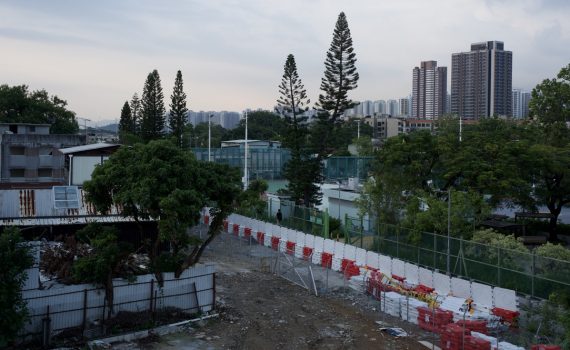
The new university town in the Northern Metropolis Development area will be expanded, Lee said today in the policy address, but universities, which are expected to fund new campuses, say the government is not offering enough money for building costs. In April, the government announced a low-interest loan scheme with HK$10 billion reserved to support universities in building campuses in the new development area. Dr Albert Chau, the Vice-President (Teaching and Learning) at Hong Kong Baptist University, said the low-interest loan is “not enough”. “Our university may build new laboratories and buildings, and the required funding is substantial, despite a HK$10 billion loan for universities.” Nineteen universities have submitted proposals for building a new campus in NMUT, Choi Yuk-lin, the secretary for Education of Hong Kong, said in a press conference in June. If all the proposals are accepted, each university would receive an average of around HK$500 million. According to the University Engagement Office of HKBU, its new Jockey Club Campus of Creativity, which opened in 2024 on its Kowloon Tong campus, cost HK$2.22 billion for 7,430 square metres, far exceeding HK$500 million. Zhou Haoming, a post-graduate student at the University of Hong Kong, said he is concerned that universities may raise tuition fees to fill the funding gap. “Government loans are a policy concession, but the school will ultimately have to put up the money for construction,”he said. Chau said that the tuition fee at HKBU will only be raised to meet inflation and won’t be a major way to gather funding for expanding the campus site. “We have no reason to transfer the burden of university development to our students. We should set proper tuition figures which students can afford. This is our social responsibility,” Chau said. Universities are expected to seek funds by utilising reserves or …
Policy address 2026: Expert questions government expectations on expanding new university town
- 2026-09-16
- Society
- The Young Reporter
- By: LI Jinyang Carlos、ZHENG XinyiEdited by: CHEN Ziyu
- 2026-09-16
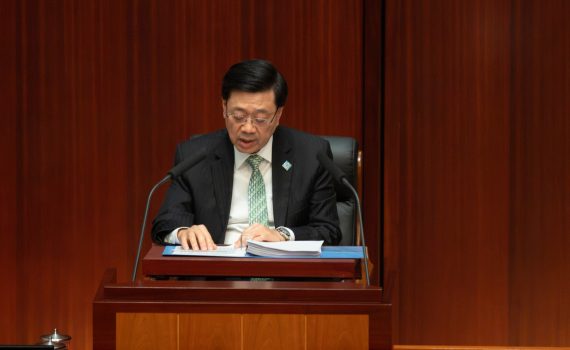
The Northern Metropolis University Town will expand to about 300 hectares, as announced in the Policy Address 2026 today, more than triple the size in a 2025 press release from the Development Bureau. The University Town is intended to resolve insufficient land resources, providing more space for the development of innovation and technology, higher education and the cultivation for high caliber talents. Chief Executive John Lee Ka-chiu said today this town will become the main development thrust of the Northern Metropolis. The town also encourages institutions from the mainland and overseas to establish campuses in the area, according to the consultation document before the announcement of Hong Kong’s five-year plan. Financial Secretary Paul Chan Mo-po said the government has prepared HK$10 billion in loans to assist the campus development in the Northern Metropolis in his 2026 budget speech. “For now, the return of investing in the university town is uncertain,” said Terence Chong Tai-leung, Executive Director of the Lau Chor Tak Institute of Global Economics and Finance at the Chinese University of Hong Kong. Chong said this depends primarily on its ability to attract major companies, yet those companies will not locate there based simply because of the surrounding infrastructure and that the government should adopt a public-private partnership model. “By providing land use to universities free of charge, while the universities themselves are responsible for constructing campus infrastructure. The government could then share the profits once the project becomes profitable,” he said. According to the Government's e-Tendering System, the estimated tender values for San Tin Technopole's supporting facilities,connected to the University Town, exceed HK$1.2 billion in Q3 and Q4 alone this year. Liu Xiao, owner of Golden Harbour Group Limited, a real estate company, said the long-term outlook for real estate around the university town is positive, though short-term …

Rising fuel costs sting Hong Kong on everything from cars to laundry
- 2026-05-08
- Society
- The Young Reporter
- By: LI Jinyang Carlos、ZHANG Jiahe RoysEdited by: CHEN Ziyu
- 2026-05-08
Marcus Kan, 29, sits restlessly in his car on the Hong Kong-Zhuhai-Macao Bridge, stuck in heavy traffic as he waits to cross into Zhuhai. Once there, he hopes to fill up at lower fuel prices than Hong Kong, where he lives. “I go to the mainland for fuel once a week. Since the outbreak of the Iran war, the petrol price difference between the mainland and Hong Kong has widened steadily. Even factoring in the fuel cost of commuting back and forth, it’s still more economical to refuel in the mainland,” Kan said. Petrol prices in Hong Kong have risen steadily since the Islamic Revolutionary Guard Corps closed the Strait of Hormuz following US-Israel airstrikes on Feb 28. Prices have surged by 11.3% over the past two months, climbing from HK$29.24 in early March to a record high of HK$32.54 per litre as of May 1. “It’s a popular trend among my social circles. It only takes 50 minutes for a single trip from Hong Kong to Zhuhai, so I quite enjoy the trip,” he added. Kan said nearly all his friends who own vehicles have tried refuelling in mainland China at least once. “The control points are sometimes congested nowadays, which likely means more cars are crossing the border,” said Kan. Global crude oil prices have surged over 53% since the war began, topping US$120.55 per barrel. Fluctuations in crude oil prices directly impact its derivatives, such as petrol, diesel and liquefied petroleum gas. To ease the pressure of rising fuel prices, the Hong Kong government made a 50% tunnel toll reduction for commercial vehicles following a special meeting in April, though it still has not announced any price controls or subsidies for private car owners. “The closure of the Strait of Hormuz transportation route will affect 20% to …
Shelters and government housing for street sleepers don’t meet needs, experts say
- 2026-03-04
- Society
- The Young Reporter
- By: LI Jinyang Carlos、ZHANG Jiahe RoysEdited by: CHEN Ziyu
- 2026-03-04
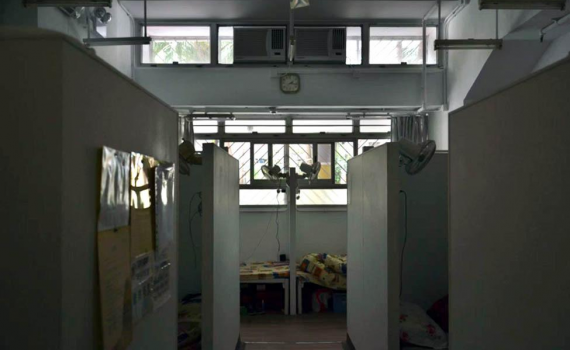
At night, Wong Hiu-fan, a 46-year-old former street sleeper, returns to her temporary home at the Jockey Club Hostel in Lok Fu, a single bed in a dormitory room she shares with other women. She stores her personal belongings in a small locker she has a key for. For her, it is a warm harbour and a place to restart her life after a period she described as “full of worries". Wong became a street sleeper six months ago -- after losing her job at a temple -- which she had relied on for income, meals and accommodation. After sleeping on the street for a while, Wong moved into the temporary shelter in Lok Fu. According to the Labour and Welfare Bureau, Wong was one of around 750 street sleepers in Hong Kong last year. To get off the street, many look for places in temporary shelters funded by the Social Welfare Department or NGO-funded hostels like this one in Lok Fu. Those who are eligible and lucky can move into government transitional housing units. The Lok Fu hostel where Wong lives in is a shelter managed by the NGO Neighbourhood Advice-Action Council that provides six-month accommodation, including 16 beds for men and 26 for women for street sleepers and needy persons with a monthly rent of HK$2,000. Residents facing significant financial difficulties can apply for rent reduction. It is now fully occupied. Law Sze-ha, 35, a hostel supervisor of Lok Fu, said the hostel does not have enough beds to meet demand. While many residents wish to stay longer than the maximum six months allowed, the hostel must accommodate new applicants waiting for a spot. “A stable place to live is the foundation for starting a new life. We offer guidance and information to our residents for applying to …
Budget 2026: Hong Kong reinforces its roles as international gold trading centre
- 2026-02-25
- Business
- The Young Reporter
- By: ZHANG Jiahe Roys、LI Jinyang CarlosEdited by: CHEN Ziyu
- 2026-02-25
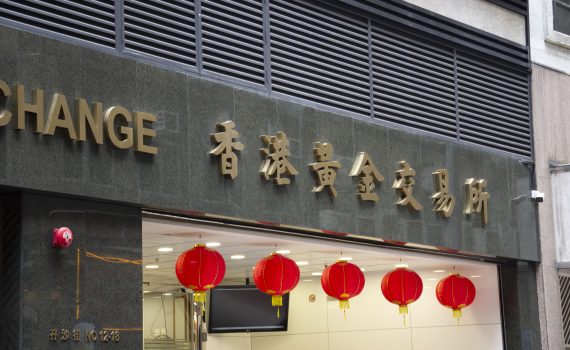
Financial Secretary Paul Chan Mo-po announced that the government will establish Hong Kong as an international gold trading centre, providing relevant services including tax incentives, setting up industry associations and training for eligible gold trading institutions. Hong Kong plans to lift its gold storage capacity to over 2,000 tonnes within three years, according to Chan Ho-lim, the Under Secretary for Financial Services and the Treasury at the Hong Kong Gold Exchange 2026 opening ceremony. At the Asian Financial Forum on Jan.26., Hong Kong Financial Services and the Treasury Bureau signed a co‑operation agreement with the Shanghai Gold Exchange, establishing Hong Kong Precious Metals Central Settlement System Company Limited to create a gold settlement system. More than 10 banks, both local and overseas, will participate in the system to commence within the year. Hui Ching-yu, Secretary for Financial Services and the Treasury Bureau, said at the forum that gold is important under current geopolitical uncertainty and inflationary pressures. Lau Hou, 42, project manager of CNI Securities Group, said the key to increasing gold reserve capacity is whether Hong Kong could be a stronger physical hub in the Asia-pacific zone capable of storage, allocation, delivery and financing. “Hong Kong’s advantages lie in connecting the mainland with the international market, Asia-pacific time zone delivery, offshore RMB products and funding pools,” he said. “Through complementary cooperation with existing major international gold markets, participants can view Hong Kong as a key point in the global chain. This will increase the feasibility and attractivity of RMB-denominated gold productions, making market makers and institutions prefer to offer more products,” Lau added. Chan Wah, 25, local investor and lawyer, said he holds a wait-and-see attitude regarding the gold policy in today’s budget. “ I hope the government can prioritize training on market regulation and risk management, such as …
Pet the insect: Mantis exhibition sparks interest among pet buyers
- 2026-02-03
- Society
- The Young Reporter
- By: LI Jinyang Carlos、RONG Miu Tung ShellyEdited by: CHEN Ziyu
- 2026-02-03
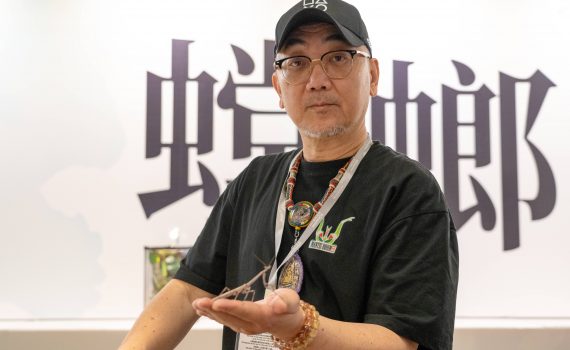
Visitors gathered around rows of glass cages to observe the live mantises at the annual Hong Kong Pet Show, held at the Hong Kong Convention and Exhibition Centre from Jan. 29 to Feb. 1. The exhibition aims to show the unique charm of mantises as a kind of pet, breaking the public’s stereotypes towards mantises, said Lai Kai-keh, 61, who is responsible for marketing and sourcing of mantises. “There are many misunderstandings about insects in Hong Kong. For instance, stick insects can actually be kept as pets,” Lai said. Over 50 species of mantises were displayed, including more than 10 new varieties, such as the colourful Metallyticus mantis and the impressive Peruvian shield mantis. All mantises were provided by the organisation “Mantis Forest”. Lai said education is more important than promotion. “We don’t encourage impulsive ownership if owners do not really understand this species. They should learn more about mantises,” he added. He added the ownership of insect pets has increased. “There are already more than 300 members in the Hong Kong mantis association on Facebook.” Visitors were interested in the mantis's camouflage and the setup of its breeding cage. Some booths were crowded with people looking for those well-hidden mantises. Some traditional pet lovers were considering keeping mantises for the first time due to their beauty, both in stature and active posture. “The special posture and its tiny size are really eye-catching," said Canny Heoi, a cat owner who was attracted by the petal-like limbs and elegant posture of the orchid mantis. “For a city known for its love of cats and dogs, this special mantis exhibition proved that even the smallest species can be the spotlight of the public,” Lai said.