
By: YANG Shuyi、Lou ZhengzhengEdited by: QIN Ziyang

More non-local couples choose to say “I Do” in Hong Kong
- 2026-05-08
- Society
- By: YANG Shuyi、Lou ZhengzhengEdited by: QIN Ziyang
- 2026-05-08
On Halloween in 2025, Li Shiman, 28, married her boyfriend of five months at the Cotton Tree Drive Marriage Registry. The decision to get married in Hong Kong was to expedite their U.S. visa applications so they could catch NBA star Stephen Curry’s game before his retirement. Before getting married, Li lived in Guangzhou and only held a Hong Kong tourist visa, while her boyfriend had been working as a project manager for two years in Hong Kong after completing his master's degree for a year. “U.S. visa applications are more likely to be approved in Hong Kong than in the mainland," she said. “We’re both Curry’s fans and want to see him play in person before his retirement.” Hong Kong has become an increasingly popular destination for overseas couples tying the knot for its superior legal protection and relatively easy administrative procedures. Latest data from the Hong Kong Census and Statistics Department shows that marriages between two non-locals or among Hongkongers who paired up with foreigners increased from 2,889 to 5,071 from 2021 to 2024, representing an astonishing growth of 75.5% in just four years. While the data did not indicate a detailed home country breakdown among the couples, there has been a growing number of social media accounts and posts on mainland platforms, like RedNote, sharing related service information and experience for couples to be wedded in the city. Many mainland couples like Li and her husband chose Hong Kong for its ease of overseas visa applications. According to the U.S. Department of State, only applicants who have a Hong Kong or Macau residency are eligible to apply for a visa submission at the U.S. Consulate in Hong Kong. And statistics show that the refusal rate for B-visas, which includes business and tourist visas, for mainland China is …
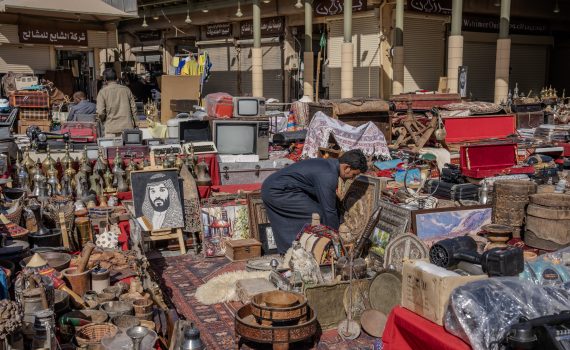
In Pictures: Ten Years Into Vision 2030, Digital Payments Reach Saudi Arabia's Traditional Markets
- 2026-03-09
- Photo Essay
- By: Haoming ZhouEdited by: Haoming Zhou
- 2026-03-09
Saudi Arabia marks a decade since Crown Prince Mohammed bin Salman launched Vision 2030 in 2016. One key reform area is the digital transformation of financial infrastructure. Saudi Arabia aims to achieve 80% cashless transactions by 2030, up from just 36% in 2019. According to the Saudi Central Bank (SAMA), electronic payments already accounted for 79% of total retail payments in 2024—nearly reaching the target six years early. Even in Souk Al-Zal, Riyadh's oldest traditional market, digital payments are gaining ground.

Hong Kong Autumn Electronics Fair kicks off with Gerontechnology amid Silver Economy Boom
- 2025-10-13
- Business
- By: Yau Ka Ming、LO Shing KwanEdited by: Haoming Zhou
- 2025-10-13
Gerontechnology has taken the spotlight this autumn’s electronic fair on Monday, with multiple innovative elder-friendly products emerging amid the growing local silver economy. “The demand and acceptance (of our products) are both gradually increasing, ”said Richard, a staff member from VCOM, a start-up manufacturer and exhibitor of senior technology products. He added that the company provides corresponding products for both indoor and outdoor use. Virginia Ngai, Sales Manager of Max Care Industrial Ltd, a Hong Kong-based manufacturer of senior technology products, said Hong Kong has a significant elderly population with relatively long life expectancy, adding that the market for age technology products in Hong Kong still has room for growth. The percentage of the population aged 65 or above rose from 20.8% in mid-2022 to 23.9% in mid-2025 and is expected to continue growing in the future, presenting significant market potential, according to the Census and Statistics Department. According to the Consumer Council’s Consumer Survey for the Silver Economy in Hong Kong, the average monthly expenditure (in local currency, excluding housing) for the elderly population aged 60-79 in 2024 stands at HK$7,785. Average monthly spending for affluent and general senior consumers reached HK$13,649 and HK$4,284, respectively. Chloe Siu, Associate Director of the Master of Science in Smart Ageing and Gerontology, Hong Kong Lingnan University, said the elderly group shows a keen interest in medical products, such as intelligent health monitoring devices that track physical indicators and ensure safety, which can meet their needs. “There are now many different platforms where seniors can look for what they need,” said Siu. She added that both offline and online markets now offer a wide range of choices, making it easier for older consumers to find suitable products. She also noted that the purchasing power of individual users of gerontechnology mainly lies with “young …