
By: ZHOU Yun、TANG SiqiEdited by: Yichun Fang、BO Chuxuan
JD shares fall over 6% in Hong Kong as Q3 net income halves on new business losses
- 2025-11-14
- Business
- By: ZHOU Yun、TANG SiqiEdited by: Yichun Fang、BO Chuxuan
- 2025-11-14
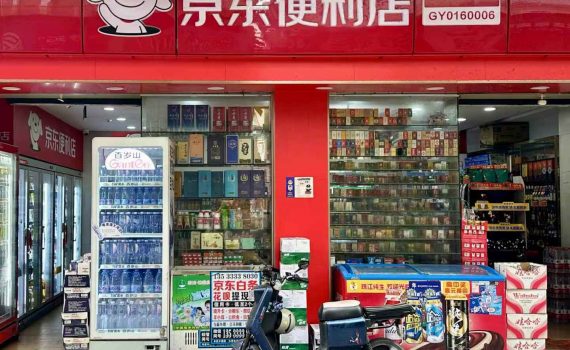
Chinese tech and service giant JD.com achieved revenue growth but it was offset by dramatic expenses, resulting in shareholders’ net income being chopped in half, as the Company released its third-quarter results on Thursday evening. Non-GAAP net income attributable to ordinary shareholders reduced by 56.1%, despite the company’s net revenue in Q3 reaching 299.1 billion yuan, up 14.9% year-on-year, with its core business, JD Retail, reporting 11.4% revenue growth to 250.6 billion yuan, as highlighted in the company’s statement. The operational loss of the company’s new business, including JD Food Delivery, JD Property, Jingxi, and overseas operations, widened dramatically more than 24 times from 615 million yuan to 15.7 billion yuan, mainly because of a 3.4 and 7.3 times increase in cost of revenue and operational expenses, respectively. Dual-listed in the US and Hong Kong, the company’s overall marketing expenses rose 110.5% year-on-year to 21.1 billion yuan this quarter. Kenny Wen, Executive Committee Member of the Hong Kong Society of Financial Analysts, said that the main reasons for the situation of increased revenue but decreased profit margin are the JD price subsidy policy and its large-scale investment in new businesses. As for the retail sector, Sandy Xu, Chief Executive Officer of JD.com, said that the electronics and home appliances category has been facing a high base since the second half of Q3, which is expected to continue in the short term, and it has been weighing on its growth momentum. Ian Shan, Chief Financial Officer of JD.com, said during the earnings conference call, in terms of investment in new businesses, JD will further enhance its supply, performance, and service, and bring greater growth potential through the expansion of product categories, customer groups, and regions. Under the code 9618 in the Hong Kong market, JD.com closed at HK$116.9 on Friday, dropping …
Hong Kong major banks follow Fed rate cut with smaller reduction
- 2025-09-18
- Business
- By: Wang Yunqi、ZHOU Yun、LO Shing KwanEdited by: Yichun Fang、BO Chuxuan
- 2025-09-18
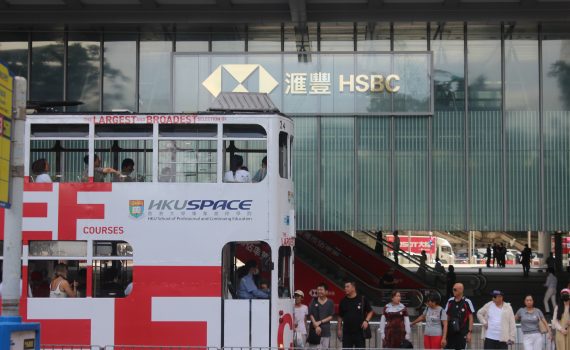
The city’s de facto central bank has cut the benchmark interest rate by 25 basis points for the first time in 9 months, with local stocks ending the day lower. Aligning with the US central bank announcement of a 0.25% interest rate cut to 4% to 4.25% as expected, the Hong Kong Monetary Authority decreased its base rate by the same amount to 4.5% to track US movement, according to its official announcement. HSBC and Hang Seng Bank announced a 12.5 basis point cut to their prime rate, bringing it to 5.125%, effective this Friday. Bank of China (Hong Kong) and Standard Chartered (Hong Kong) followed with the same 12.5 basis point reduction, effective Sep. 22, resulting in new prime rates of 5.125% and 5.375% respectively. Billy Mak, Associate Director of the Centre for Corporate Governance and Financial Policy at Hong Kong Baptist University, said that the market’s expectation of the Federal Reserve cutting interest rates had already been priced into current valuations. “The rise of Hong Kong stocks this week was a direct response of the market to the possible interest rate cut in the United States,” said Mak. Duan Yang, associate director of the Department of Finance, Hong Kong Baptist University, predicted more investment and a boost in the financial market. “In terms of the stock market, lower costs of capital immediately improve stock valuation,” she said. “It will also lead to increased margin trading, increasing trading volume and liquidity in the stock market.” Echoing Duan, Steven Tam, Associate Director of Fulbright Securities Limited, said that the interest rate cut is generally positive for the whole Hong Kong stock market. Among them, utility stocks, property stocks and dividend stocks benefit more. The Hang Seng Index broke through the 27,000-point mark during the morning session and then declined, before …

Policy Address 2025: Hong Kong develops tourism economy to revitalise retail industry
- 2025-09-17
- Business
- By: Wang Yunqi、LO Shing Kwan、Zhou XinyingEdited by: Yichun Fang、BO Chuxuan
- 2025-09-17
The Hong Kong government plans to unveil the “ Tourism Everywhere” strategy, combining local characteristics with international elements, to develop the tourism economy, said Chief Executive John Lee Ka-chiu during his Policy Address Speech on Wednesday. The tourism economy strategy encompasses a diverse portfolio of targeted initiatives, with yacht economy, horse racing tourism, cruise tourism, and eco-experiences included. These efforts of the government in tourism strategy aim to attract high-spending visitor segments, boost consumption, and drive growth across the retail, F&B, and hospitality sectors, according to Colliers, a global real estate and investment management consultancy, in a comment after the speech was delivered. “As of August this year, the overall visitor arrivals had reached 33.2 million, a significant increase of 12% over the same period last year", said Lee. Sophia Lam, a member of the Southern District Council, which is home to tourist attractions like Ocean Park and Repulse Bay, said the aim of promoting tourism by leveraging local culture is to boost the retail economy and stimulate consumer spending. According to the release from the Census and Statistics Department, the provisional estimate for total retail sales value was HK$214.8 billion for the first seven months of 2025, a decrease of 2.6% compared to the sum of the first 7 months in 2024. The government shows that from January 2023 to July 2025, the number of visitor arrivals in Hong Kong increased significantly, while the retail sales slightly declined during the same period. After the epidemic, Hong Kong's tourism industry gradually recovered, with the number of visitors to Hong Kong in the first seven months of 2025 reaching about 28 million. Chen Sihao, a professor of the Department of Accountancy, Economics and Finance at Hong Kong Baptist University, explained that the depreciation of the RMB has dampened mainland tourists’ enthusiasm …

Hong Kong Kai Tak Terminal crawls to make progress amid Singapore’s busy cruise schedules
- 2025-04-25
- Business
- The Young Reporter
- By: BO Chuxuan、Haoming ZhouEdited by: BO Chuxuan、XIA Fan
- 2025-04-25
Standing on a chilly winter morning, Wang Wei-de, a Taiwanese cruise passenger, is looking for brunch with local flavour with his family at Kai Tak Cruise Terminal. “It feels deserted here. I didn’t expect the restaurants won’t open until 11:30 am,” said Wang, whose Cruise ship arrived at 7:30 am on Jan. 22. Upon arriving in Hong Kong for the first time, Wang was disappointed by the transporting and ancillary facilities at KTCT. “It would take too much time on the way to MTR if we’re going downtown,” said Wang, who decided not to head downtown because of time limitations, “shuttle bus is only free for one way, and other alternatives are expensive.” With HK $950 spent on one meal and local cookies in the terminal, Wang and his family ended up hanging in stores inside the terminal with no consumption. KTCT was often complained about by tourists for the lack of supporting transportation facilities, and many businesses have also closed down due to a lack of business. The government has responded positively to the problem by increasing the number of free shuttle bus routes and distributing $50 liquefied petroleum gas coupons to taxis, which saw an improvement. However, taxi drivers soon complained about the insufficient passengers and attributed the problem to poor government coordination and communication. The Kai Tak Cruise Terminal, completed in 2013 at the cost of about $8.1 billion, carries the Hong Kong government's aspiration to become an Asian cruise hub. On Dec. 30, 2024, an action plan for the development of cruise tourism was released by the Culture, Sports and Tourism Bureau, reflecting the government's commitment to using the terminal as a venue for conventions and exhibitions, as well as cultural, creative, and community leisure activities, to make full use of the facilities after almost three …