
South Korea Presidential Election 2025
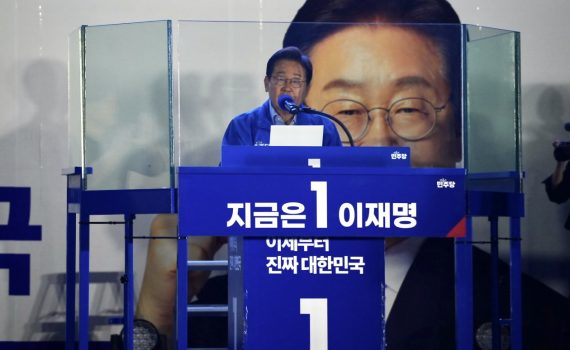
Photo Gallery: South Koreans choose their new president after six months of political chaos
- 2025-06-05
- Society
- The Young Reporter
- By: Wang Yunqi、BO ChuxuanEdited by: BO Chuxuan
- 2025-06-05
SEOUL – The South Korean presidential election wrapped up with liberal party leader Lee Jae-myung winning the presidency and being sworn in on June 4, bringing an end to six months of political chaos since martial law. Lee Jae-myung won with 49.42% share of votes, amounting to 17,287,500 ballots, the largest number of votes in South Korean presidential election history, according to Yonhap News Agency, while voter turnout reached 79.38%, the highest since 1997, reflecting a high level of public mobilisation. Besides Lee’s victory, Kim Moon-soo, leader of the conservative People Power Party, received 41.15% of the vote, as the previous party leader’s martial law declaration received wide criticism, with Lee Jun-seok of the Reform New Party securing 8.34% of the votes, who emphasised on political reform and youth empowerment. The remaining two candidates, Kwon Young-guk and Song Jin-ho, received 0.98% and 0.1% of the votes, respectively. According to a May poll conducted by Gallup, there were notable differences in support rates across age groups. Lee Jae-myung enjoyed higher support among people in their 40s and 50s, while Kim Moon-soo was more favoured by those in their 60s and 70s. And Lee Jun-seok received relatively greater support among younger voters. South Korea faced significant disruptions in high-level diplomatic activity following ex-president Yoon declaring martial law on Dec. 3, 2024, with domestic investors suffering “roller coaster” fluctuation of both the stock market and currency, also driven by the tariff policy initiated by US President Donald Trump. With concerns for the country’s social and security landscape raised, Lee outlined five key missions for his administration during his victory speech, including ending internal conflict, achieving national unity, revitalising the national economy, ensuring national security, and maintaining stability on the Korean Peninsula. “This is a world where things like martial law shouldn’t exist”, said …
South Korea Presidential Election 2025: Korean stocks surge more than 2% after the country’s new president announced
- 2025-06-04
- Business
- The Young Reporter
- By: BO Chuxuan、Wang YunqiEdited by: BO Chuxuan
- 2025-06-04
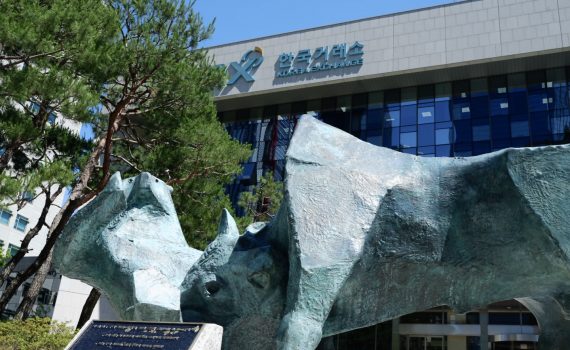
SEOUL –South Korea’s benchmark index surged 2.7% to 2770.84 at close on Wednesday (as of 3:30 p.m. local time) after Lee Jaemyung brought the presidential election to an end with his widely-expected victory at midnight. The Korea Stock Exchange KOSPI Index opened with a rise of 1.4% after a one-day recess due to the election holiday on June 3, reaching a closing high of 2770.84 – the highest level in over 10 months. The index has gained 20.8% since April lows triggered by concerns over Trump’s reciprocal tariff policies. Financial stocks saw significant gains today, with Bookook Securities surging more than 22% while Mirae Asset Securities, SKSquares, and Shinyoung Securities rose about 13%, charging the KOSPI higher. During his campaign, Lee Jae-myung proposed a series of financial policies, such as customised financial services for the underprivileged and debt relief for small business owners. Tech stocks are also leading gains among other component stocks. Chip and appliance maker Samsung Electronics gained 1.8% to 57,800 KRW, with the semiconductor manufacturer SK Hynix surged 4.8%, and aero engine-savvy Hanwha Aerospace gained 1.2%. Lee claimed his presidency and delivered a speech in front of the National Assembly, prioritising the revision of the economy and livelihood to alleviate economic hardship as his second priority in his incoming administration, following the restoration of democracy. “From the moment my victory is confirmed, I will devote every effort to recovering your livelihoods—quickly and decisively,” he said. Lee has also promised to boost the economy by increasing government spending, improving corporate governance, strengthening labour protection, and wrapping up the ongoing tariff talks and exchange rate negotiations with the Donald Trump administration, which may contribute to stabilising market sentiment. The South Korean won strengthened against major currencies on Wednesday, trading at around 1,363 per dollar and 946 per 100 yen as …
South Korea Presidential Election 2025: Students Embrace AI's Future Potential While Questioning Candidates' Preparedness for Tech Leadership
- 2025-06-03
- Politics
- By: Wang YunqiEdited by: BO Chuxuan
- 2025-06-03
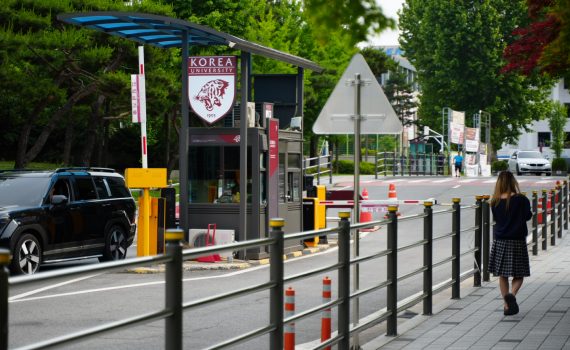
Young voters in South Korea expressed different views on increasing funding for AI development, as some presidential candidates have mentioned AI in their speeches, amid the country's rising financial input for technology research and development. “I think it’s kind of a waste of money because we already have technologies like GPT, and China has DeepSeek. Developing AI requires a lot of information and money,” said Kim Jun Young, an English Education student at Korea University. “Still, we don’t really have sufficient resources to compete on the same level,” she added. Park (assume name), 26, majored in computer science, has also expressed doubts about the practicality and feasibility of AI policies proposed by different candidates. “ I’m doubtful whether they can achieve meaningful advancements in this field,” he said, adding that he thinks many candidates do not understand AI much. South Korea recently increased the research and development budget for 2025 by 16.1 percent year-on-year to a record high of KRW 24.8 trillion (HK$ 141.4 billion) with a focus on cutting-edge technologies such as artificial intelligence (AI), biotechnology, and quantum technology. The ambitious investment aims to position South Korea as a global leader in these fields. Lee Jae-myung, the presidential candidate of the Democratic Party, who leads the poll, has identified AI, renewable energy, and the cultural industries as essential tools for addressing South Korea’s economic challenges meanwhile Kim Moon-soo, first runner-up in the poll, from the conservative People Power Party, promote himself by creating a joint fund to boost AI development. Meanwhile, Lee Jun-seok, the youngest candidate among all, representing the Reform New Party, emphasises the importance of data freedom in AI development and highlights the role of Large Language Models (LLMs) in advancing the industry. AI has become a core driving force for national development, with applications spanning industries …