

Ebola threat sets Chungking Mansions residents on guard
- 2014-12-09
- Health & Environment
- 2014-12-09
Chungking Mansions, a building complex popular with Africans liv- ing and working in Hong Kong, was at the centre of an Ebola scare here in August. Though the Nigerian man rushed to the hospital with symptoms of the virus tested negative, shop owners and residents have made contingency plans just in case. The 17-storey building in Tsim Sha Tsui sees thousands of people a day from all over the world, with many from South Asia, Africa and the Middle East. It hous- es inexpensive guesthouses, restaurants, retail shops and foreign exchange offices. Ebola has claimed close to 5,000 lives this year in West Africa, according to the World Health Organization. The disease is spread by direct contact with blood or other bodily fluids and indirect contact with environments contaminated with such fluids. Outside Africa, 17 cases were treated and four deaths were caused. Peter Piot, director of the London School of Hygiene and Tropical Medicine and the first to identify the virus, said that the chance of the virus spreading to Hong Kong is small. Despite the reassurances, the Hong Kong Department of Health held four meetings to discuss plans with members of the Incorporated Owners of Chungking Mansions and representatives of the nearby Miramar Shopping Centre. Most participants at the meetings are guesthouse owners, whose business- es are most susceptible to Ebola. "Those who clean the place and take out the trash from the guesthouses have the highest risk of being infected, as they are most likely to have direct contact with bodily fluids from the customers," said Mr Dennis Cheung Ka-yuen, a mem- ber of the Incorporated Owners of Chun- gking Mansions. "The workload increased and I am afraid of the disease but I have to do this for a living," said at a cleaner New Broth- er's …

Artists let the pictures speak for the past
- 2014-12-09
- Culture & Leisure
- The Young Reporter
- 2014-12-09
With just a click, photographers can freeze a moment of history. But before 1960, that moment was probably in black-and-white. Colour film didn't become the norm until the 60s and 70s when prices came down and amateurs could afford it. But with today's technology, colourising pictures can be done with a few clicks on a computer and those frozen black-and-white moments gain new life. Mr Victor Liu Ka-chung, a university student who is passionate about colourising Hong Kong historical black-and- white photos, says "colour brings new life and perspective to the photos." By adding colours to the images, Mr Liu rediscovers Hong Kong's yesteryears. He hopes his work will draw public attention to protecting historical elements in the city. Ms Tiffany Chan chooses to preserve historical moments by drawing. The idea is simple: to record faces and the human stories behind them. With paper and pencils, the illustrator sketches major historical events in Hong Kong, such as the Umbrella Movement. The free-of-charge service takes 10 minutes to produce a portrait. While having their portraits painted, people tell their personal stories to Ms Chan. Unlike photography, drawing doesn't freeze the moment. It gives time to let the stories flow, she says. "A 70-year-old lady told me that she has been staying overnight for the pro- test," Ms Chan said. The personal sto- ries move the pencil as they touches her heart, she said. The artist seals emotions, stories, expressions and people in the im- ages on the papers. However, spending 10 minutes to record one person in history is impractical, says Mr Ryan Chan, a photographer. He spends his time capturing complex ideas and emotions with the speed of light on film. "Photographing with film allows me to think," Mr Chan said. With limited frames, he has to spend time observing the …

"Boiling Frog" cartoonist sees bleak future for Hong Kong
- 2014-12-09
- People
- 2014-12-09
It is another ordinary night for the toy designer sitting in the Mong Kok occupy site with his pen, iPad and notebook, which is filled with sketches and astonishing soundbites and scenes. Mr White Water, the artist's alias, designs toys that bring children and adults into a dreamy world. But he is more well-known for confronting reality through his online political comics "Boiling Frog" that went viral among netizens in 2011. Published on Facebook, his humourous and sarcastic comics against the Hong Kong government and the mainland have become very popular, but the 33-year-old political cartoonist says he faced struggles. Working as a full-time toy designer and part-time political cartoonist, he says it is hard as he has limited time to create and could barely make a living through his artwork. "The nature of political comics is not easily accepted by society," he said. His brainchild springs from the parable of the boiled frog, the idea that if water is heated slowly enough a frog will boil to death without even noticing. This described Hong Kong's situation three years ago, he said. The comics depicts his inner struggles towards political issues through portraying the life of two frogs debating current affairs. "The brown one reflects my true feelings while the green one symbolises the inner cynic in me who justifies things with scepticism," he said. By using metaphors commonly used in ordinary life, he expresses his ideas in the four-frame comic strip using a minimal style. What prompts him to use lively comics to express weighty political issues are his friends, he says. They have detached themselves from reality and seldom read the news. His comics have touched on significant moments in Hong Kong such as the umbrella movement and the anti-national education protest. "I try to bring them back …
A bridge between life and death
- 2014-12-09
- People
- 2014-12-09
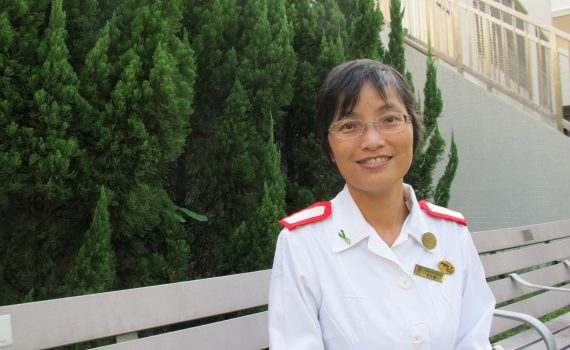
IMAGINE leaving your family behind on New Year's Eve to tell somebody that their beloved one just died. Adding fuel to the flame, you ask the relatives to donate the organs of the dead, allowing little time for them to come to terms with the death. For Ms Tong Yuen-fan, one of the seven organ transplant coordinators in Hong Kong, her job means a constant confrontation with death day and night. "It is essentially a 24-hour task be- cause death has no schedule," said Ms Tong. When she receives a call from the Prince of Wales Hospital informing her of a potential donor, she will need to talk to the relatives about their choices as soon as possible. Time is a critical factor in organ transplant because the organs will start to deteriorate rapidly once the heart stops. How to convey the imminence of this matter to the grief-stricken families without causing antipathy is a question with no definite answer. "I would say something in condo- lence with the family. I would not bring up the topic if I feel that they are not ready to accept the death of their loved ones," she said. For instance, people would demand the doctors to resuscitate the patient even after he or she was declared brain-dead. Ms Tong added that it is important for the family to understand what brain death means and how an organ trans- plant is carried out. The mother of a do- nor kept asking every doctor she visited whether her son's death was real. It is hard to accept the death of your beloved ones when you can still feel the warmth of the body. But they are gone, together with the neural responses and brain functions. "Sometimes just being a compan- ion is enough. They need …

Hong Kong's Grey Market for iPhone 6
- 2014-12-09
- Business
- 2014-12-09
A new iPhone is a lot more than an ordinary smartphone, it's also an investment to some buyers. After reserving the limited offering of iPhone 6 online every morning, some customers resell it to other private users and shop owners in Mong Kok and Shenzhen to earn the price difference. More than 10 million new iPhones were sold over the first three days after entering the market on September 19. But it is still soaring high after a month's sale. At 8 sharp every morning, customers scramble to make online reservations for the limited offering of iPhone 6 or 6 Plus. At 8.04 am, the reservations are usually fully occupied. "IReserve (iPhone online booking system) makes me feel frustrated," said Mr Mark Chan, a bank clerk who bought his iPhone 6 from Sincere Podium, a shopping mall that mainly sells mobile phones. "I like the new iPhone very much and I don't mind paying $400 more as I have to pay thousands of dollars for it." It is not easy for normal customers to order an iPhone online and this situation stimulates the grey market. Eason Tsang, a university student, is one of the skilled reservation makers surviving in the reselling market. "My friend started to resell iPhones on the first day of sale and he earned a lot, so I decided to join the reselling army," said Eason, who resold more than 20 new iPhones and earned $15,000 since then. Each phone number or credential number used to reserve an iPhone can only buy two phones, so he uses personal information from his friends to make the online reservations. After picking up the phones in Apple store, he resells them to shop owners in Sincere Podium in Mong Kok according to the reference price in Hong Kong Golden Forum. …
Retiring atheletes go back to school
- 2014-12-09
- 2014-12-09
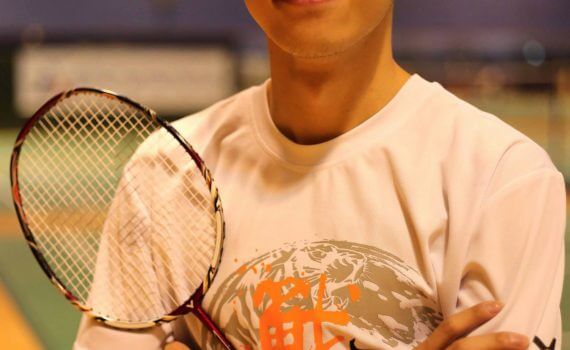
Three years ago Mr Chan King-yin decided to retire. He was only 28. Having already won two gold med- als at the Asian Games and with a 3-year- old son at home, Hong Kong windsurfing champion Mr Chan decided not to train for the London Olympics. He was immediately granted two scholarships to study for an undergradu- ate degree in Physical Education and Recreation Management at Hong Kong Baptist University. Mr Chan set three goals when he was an athlete: to compete in the Olympic Games, to get married and have a happy family and to be a university graduate. Now, all three have been accomplished. Now 31, Mr Chan is a coach for the Hong Kong national windsurfing team. He hopes his team members achieve their dreams, just like he managed to do not long ago. "The life of a sportsman is rather flat. It's about training and hard work," he said. "My advice for serving athletes is to be prepared for retirement, plan- ning what should be and will be done afterwards." For young athletes still in their prime, retirement is not a far-fetched idea. Mr Angus Ng Ka-long, 20, a Hong Kong national badminton team member, said he is worried about retirement. "I think I will return to school be- cause I am not interested in coaching work," said the athlete, ranked 43 in the world. Two years ago, Mr Ng had a chance to be admitted by local universities through the Outstanding Sportsmen Recommendation Scheme. "I didn't take that path. I need to con- centrate on my training, and there is no other way but to practise hard," he said. In 2008, the Sports Federation & Olympic Committee of Hong Kong, Chi- na launched the Hong Kong Athletes Career & Education Programme. The programme, third of …

Rising rents at factory buildings are pushing artists out
- 2014-12-09
- Politics
- 2014-12-09
TWO ageing thespians dressed head to toe in black gesture to the audience in one swift move. Their leveled voices project across the theatre, echoing faintly. Black box production "Occupy San Po Kong" is playing in the humble but creative community of San Po Kong in New Kowloon. Performing are members of We Draman, a drama group funded by the Hong Kong Arts and Development Council. The play centers on two new hotel buildings in the neighbourhood and paints an apprehensive and hopeless picture of artists fearing their creative sanctuary would soon become a commercialised district. The play highlights dissatisfaction with real-life 2010 policy measures to redevelop and convert old industrial buildings, resulting in rent increases and forced removal of artists and art groups. The government plans to pull the plug and withdraw the policy in 2016, according to an announcement by the Secretary for Development Mr Paul Chan Mo-po in November last year. The revitalisation plan came about because an increasing number of artists were illegally running studios out of industrial buildings. The HKADC called for the amendment of the revitalization policy, hoping to include art creation under the category "industrial usage" to enable local artists to keep their studios legally. Four years have passed and 90 revitalization cases have successfully been approved by the Land Department, yet the amendment is still in limbo. In hindsight, the local art community thinks little of the revitalization plan and believes the policy didn't help the arts and culture sector much. "I could say it's a total mess," said Mr Honkaz Fung Hing-keung, a freelance artist and creative director. Mr Fung recalls renting a 1,000 square foot apartment that has doubled in rent over the past eight years. "The policy had good intentions, but it didn't help, and instead left us in …

Proposed changes to racial discrimination law stir contention
- 2014-12-09
- 2014-12-09
MANY parents would take their children to parks to have some fun. But Ah-kiu (not her real name), a 43-year-old mother, is afraid to do so as she and her children have been called "locusts" with spite in a park twice. Locust is a pejorative term that some locals use in referring to immigrants or visitors from the Mainland. In their minds, the mainlanders have encroached on Hong Kong's resources like pests. Ah-kiu came to Hong Kong from the Mainland in 2008 to reunite with her family. On one occasion, a woman scolded her as a "locust" when Ah-kiu asked her to move aside of a slide so that her daughter could play on it. On another occasion, Ah-kiu and a friend went to a park with their children, and a man passing by mumbled: "Those locusts give birth to so many children." The Equal Opportunities Commission, Hong Kong 's statutory body responsible for enforcing anti- discrimination laws, sees a need to combat the kind of discrimination that Ah-kiu has suffered by legislation. In July, the commission started a consultation exercise to gauge public opinion on whether the scope of the Race Discrimination Ordinance should also outlaw discrimination on the grounds of "nationality, citizenship, residency or even though they are ethnically the same as Hong Kong people. At the public forums held by the commission, some locals strongly opposed the proposed amendment. They were worried that people from the mainland would become "the privileged". In an article published in the Chinese language newspaper Ming Pao in October, Mr Fan Kwok-wai, a Legislative Council member who launched a pro- locals campaign called Hong Kong First, says the proposed amendment would strip the permanent residents of their priority over new immigrants, and thus cause a fierce competition for public resources between the …

Letter from the Editor - 2014 November issue
- 2014-12-09
- 2014-12-09
TODAY, as this November issue goes to press on 19th November, marks day 53 of the Umbrella Revolution. While public attention seemed to be all on the development of the movement, the government was initiating public consultation on different legislations. In this November issue, our cover story features the review of Race Dis- crimination Ordinance – whether the scope of the ordinance should be ex- tended to outlaw discrimination to- wards mainlanders, who belong to the same ethnic group as Hongkongers. Following are features of different issues in society, including the pitfall of the government's project to revitalise old buildings into artists' workshops, the career prospect of retired athletes and how a smartphone became an in- vestment product. Coming next, we have one of the seven organ transplant coordinators in the city to share the moving stories at her career, and an online political car- toonist to talk about the inspirations behind his successful series "The Boiling Frog". We ought not to overlook health issues, even with much political hap- penings in the background. With Chungking Mansions being a popu- lar choice of accommodation among tourists from the Ebola-affected countries, we look at the threat of the deadly disease to the building, and eventually the whole city. Our team also brings you an international sport that has taken over different corners of our city – street workout. We end this issue with a photo essay of the occupied sites in Admi- ralty, looking at how the protesters have been walking through the move- ment. As the protesters and the gov- ernment could not reach to compro- mise following the open conversation in late October, the movement con- tinues and our team will continue to cover the latest developments. Please stay tuned to our Facebook page and Twitter for timely updates. …

Rallying call for change
- 2014-10-21
- 2014-10-21
[slideshow_deploy id='1629'] The class boycott is about: Refusing to watch with apathy; Taking the first step towards striking back against oppression; Re-grouping the masses at a fresh starting point; Urging Hong Kong people to reflect on their own fate; and Appealing to the older generation to heed the calls of young people. We absolutely do not accept our fate, as we are determined to get back our future and be the masters of our own destiny. Excerpt from the Hong Kong Federation of Students' declaration on class boycott WITH the release of this declaration, tertiary students launched the biggest-ever class boycott in Hong Kong's history on September 22. The class boycott was kicked off by a mass rally attended by estimated 13,000 students at the University mall of the Chinese University on September 22. With yellow ribbons pinned on their white clothes to symbolize their pursuit of "genuine" universal suffrage and peace, the students called for a revocation of the NPC resolution. While they boycotted classes, the students said they would not stop learning and announced plans to invite scholars from different disciplines to give public lectures. More than 10 lectures a day were held from September 23 at Tamar Park and two other protest sites near the Central Government Office and Legislative Council Complex. On September 26, some secondary school students joined the class boycott on the initiation of student-activist group Scholarism. Things took a dramatic turn in the evening, when Scholarism convenor Mr Joshua Wong Chi-fung urged the crowd to break into the front plaza of the government headquarters. Known as Civic Square, the plaza was recently closed to the public, and Mr Wong said the break-in was aimed at "recovering" the public space for the masses. Scores of students who managed to get into the …