
Politics
Policy Address 2026: Hong Kong set to provide 30,000 career opportunities to stimulate employment for youth
- 2026-09-16
- Politics
- By: Baguio Anne、Pann Hnin Nay ChiEdited by: Fu Rong
- 2026-09-16
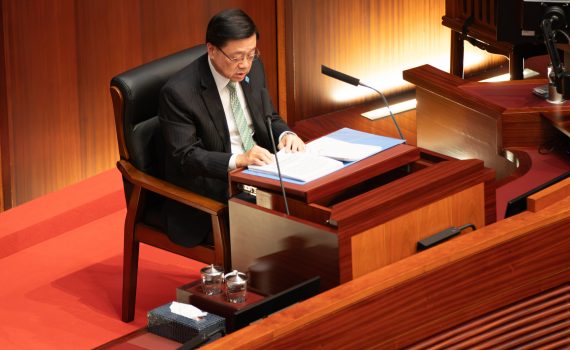
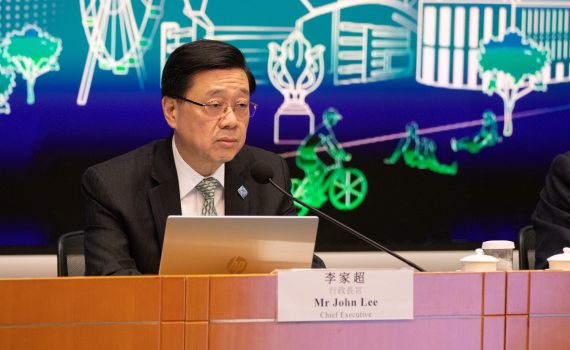
Hong Kong will subsidise 30,000 new employment opportunities through internships and full-time jobs for those with limited experience, Chief Executive John Lee Ka-chiu said at the 2026 Policy Address. This initiative is under the new “30,000 Youth Employment and Internship Programme” and it aims to facilitate career opportunities among fresh graduates and university students over a period of two years starting from the first quarter of 2027. Of these, 10,000 full-time jobs will target fresh graduates entering the workforce for the first time. The number of job vacancies open for university graduates fell to a five-year low last year, according to a May report by the Research Office of the Legislative Council Secretariat. The report also attributed the rise in the unemployment rate of those aged between 15 to 24 to the high proportion of first-time job seekers who lack work experience. Within the programme, 10,000 internships for STEM will be offered over two years. Alizhan Ibrayev, 22, from Kazakhstan, who graduated with a bachelor's degree in chemistry from Hong Kong Baptist University this year, interned at “A Grade Energy Limited”, a company based in the Hong Kong Science and Technology Park. Ibrayev said that internship opportunities at the Science Park are very popular, especially for STEM students. Hong Kong Science & Technology Parks Corporation, set up by the Hong Kong government in Shatin in 2001, is home to more than 2,400 technology companies, many of which offer student internships. Ibrayev mentioned that after his internship, he was offered a full-time position at the Park, but declined it to pursue his PhD at the Hong Kong University of Science and Technology. He added that other graduates in his cohort are struggling to find part-time or full-time jobs. Hong Kong’s entire labour market has seen a decline in employment, according to …
Policy Address 2026: Hong Kong government to call for private sector bids to build student housing
- 2026-09-16
- Society
- By: MA Yifan Chloe、SHI Puxuan AmyEdited by: CHEN Xiyun
- 2026-09-16
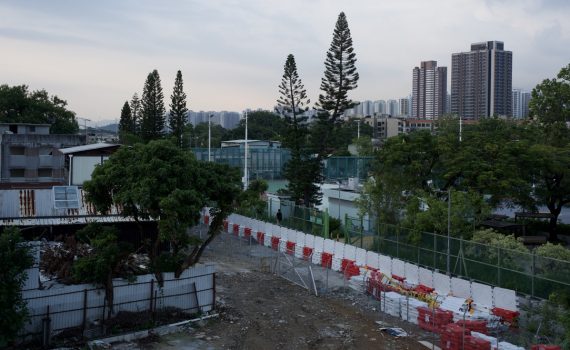
The Development Bureau will put the first student-hostel designated site up for sale this financial year, Chief Executive John Lee Ka-chiu said in today’s policy address. The tendered land will be from Kai Tak, Siu Lek Yuen, Shatin or Tung Chung East, according to the February release of LegCo, with no further details released. The land-selling initiative comes under the Hostels in the City Scheme, jointly launched by the Development Bureau and Education Bureau in July last year, and encourages dormitory developers from private sectors. The scheme was previously limited to the conversion of office buildings and hotels into student housings when introduced in the policy address last year. Ho Hang-kei, a professor researching housing policy at the Chinese University of Hong Kong, said, developing new sites, as opposed to converting existing buildings, will compete for limited construction human resources in the market. He added that it may curb the number of building projects that can commence in the same period. “But in the medium term, I think that’s going to be quite an attractive position, given the steady stream of students and high occupancy rate,” he said. As of April, existing market-run student hostel projects have recorded an occupancy rate of between 98% and 100%, according to the report from Jones Lang LaSalle. Sun Yichen, 22, a master student at City University of Hong Kong, moved into the Yuè Residence in Kowloon in August this year since she failed to secure a place in the on-campus hall in June. Sun thinks that the hostel needs better security arrangements. “It’s very late for me to finish the class at 10 p.m. every night,” she said. “Temple Street draws heavy foot traffic after dark, and there is only one security guard on duty downstairs at the dormitory,” she added. TYR reporters …
Policy Address 2026: HK$10 billion loan ‘not enough’ for building new campus site, after John Lee announced the development of Northern Metropolis University Town
- 2026-09-16
- Society
- The Young Reporter
- By: ZHENG WU Anny、ZHENG Yuan ElaineEdited by: CHAU Wing Yau
- 2026-09-16
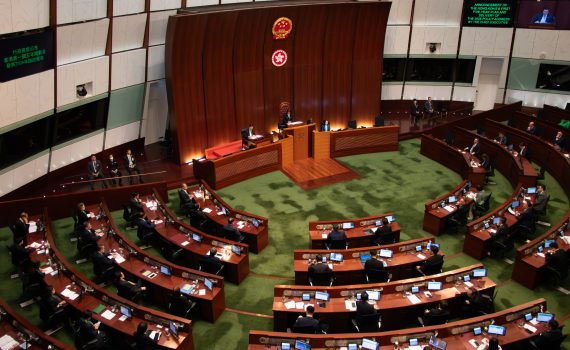
The new university town in the Northern Metropolis Development area will be expanded, Lee said today in the policy address, but universities, which are expected to fund new campuses, say the government is not offering enough money for building costs. In April, the government announced a low-interest loan scheme with HK$10 billion reserved to support universities in building campuses in the new development area. Dr Albert Chau, the Vice-President (Teaching and Learning) at Hong Kong Baptist University, said the low-interest loan is “not enough”. “Our university may build new laboratories and buildings, and the required funding is substantial, despite a HK$10 billion loan for universities.” Nineteen universities have submitted proposals for building a new campus in NMUT, Choi Yuk-lin, the secretary for Education of Hong Kong, said in a press conference in June. If all the proposals are accepted, each university would receive an average of around HK$500 million. According to the University Engagement Office of HKBU, its new Jockey Club Campus of Creativity, which opened in 2024 on its Kowloon Tong campus, cost HK$2.22 billion for 7,430 square metres, far exceeding HK$500 million. Zhou Haoming, a post-graduate student at the University of Hong Kong, said he is concerned that universities may raise tuition fees to fill the funding gap. “Government loans are a policy concession, but the school will ultimately have to put up the money for construction,”he said. Chau said that the tuition fee at HKBU will only be raised to meet inflation and won’t be a major way to gather funding for expanding the campus site. “We have no reason to transfer the burden of university development to our students. We should set proper tuition figures which students can afford. This is our social responsibility,” Chau said. Universities are expected to seek funds by utilising reserves or …
Policy Address 2026: Government to step up Chinese-language support for ethnic minority students
- 2026-09-16
- Society
- The Young Reporter
- By: Cao Beiyu、Man Cheok Lam LorraineEdited by: FENG Zhenpeng
- 2026-09-16
Chief Executive John Lee Ka-chiu said the government will adopt learning materials tailored for non-Chinese-speaking students and also provide them after-school Chinese language courses from Primary One to Secondary Three. The materials will help them pass two Chinese language standardised tests, which will help them integrate into the community and have more job opportunities. Based on the 2021 Population Census, ethnic minorities make up 8.4% of the population in Hong Kong. Among ethnic minorities under the age of 14, 35% to 38% are unable to read or write Chinese. Bahart Nangia, former director of the Support Service Centre for Ethnic Minorities and an Indian-Hong Konger, said, “language is the biggest barrier amongst ethnic minorities. Cantonese is not easy to learn.” He said for example, MTR staff may not be able to communicate in English if they need help. Chinese classes in schools are not “fully equipped to be teaching minorities with a cultural dynamic difference,” said Jeffery Andrews, one of the founders of the Diversity Hub, a multi-cultural community space in Hong Kong, as well as the first ethnic minority social worker in Hong Kong. Andrews said the government has put many resources into ethnic minority policies for the last 15 to 20 years but the framework for implementing Chinese as a second language in schools is still weak. Alishiba Matloob Aloosh, a Pakistani Hongkonger podcaster and a former TYR reporter who now works for RTHK Radio 3, said the government should put more effort into tackling the real adjustment issues behind why, even after learning the language, some people still find it hard to adapt in daily life. Discrimination, workplace barriers and difficulties with inclusion in schools and the community are all issues that need addressing. In the policy address, Lee said the scheme for ethnic minorities to serve …
Policy Address 2026: Hong Kong to support AI training for employees and SMEs
- 2026-09-16
- Society
- The Young Reporter
- By: YANG Shuyi、Yutong SuEdited by: Lou Zhengzheng、QIN Ziyang
- 2026-09-16
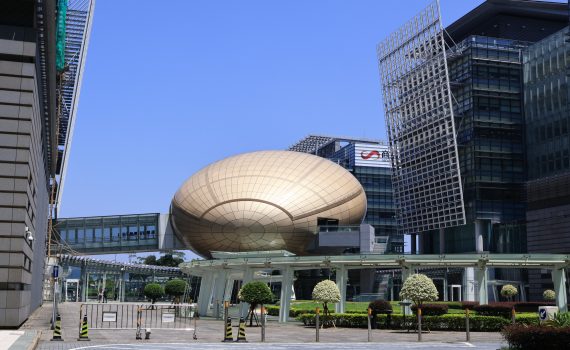
The policy address proposed several AI training programs to support employees in enhancing practical AI skills and optimized the existing AI support program for small and medium-sized enterprises. The government will release more than 200 training courses and activities under the “AI for All” programme before the first quarter of 2028. The government’s Employees Retraining Board will release an 18-month AI upskilling campaign in the first half of 2027, offering free online courses on workplace AI applications, expected to benefit at least 40,000 employees. Calvin Cheng, the Executive President of the Hong Kong Small and Medium Enterprises Association, said that with subsidies from the government and corporate training, employees would be more willing to spend time learning how to use AI. “Many employees hold conservative views against AI, fearing job displacement,” Cheng said. “Companies need to educate their employees that AI is not meant to replace them, but to help improve their work efficiency.” According to Peter Shum, Deputy Chairman of the Federation of Hong Kong Industries, a lack of clear AI strategies from management creates a gap with employees keen to adopt AI but remaining cautious due to data leakage and security risks. Microsoft’s May 2026 Work Trend Index reveals that only 19% of AI users in Hong Kong believe their leadership has set a clear and consistent AI strategy. “The market is flooded with information about AI for SMEs, leaving them confused and unsure of what to do,” said Cheng. “The government can provide some successful showcases as guidance for them.” According to the Census and Statistics Department, as of March 2026, there were approximately 360,000 SMEs, accounting for more than 98% of the enterprises in Hong Kong. “The government needs to prioritize supporting SMEs in the field of AI, because large companies have substantial financial resources to …
Policy address 2026: Expert questions government expectations on expanding new university town
- 2026-09-16
- Society
- The Young Reporter
- By: LI Jinyang Carlos、ZHENG XinyiEdited by: CHEN Ziyu
- 2026-09-16
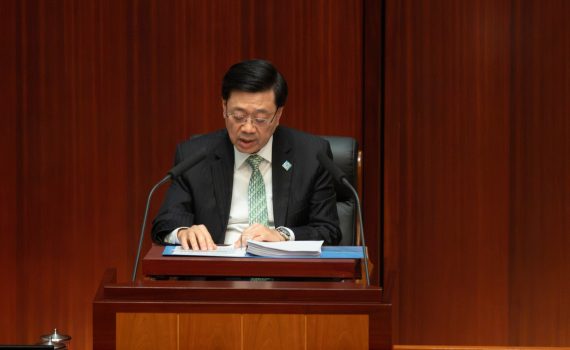
The Northern Metropolis University Town will expand to about 300 hectares, as announced in the Policy Address 2026 today, more than triple the size in a 2025 press release from the Development Bureau. The University Town is intended to resolve insufficient land resources, providing more space for the development of innovation and technology, higher education and the cultivation for high caliber talents. Chief Executive John Lee Ka-chiu said today this town will become the main development thrust of the Northern Metropolis. The town also encourages institutions from the mainland and overseas to establish campuses in the area, according to the consultation document before the announcement of Hong Kong’s five-year plan. Financial Secretary Paul Chan Mo-po said the government has prepared HK$10 billion in loans to assist the campus development in the Northern Metropolis in his 2026 budget speech. “For now, the return of investing in the university town is uncertain,” said Terence Chong Tai-leung, Executive Director of the Lau Chor Tak Institute of Global Economics and Finance at the Chinese University of Hong Kong. Chong said this depends primarily on its ability to attract major companies, yet those companies will not locate there based simply because of the surrounding infrastructure and that the government should adopt a public-private partnership model. “By providing land use to universities free of charge, while the universities themselves are responsible for constructing campus infrastructure. The government could then share the profits once the project becomes profitable,” he said. According to the Government's e-Tendering System, the estimated tender values for San Tin Technopole's supporting facilities,connected to the University Town, exceed HK$1.2 billion in Q3 and Q4 alone this year. Liu Xiao, owner of Golden Harbour Group Limited, a real estate company, said the long-term outlook for real estate around the university town is positive, though short-term …
Live: Hong Kong Policy Address 2026
- 2026-09-16
- Politics
- By: Baguio Anne、Man Cheok Lam LorraineEdited by: Baguio Anne、Man Cheok Lam Lorraine
- 2026-09-16
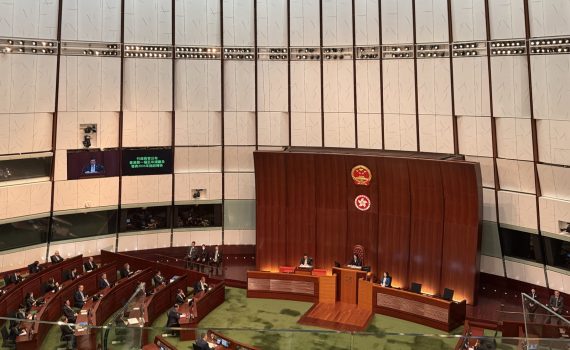
Chief Executive John Lee Ka-chiu is announcing Hong Kong’s 2026 Policy Address alongside Hong Kong's Five-Year Plan at 11am today. TYR reporters will be covering the policy address live and will be making regular updates. 2:00 PM The 2026 Policy Address has now concluded, being the shortest policy address in Lee's term as Chief Executive. 1:48 PM In response to extreme weather caused by global warming, Hong Kong civil engineering will enhance resilience by adapting updated building standards and upgrading utilities collaborating with AAHK and MTR Corporation. Facilities for resilience include drainage systems, sewage tunnels, and wave walls, 20 areas of which have been completed and the remaining is under active construction, expected to be done by 2030. 1:47 PM Hong Kong will get an “AI city brain” to help the government run better. Big data analytics and real time data will help the city handle emergencies, Lee said, such as during extreme weather. He announced a task force to manage this. 1:35 PM Regarding elderly support, an additional 2,000 community care service vouchers for the elderly will be provided, bringing the total to 18,000 in 2027–28. The number of residential care service vouchers will also be increased to 8,000. In addition, five new subsidised day care facilities offering around 200 service places will be set up, along with five new neighbourhood elderly centres that will help older people integrate into the community and are expected to serve 5,000 people a year. 1:32 PM Lee announced new measures to support the city’s caregivers, including a 10% increase in subsidies for carers of low-income elderly people and people with disabilities. Caregiver welfare is an escalating social issue in Hong Kong driven by a large aging population, with more than 1 million caregivers estimated in the city …
Inside Myanmar’s tightened passport system
- 2026-03-08
- Society
- The Young Reporter
- By: LI Yuzhou Asher、Pann Hnin Nay ChiEdited by: ZHENG Xinyi
- 2026-03-08
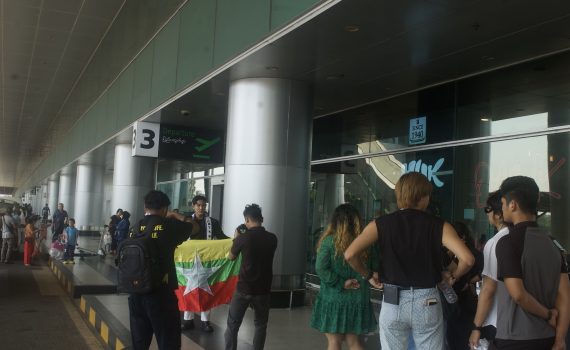
In early 2023, 28-year-old Scarlett, not her real name, queued up to enter Thailand at the Thai-Myanmar border, clutching her passport as she waited for her turn at the checkpoint. This was not for studying abroad, but an escape for survival. She feared that staying longer would permanently strip her of the possibility of leaving legally. “If my passport were scanned at the airport, I am afraid that it would be flagged,” said Scarlett. “That’s why I chose to leave from the Thai-Myanmar border,” she said, referring to its less stringent procedures. When she stepped up to the counter, the officer flipped through her red passport and looked at her briefly. “Okay, next,” said the immigration officer. He waved her through without running the passport through a scanner. Scarlett exited the gate and dared not slow down until she reached Thailand. Since the 2021 military coup, Myanmar’s passport system has increasingly functioned as a tool of exit control rather than merely a document for international travel. According to a 2025 report by the Danish Immigration Service, Myanmar authorities have circulated files of blacklisted people to airports and border checkpoints, allowing immigration officers to identify individuals and bar them from leaving the country with a passport scan. Those barred from leaving include participants in the Civil Disobedience Movement — a nationwide non-violent protest campaign that started in February 2021, in which civil servants went on strike in protest of military rule following the coup. More than 417,000 civil servants had joined the movement, according to an official brief from the National Unity Government of Myanmar. The movement was even nominated for the Nobel Peace Prize in 2022. Scarlett was one of them. Before the 2021 movement, she worked as a doctor at a public hospital. After the military seized power, she joined …
Budget 2026: Hong Kong plans to attract more family offices for the ultra rich
- 2026-02-25
- Politics
- The Young Reporter
- By: Ng Wing Sum Jodie、PENG Yixin NaomiEdited by: ZHENG Xinyi
- 2026-02-25
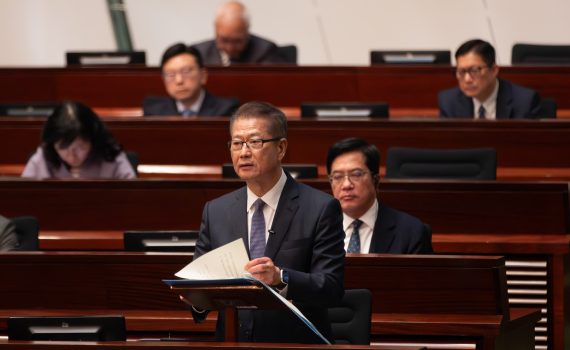
Hong Kong Financial Secretary Paul Chan Mo-po proposed a tax regime augmentation, aiming to attract more family offices, which manage money for ultra wealthy individuals. “Tax regime coverage will expand the scope of funds to specific ‘funds-of-one’, as well as classifying digital assets, precious metals, and specific commodities as investments with tax concession eligibility,” said Chan. Chan added the changes will take effect from the year of assessment 2025/26. A family office is a private wealth management company established by ultra-high-net-worth individuals, responsible for the day-to-day management of family assets. According to Chan Ho-lim, Under Secretary for the Treasury Bureau, single family offices generally refer to institutions established by a single family for wealth, family affairs, and long-term equity investment management. Multi-family offices, on the other hand, are licensed companies that “serve more than one high-net-worth family” by providing outsourced services and are “typically established and run as commercial ventures”. There are 3,384 single family offices in Hong Kong, according to research from Deloitte. According to Financial Services and the Treasury Bureau, this is a 25% increase from 2023. Half of the current offices are serving families with more than US$51 million of accumulated wealth. Since 2023, the Hong Kong government has issued a policy statement supporting the development of a global ecosystem for family offices and asset owners, promoting the growth of the industry. The bureau also said a single office contributes approximately HK$12.6 billion annually to the local economy through operating expenses alone, directly creating over 10,000 full-time professional positions, covering high-value-added fields such as financial advisors, legal and accounting. Yu Ann, 36, Co-Founder of Jadewell Family, a multi-family office, said, compared with banks and securities firms that have a single perspective, family offices can provide a comprehensive view and risk analysis across banks and even platforms, …
Budget 2026: Hong Kong continues harbourfront construction, drawing in visitors
- 2026-02-25
- Politics
- The Young Reporter
- By: Baguio Anne、RONG Miu Tung ShellyEdited by: Lan Xinbei
- 2026-02-25
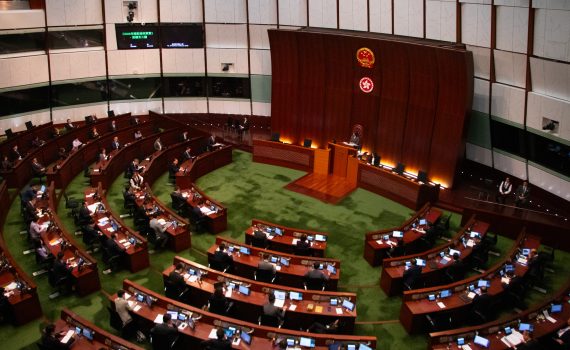
Hong Kong will continue to develop the harbourfront to attract tourists, Financial Secretary Paul Chan Mo-po announced in the budget speech on Wednesday, while also giving the Tourism Board HK$1.6 billion. With the opening of a waterfront site in Hung Hom by next month, the Kowloon promenade will be extended to 15 kilometers, Chan said. The government will also consider a new pedestrian harbourfront walkway in Kennedy Town. According to data from the Hong Kong Tourism Board, the number of visitors to Hong Kong in January reached 7.23 million, an increase of 9.6%, with overseas visitors increasing by 16.4%. The West Kowloon Cultural District on the harbour attracts many tourists. Eddie Massonique, a 25-year-old tourist from France, said he came to M+ recommended by friends, but what attracted him the most to West Kowloon was the seaside scenery. Anastashiia Armoldova, 32, a tourist from Ukraine, said she found the West Kowloon area by accident. “I think the Hong Kong government should strengthen publicity, such as advertising at the airport, to let more tourists and citizens know about this place,” she added. “My friends and I came here specifically to watch the sunset. The environment is very comfortable, and the scenery is good,” a local 14-year-old student, Ebbie Wong said. “But the transportation is not very convenient, and there are too few dining options; we have to walk far to buy food.” The Artpark in the district hosts many restaurants, but most are more expensive than local neighborhood cafes. Two 21-year-old students from Guangzhou, Wesly Peng and Gu Chuqi, said that this area is crowded. “We're looking for a restaurant, but the restaurants here are clearly very busy, with long queues,” said Peng. Gu said the government could add some minibus routes between Austin Station and the West Kowloon Cultural District …