
Politics

Nepal’s 2025 protest: youths hope for political change, experts urge structural reformation
- 2025-10-09
- Politics
- By: LAI Uen LingEdited by: KURNIAWAN Trista Vania
- 2025-10-09
Pravakar Bogati, 22, graduated with an engineering degree in Nepal last year, but has been unable to find a job in the capital of Kathmandu despite months of looking. So when protests broke out in early September, he joined, hoping his voice would lead to political change. It worked. After six days of violence, large-scale protests in different cities that saw more than 70 killed, mostly young protesters shot dead by police, the prime minister resigned and parliament was dissolved. Former Chief Justice Sushila Karki was appointed interim leader, and a general election is now scheduled for March, sparking hope for reform, particularly among Gen Z. Experts, meanwhile, are calling for institutional changes in the country's economy and society. Bogati said it was important to stand up to let the government know the demands of the public. “It was not about toppling the government,” he said. “We wanted to let them know that there are certain people among the youngsters who have a different view on the political stances of the people and how the government should be run, how the country itself should be.” A decade-long civil war transformed Nepal from a 240-year-old monarchy to a republic in 2008. Three major parties have dominated the government since: The Nepali Congress, Communist Party of Nepal (Unified Marxist–Leninist) and Communist Party of Nepal (Maoist Centre). In a game of political “musical chairs,” as Bogati describes it, there have been 13 prime ministers from these three political parties since 2008. Bibek Raj Kandel: “The old narratives the political parties used to sell about how they managed to make the country a republic no longer resonate.” Bibek Raj Kandel, an analyst and AsiaGlobal Fellow at the University of Hong Kong, said Gen Z protested for change because they did not experience the monarchy …
What Sparked Indonesia’s Violent Protests and What It Means for Democracy
- 2025-09-19
- Society
- The Young Reporter
- By: KURNIAWAN Trista VaniaEdited by: LAI Uen Ling
- 2025-09-19
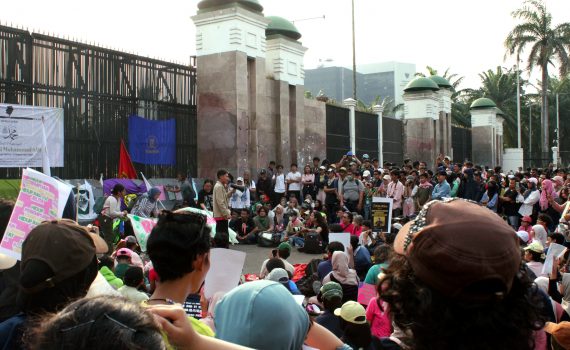
Thousands of protesters swarmed the streets of Jakarta on Aug. 25, outraged by Parliament’s approval of a new monthly housing allowance that is ten times the minimum monthly wage in Indonesia. Within a week, what began as questions over economic imbalances turned into violent protests in 20 major cities against police brutality, demands for the protection of vulnerable communities, and worries about the future of Indonesia’s democracy. From Aug. 25 to 31, the Indonesian Legal Aid Foundation reported more than 3,000 people were arrested and 10 were killed. Despite a government response, people are still unsatisfied and fighting for democracy. The Underlying Cause Tito Ambyo, an Indonesian journalist and journalism lecturer at the Royal Melbourne Institute of Technology, said the political and economic frustrations have been growing since people expected reformation after the violent protests in 1998. In May 1998, a riot broke out due to economic inequality, corruption, and the authoritarian rule of President Suharto. It escalated to the targeting and attacks of Chinese Indonesians and the destruction of public property. “After the 1998 riots and our president stepped down, we won. But the next leaders were disappointment after disappointment,” he said. In 2012, former President Susilo Bambang Yudhoyono’s cabinet faced corruption allegations, with his ministers, including the Chairman of the House of Representatives, indicted by the Corruption Eradication Commission. Ex-President Joko Widodo’s government passed a job creation law aimed at easing work regulations and encouraging investment in 2020. However, it sparked public protests because the bill was seen as weakening workers’ rights and opportunities. He described the Indonesian elites in the government as “careless” and “callous” with their actions. Protesters took to the streets on Aug. 25 after the House of Representatives announced the members of parliament would receive a monthly housing allowance of 50 million rupiah (HK$23,676). …
Policy Address 2025: Government provides sufficient focus on the needs of subdivided communities amid continued poverty concerns
- 2025-09-19
- Society
- The Young Reporter
- By: Chun Hei LUK、Wing Chi HOEdited by: CHAN Wing Yiu
- 2025-09-19
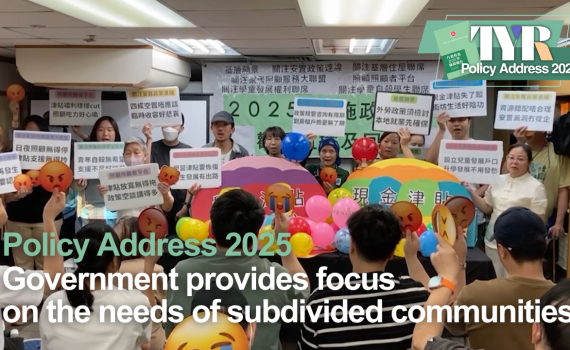
As the Chief Executive prepares to unveil the 2025 Policy Address, poverty reduction is in the spotlight, especially regarding Hong Kong’s subdivided flats. Concern for Grassroots' Livelihood Alliance emphasizes that the government has given little attention to the specific needs and wants of subdivided flat users. Our reporter Gigi Ho explores how proposed initiatives aim to support vulnerable communities. This address could be crucial in the fight against poverty, emphasizing the urgent need for effective policies to uplift marginalized citizens and improve their quality of life. (Sept 17, 2025) Reported By: Gigi Ho Wing-chi, Anson Luk Chun-hei Edited By: Yoyo Chan Wing-yiu
Key Highlights from Policy Address 2025
- 2025-09-17
- Politics
- The Young Reporter
- By: LI Sin Tung、ZHENG XinyiEdited by: CHEN Yik Nam
- 2025-09-17
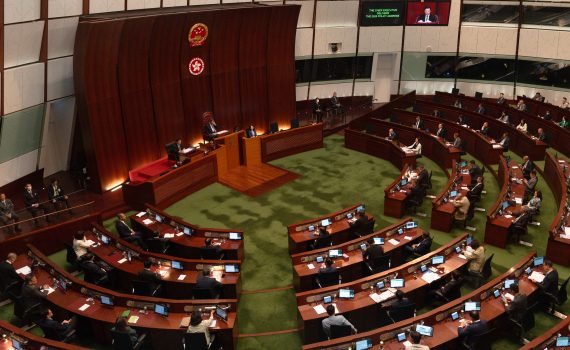
Chief Executive John Lee Ka-chiu delivered his fourth Policy Address on Wednesday morning, pledging to deepen reform and prioritise public livelihood. The following are the key takeaways. New action plan for the low-altitude economy More legislation to promote the low-altitude economy, mostly about drone activities. Including the improvement of civil aviation legislation and regulatory framework, promotion of infrastructure facilities, organisation of more talent training, enhancement of the application system and development of low-altitude economy insurance products Potential activities in airspace under 1,000 metres include drone rescues, surveys and deliveries Satellite positioning, three-dimensional spatial data systems and a smart traffic-management system for low-altitude passenger aircraft will be established Patriotic Education Collaboration with Shenzhen to promote a red education route and patriotic education venues in the mainland A series of activities called "Love Our Home, Treasure Our Country" by the Education Bureau will be organised and the Constitution and Basic Law Student Ambassadors Training Scheme will be strengthened Arts and Culture A premium arts trading hub will be built An arts ecosystem in the Airport City with studios, galleries, and trading facilities will be established Large-scale art storage and arts plaza buildings will be constructed to attract galleries and family offices West Kowloon Quay will be opened and a cultural district academy will be set up The Hong Kong Fashion Fest will be launched, and the government will further support the local cultural and creative industries Education Cap on self-financing non-local students' enrolment will be increased from 40% of available spots to 50% The over-enrolment ceiling of self-financing places of funded research postgraduate programs will be increased from 100% to 120% Task Force on Study in Hong Kong to be established to step up promotion of higher education in Hong Kong Eight supported universities will be given HK$40 million to improve their …
Policy Address 2025: Pundits criticised industry mismatch despite the city’s Top Talent Scheme has contributed HK$34 billion to local economy
- 2025-09-17
- Society
- The Young Reporter
- By: FENG Zhenpeng、Li YinhengEdited by: LIU Yutong
- 2025-09-17
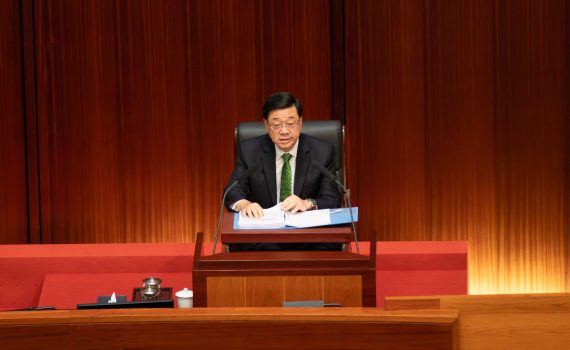
Chief executive John Lee Ka-chiu defended the controversial top talent scheme in his latest policy address but observers urged the government to address the talent mismatch by bringing in more high-tech elites. The Top Talent Pass Scheme generated around HK$34 billion a year for the local economy, accounting for approximately 1.2% of economic growth, said Chief Executive John Lee Ka-chiu, in the policy address on Wednesday. This is the first time the Hong Kong government has quantified the scheme’s economic contribution to the city in light of mounting criticism against the scheme being abused. Former chief executive Leung Chun-ying criticised last month that most applicants did not settle in Hong Kong, but returned to the mainland with their families after obtaining Hong Kong identity cards. When delivering the 2025 Policy Address, Lee said Hong Kong attracted over 230, 000 talents to work and live in the city under a number of new talent talent admission policies, including the TTPS. About 14,000 of TTPS applicants, or 54%, had their visas renewed. “Of them, 95% receive a monthly income higher than the local median income of about $20,000, and 50% earn a monthly income nearly double that amount. This reflects a strong demand for TTPS talents and the market's willingness to offer higher salaries to attract them,” Lee said most of the admitted talents to Hong Kong are relatively young, with 70% being under 40 years old, which helps to address the challenge of the aging population. However, observers did not see a picture-perfect reality. Lawmaker Wendy Hong Wen said Hong Kong lacks high-end tech talents but the TTPS is mainly bringing in talents from the finance sector. “To address the mismatch between the talent supply and industry demand, the government should adopt a demand-driven approach by enabling companies to directly search for …

Policy Address 2025: Hong Kong relaxes loan application period alleviating capital pressure for SMEs
- 2025-09-17
- Politics
- By: ZHONG Xinyun、LIN Xiaoyou、Yau Ka MingEdited by: ZHAO Runtong、BO Chuxuan
- 2025-09-17
Hong Kong to reduce capital pressure for Small and Medium-sized Enterprises by extending principal payment as well as application for guarantee products, said John Lee Ka-chiu during his fourth Policy Address speech on Wednesday. Application period for principal moratorium arrangement and 80% of Guarantee Products under the SMEs Financing Guarantee Scheme will be extended for one year and two years, respectively, said Lee. “The biggest problem SMEs face is that they have no way to borrow money,” said Cheung Ki-ling, Associate Professor in the Department of Information Systems, Business Statistics & Operations Management at Hong Kong University of Science and Technology. He explained that the decrease in customers and consumption has led to a decrease in income, so they have less to pledge as collateral, making it difficult for banks to lend them money. “(These policies) give companies more opportunities to obtain government-guaranteed loans,” wrote Tam Yiu-chuen Sam, Steering Chairman of the Hong Kong Federation of Commerce for Small and Medium Enterprises, in a written response. He explained that the measures allow SMEs longer timeframes to apply for funding while easing their capital pressure. Previously, the government’s policy had postponed the application for principal moratorium for up to 12 months in November 2024. As of March 2025, the number of small and medium-sized enterprises was 356,128, according to the government website. However, Cheng Chung-pong, chairman of the Hong Kong Small and Medium Enterprises Association, called for more measures to support local SMEs. "The support for our small and medium-sized enterprises is not that great," said Cheng. "On the contrary, I have seen a lot of mention in the policy on how to help mainland businesses." “I think the government and banks still need to review which industries truly need priority support, to prevent the number of bankruptcies from increasing,” said …
Policy Address 2025: Hong Kong to take further actions for land management in Northern Metropolis
- 2025-09-17
- Politics
- The Young Reporter
- By: CHEN Xiyun、CHEN ZiyuEdited by: CAO Jiawen
- 2025-09-17
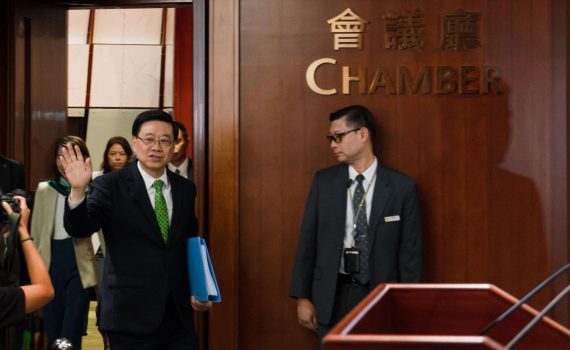
A land use review over the Sha Po area, as part of the Northern Metropolis, a development priority proposed four years ago, will be established to discuss its development potential and the feasibility of constructing more private housing in the region, Chief Executive John Lee Ka-chiu said in his policy address on Wednesday. According to the Planning Department, Hong Kong will build 500,000 housing units in the coming decade in the Northern Metropolis for 2.5 million people. Mak Sui-choi, Associate Professor who researches finance and investment at Hong Kong Baptist University, said the Northern Metropolis may attract labour to the local industry. “The increase in Hong Kong's population is a good thing, driving the development of other local industries,” Mak said. “But the construction of the Northern Metropolis should first address the conflicting land status,” he added. According to the commissioned Farm Land Survey Report by the Chinese University of Hong Kong, most farmland in San Tin and Ngau Tam Mei has been rebranded as non-arable fields. “The first step for the government is to reacquire the land and adjust its current land status,” Mak said. “This is going to be a long and cumbersome process, but it is doable,” he added. Lee said the government will arrange three sites for the Urban Renewal Authority to build new housing in Kwu Tung North and Fanling North, areas that are part of the Northern Metropolis. While the Northern Metropolis area presented certain property development potential, a 28-year-old two-time mainland home buyer Cissy Chen opted for Kai Tak instead. “The Northern Metropolis is far away from Hong Kong Island as compared to Kai Tak, location is my main consideration when it comes to real estate investment," Chen said. She added that it would be long before infrastructures in the northern metropolis would …

Policy Address 2025: Hetao Cooperation Park layout to be finalised as Hong Kong aims to speed up area development
- 2025-09-17
- Politics
- The Young Reporter
- By: WANG Ludan、Li ZhongyiEdited by: YANG Haicen
- 2025-09-17
Hong Kong hopes to speed up the development of a newly constructed park on the border that is cooperatively managed by Hong Kong and Shenzhen, as part of the government’s focus on innovation and technology, said John Lee Ka-chiu in today's Policy Address. The park’s layout has yet to be finalised even as the first batch of enterprises has already taken up residence in the Hetao Shenzhen-Hong Kong Science and Technology Innovation Cooperation Zone. “We will finalise the Park’s overall layout and consider offering workspaces flexibly to companies under the ‘moving in while construction is underway’ approach; that will enable them to move in earlier without having to wait for the completion of the entire park's construction,” said Lee. The new tenants include companies and talents specializing in life and health technology, microelectronics, new energy, AI and other pillar industries. This is connected to the government’s broader plan to develop Hong Kong into a global AI hub. The second phase of construction, which includes another five buildings in addition to the current three, will be completed progressively from 2027, Lee said. According to reports from Chinese state media, companies including The Hong Kong and China Gas Company, RoadAGI, Ping An Technology, and Siemens Energy have established a presence in the park. The Cooperation Zone will be used as a dedicated hub for cutting-edge research in biomedicine, artificial intelligence, applied mathematics and new materials. Earlier this year, Financial Secretary Paul Chan Mo-po highlighted in the 2025 budget plan that the government has earmarked HK$3.7 billion for the Hetao Innovation Zone, supporting the first-phase construction of infrastructure and public facilities, as it is one of the key projects in the Northern Metropolis development strategy. Chan estimated that upon the full completion of Hong Kong Park, it will contribute approximately HK$52 billion annually …
Chief Executive John Lee Ka-chiu delivers Policy Address 2025
- 2025-09-17
- Politics
- The Young Reporter
- By: SIU Tsz HangEdited by: AO Wei Ying Vinci
- 2025-09-17
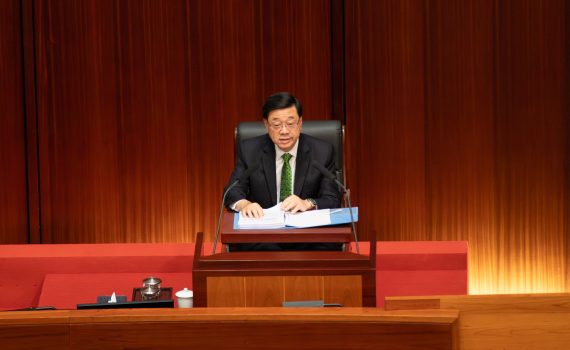
Chief Executive John Lee Ka-chiu announced his fourth policy address at 11am today. As in the case in the past three years, Lee continues to stick with green as the theme colour. His policy address mainly focuses on several areas such as promoting patriotic education, setting up an accountability system for senior civil servants to enhance governance, accelerating the development of the Northern Metropolis, improving innovation and technology industry’s development, reforming the economy and healthcare system. This year, his address lasted 174 minutes, which is his second longest in history, followed by the longest record of 202 minutes in 2023.
Nepali people protest and pay tribute at Copenhagen’s City Hall and Nepal Embassy
- 2025-09-13
- Society
- The Young Reporter
- By: LEUNG Chi NgaiEdited by: AO Wei Ying Vinci
- 2025-09-13
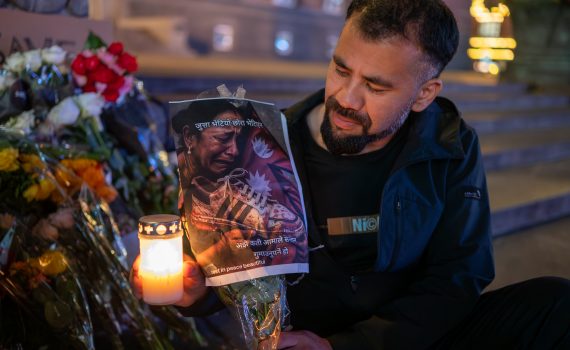
Flowers, candles, and handwritten cardboard signs sat on the stairs of a public square in the city centre of Copenhagen to commemorate more than 50 Nepali protesters who died protesting against the government in Nepal on Monday and Tuesday. Hundreds of Nepalis living in Copenhagen gathered at the City Hall Square on Tuesday evening, said Jyotindra Thapa Ais, 29, a Nepali living in Copenhagen who attended the gathering. On Wednesday morning, 23 Nepalis gathered again outside the Nepal Embassy to protest Nepal government policies, youth unemployment and a lack of opportunities and to pay tribute to the dead protesters. The protest, which started against a social media ban in Nepal, has escalated into a deadly conflict involving tens of thousands of mostly young people taking to the streets of Kathmandu. More than 50 Nepali protesters, mainly students and young people, have died from clashes with security forces and police, according to the BBC. The Nepali Supreme Court, parliament and other major government buildings were set on fire. Houses that belong to government officials were raided by demonstrators. The dissent has created a power vacuum in the Nepali government, as the prime minister, ministers and high-ranking members of political parties resigned. Bel Gurung, 50, from Nepal who lives in Copenhagen, said he initiated the two events in Copenhagen on Tuesday morning, after hearing requests from Nepalis in Copenhagen to raise their voices. “No corruption, no violence, no injustice” were the key messages Gurung and other protesters spread, he said. “When you speak a voice, the true voice, it doesn't matter how loud or how small it was. That spread all over the world to the right people, to the right country,” he said. Jyotindra said: “Today was just for the death of the students, and we were not focusing on other …