
Culture & Leisure
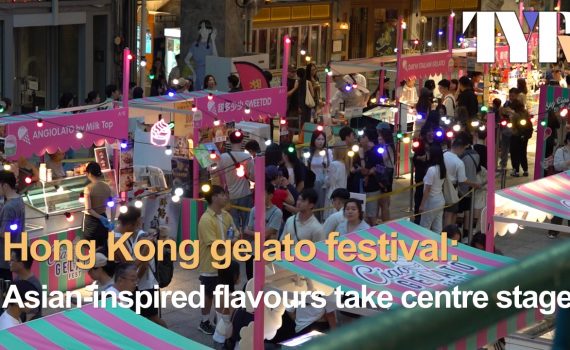
Asian-inspired flavours take centre stage at HK gelato festival
- 2026-10-08
- Society
- By: Baguio AnneEdited by: Fu Rong
- 2026-10-08
https://youtu.be/JclqSdmYdas?si=Aj4NY2NJcgZ9LKZ_ Reported by Linnea Hedman, Anne Baguio Edited by Audrey FU Rong Video description: Hong Kong’s largest gelato festival, Ciao! Gelato Fest 2026, has returned to PMQ in Central, bringing together 20 gelato brands from Hong Kong, Italy, Macau and Portugal. The festival features more than 30 limited-edition and debut flavours, including Asian-inspired creations such as Hong Kong French toast, pineapple bun and mochi. The event attracted long queues and a diverse crowd during the National Day Golden Week, with visitors from Hong Kong, mainland China, and more. According to PMQ, daily visitor traffic increased by 12 % compared with last year, averaging 12,000 visitors a day. With free admission, Ciao! Gelato Fest takes place at PMQ from Oct. 1 to 4 and Oct. 9 to 11.

126-year-old Sincere to close Central store after lease renewal fails
- 2026-10-08
- Society
- By: SHI Puxuan Amy、MA Yifan ChloeEdited by: Fu Rong
- 2026-10-08
Hong Kong’s first Chinese-owned department store, Sincere, will close its Central store in early December after nearly 126 years of business, as it failed to renew its lease. The company is searching for new premises in Sheung Wan or Central for a new store, yet no suitable location has been found by Oct. 4, according to an official announcement by Sincere. Only a four-storey store in Mong Kok and an online store will be left in Hong Kong after the Central store closure. Lily Chan, 74, a customer who lives in Hong Kong Island, lamented the closure of Sincere’s Central store since it had been her top shopping destination for more than 50 years. “I started shopping in Sincere when I was only 20 years old,” she said. “Back then, few Hong Kong department stores like Sincere carried such a wide range of European brands, covering apparel, kitchenware, and furniture.” “I am unsure where I can go shopping after the store shuts down. The Mong Kok one is far from my home,” Chan added. Anny Lau, 42, said her family spanning from her parents down to her children had shopped here. “It carries memories for several generations since it is more than a century old,” she added. Ahead of the closure, the Central store is selling its remaining stock at discounted prices. A cleaner who has worked at the store for a year said customer numbers had been generally low, and only surged these days amid the sale. She declined to be named for fear of repercussions from the company. Sincere’s consolidated revenue dropped from around HK$146 million in 2023 to roughly HK$134 million in 2025, according to Sincere’s annual report. Heidi Cheung, 25, said she seldom shops at traditional department stores such as Sincere, as online shopping is more …
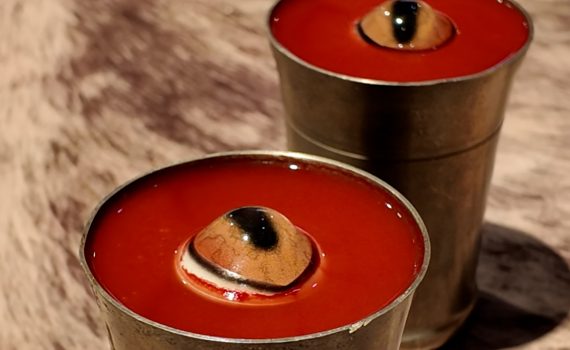
Dare to taste? Sweden’s Disgusting Food Museum arrives in Hong Kong
- 2026-10-02
- Society
- The Young Reporter
- By: Fu RongEdited by: Li Yinheng
- 2026-10-02
Presenting more than 80 unusual foods from 35 countries with their historical and cultural background, the Disgusting Food Museum opens up to the public from Sept. 29 till Nov. 26. “People should come with an open mind to see things that they haven’t really seen before,” said Andreas Ahrens, the CEO and founder of the Disgusting Food museum. Coming to the exhibition with a given vomit bag, visitors can tease up to eight selected foods at the end. The museum’s concept originated in Malmö, Sweden, had recorded 761 vomits over the eight years, and had tours to Los Angeles, Berlin, Bordeaux and Taipei, attracting more than 500,000 visitors. Follow the link below to watch the full reel: http://www.youtube.com/shorts/6pVvPC0A1bc Reported by Audrey FU, Linnea Hedman Edited by Henry Li Yinheng

Women’s sports is on the up in longest‑ever women’s world road race
- 2026-09-28
- Culture & Leisure
- The Young Reporter
- By: RONG Miu Tung ShellyEdited by: CHAU Wing Yau
- 2026-09-28
MONTREAL, Canada Sept. 26 - The Women Elite Road Race of the 2026 Union Cycliste Internationale Road World Championships started its longest race in history, covering 180.4 kilometres after the Union Cycliste Internationale changed its rules. The championships ran for eight days from Sept. 20 to Sept. 27, in Montréal, Canada, featuring 13 separate races. After raising the maximum distance for elite women’s world championship and Olympic road races from 160 km to 180 km, this year’s event has become the longest Women's World Road Cycling Championships since the women elite race was first introduced in 1958. The eight-lap course in Mount Royal circuit had passed through Côte de la Polytechnique with a gradient of over 11% and finished at the uphill of Avenue du Parc. In the final laps, the women's elite riders have to climb roughly 2,150 of the 2,570 metres total, testing riders' endurance. Around 141 riders have joined the Women Elite Road Race on Sept. 26. Demi Vollering from the Netherlands won the championship, beating Katarzyna Niewiadoma in the race, while Elisa Longo Borghini took bronze. Amanda Spratt, an Australian 39-year-old rider, finished 39th, said her strategy to the added kilometres was to conserve energy from the very start by eating and drinking constantly. “I think it is not very hard with the distance in the legs and when you were just doing the climb once,”Spratt said. “But it was definitely difficult for the last two laps, after making so much distance and laps,”she added. Spratt considered it a fun race, despite hours of racing and the punishing laps of Mount Royal. “It was a hard race, but giving up is not really in my DNA.” she said. Around 500,000 audiences arrived at the Avenue du Parc for the eight-day competition. Sean Zimmer, a …

Aberdeen Fire Dragon Festival returns with new elements
- 2026-09-28
- Culture & Leisure
- By: ZHENG WU Anny、XIE Xinni CindyEdited by: Lan Xinbei
- 2026-09-28
The Aberdeen Mid-Autumn Fire Dragon Festival was held at Aberdeen Centre and Wah Fu Estate on Sept. 25. The parade involved 13 troupes and nearly 600 participants. For the first time, a roller-skating dragon dance was performed by the WeSkate team, a local roller-skating organisation. Follow the link below to watch the full reel: https://youtube.com/shorts/UMZCHnG_dLU?si=hBsAeyfSFg4v-FI6

Global visitors flock to Victoria Park for festive lanterns
- 2026-09-27
- Culture & Leisure
- The Young Reporter
- By: Cao Beiyu、MA Yifan ChloeEdited by: Li Yinheng
- 2026-09-27
Hong Kong’s first International Lantern Spectacular is bringing lanterns from more than 20 countries to Victoria Park in Causeway Bay, alongside local lantern art and traditional lantern-making craft from Nanjing. Organised by the Hong Kong Tourism Board under the theme “Reunion”, the show was originally scheduled to run from Sept. 17 to 27 but has been extended through Oct.4. Follow the link below to watch the full reel: http://m.youtube.com/shorts/oQcVdWFLN3s?ra=m

Policy Address 2026: Government to relax regulations for cross-border yachts
- 2026-09-17
- Society
- The Young Reporter
- By: WU Sitan Elaine、PENG Yixin NaomiEdited by: LAU Ka Yan
- 2026-09-17
Video description: The Policy Address 2026 sets out new plans to take forward Hong Kong's yacht economy, including expanded Greater Bay Area cross-border cruising arrangements and streamlined certification for visiting yacht captains. Industry stakeholders are calling for further investment in supporting infrastructure and marine services to underpin the sector's long-term growth.

Policy Address 2026: Government to step up Chinese-language support for ethnic minority students
- 2026-09-16
- Society
- The Young Reporter
- By: Cao Beiyu、Man Cheok Lam LorraineEdited by: FENG Zhenpeng
- 2026-09-16
Chief Executive John Lee Ka-chiu said the government will adopt learning materials tailored for non-Chinese-speaking students and also provide them after-school Chinese language courses from Primary One to Secondary Three. The materials will help them pass two Chinese language standardised tests, which will help them integrate into the community and have more job opportunities. Based on the 2021 Population Census, ethnic minorities make up 8.4% of the population in Hong Kong. Among ethnic minorities under the age of 14, 35% to 38% are unable to read or write Chinese. Bahart Nangia, former director of the Support Service Centre for Ethnic Minorities and an Indian-Hong Konger, said, “language is the biggest barrier amongst ethnic minorities. Cantonese is not easy to learn.” He said for example, MTR staff may not be able to communicate in English if they need help. Chinese classes in schools are not “fully equipped to be teaching minorities with a cultural dynamic difference,” said Jeffery Andrews, one of the founders of the Diversity Hub, a multi-cultural community space in Hong Kong, as well as the first ethnic minority social worker in Hong Kong. Andrews said the government has put many resources into ethnic minority policies for the last 15 to 20 years but the framework for implementing Chinese as a second language in schools is still weak. Alishiba Matloob Aloosh, a Pakistani Hongkonger podcaster and a former TYR reporter who now works for RTHK Radio 3, said the government should put more effort into tackling the real adjustment issues behind why, even after learning the language, some people still find it hard to adapt in daily life. Discrimination, workplace barriers and difficulties with inclusion in schools and the community are all issues that need addressing. In the policy address, Lee said the scheme for ethnic minorities to serve …

More than just a parade: Cheung Chau Bun Festival 2026
- 2026-05-29
- Society
- The Young Reporter
- By: Ng Wing Sum JodieEdited by: YAM Long Hei Jamie
- 2026-05-29
Reported by Jodie Ng Wing-sum, Ella Huang Wing-tung Edited by Jamie Yam Long-hei Video Description: The Piu Sik parade, a century-old tradition of the annual Cheung Chau Bun Festival, returned to the city on May 24. This year, 17 parade teams wove through Cheung Chau’s alleys to worship and pray for blessings.

Music and alcohol event Sip&Groove drew thousands to West Kowloon
- 2026-05-05
- Culture & Leisure
- The Young Reporter
- By: Li Yinheng、Cao BeiyuEdited by: Li Yinheng
- 2026-05-05
The music event Sip & Groove took place in West Kowloon Cultural District’s Arts Park from May 1 to 3. It gathered 15 groups of performers and 14 wine brands. This is the second time that this event has been held, attracting thousands of people, even more than last year. Follow the link below to watch the full reel: http:////youtube.com/shorts/uABgbZ8Dhd4?si=ccui8iURcS_5rM5C