
Culture & Leisure
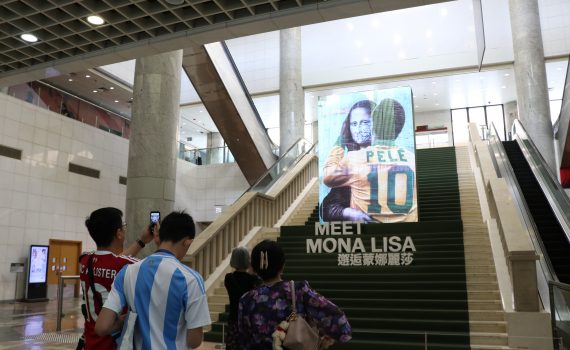
Mona Lisa comes to life through immersive displays at the Heritage Museum’s exhibition
- 2026-05-02
- Culture & Leisure
- The Young Reporter
- By: Ng Wing Sum Jodie、Pann Hnin Nay ChiEdited by: YAM Long Hei Jamie
- 2026-05-02
Large crowds filled the Hong Kong Heritage Museum on Friday as the “Meet Mona Lisa & Portraying the Renaissance” exhibition opened to the public on the Labour Day holiday. The exhibition, part of the annual French May Arts Festival, features multimedia immersive installations that introduce the history of the Mona Lisa, and diverse forms of Renaissance artworks, including four Leonardo da Vinci manuscripts. The multimedia section “Meet Mona Lisa” was produced by the Musée du Louvre and the Grand Palais Immersif in Paris. Most borrowed exhibits from France and Italy are making their Hong Kong debut, including The Crucifixion by Noël Bellemare, The Rebellious Slave by Michelangelo Buonarroti, and Luca Penni’s The Virgin and Child with the Infant Saint John the Baptist. Visitors crowded the galleries with long queues forming for interactive activities and the Mona Lisa’s “self-narrated” audiovisual walking tour by midday. Samuel Tang, 30, and Mavie Yu, 25, said they came to the exhibition today specifically for the Mona Lisa. Tang thinks the multimedia immersive experiences of the Mona Lisa's animations are more interesting than “regular stationary exhibitions”. He described the interactive elements as engaging, comparing the experience to watching a movie. “Usually we interpret the artworks on our own, but here the artworks break the fourth wall by talking to us and guiding us through the experience,” Tang said. The first-person narrative in the storytelling helped her understand the Mona Lisa’s backstory thoroughly, Yu said. Pursy Law and Waybe Tsang, both in their forties, brought their son for a family-bonding holiday after learning about the show on social media. “We want to bring our child to experience the cultural influence of the Mona Lisa,” Law said. “Everyone knows about the beauty of the Mona Lisa, but many are unaware of its story of being stolen,” she added. …
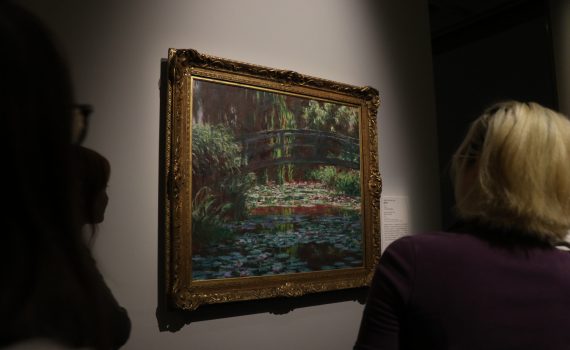
Visitors flock to Hong Kong Museum of Art for Claude Monet’s masterpieces
- 2026-04-26
- Culture & Leisure
- The Young Reporter
- By: Baguio Anne、Pann Hnin Nay ChiEdited by: YAM Long Hei Jamie
- 2026-04-26
Visitors filled the Hong Kong Museum of Art on Friday for a garden art exhibition featuring two original masterpieces by French Impressionist Claude Monet. “Blooming: The Art of Gardens in East and West” features 106 artworks from the Art Institute of Chicago, Beijing’s Palace Museum and the Palace of Versailles in Paris, alongside pieces from the museum’s collection. Highlights include Monet's Water Lilies and Water Lily Pond from the Art Institute of Chicago. Other masterpieces include Zhang Daqian's Entrance of Bade Garden and Splashed-colour Landscape, as well as Wen Zhengming’s Spring Ablution at the Orchid Pavilion and sculptures such as The Enceladus Fountain and The Water Theatre from the Palace of Versailles. Despite rainy weather, crowds filled the galleries by midday, with long queues for popular works and interactive activities. Vasilisa Popov, 28, from Russia, said she came to the exhibition after reading it online, drawn by Monet. “I work in the culture sphere back home, so art is very special to me,” she said. “I’m actually flying back today, but I made sure to come here before leaving.” Glenda Wilson, 70, from New Zealand, called it a trip highlight and “beautifully courageous, really well put together, and fantastic.” She had visited the museum days earlier but returned for the show. “It’s the opening day and people love to see Monet,” she said of the crowds. Helen Kwok, 74, a regular visitor at the HKMoA, had seen Monet’s works at a 2016 Monet exhibition in the Hong Kong Heritage Museum. “I’d like to see Monet, but also the other various garden paintings from Versailles.” First-time visitors Few, 23, and Pakke, 26, from Thailand, celebrated Few’s university graduation here in Hong Kong. Though new to art, they said they enjoyed the exhibition, especially the French paintings of gardens. Pakke added that …

Kai Tak Calling: Hong Kong Sevens Marks 50th Anniversary
- 2026-04-25
- Society
- The Young Reporter
- By: Fu Rong、ZHENG XinyiEdited by: FENG Zhenpeng
- 2026-04-25
https://youtu.be/LrmKyHmxzUM?si=kVJUTMbk67jC4LKi The annual HSBC Hong Kong Sevens returned to Kai Tak Sports Park on April 17, marking its 50th-anniversary. The opening day drew around 34,000 spectators to witness the start of the three-day tournament. Reported by: Audrey Fu Rong, Sofina Zheng Xinyi Edited by: Stephen Feng Zhenpeng
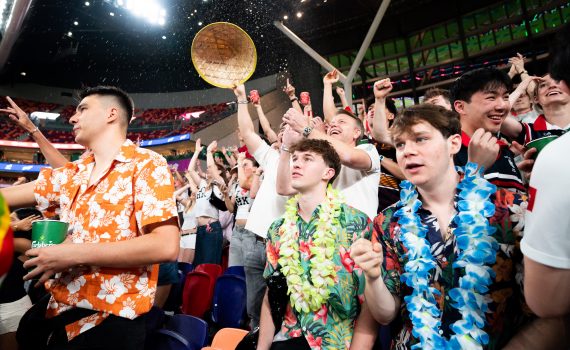
50th HK Sevens opens with some 30,000 spectators
- 2026-04-18
- Culture & Leisure
- The Young Reporter
- By: LIU Rui Reena、LEUNG Chi NgaiEdited by: CHAN Hiu Ying
- 2026-04-18
The annual mega event Hong Kong Sevens returns to Kai Tak Stadium on April 17, marking its 50th anniversary and drawing some 30,000 spectators on its opening day. The three‑day tournament features 30 teams competing in 72 matches, with more than 100,000 spectators expected to attend. The opening ceremony featured a dragon dance and a performance by robots, cheerleaders, and singers from South Korea and the Philippines. Laser projections across the pitch showcased all past participating nations and regions, as well as the names of rugby sevens legends, as part of the 50th anniversary celebration. On the first day, the Hong Kong team faced Denmark and China. The men’s team secured a 36–14 win over China, while the women’s side staged a comeback to draw 14–14 with Denmark. Local based rugby fans Heidi Gysler and her husband Andre Gysler have attended matches in several countries and returned to Kai Tak Stadium for the second consecutive year. Gysler described this year’s event as noticeably better organised than last year, with more staff on hand to help spectators. She added that people had seemed quite lost during last year’s tournament, but the experience felt much smoother this time. “It's a really good atmosphere. The emotion that flows is unbelievable. Everyone is calling, chanting for Hong Kong,” she said.

Chops, sidekicks and smashes: Professional wrestlers wreck the ring at Chai Wan
- 2026-04-08
- Culture & Leisure
- The Young Reporter
- By: LEUNG Chi NgaiEdited by: CHAN Hiu Ying
- 2026-04-08
On the night of April 5, Ricky Marvin, a Mexican professional wrestler, knelt in a corner of a wrestling ring at Chai Wan Youth Square, trembling as he looked towards the three other wrestlers surrounding him. This was a fatal four-way match, in which professional wrestlers compete simultaneously, though three of them had teamed up against Marvin. Marvin swore and shouted at his opponents. The three wrestlers smirked and stamped on him as the audience burst into laughter. Across two nights, April 5 and 6, 18 professional wrestlers exchanged blows and kicks at an event organised by the Hong Kong Pro Wrestling Federation, which has staged wrestling events since 2009. Titled “Shin Squared Circle Vol.2: World Wide Wrestling”, the event featured three international wrestlers, Ricky Marvin from Mexico, Katsuhiko Nakajima from Japan and Elijah Blum from Germany. The two-night event included nine matches, including singles, tag team (2 vs 2) and fatal four-way matches and attracted around a hundred audiences. For Blum, it was his first time wrestling in Hong Kong. He has pursued his professional wrestling career in Germany since 2021, and said the setting in Hong Kong is quite similar to that in Germany. “In Germany, it is hard to entertain the audience in the cities as they have already seen so much wrestling. I feel the people in Hong Kong are really up for being entertained. They love the whole show, which is amazing,” he said. He said he would like to wrestle in Hong Kong again if HKWF invites him back. Danny Freer, 49, is a school teacher in Hong Kong from the United States. He and his wife have followed professional wrestling for 12 years and have attended several World Wide Entertainment events before. The married couple were there to support Owen, a local wrestler. …
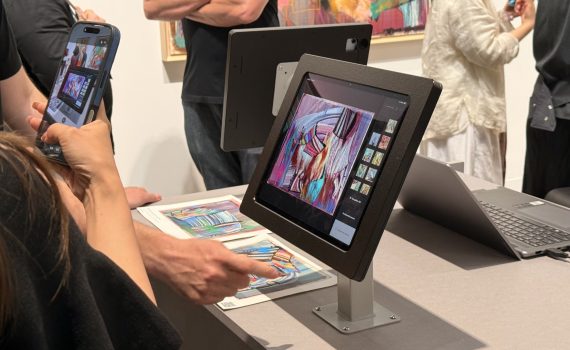
Art Basel Hong Kong: Asia debut of Zero 10 sparks mixed reactions
- 2026-03-31
- Culture & Leisure
- The Young Reporter
- By: MA Yifan Chloe、SHI Puxuan AmyEdited by: LAU Ka Yan
- 2026-03-31
Zero 10, a digital art-theme exhibition area featuring 14 exhibitors, made its Asian debut on March 27 at the three-day Art Basel Hong Kong this year. The event drew 91,500 visitors, but scepticism towards digital art and AI use remains. Harvey Rayner, 51, an English artist for Art Blocks, writes code and algorithms to let people generate their own digital artwork on the computer and in print. “This type of digital artwork is not yet widely acceptable,” said Rayner. Joan Chen, 24, an exhibitor of Art Blocks, said some buyers may not have been exposed to digital artworks before, but they find participating in the creation of digital art a novel experience. Lydia Lee, 37, visited Rayner’s exhibition area and asked for the story behind the digital art piece creation. “I believe the collection value of digital artworks lies in the public’s interaction with them,” said Lee. “It is only valuable if one fully participates and understands the creative logic behind it.” “We’re really interested in educating and showing people here what generative art is,” said Rayner. According to the Art Market Report 2026 by Arts Economics, digital art is one of the most popular purchases among high-net-worth individuals. In the early sales of digital works at Art Basel Hong Kong this year, seven artworks priced over US$10,000 have been successfully sold. Joshua Chan, a 36-year-old visitor, said digital art is a new trend in the art world, but he finds it difficult to assess its value because of AI development. “I think the general public will be attracted by the interesting interactive installations in Zero 10,” he said. “But it still takes time for people to truly appreciate and accept new forms of art.” “Everyone may use AI to generate unique works. This is not something that only artists …
Edible art fair debuts in Hong Kong with mixed reactions
- 2026-03-31
- Culture & Leisure
- By: PENG Yixin Naomi、WU Sitan ElaineEdited by: Fu Rong
- 2026-03-31
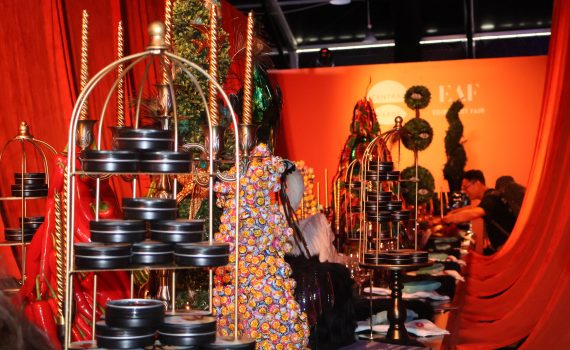
Hong Kong’s first edible art fair opened on March 26 in Central, drawing visitors’ appreciation, though some questioned its educational value and food safety. Located at the Harbourfront Event Space, the Central Yards Edible Art Fair features a 20,000-square-foot tent, which houses 10 galleries showcasing different art movements. “You're not only looking and listening, but you can play, take pictures and also taste the edible art treat, which makes for a more immersive cultural experience,” said Levina Li-Cadman, 55, curator of the fair. “Our daughter was quite excited when she found out she could get different snacks from each exhibit. We are very happy to see her running around the interactive areas,” said Steve Jon, 36, who visited with his family. Cathery Xu, 39, chief executive officer of Sunflower Media, a cultural industry operator, said the exhibition had provided her with new ideas for planning future art and cultural events. Several visitors said the ticket was expensive, at over HK$300 per adult depending on the time slot. “The experience is quite fresh, but it doesn't seem to be worth it, considering that only two exhibition halls feature works by individual artists,” said Shelly Zheng, 25, a short video content creator on Rednote and Instagram. The fair features installations by two local artists, while the remaining exhibition halls are themed around art movements, including Modernism, Pop Art and Surrealism. Tom Audrew, director and head of leasing & operations of Central Yards, said in a press release that the fair allows both residents and tourists of different ages and backgrounds to learn about different forms of art, introducing a more accessible and inclusive art experience. “This exhibition aims to promote art education, but the content is too shallow," said Anthea Fan, chief editor of Art Map, a cross-disciplinary art platform focusing on …
Zero 10 makes its Asian debut at Art Basel Hong Kong
- 2026-03-31
- Culture & Leisure
- The Young Reporter
- By: YANG Shuyi、Li YinhengEdited by: QIN Ziyang
- 2026-03-31
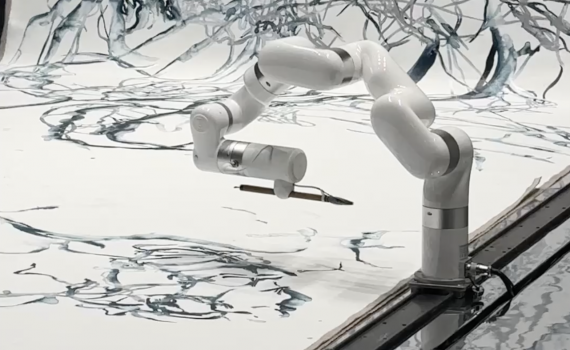
Art Basel Hong Kong 2026, the annual art event, returned on March 27 at the Hong Kong Convention and Exhibition Centre and will run for three days. This year's exhibition introduces the “Zero 10” digital art zone – its first appearance in Asia. The zone focuses on the use of technology in art, with 14 exhibitors showcasing how new tools are changing the way artists create. According to the Art Basel and UBS Global Art Market Report 2026, digital art is the third-largest category in total expenditure. And the expert said that with Zero 10 in Hong Kong and heading to Art Basel Switzerland this June, watchers expect digital wave growth through 2026. Follow the link below to watch the full reel: https://youtube.com/shorts/IkZ7smdla6k?si=sUcoGRbA6Qd92MWf
HKwalls 2026 innovates moving street art
- 2026-03-30
- Society
- The Young Reporter
- By: MA Yifan Chloe、SHI Puxuan AmyEdited by: Chun Lim LEUNG
- 2026-03-30
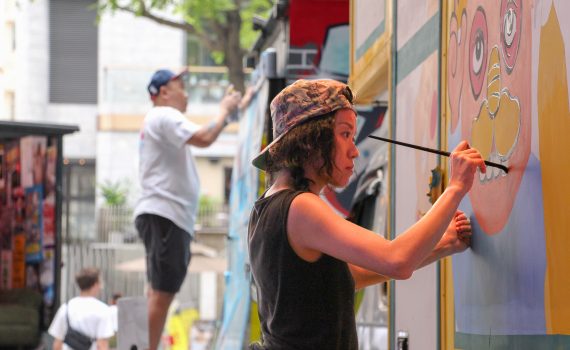
HKwalls Street Art Festival debuted its 11th edition from March 21 to 29 at the former Police Married Quarters in Central, turning Central and Western District into an open studio for street art. More than 20 local and international artists from 14 countries took part in workshops, art tours and traditional wall paintings, with the festival proposing a moving street art exhibition that allows artists to paint on trucks and let them roam across the city. Jason Dembski, co-founder of the HKwalls, said he had tried multiple channels to cooperate with truck owners willing to have their track be graffitied, including approaching individual truck owners on the street and contacting companies. “All the truck owners will keep the artwork for around three months,” he said. “Especially the drivers who are independent owners, they all seem very happy about the artwork and want to keep it for a long time.”. He added the project was an opportunity to integrate street art into more parts of Hong Kong. Ten artists jointly completed the graffiti or hand-painted designs for six trucks, which will later be used for regular cargo transportation. Taiwanese graffiti artist Leho, 30, said it was rare to have a chance to complete such a full-scale work on a truck. “It was usually identified as illegal graffiti in Hong Kong to paint on a vehicle," he said. Mooncasket, a 35-year-old local illustrator, painted on a truck for the first time. “I feel like the works that are created on small canvases might only sit inside a gallery or at home, while the audience could interact with my artworks and get more attention when there was a truck painting,” she said. Lindsey McAlister, 65, an artist who has attended the festival as a visitor for years, said she was looking forward to …
Plush flower exhibition marks its Asian debut in Hong Kong
- 2026-03-27
- Culture & Leisure
- The Young Reporter
- By: ZHOU Shiqing、Ye EnyiEdited by: Yu Yan Pui
- 2026-03-27
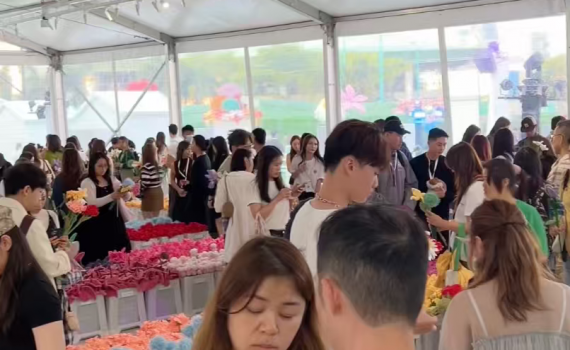
The Plush Flower Market was held at the Central Harbourfront from Mar. 19 to Mar. 22. It offers a variety of plush flowers for purchase. The touring exhibition marks its first presentation of plush flowers from the renowned Australian hyperrealist artist CJ Hendry outside the United States, with Hong Kong as its first stop in Asia. It is also one of the highlights in Hong Kong’s Art March 2026 programme. Follow the link below to watch the full reel: https://www.youtube.com/shorts/KguLlHIyo2c