
International

France reports more than 5,000 deaths after June heatwave
- 2026-07-25
- By: XIE Xinni CindyEdited by: FENG Zhenpeng
- 2026-07-25
The French national health agency said on Wednesday it recorded 5,764 excess deaths between June 17 and July 2, 36.2% higher than normal, during the June heatwave. The World Meteorological Organization's weather forecast shows that Paris will experience temperatures exceeding 30 degrees Celsius again next week. According to the French meteorological service, 2026 was France’s hottest June on record. Paris hit 40.9 degrees Celsius on June 24, which broke the capital’s June temperature record. Jennifer Yu, 22, a US tourist in Paris, said it’s her first time in France and she can hardly breathe due to the hot weather. Rémy Jarry, 48, a Paris resident, said some Parisians without air conditioning cool down in public parks or swim in urban canals. “It's really too hot in Paris this year...It feels like France has not seen such extreme heat since I was a child,” Jarry said. The World Weather Attribution reported this summer had the most severe and widespread heat wave in Europe ever, but only 25% of households are equipped with air conditioning. Sylvain, 43, a French teacher who lives in Paris and declined to provide his last name, said he drove to rural towns after work to escape the urban heat island effect. He said he does not use household air conditioning because it harms the environment. But due to the increasing numbers of hot days, he said he might change his mind. The World Weather Attribution also said that fossil fuel emissions have rapidly exacerbated heatwaves in Europe in just a few decades. “We only started facing such extreme heat regularly in recent years, which shows environmental issues are growing increasingly severe,” Sylvain said.
What being a ‘News Creator’ means for the next generation of journalists
- 2026-05-02
- By: KURNIAWAN Trista VaniaEdited by: KURNIAWAN Trista Vania
- 2026-05-02
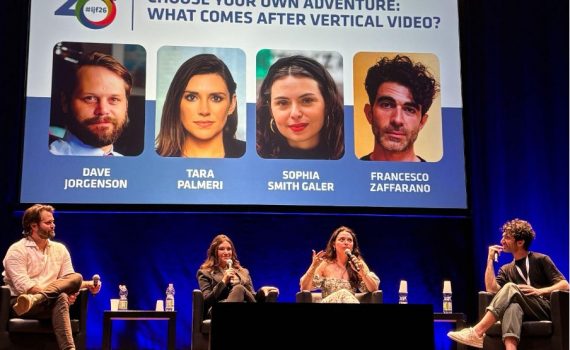
The “News Creator” theme emerged as one of the largest draws at the International Journalism Festival in Perugia this April. It represents a movement of independent journalists who create and distribute content through social media about news and current affairs, often drawing on influencer techniques to build audience. In a panel of news creators, Sophia Smith Galer, Dave Jorgenson and Tara Palmeri discussed the challenges and strategies to succeed in the industry, ultimately saying it comes down to distinctiveness. “Do you have a distinctive offering, or are you making an identical news explainer that every other newsroom is doing? Are you creating additional value around the news story? If you're not, you’ve got to rethink the strategy,” Galer said. Galer pioneered the UK’s TikTok journalism and began producing short-form videos for the BBC’s coverage of religion, technology and health. Jorgenson, a panellist who previously worked with The Washington Post before running his media outlet, Local News International, added that distinctiveness is what makes one stop scrolling. “It has to be distinctly different from what everyone else is offering. Not necessarily how you shoot it, but like what you as a personality bring to it,” he said.When asked how Galer makes herself distinctive after years in the industry, she said she creates fewer videos each year but each with higher production value. “The time load is now going into ensuring distinction, and for me, that has meant higher quality, more and more original reporting to make sure it's distinctive,” Galer said. In 2025, Galer launched an app called Sophiana to help journalists create engaging scripts for vertical video formats. “We’re seeing short-form vertical video everywhere. It’s not just about the shape; there is a grammar to how these videos are made, it’s how they begin, how they are structured,” Galer said …
Seven years in the making: Here’s how the BBC produced a documentary about child exploitation
- 2026-05-02
- By: KURNIAWAN Trista VaniaEdited by: KURNIAWAN Trista Vania
- 2026-05-02
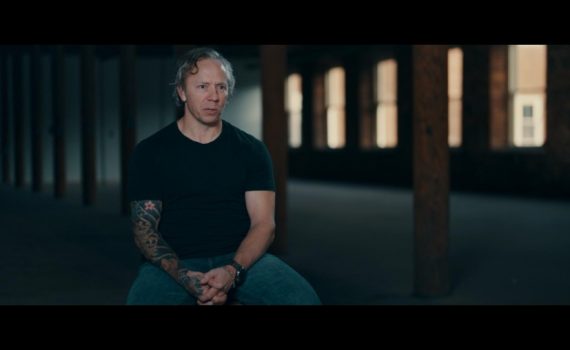
The BBC screened a documentary that follows the lives of paedophile hunters on the dark web at the International Journalism Festival in Perugia. “The Darkest Web” revolves around US undercover agent Greg Squire and a team of agents who spend every day tracking abusers in encrypted forums who are sharing millions of child abuse materials online. The documentary reveals unsettling cases Squire and his team investigated, which took director Sam Piranty and his team seven years to document and film. When asked how he persevered through such a long-term project, Piranty said it was Squire. “He was a force of nature. It was a real surprise to ever film someone so committed. I believed in him and the amazingness of his stories. When you have conversations with those people, you will realise that it’s worth it,” he said. It all started with months of back-and-forth emails before Squire even wanted to speak anonymously, Piranty said. “At some point, he wanted to go on camera because he wanted to talk about the more difficult things he faced. He spoke to his colleagues, who were scared to talk about their feelings. And he wanted to change that,” Piranty said. Ultimately, Piranty and his team decided to centre the story around Squire’s psychological struggles and personal journey, as every saved child took Squire hundreds of hours of viewing abusive materials of children. Piranty added that he wanted people to “get a sense of the scale and gravity of the issue” and know there is hope, that “these Gregs, these amazing men and women who are willing to do things.” Piranty said the BBC screened the movie at the festival to reach as many people as possible. “There’s a group of people who would be interested in it, but sensitive to the darker side …
AI-fueled online gender violence surges, causing women journalists to face offline harm
- 2026-05-02
- By: Lan Xinbei、ZHOU ShiqingEdited by: Lan Xinbei、ZHOU Shiqing
- 2026-05-02
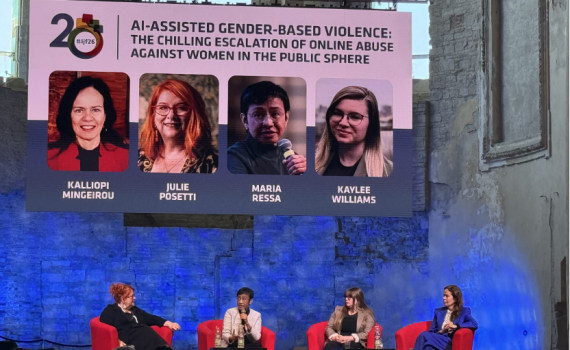
Artificial intelligence has drastically escalated online gender-based violence, silencing women journalists and activists worldwide, a group of women journalists said on a panel at the International Journalism Festival in Perugia. The discussion spotlighted how AI tools have turned targeted harassment into a realistic threat. Once text-based abuse and crude memes have evolved into AI-generated sexualized deepfakes to push women out of public life. Nobel Peace Prize laurate Maria Ressa, the co-founder and CEO of Rappler in the Philippines, said in the talk that she received thousands of hate messages, malicious memes and AI deepfakes. “These are not personal attacks, they are information operations to silence women,” Ressa said. “Platforms fail to act because they label public figures as targeted persons, while AI makes abuse faster and more harmful.” A 2025 UN Women survey found that 42% of women journalists have suffered offline harm linked to online violence, up from 20% in UNESCO’s 2020 The Chilling report, marking a 22% increase in five years. Julie Posetti, director of the Information Integrity Initiative, a digital forensics lab set up by Ressa, said online violence is nothing virtual. It’s an act of violence that's part of a cycle of escalating harm. “We have found that 41% of the women surveyed had experienced offline attacks, abuse or harassment that they believed had been received through online attacks,” she said. Kalliopi Mingeirou, the Chief at the Ending Violence Against Women section of UN-Women, said in the talk that global backlash against gender equality exacerbates the crisis. “Over 50% of countries lack strong legal protections for women, and fewer than 40% cover digital gender violence,” she said. “Funding cuts for women’s rights groups and algorithmic amplification of misogynistic content create a ‘toxic cycle’ linking online abuse to radicalization and offline harm.” “It is necessary to …
No neutral journalism, Ukrainian War journalist says
- 2026-05-02
- By: Lan Xinbei、ZHOU ShiqingEdited by: Lan Xinbei、ZHOU Shiqing
- 2026-05-02
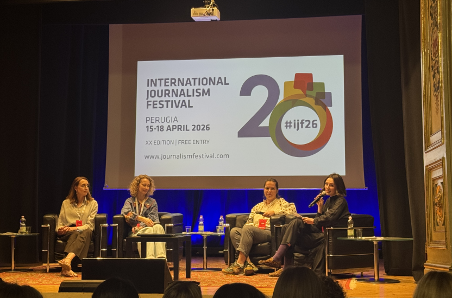
A Ukrainian war reporter said she doesn't believe in neutral journalism, speaking at the 20th International News Festival in Perugia, Italy on April 17. In a panel discussion on Ukrainian war reporting, Mariya Frey, member of the managing board of Ukraine’s national public broadcasting company Suspilne Ukraine, showed a photo of female journalist Oleksandra Novosel wearing a blue protective jacket, carrying a camera and recording equipment while shuttling through the "kill zone" only 20 kilometers away from the front line. “Her base was bombed twice, and Russia was only trying to drive away the journalists,” Frey said. The environment the speakers depict is suffocating, with about 40% of Ukrainian media institutions suffering heavy damage and requiring 500 million euros for recovery, one said, adding that the financial stress is even greater after the United States Agency for International Development cut funding to Ukraine. The new equipment requirement in the Ukrainian work package for journalists is a washing machine, Freya added. When the artillery fire cuts off water and electricity, Ukrainian journalists have to take a shower and wash clothes in the office. “Due to power outages, the journalist team even built shower rooms and bought washing machines in the office, which is our safe house,” she added. Despite the challenges, Freya said independent media in Ukraine has won unprecedented trust, with Suspiline Ukraine's audience trust reaching 79%. “People search for information like they search for food,” said panel speaker Ola Myrovych, CEO of Lviv Media Forum, an NGO supporting media development. “The media has become a critical infrastructure.” Panel speaker Olha Syrotiuk, who coordinates a Ukraine programme at the European Centre for Press and Media Freedom said, “We have already won because we have preserved the news industry in the midst of gunfire. What is needed now is to invest …
AI transforms the news ecosystem as traditional media face new pressure
- 2026-05-02
- By: WEI Yanfangru、Zhou XinyingEdited by: WEI Yanfangru、Zhou Xinying
- 2026-05-02
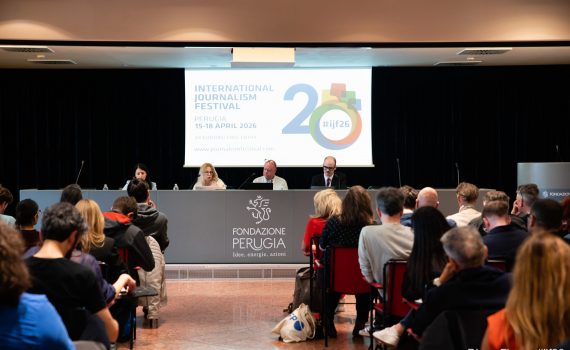
Traditional media are being reshaped by digital transformation, while artificial intelligence is also transforming the wider information ecosystem, said Felix Simon, a research fellow at the Reuters Institute for the Study of Journalism, at the International Festival in Perugia in April. According to the Reuters Institute's Generative AI and News Report 2025, 24 percent of users now turn to AI weekly for information, double last year's figure, with six percent using it specifically for news. The highest use of AI was in the US and Argentina. The report found 12 percent of respondents were comfortable with purely AI-generated news, rising to 21 percent for content with human oversight. “I think that the technology sort of enables new actors to take on some of the roles that traditionally were held by news media. And that could be your news influencer who can suddenly use a technology that helps them produce various sorts of authoritative-looking information much more quickly, much more cheaply than before,” Simon said.. However, experts also warned that these opportunities come with significant challenges for traditional news organisations. David Caswell, Founder of AI consultancy StoryFlow Ltd, said many media organisations were still using AI to make “the existing conception of journalism more efficient,” adding that this would not be enough in the long run. He said the industry needed bolder experimentation and a strategic rethink because AI was likely to create “a completely new, completely different information ecosystem.” Natalie Helberger, professor of law and digital technology at the University of Amsterdam, said newsrooms should spend less time asking what they could do with AI and more time deciding where they wanted journalism to go. She said the starting point should be freedom of expression, describing it as a cornerstone of democracy and of journalism’s role in holding power to …
Forced Out, Still Reporting: Women Journalists in Exile
- 2026-05-02
- By: WEI Yanfangru、Zhou XinyingEdited by: WEI Yanfangru、Zhou Xinying
- 2026-05-02
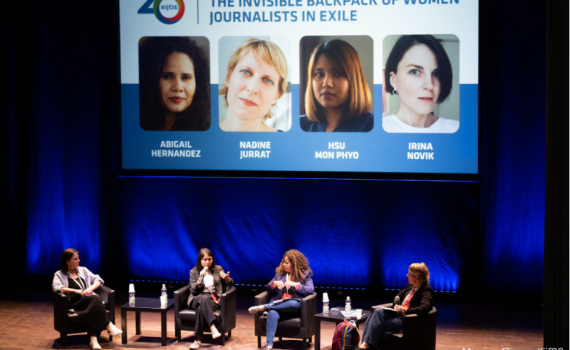
“I have to leave.” The phrase echoed through a panel on women journalists in exile at the International Journalism Festival in Perugia. For three women journalists from Nicaragua, Myanmar and Russia, departure was not a professional repositioning. It was the result of political violence, escalating threats and the erosion of space for independent reporting. Gender often determines how repression is experienced and survived, the journalists on the all-women panel said on April 16. The conversation unfolded against a global media environment that has grown increasingly hostile. UNESCO’s World Trends in Freedom of Expression and Media Development Report 2022–2025 documents a 10% global decline in freedom of expression since 2012. It also reported that self‑censorship among journalists increased by 63 percent. In 2025, a record number of 130 journalists and media workers were killed on the job, according to the Committee to Protect Journalists. For many others, violence ended in exile. Abigail Hernandez, a Nicaraguan journalist and founder and director of La Sala – mujeres en la redacción in Costa Rica, which brings together women-led Central American media outlets in a shared workspace, said exile for her began before she crossed the border. Hernandez spent six months in constant internal displacement, moving between safe houses while being followed and intimidated by men in civilian clothes. “It’s not the police, it’s not the— but we know it’s the police and they are military,” she said. Hernandez described how repression was gendered. Threats targeted her body and appearance, turning political intimidation into something deeply personal. “The message is that in prison your face, your body, your supposed beauty will be destroyed,” she said. She left Nicaragua after receiving a warning that made clear her arrest, or worse, was imminent. Harassment, abuse and online attacks are routine risks for women journalists. Last year, 75 …
Building trust with Epstein survivors needs empathy and self-awareness, journalists say
- 2026-05-02
- By: Chun Lim LEUNGEdited by: Chun Lim LEUNG
- 2026-05-02
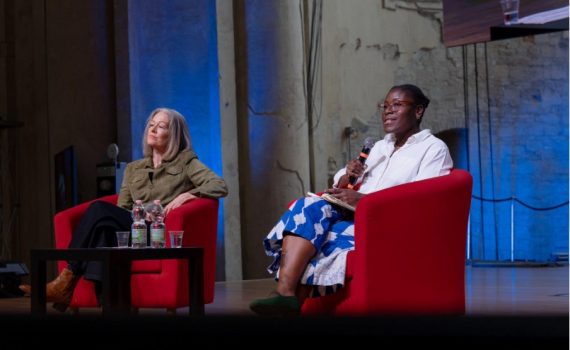
The Epstein files are not only about politicians, but also what they reveal about abuse, institutions and inequality in the United Status, two journalists said at the International Journalism Festival in Perugia on April 16. Wallace spent four years working with Epstein survivor Virginia Giuffre to tell her story in the memoir published last year. Building trust and getting to know each other is needed for collaboration, Wallace said, detailing how she co-authored the book Nobody's Girl: A Memoir of Surviving Abuse and Fighting for Justice. In a separate panel on the Epstein files, Monique El-Faizy, a Paris-based journalist and author, said that journalists need self-awareness about the impact of their work and understanding how publication changes how a story feels for the person inside it. “This is when we ask women to tell us their stories, they will be exposed,” she said. “If they saw themselves in a newspaper or see it on TV, they feel undressed; they feel naked; they feel exposed.” “This is your career, but it’s my life,” said Elizabeth Stein, a Human Trafficking Specialist and Survivor Advocate speaking on a panel analyzing media coverage of Epstein. She said journalists should use empathy in building responsible journalism. “We need to learn how to handle tragedy reporting compassionately in the media so that more people feel comfortable coming forward,” she said. Spending six years investigating Jeffrey Epstein and Ghislaine Maxwell’s child sex trafficking ring, Lucia Osborne-Crowley said journalists should respect boundaries when interviewing survivors of tragedy. “What you need to not do is violate their consent in any way or cross a single boundary that they set down because then you are just retraumatising them,” she said. She added journalists should follow survivor’s requests for breaks or limits and stop forcing them to answer questions.
Good morning, Perugia: Smartphone narratives essential in journalism
- 2026-05-02
- By: Chun Lim LEUNGEdited by: Chun Lim LEUNG
- 2026-05-02
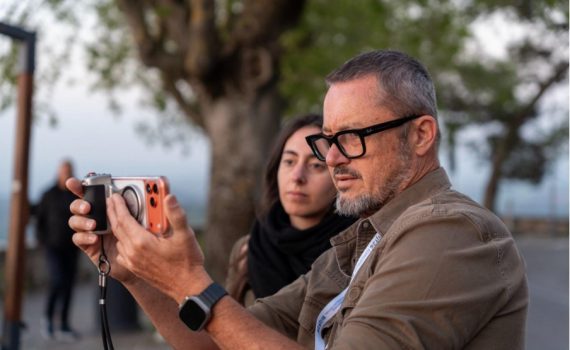
It is essential journalists know a little of every format of storytelling as the era of specific journalism is gone, Australia’s Bond University assistant professor of mobile journalism Rob Layton said during a sunrise smartphone photography workshop at the International Journalism Festival in Perugia on April17. Layton, with over 45 years’ experience as a journalist and mobile journalism educator, led participants on a walk of Perugia, demonstrated composition and other smartphone camera tips, such as locking the exposure and focus to capture the sunrise and other morning routines of the city. “Smart phones help journalists working across different platforms and different media just using the phone to present information,” Layton said as he walked through the alleys of Perugia. “Journalists were required to do all things because everything can be done by mobile phones now.” Layton said he has found more journalists in the field of mobile journalism. “They should know how to use different apps such as YouTube creators for simple video editing and the camera functions.” Layton taught participants to combine visual elements into narrative video montages, in which everyone had a chance to showcase their final work on the screen. Lilly Reisenweber, a US student majoring in broadcast journalism from West Virginia University, said the video montages in mobile journalism were more like a digital print story turned into video. “Mobile journalism and traditional broadcast are both needed in the media landscape,” she said. “Broadcast is a little straightforward to deliver news while different types of journalism could reach different types of audience.” “I started my career as a print journalist, which used words to create images in the audience's mind, while visual journalists would identify the detail through the lens and frame with what you see,” said Aphrodite Salas, associate professor in the Department of Journalism …

More than a public holiday, Brisbane honours mateship and sacrifice on Anzac Day
- 2026-04-29
- The Young Reporter
- By: CHAU Wing YauEdited by: Yu Yan Pui
- 2026-04-29
Brisbane marked the 110th anniversary of Anzac Day on April 25, 2026. Thousands gathered in the city to commemorate those who served in the Australia Defence Force and those who sacrificed. Anzac Day began as a commemoration of Australians and New Zealanders who served at Gallipoli in the First World War. It has evolved into a national day of remembrance for all who have served and fallen in wars. Before the parade, dawn services across the suburbs and at Anzac Square in the CBD included the laying of wreaths, the sounding of the Last Post and a minute of silence. The Anzac Day Parade started at 9:45 am Adelaide Street, with Australian Defence Force veterans, descendants and school cadets marching in tribute until midday. Reported by Anny Chau Wing-Yau Edited by Jennifer Yu Yan-pui