
International
Humour helps serious journalism win back young audiences, journalist tells Perugia festival
- 2026-04-21
- By: WANG Ludan、YANG HaicenEdited by: WANG Ludan、YANG Haicen
- 2026-04-21
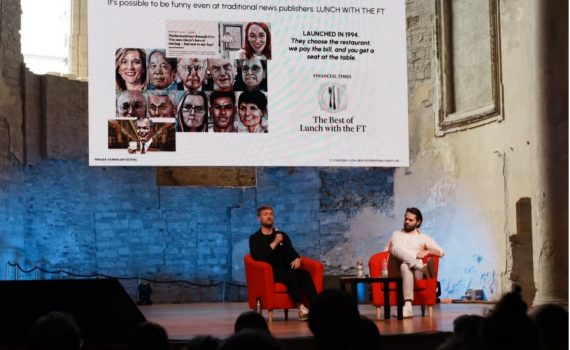
Former Washington Post journalist Dave Jorgenson told a workshop that serious journalism can attract young audiences through humour and personality in short social media videos, as the journalism industry searches for new ways to build trust. Speaking on April 17 at the 20th International Journalism Festival, Jorgenson, who started the paper’s Tik Tok channel, shared several videos he made to demonstrate how he transformed dry topics into engaging content using sketches, visual gags and automatic video looping. “I try to put myself in the shoes of the audience,” he said. “Not do it in a way that feels condescending.” One video, a 30-second sketch depicting a fictional phone call between Egypt, Ukraine and Russia, summarised a lengthy Washington Post article and attracted 47 million views. Another was a two-minute fact check of a Donald Trump speech, which involved rapid corrections and visual gags, including holding up a gingerbread house to illustrate the housing crisis. “Pulling back the curtain on your own understanding of a story is a way to make the process of journalism more relatable,” he added. At the beginning of the speech, Aled John, group strategy director at the Financial Times, outlined challenges facing traditional newsrooms, including a deepening sense of disconnection among audiences and what he called the “dogma” that serious stories must always be delivered in a serious tone and language, leading to a significant decline in readership. According to the Reuters Institute Digital News Report 2025, traditional news media are “struggling to connect with much of the public, with declining engagement, low trust and stagnating digital subscriptions”. Overall trust in news remains at 40%. Globally, social video consumption for news has risen from 52% in 2020 to 65% in 2025. Held in Perugia, Italy, the festival is the largest annual media gathering, drawing journalists, media …

Maria Ressa says global 'funnel' destroying democracy
- 2026-04-21
- By: WANG Ludan、YANG HaicenEdited by: WANG Ludan、YANG Haicen
- 2026-04-21
Democratic decline is unfolding through a “funnel” driven by online narratives, weakened institutions and rising corruption, Nobel Peace Prize laureate Maria Ressa warned at the Perugia International Journalism Festival on Thursday. Ressa said the pressures facing journalists are intensifying as democratic systems weaken, describing her own experience as one of “PTSD and déjà vu” as she watches developments in the United States. Several attendees said the discussion helped them make sense of an increasingly chaotic media environment. “The ability for these reporters to contextualize the time period that we’re in right now is really inspiring,” said attendee Caroline Chaffiotte, a master’s student from the Erasmus Mundus journalism programme and who said also worked for local media in the US. Ressa herself pointed to those pressures. Co-founder of Philippines independent news outlet Rappler, she rose to prominence for her coverage of former Philippines president Rodrigo Duterte’s anti-drug campaign. She has faced “21 different cases or investigations” that she has described as politically motivated, all but one of which have been dismissed. “Nothing can bring her (Ressa) down. She makes us feel more supported,” said Gabriele Blaschko, a German reporter who is also a master’s student in the Erasmus Mundus journalism programme. “To see them kind of clarify and provide at least the beginnings of a path towards protecting democracy and maintaining the structures that we have in the institution was really inspiring,” said Chaffiotte. Ressa described a “funnel” model of democratic decline. “The top of the funnel is narrative warfare,” she said, referring to how political actions are transformed into “content triggers” and amplified across platforms such as X, Facebook, TikTok and YouTube. She said these systems are shaped by incentives that prioritise emotional engagement. “The distribution system literally prioritize the spread of lives laced with fear, anger and hate,” she …
Saudi-Chinese cultural festival: Chinese cuisine draws crowds in Riyadh
- 2026-01-19
- Business
- By: ZHOU YunEdited by: ZHOU Yun
- 2026-01-19
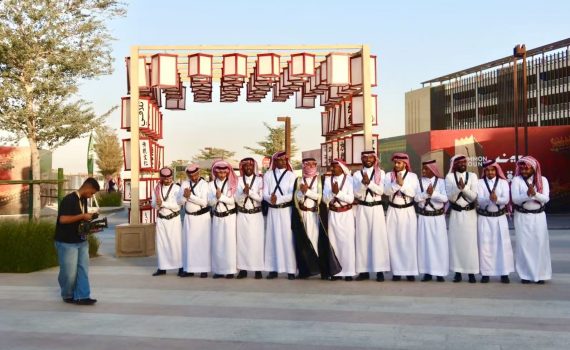
The Common Ground Festival was held in Riyadh, the capital of Saudi Arabia, with the authentic Chinese cuisine cooked on the spot becoming a highlight. Set against the backdrop of traditional Chinese markets, this festival presented the cultures of China and Saudi Arabia in a single space, featuring artistic performances, intangible cultural heritage displays, art exhibitions, and food culture. Among all the exhibition areas, the food experience area was one of the busiest sections, bustling with people. Three booths were set up in the food area, two of which offered China-Saudi fusion dishes, and the other one that drew large crowds served authentic Chinese food prepared on-site. “Saudis generally like Chinese cuisine,” said Jade He, the vendor of Chinese cuisine, during the festival. “Every day, visitors queue up in long lines to pick up the freshly cooked Chinese food we provide.” Delicacies such as beef noodles, steamed buns, dumplings and rice noodles are provided to tourists for free within a limited time and quantity every day. All the freshly made delicacies here still retain the authentic Chinese flavors and were not specially adjusted to cater to the tastes of locals. “Saudis generally have a sweet tooth,” he said. “So for those who come to taste Chinese cuisine, we will also offer customers some free localized sweet noodles according to their taste preferences.” Basseh, a local university student at Princess Noor University, is a fan of Chinese food. “Chinese food is really delicious, and the meat tastes really good,” said Basseh. She said that if more Chinese restaurants will open in Riyadh in the future, she is willing to try them one by one. Mahamed, a staff at the event site said that the cultural festival is so popular that more than 3,000 people come to visit the exhibition every day, …
The story of Peter: How socially vulnerable people in Denmark reintegrate back into the society
- 2025-12-21
- Society
- The Young Reporter
- By: LEUNG Chi NgaiEdited by: SIU Tsz Hang
- 2025-12-21
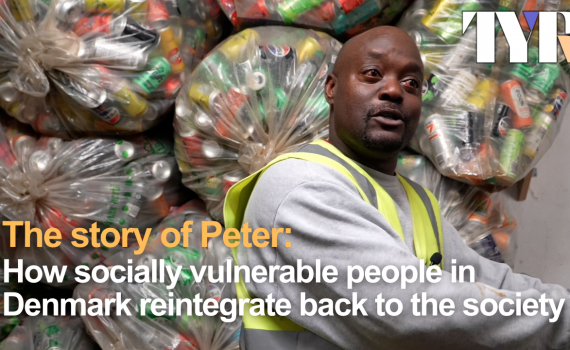
https://youtu.be/CDTs4jNfeo0 Reported by Bono Leung Chi-ngai Edited by Henry Siu Tsz-hang Video description: Peter is one in around 17,000 people in Denmark receiving a Socialt Frikort, a card that is applicable for socially vulnerable people to obtain a certain amount of tax-free income. He is currently a driver for PantForPant, a working community under the NGO Foreningen Gade Liv that hires socially vulnerable people. Here he shares his reintegration process back into the society.
Mourners grieve at Taipei Main Station after deadly stabbings
- 2025-12-21
- Society
- The Young Reporter
- By: CHAN Wing Yiu、LAI Uen LingEdited by: Wing Chi HO
- 2025-12-21
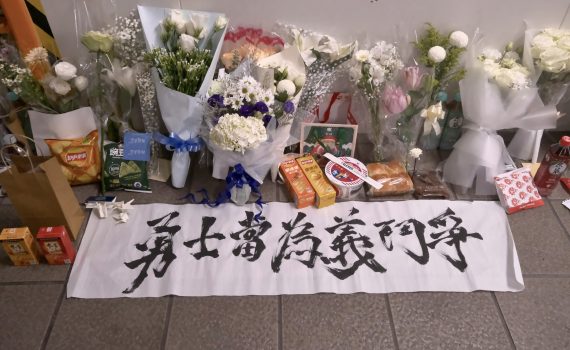
Flowers, handwritten notes and candles for memorial are placed at Taipei Main Station, following a deadly attack on Friday night that left at least four people dead and 11 others injured. Police said the suspect, Chang Wen, 27, set off multiple smoke bombs inside the station before launching a knife attack. Police added that he later moved to the Zhongshan shopping district, a popular commercial area, where the assault continued. After the attacks, the suspect fell to his death from a department store building, Director-General of National Police Agency of Taiwan Chang Jung-hsin said at a press conference. Authorities said Chang had an outstanding warrant for evading military service and is believed to have committed the crime alone. While the motive remains unclear, investigators said the attacks appeared to be planned. In response to the incident, Taipei Mayor Chiang Wan-an announced on Saturday that the city government implemented various measures, including strengthening police deployment and increasing random inspections throughout the city. Around 2,000 police officers are assigned at metro stations and other key locations to enhance security measures across the city, according to the National Police Agency. Taiwan President Lai Ching-te pledged a full public inquiry and offered condolences to the victims and their families on his official page. According to his Facebook page, he visited hospitals on Saturday to meet survivors and express support.

Taiwan's president Lai Ching-te deeply moved by A Foggy Tale, a film on Taiwan’s White Terror
- 2025-11-22
- Society
- The Young Reporter
- By: CHAN Wing YiuEdited by: Wing Chi HO、AU YEUNG Jim
- 2025-11-22
TAIPEI, Taiwan – Taiwan’s President Lai Ching-te attended the screening of A Foggy Tale, a Taiwanese film about the era under authoritarian rule, in the Xinyi District on Friday. The historical drama is about Taiwan’s White Terror period, the political suppression from the 1950s to 1990s when Taiwan was ruled by the Kuomintang. The film follows a girl from Chiayi, who travels to Taipei alone to collect her brother’s remains and meets a former soldier, now working as a rickshaw driver. After the screening, Lai said to the audience that he was deeply moved by the film, set in 1951, the year he was born. “In that era of the White Terror, many people might have had nothing at all, except courage, they only wanted to step out of the thick mist and see a bright future, they had no conditions, no resources—only courage,” Lai said. “Back then it was 1954, and now it is 2025. We have come this far through the sacrifices and dedication of many people,” Lai said. “I truly hope that everyone who watches this film can understand how difficult the past was, and that we must all cherish the achievements of today as we move toward a better future.” “White Terror” refers to the political suppression of dissidents carried out by the Kuomintang from 1949 to 1992, which included mass arrests, interrogations, trials and imprisonments and even executions of suspected communist spies or independence advocates, according to the National Human Rights Museum of Taiwan. The Kuomintang lifted the Martial Law in 1987 with the “Temporary Provisions Effective During the Period of National Mobilisation the Communists Rebellion” repealed in 1991, according to the National Human Rights Museum, putting an end to the era of political suppression and the restriction of civil and political rights in Taiwan. …

Kruger's backstory: the conservationists protecting South Africa’s wildlife
- 2025-09-20
- By: Dake Liu、Wenhui Li、Wing Yan Chan、Ruqing ChenEdited by: Robin Ewing
- 2025-09-20
This project is part of an independent reporting trip by HKBU journalism students to South Africa this summer to explore animal conservation efforts in the lead up to World Rhino Day on Sept 22. GREATER KRUGER AREA, South Africa – The moment we locked eyes with two tawny lions from our open-sided vehicle in Kruger National Park in South Africa, the world fell away. Their necks were brushing softly, as if they were murmuring secrets to each other. The wind rustled the grass, and cameras clicked nonstop. In that raw, heart-stopping silence, we felt the ancient pulse of Africa, a jolt of pure wildness. Kruger National Park is one of Africa’s remaining lion strongholds. In August in the park, many of the animals on the African savanna are on the move, but poachers are also lying in wait, ready to strike. As a group of student journalists who love wildlife and nature, we came to South Africa to see what efforts people here have been making to protect animals in Kruger National Park and the Greater Kruger Area. The official park, South Africa's largest wildlife reserve and one of the largest in Africa, covers approximately two million hectares of vast wilderness. It is a crucial sanctuary for biodiversity, a place where the coveted “Big Five” – lion, leopard, elephant, rhinos and Cape buffalo – can be spotted. Every year, millions of visitors are drawn here, eager to experience a close encounter with them. The park lies inside of the Greater Kruger Area, a large network of unfenced private and community-owned nature reserves that lies to the west, forming one contiguous, massive wildlife ecosystem. These private reserves share no fences with Kruger National Park, allowing wildlife to roam freely across the entire region. Yet what feels like untouched wilderness is in …
What Sparked Indonesia’s Violent Protests and What It Means for Democracy
- 2025-09-19
- Society
- The Young Reporter
- By: KURNIAWAN Trista VaniaEdited by: LAI Uen Ling
- 2025-09-19
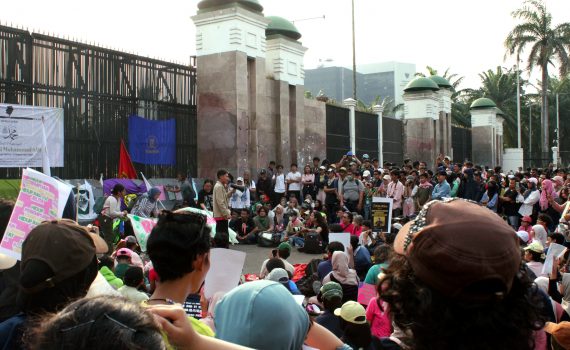
Thousands of protesters swarmed the streets of Jakarta on Aug. 25, outraged by Parliament’s approval of a new monthly housing allowance that is ten times the minimum monthly wage in Indonesia. Within a week, what began as questions over economic imbalances turned into violent protests in 20 major cities against police brutality, demands for the protection of vulnerable communities, and worries about the future of Indonesia’s democracy. From Aug. 25 to 31, the Indonesian Legal Aid Foundation reported more than 3,000 people were arrested and 10 were killed. Despite a government response, people are still unsatisfied and fighting for democracy. The Underlying Cause Tito Ambyo, an Indonesian journalist and journalism lecturer at the Royal Melbourne Institute of Technology, said the political and economic frustrations have been growing since people expected reformation after the violent protests in 1998. In May 1998, a riot broke out due to economic inequality, corruption, and the authoritarian rule of President Suharto. It escalated to the targeting and attacks of Chinese Indonesians and the destruction of public property. “After the 1998 riots and our president stepped down, we won. But the next leaders were disappointment after disappointment,” he said. In 2012, former President Susilo Bambang Yudhoyono’s cabinet faced corruption allegations, with his ministers, including the Chairman of the House of Representatives, indicted by the Corruption Eradication Commission. Ex-President Joko Widodo’s government passed a job creation law aimed at easing work regulations and encouraging investment in 2020. However, it sparked public protests because the bill was seen as weakening workers’ rights and opportunities. He described the Indonesian elites in the government as “careless” and “callous” with their actions. Protesters took to the streets on Aug. 25 after the House of Representatives announced the members of parliament would receive a monthly housing allowance of 50 million rupiah (HK$23,676). …

Brisbane’s West End celebrates Kurilpa Derby with parade and festivities
- 2025-09-17
- Society
- The Young Reporter
- By: CHAU Wing YauEdited by: CHAN Wing Yiu
- 2025-09-17
BRISBANE, Australia — The 2025 Kurilpa Derby took place on 14 September, continuing an 18-year tradition in the West End suburb in Brisbane, Australia. The word “Kurilpa” means “home of the water rat”, showing the West End suburb’s history as a natural habitat for water rats and a place where First Nations people once lived. The West End Community Association organises the parade annually in recognition of Indigenous heritage and celebrates the community’s spirit. Participants decorated their wheels in various creative styles and dressed up for the parade. A series of activities following the Kurilpa Derby parade, including a doggy fashion parade, Samba performance and live music. Follow the link below to watch the full reel: https://youtube.com/shorts/vOYWsjYb81Q?si=i10rLg1kZpImBD-d
Sawed-Off Horns: The Rhino’s Trade-Off for Survival in South Africa
- 2025-09-16
- By: Dake Liu、Wenhui Li、Ruqing Chen、Wing Yan ChanEdited by: Robin Ewing
- 2025-09-16
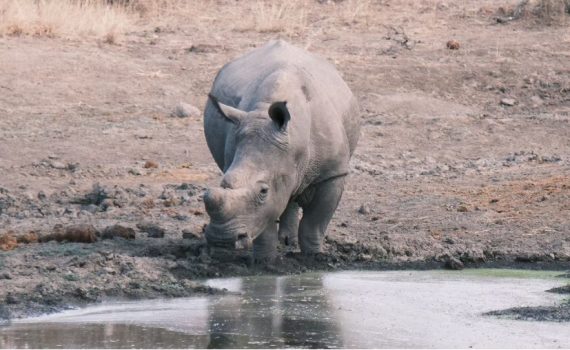
This project is part of an independent reporting trip by HKBU journalism students to South Africa this summer to explore animal conservation efforts in the lead up to World Rhino Day on Sept 22. KRUGER NATIONAL PARK, South Africa -- Beneath the harsh African sun this August, the rhino pauses at the edge of a watering hole. Its body is a marvel of strength—thick, leathery hide folded like ancient parchment, dotted with ticks and patches of dried mud that crack when it shifts its weight. Its legs, short but sturdy as tree trunks, carry it forward with a slow, deliberate gait. But as our gaze moved to its face, we were startled to see only a stunted remnant of its rhino horn. On a safari in Krueger National Park in South Africa, we turned to the guide with questions. Had the horn been poached? No, the guide told us. It was the national park itself that chopped off the rhino's horn. This measure, known as dehorning, aims to protect these creatures from poachers that hunt and kill them for their horns. South Africa, home to nearly 70% of Africa’s remaining rhinos, remains the epicenter of a violent and escalating poaching war. At least 2,212 rhinos have been killed for their horns since 2020, according to data from Kreuger National Park. Rhino horns are highly valued in wildlife black markets for their use in traditional Chinese medicine and as status symbols in Asia, such as Vietnam. The South African government, which manages Kruger National Park, has adopted rhino dehorning as its key anti-poaching strategy. And while this has proven effective, poachers have recently started targeting even dehorned rhinos for their remaining stump. And some recent studies have found that rhinos are negatively impacted by the loss of their horns, bringing the …