This project is part of an independent reporting trip by HKBU journalism students to South Africa this summer to explore animal conservation efforts in the lead up to World Rhino Day on Sept 22.
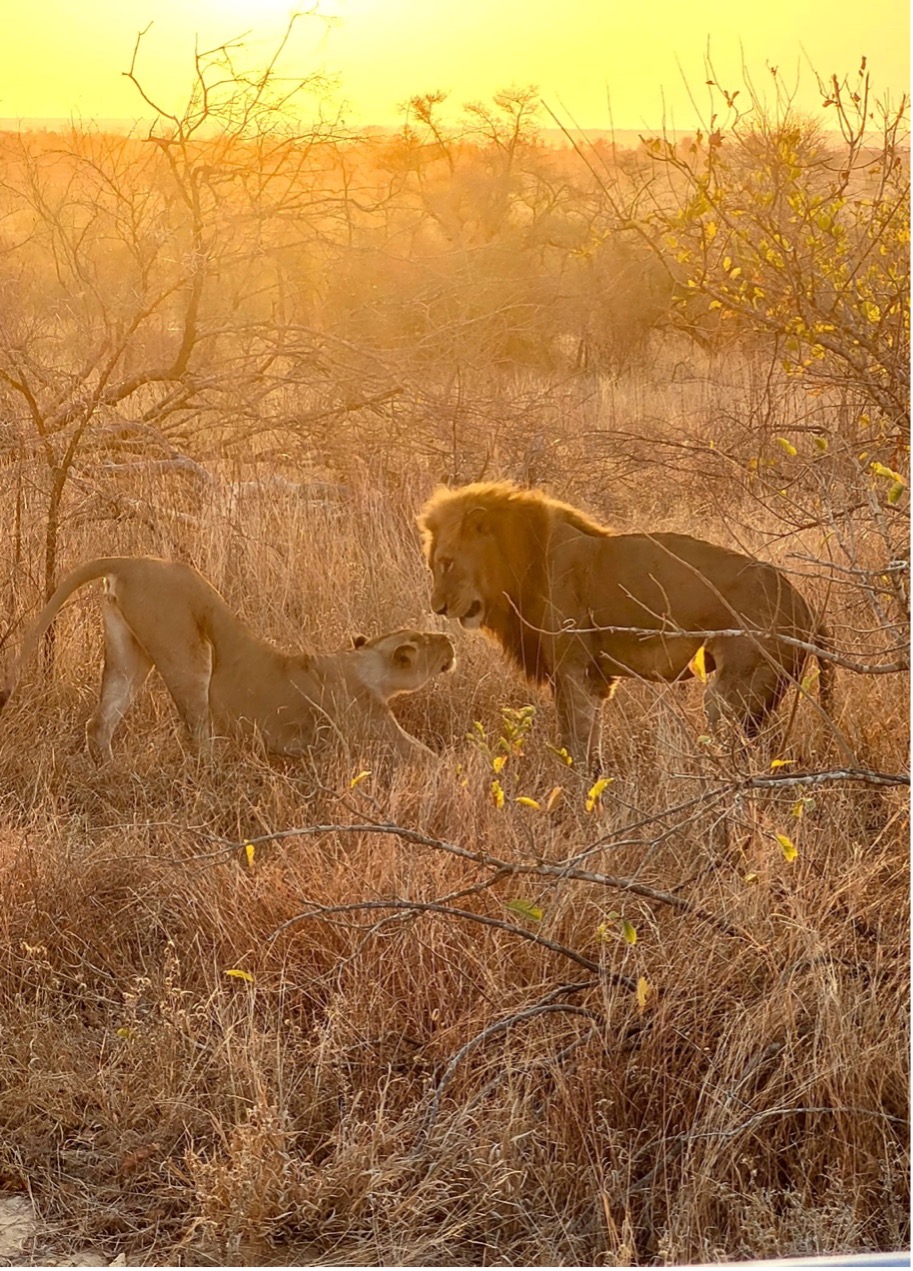
GREATER KRUGER AREA, South Africa – The moment we locked eyes with two tawny lions from our open-sided vehicle in Kruger National Park in South Africa, the world fell away. Their necks were brushing softly, as if they were murmuring secrets to each other. The wind rustled the grass, and cameras clicked nonstop. In that raw, heart-stopping silence, we felt the ancient pulse of Africa, a jolt of pure wildness.
Kruger National Park is one of Africa’s remaining lion strongholds. In August in the park, many of the animals on the African savanna are on the move, but poachers are also lying in wait, ready to strike. As a group of student journalists who love wildlife and nature, we came to South Africa to see what efforts people here have been making to protect animals in Kruger National Park and the Greater Kruger Area.
The official park, South Africa's largest wildlife reserve and one of the largest in Africa, covers approximately two million hectares of vast wilderness. It is a crucial sanctuary for biodiversity, a place where the coveted “Big Five” – lion, leopard, elephant, rhinos and Cape buffalo – can be spotted. Every year, millions of visitors are drawn here, eager to experience a close encounter with them.
The park lies inside of the Greater Kruger Area, a large network of unfenced private and community-owned nature reserves that lies to the west, forming one contiguous, massive wildlife ecosystem. These private reserves share no fences with Kruger National Park, allowing wildlife to roam freely across the entire region.
Yet what feels like untouched wilderness is in fact carefully preserved through a complex, multi-layered conservation system involving those enacting government policies in the park and those outside its boundaries in the private sector. These conservationists are trying to protect the same group of vulnerable animals over a vast tract of land. While there are dozens of NGOs and private companies operating in the Greater Kruger region, we visited four working to educate locals and visitors and conserve wildlife.
Wildlife in the Kruger region is often in urgent need of rescue, most notably from poaching attempts. Poachers, who target animals for their meat, tusks, pelts, or other body parts, frequently leave their victims injured rather than killing them outright. Sometimes they flee when interrupted; other times, they lose track of wounded prey that manage to escape.
These animals—left shot, poisoned or orphaned after their parents are killed—rarely survive on their own in the wild. Without human intervention, the consequences are often fatal: untreated wounds turn septic, starvation sets in, or the lingering effects of poison take their toll.
Moholoholo Wildlife Rehabilitation Centre has cared for 254 injured animals in the last year. A poisoned vulture, a baby monkey orphaned by a car and a leopard caught in a poacher’s snare—the scenarios vary.
“The first step of the process of animal rescue is documentation, carefully noting each animal’s injuries and condition,” said Even Darian, a caregiver and tour guide at Moholoholo who carries out rescue, rehabilitation and release work. "We have to know what we’re fighting for before we can fight it”
“Most poachers shoot or poison wild animals,” Darian said, noting that while gunshot wounds are more common, they are often more treatable if responders arrive quickly. "With a gun... if it's not too bad, we can patch it up," he said, explaining that wild animals often have a thick layer of fat or muscle that protects them.
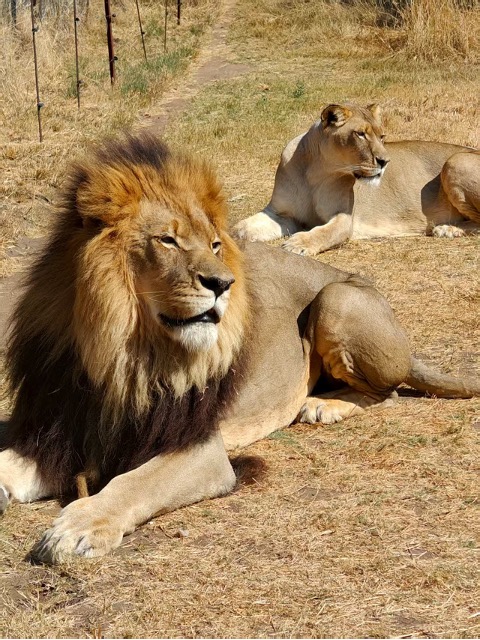
“A few years ago, our center took in a male lion that had been shot in its right leg. Due to years of running, the lion had extremely well-developed leg muscles. As a result, it not only did not suffer a severe injury, but also sprinted away before the shooter could reload and fire a second shot,” Darian said.
Poisoning poses a more devastating threat to wildlife as it spreads through the ecosystem, Darian said. “Poachers poison carcasses to eliminate vultures, whose circling flocks alert rangers to illegal kills, and for their brains; they can be used for supposed clairvoyant powers,” he said.
A single poisoned carcass triggers a toxic chain reaction, killing scavengers, predators, and other animals that feed on it. It also contaminates soil. Data from Moholoholo highlights the crisis: last year, only two of 85 poisoned animals, including vultures and eagles, were saved.
Darian said anti-poaching activities have created stability in some areas, like near Moholoholo, but that means poachers have moved to other areas, particularly in northern Kruger near the Mozambican border.
“Our biggest success is all the cages empty,” he said.
In many communities near Kruger, poaching is driven by economic inequality, a 2020 study published by Boise State University said. Some join the poaching ranks for quick money to support their families.
Others are influenced by traditional beliefs, such as the idea that vultures possess mystical powers, according to BirdLife International, a charity that works to conserve birds.
Education can create emotional attachments to animals and reduce fear and negative perceptions, according to research from the Journal of Agricultural Education.
Located in the Greater Kruger region, Koru Camp is a nonprofit safari camp that focuses on conservation education and igniting the passion for nature in the local communities.
On the day we visited, a group of local children were eating “mielie meal pap”, a traditional South African staple made from maize, while excitedly discussing the upcoming safari. For most local families, although Kruger National Park offers drastically discounted entry to South African residents, the high cost of safari tours remains a luxury far beyond their means.
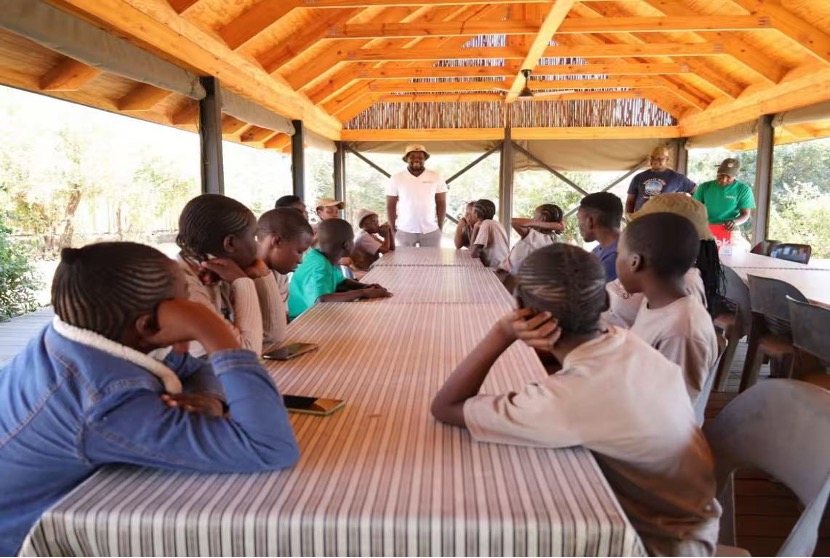
Most tour agencies charge the equivalent of HK$1,000 or more per day for a safari, around 25% of the average monthly income of residents in the Kruger region, according to Statistics SA. This means many children in local communities have never seen animals such as rhinos or leopards.
"We know that education is important in animal conservation and combating poaching, but if children have no access to see and experience animals with their own eyes, then the education work is only half done," said Eurydice Dupré, the development manager of Koru Camp.
Koru Camp focuses on showcasing the “live value of wild animals” with activities that include tracking wildlife by identifying different animal footprints, comparing the sizes and patterns of various bird eggs and teaching practical bush skills, such as tying different types of knots. Through games, DIY projects and teamwork, children learn while creating joyful and meaningful memories in the wild, Dupré said.
“The most important part of education is actually not the imparting of knowledge, but the experience of emotions,” Dupré said, “We aim to make children fall in love with animals, show them how beautiful and peaceful they are and change their attitudes and behaviors towards wild animals.”
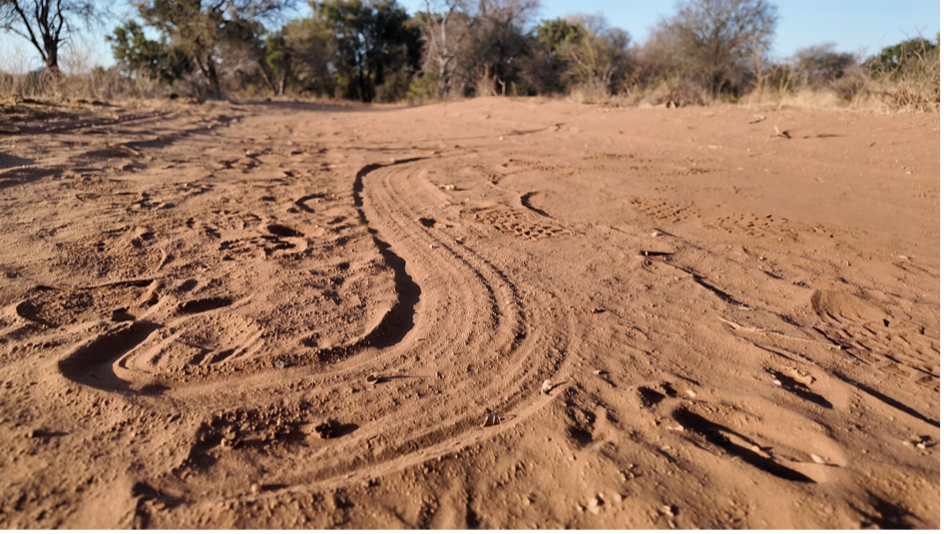
On another day, a group of us stood looking at long sweeping tracks in the dirt. “Is this the dragging path of a reptile?” a woman in our group asked. “No,” the guide clarified, “this is the track left by an elephant's trunk.”
We joined a wildlife tracking camp to learn how local NGO Wild Impact combats poaching through education in the Kruger region.
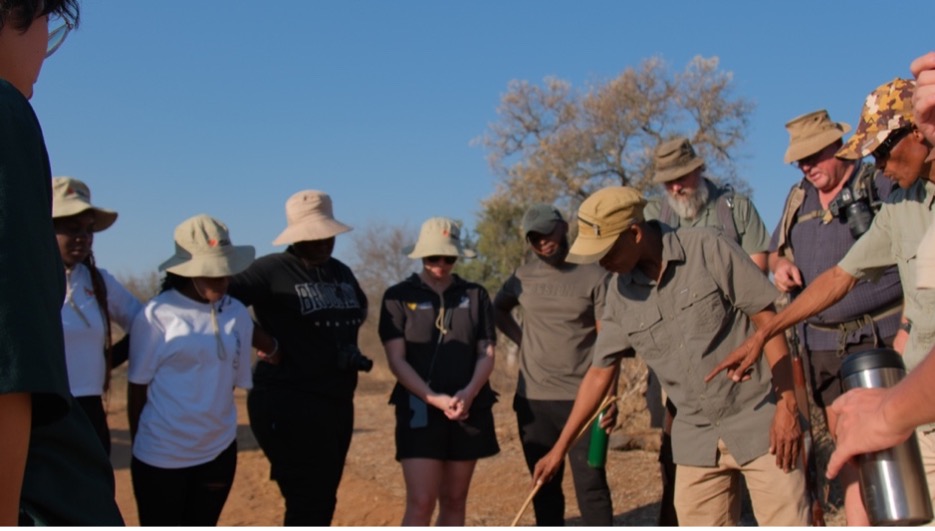
The other members of our group were locals aspiring to become safari guides. Learning to identify animal signs like footprints is a foundational step in that process, said Tanya Dobson, the Regional Manager of Wild Impact.
Its "Hustle Economy" program promotes small business development, with a focus on supporting youth and women running enterprises from family farms to artisan workshops. Creating sustainable jobs provides a viable alternative to illegal hunting, Dobson said.
"You can’t ask someone to care about saving rhinos if they’re worried about feeding their family,” said Dobson. “Only when people’s lives improve will they truly value their communities and reject harmful practices like poaching."
The organization promotes local ownership at every stage of business development, aiming to create a self-sustaining cycle in which economic empowerment directly benefits conservation efforts.
“For every individual, the first step is to foster pride in their community,” Dobson said.
Local tourism companies have also transformed from simply showing tourists animals to using the grasslands as natural classrooms.
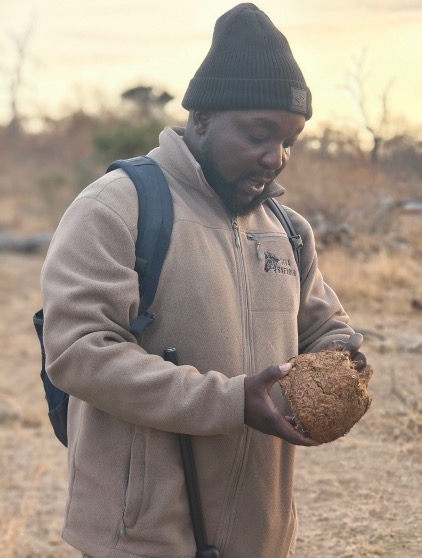
Charl Victor, working with local tourism company Viva Safaris, led our game drive in Kruger National Park. A guide since 2017, Victor said tourism companies mainly promote animal protection by educating tourists.
“The more the visitors understand nature, the greater their sense of responsibility towards animal protection,” Victor said.
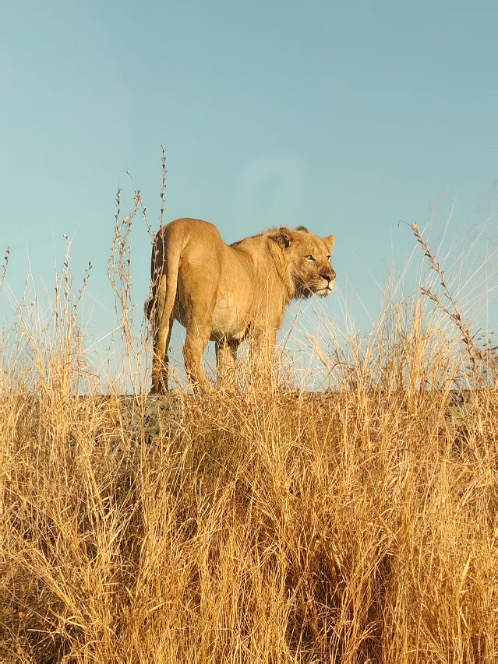
Just as we were busy taking photos of the lion, Victor told us that guides turn every wildlife encounter into a ‘classroom’.
“We will explain to tourists the behavior, ecological habits and current conservation status of animals. For example, when encountering lions hunting, we will explain their teamwork patterns and how this hunting behavior maintains the population balance of the grassland - if the number of lions is too small, overgrowth of herbivores will lead to vegetation degradation, ultimately affecting the entire ecological chain,” he said.
The money flowing from tourism is vital to animal conservation. Most funding for South Africa's national parks comes from the tourism industry with only about 20% coming from grants and individual donations, according to the website of the South African National Parks Authority.
The Greater Kruger Area contributes 6.6 billion rand (around HK$29.5 billion) annually to the South African national economy, according to a research paper in the Journal of Sustainable Tourism in 2020.
Since South Africa enacted a series of hunting bans in the 1990s, authorities have encouraged local residents to actively participate in local tourism development and related industries, such as cultural and creative industries. Approximately 285 wildlife park tourism business operate in the Kruger area, providing a variety of services from private tour guides to luxury campsites, according to independent and non-profit platform YourAfricanSafari.
One night, we stayed at the Sashwa River of Stars hotel, a social enterprise focused on wildlife conservation and youth development that channels its profits back to the Koru Camp, the safari camp for children we visited earlier.
Most of the hotel’s employees come from previously disadvantaged communities, said general manager Ian Shoebotham. “These communities do not have many job opportunities due to their distance from cities such as Johannesburg,” Shoebotham said. “But now they can stay with their families, and we offer training and career paths for unemployed youth who come through our partner organizations.”
A 2017 study said Kruger National Park created around 10,400 job opportunities for locals with 1.2 billion rand (HK$5.23 billion) in wages. More recently, the South Africans National parks system reported it is creating thousands of jobs for young people.
On our way back to Johannesburg, a young male lion passed by our car and turned to look at us, as if bidding us farewell. We stared at each other for a long time, holding our unspoken words tight.
《The Young Reporter》
The Young Reporter (TYR) started as a newspaper in 1969. Today, it is published across multiple media platforms and updated constantly to bring the latest news and analyses to its readers.
What Sparked Indonesia’s Violent Protests and What It Means for Democracy

Typhoon Ragasa: Preparation of supplies before storm approaches


Comments