
At Kwun Tong Yue Man Square Public Transport Interchange, one of the city’s busiest transport hubs, 55-year-old red minibus driver Saniel Ng would clock off from a 13-hour shift at 9pm on most days with a take-home pay of just about HK$1,000.
As Ng looked around the transport interchange, he noted that even though there were some queues of passengers waiting for red minibuses, ridership was not what it used to be.
“Bus companies have taken away the business,” said Ng, who has been a red minibus driver for more than 20 years. “Without enough passengers, it’s hard to survive.”
For decades, Hong Kong’s red minibus has been better known for its high speed and unruly round-the-clock service. But the trade is at risk of becoming a remnant of old Hong Kong as the city’s mass transport network continues to modernise.
There are two types of public light buses, differentiated by their roof colours and service flexibility. Red minibuses operate on flexible routes with fares that drivers can adjust based on demand and the time of day, whereas green minibuses run on fixed routes and schedules set by the government.
Red minibuses are disappearing, with passenger numbers falling by more than half, or 50.5%, from 295,000 in 2017 to 146,000 in 2024, according to Transport and Logistics Bureau data compiled in a Legislative Council research report published in March last year.
Commercial vehicles in Hong Kong must obtain operational licences from the Transport Department. The price of a minibus operating licence, for both red and green minibuses, also dropped 47% between 2022 and 2024, from HK$1.7 million to HK$900,000, far below its 2014 peak of HK$5.5 million.
Despite green minibuses having recorded a recovery in passenger volume since 2022, red minibuses have continued to see a decline in their passenger volume, according to another LegCo report published in July last year.
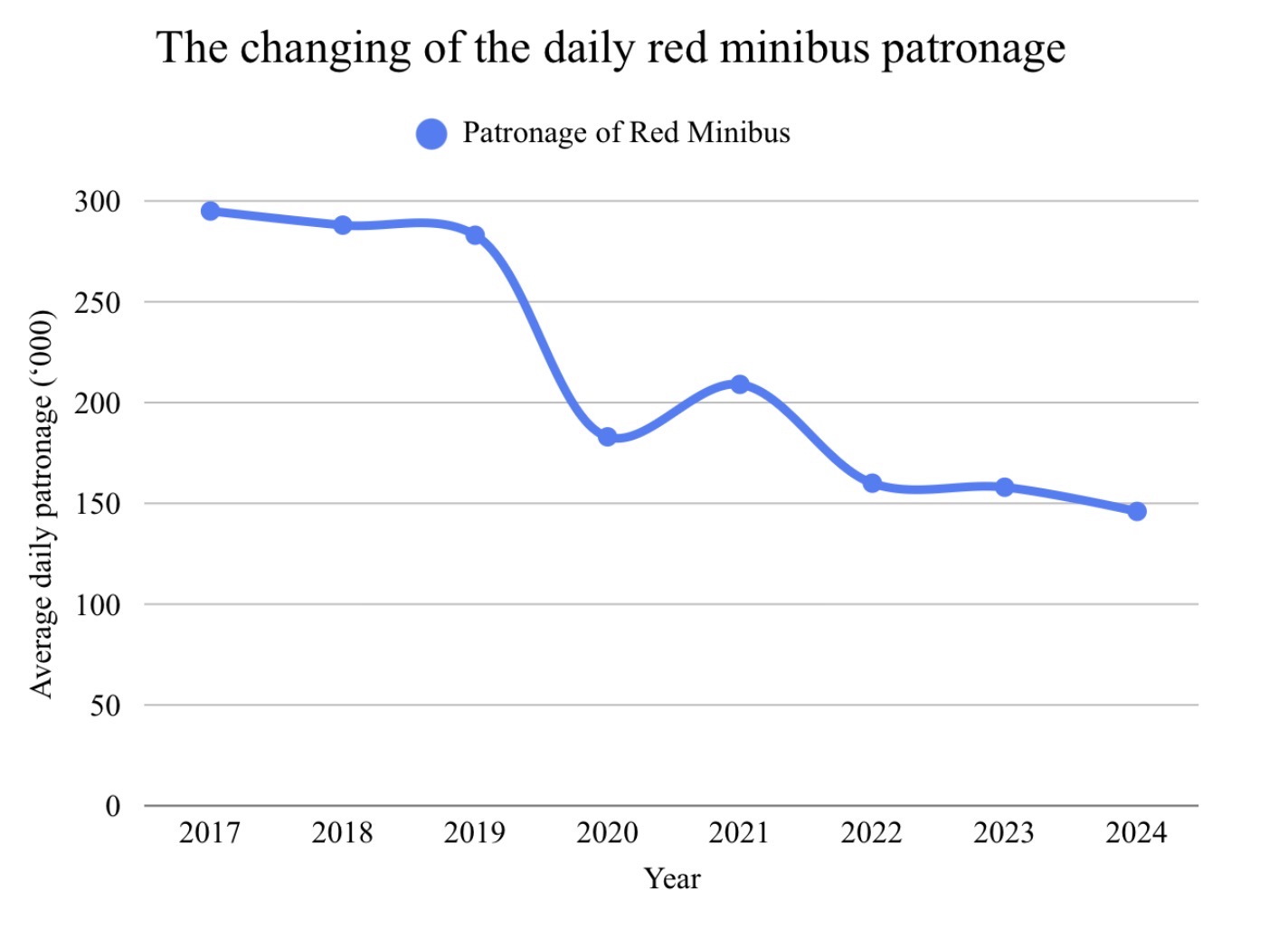
Since rail coverage expansion across Hong Kong in the 2010s, red minibuses are no longer the preferred mode of transport for local passengers.
“There used to be a major red minibus stop named Daimaru in Causeway Bay,” said Franki Lee, who runs AN Bus, a red minibus company.
“After the West Island Line opened, it disappeared within a week,” Lee said.
To save costs, red minibus operators are trimming routes, with limited overnight service. The red minibus fleet has declined from 921 in December 2024 to 707 vans in September 2025, a drop of around 23.2% within eight months.
“There used to be hundreds of red minibuses at Kwun Tong Yue Man Square Public Transport Interchange, but now only 20 or 30 remain,” said Hung Chau, 60, also a red minibus driver.
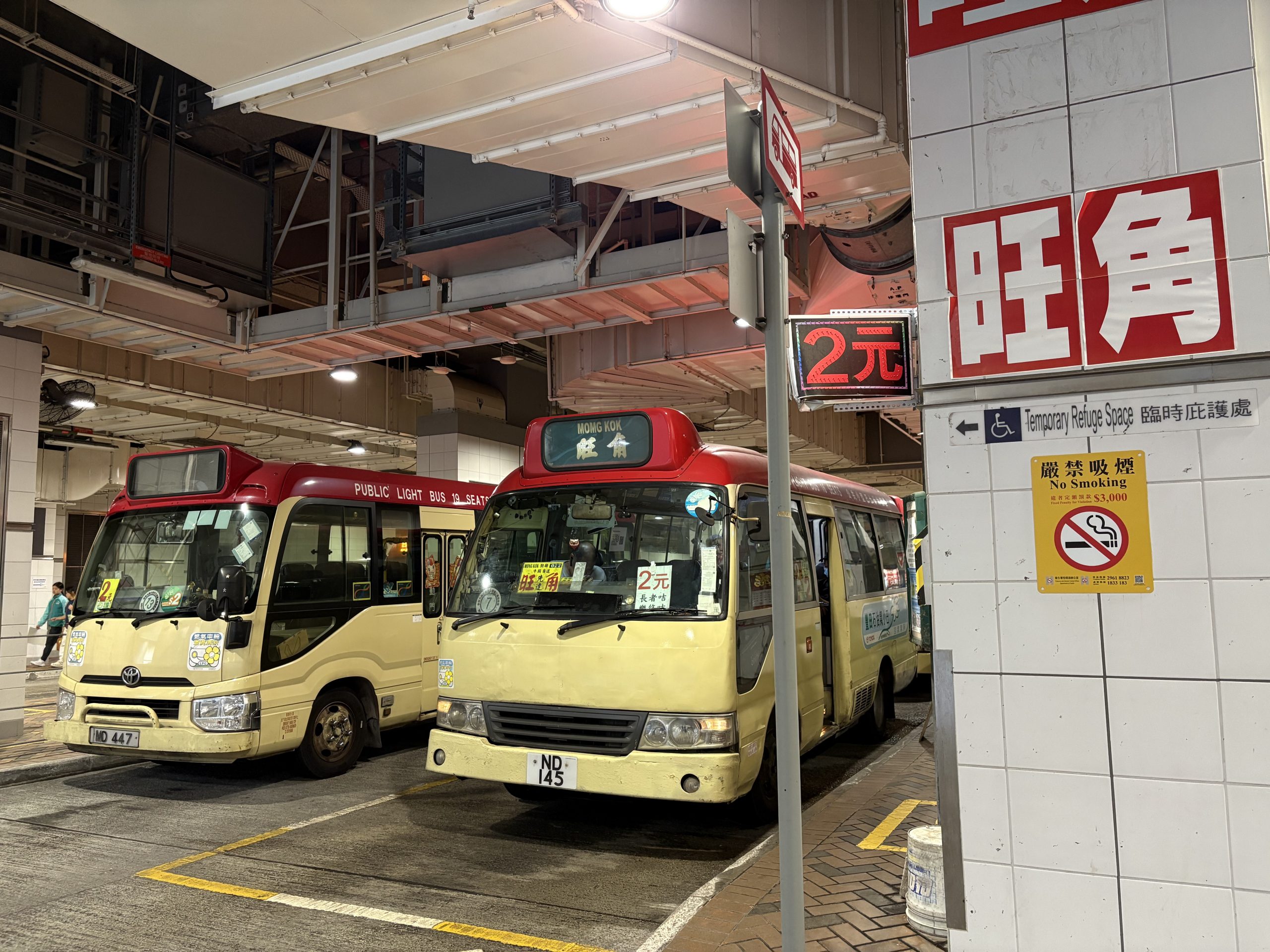
However, reduced services have pushed more passengers away, making the red minibuses less convenient.
“The red minibus doesn’t go to my workplace,” said Rosa Lam, a 40-year-old Kwun Tong resident. Even so, she said it is more comfortable and less crowded than travelling by MTR.
Uncertainty also deters new riders, as red minibuses can skip a stop if no one requests to get off. “I almost missed work on my first red minibus ride because I didn’t know when to get off,” said Hugo Chung, a 20-year-old who commutes to work by red minibuses.
“Red minibuses aren't commonly used among young people,” he added. “If I can choose, I won’t go to work by red minibus.”
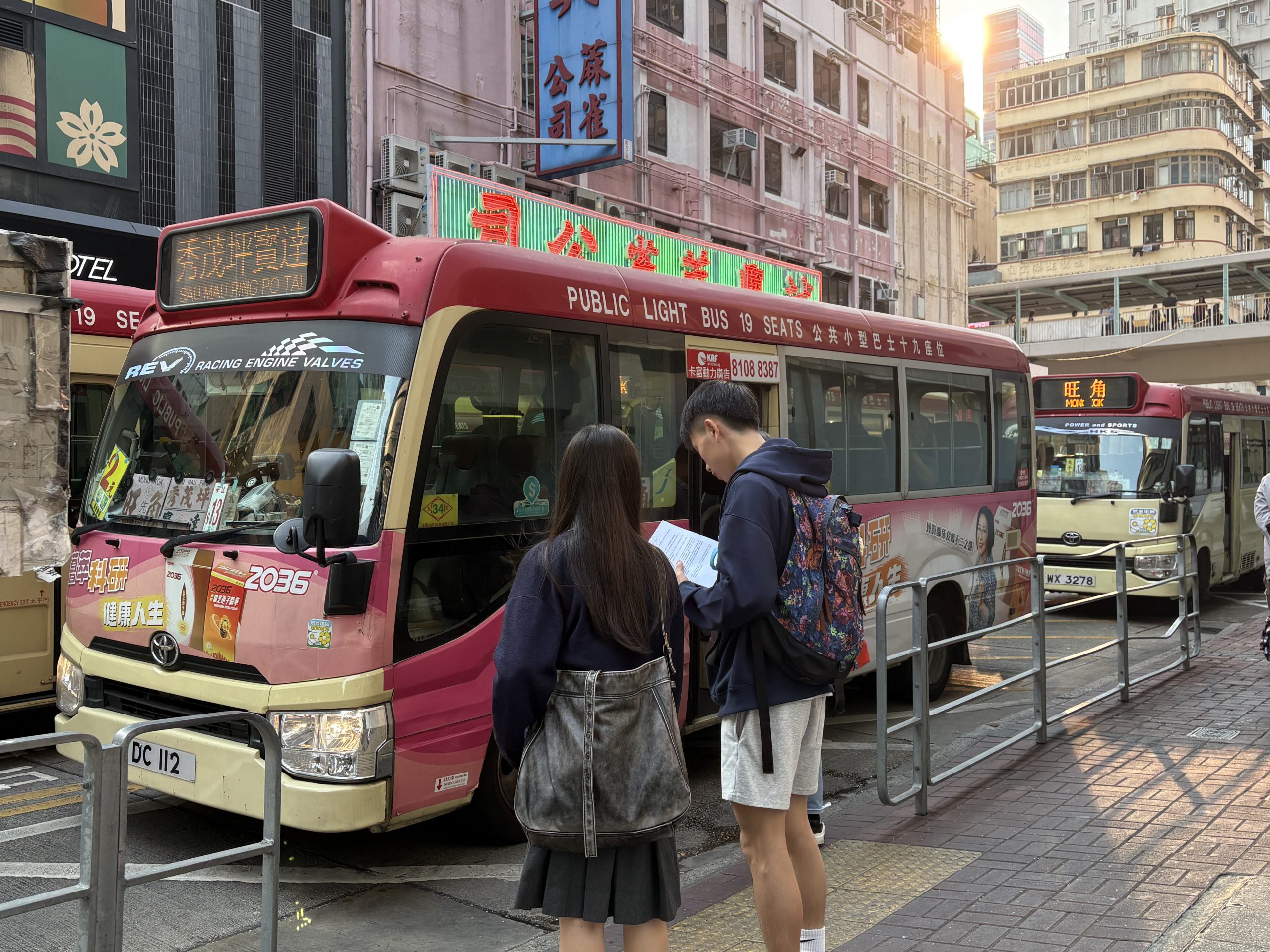
Falling ridership and rising fuel costs are cutting drivers’ take-home pay.
Unlike regulated green minibuses, most red minibus drivers’ income is directly tied to passenger flow and fares.
Ng, the 55-year-old red minibus driver, said fuel costs are around HK$300 per day, while the daily vehicle rental and licence fees total about HK$500.
As Ng is employed by a red minibus company that helps to cover the fuel and rental costs, he earns around HK$1,000 per day for a 13-hour shift.
But for other red minibus drivers who are self-employed, the situation is worse.
Daniel Wong, a red minibus driver in his 60s, said fuel prices have a huge impact, making the job “barely worth it”.
“We have to spend HK$400 to 500 on fuel per day, especially when the air-conditioning has to run non-stop in summer,” Wong said.
“I make almost nothing on holidays as my revenue just breaks even with costs,” he added. “Just like volunteering.”
“But on weekdays, I can net HK$500-600 for a 16-hour shift, because there are more students and workers,” said Wong.
Wong said the passenger flow is only 20% of what it was 20 years ago.
“We used to work non-stop from 5am to 9pm, and the queue could be 200 metres long,” said Wong as he recounted the glorious days.
Ng also said many self-employed red minibus drivers’ incomes have been halved, from HK$2,100 to HK$1,300 before overheads, due to the falling ridership.
The declining income of red minibus drivers has affected Ng’s life.
“I even play mahjong less often now. I can’t afford to bet as much as before,” he added.
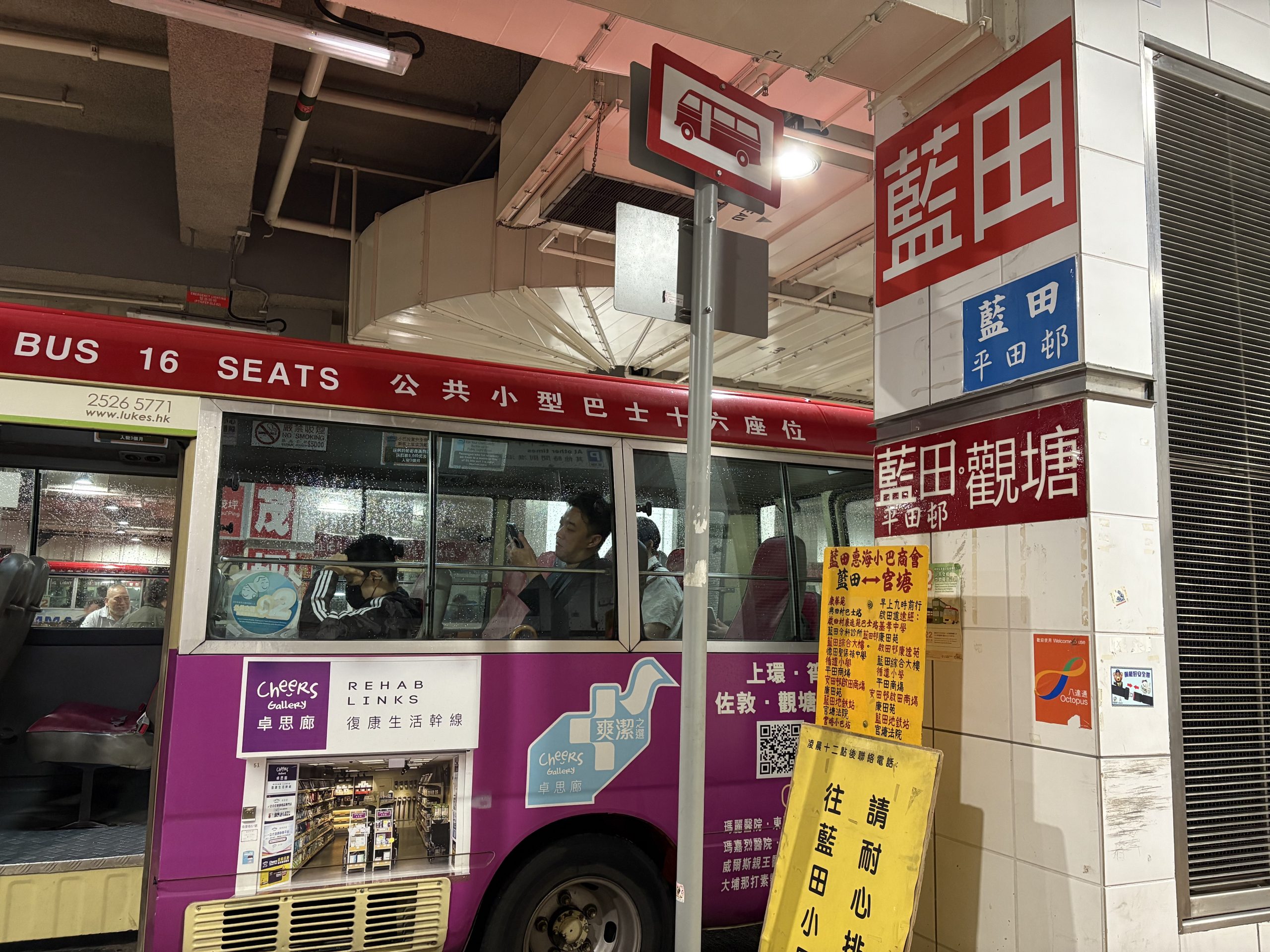
The unfavourable remuneration has pushed red minibus drivers to leave the trade.
The July LegCo report also estimated a shortage of about 2,000 minibus drivers in 2023, against a total demand of 8,300. That same year, the government introduced a labour importation scheme to fill the service gap.
As of February 2025, there were 680 imported minibus drivers, mostly from mainland China, to replace local drivers, according to media reports.
Even so, Franki Lee said the sector needs to innovate to stem the decline.
“We hope to have real-time passenger information boards showing arrival times at the minibus stops,” said Lee.
“These are common in the bus industry, but not yet on minibuses.”
Lee also called for wheelchair-accessible service for red minibuses, including advance reservation and vehicles with low floors that allow direct boarding and disembarking for wheelchair users.
“We try to adapt successful practices from other transport sectors to the minibus industry to bring about a positive impact and attract more passengers.”
《The Young Reporter》
The Young Reporter (TYR) started as a newspaper in 1969. Today, it is published across multiple media platforms and updated constantly to bring the latest news and analyses to its readers.
15 schools, one record blow: the struggles of zero primary one classes in Hong Kong

More than just a parade: Cheung Chau Bun Festival 2026


Comments