
Health & Environment

Asian-inspired flavours take centre stage at HK gelato festival
- 2026-10-08
- Society
- By: Baguio AnneEdited by: Fu Rong
- 2026-10-08
https://youtu.be/JclqSdmYdas?si=Aj4NY2NJcgZ9LKZ_ Reported by Linnea Hedman, Anne Baguio Edited by Audrey FU Rong Video description: Hong Kong’s largest gelato festival, Ciao! Gelato Fest 2026, has returned to PMQ in Central, bringing together 20 gelato brands from Hong Kong, Italy, Macau and Portugal. The festival features more than 30 limited-edition and debut flavours, including Asian-inspired creations such as Hong Kong French toast, pineapple bun and mochi. The event attracted long queues and a diverse crowd during the National Day Golden Week, with visitors from Hong Kong, mainland China, and more. According to PMQ, daily visitor traffic increased by 12 % compared with last year, averaging 12,000 visitors a day. With free admission, Ciao! Gelato Fest takes place at PMQ from Oct. 1 to 4 and Oct. 9 to 11.

Po Pin Chau visitor cap overrun on National Day, almost half absent
- 2026-10-03
- Health & Environment
- The Young Reporter
- By: Yutong SuEdited by: YANG Shuyi
- 2026-10-03
The number of reserved visitors for Sai Kung’s Po Pin Chau on National Day reached 2,420, exceeding the original official capacity limit of 2,000, yet only 1,160 people visited the spot, according to the Agriculture, Fisheries and Conservation Department. That came as the department announced on Aug. 21 that during the weekends, the Mid-Autumn Festival, and the National Day “golden week” from Sept. 5 to Oct. 7, visitors must make an appointment in advance to visit the High Island Geo Trail-Po Pin Chau Section of the High Island Reservoir East Dam in Sai Kung. Visitors must make a reservation via online travel agency Klook and present both the electronic confirmation and proof of identity to gain entry on the day of visit. On the National Day, environmental NGO Greenpeace conducted a field visit, and said crowding and trail damage remained serious despite the booking system, it said in a statement. Greenpeace called on the authorities to lower the daily quota of 2,000, prioritise repairs to damaged sections of the trail, and consider stronger measures such as seasonal closures or closing degraded segments during peak periods. “In the long run, the Culture, Sports and Tourism Bureau and the Environment Bureau should implement cross-departmental cooperation to carry out carrying-capacity studies on ecologically sensitive sites across Hong Kong and formulate a conservation-first ecotourism policy,” it wrote. Peng Liqing, Assistant Professor in the Department of Geography at the University of Hong Kong, said while visitor caps are direct management tools, their actual effectiveness ultimately depends on quota calibration and visitor behavior management. Before the policy was implemented, the East Dam—the starting point of Po Pin Chau—recorded a daily average of 2,900 visitors during this year’s May Day holiday, peaking at 5,700 in a single day, the AFCD said. According to the Policy Address 2026, …
Prolonged waiting for treatment worsens mental illness sufferings
- 2026-05-03
- Society
- The Young Reporter
- By: MA Yifan Chloe、SHI Puxuan AmyEdited by: CHEN Xiyun
- 2026-05-03
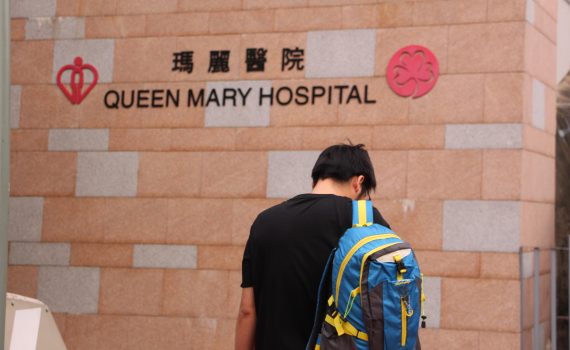
Vivian Chan, a 16-year-old Form Five student in Wong Chuk Hang, had her life trajectory changed three years ago when she was bullied and sexually harassed at just 12 years old. The incident left her isolated, led to suicide attempts, and resulted in a year-long struggle with mental health symptoms before she finally received a diagnosis and started treatment at Queen Mary Hospital. Chan was diagnosed with moderate depression in early 2024, one year after her depression began to arise, which gradually worsened due to extended outpatient waiting times and delayed community intervention, she said. Hong Kong’s public hospital psychiatric clinics have long been plagued by lengthy waiting times and a severely imbalanced doctor-patient ratio, with the longest waiting time for new outpatient cases reaching up to 101 weeks in 2025. While the government seeks to strengthen community mental health interventions in the hope of shortening clinical waiting lists, the effort is hampered by a shortage of resources for social workers’ early identification and prevention services training. The number of new psychiatric outpatient cases at public clinics has continuously increased from 47,879 in 2022 to 53,353 in 2025, according to the Hospital Authority. Around one in five urgent patients faces a median waiting time of one to three weeks for treatment, while the median waiting period for most non-urgent patients ranges from 17 to 76 weeks. After joining Queen Mary Hospital’s waiting list in 2024, Chan eagerly awaited professional medical help, only to endure a 28-week delay. Chan felt intense pain and helplessness during the waiting period. “Without a diagnosis, I kept overthinking if I was truly sick,” she added. She once locked herself in her bedroom for weeks to escape from the painful reality. “I pulled the curtains to block out sunlight, wrapped myself in blankets, and couldn’t hold …

Primal Race held during the Hong Kong Sevens weekend
- 2026-04-29
- Society
- The Young Reporter
- By: FENG ZhenpengEdited by: Fu Rong
- 2026-04-29
Primal Race debuts in Hong Kong from April 17 to 19, colliding with the Hong Kong Sevens tournament in Kai Tak Sports Park. It offers people in Hong Kong a chance to qualify for the Primal Race World Championship. Follow the link below to watch the full reel: https://www.instagram.com/reel/DXoCoSVE7nb/?igsh=MXVyNGJwdzUxbGkxeQ== Reported by: Stephen Feng Zhenpeng Edited by: Audrey FU Rong
What does Lamma Winds’ closure mean for Hong Kong’s renewables strategy?
- 2026-04-28
- Society
- The Young Reporter
- By: AU YEUNG JimEdited by: SIU Tsz Hang
- 2026-04-28
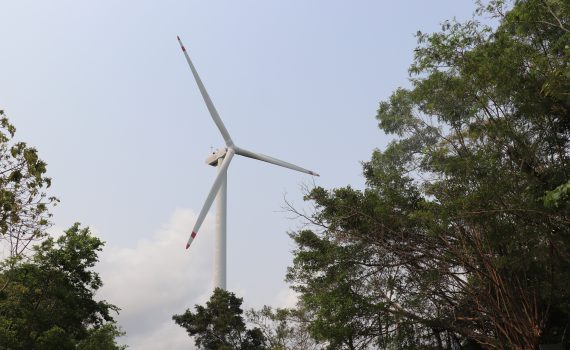
Joe Chen, 40, and Bibi Chung, 35, climbed up a 15-minute slope to reach the Lamma Winds – Hong Kong’s first wind power station – in Lamma Island, on a quiet Tuesday. They took pictures in front of the turbine, trying different angles to fit the entire 71-metre-tall wind farm into a single frame. This is probably the last time they can do so. In a press release issued in late March, the wind farm’s operator, HK Electric, said the turbine had reached its lifespan of 20 years in February. The company added most key components are no longer in production, paired with market availability and site limitations, meaning a new commercial scale turbine cannot be installed in the same location. It will therefore be decommissioned for public safety later this year, according to its website. “Last time we came here, the wind blades were still moving,” Chen said. “It is no longer moving now.” Lamma Winds was built in 2006, the first of its kind in the history of Hong Kong. It is also the first commercial-scale renewable facility built by a power company in Hong Kong. According to HK Electric, Lamma Winds was designed with a capacity of 800 kW. The construction cost was HK$15 million, and it took five years to complete. The power giant said the wind turbine has generated 16 million kilowatt hours of electricity over its 20 years. Wong Kam-sing, former Secretary for the Environment, said the decommissioning would not change the scale or direction of the city’s renewable energy development. “Based on the government’s 2050 strategy plan, onshore wind farms are actually not part of our future development strategy,” Wong said. “Lamma Winds is mostly a demonstration of the technology we had 20 years ago, therefore it has no special relationship with Hong …

Long queues for special child care centres: what does over a year’s wait mean for families?
- 2026-03-11
- Society
- The Young Reporter
- By: SHI Puxuan Amy、MA Yifan ChloeEdited by: QIN Ziyang
- 2026-03-11
In a sunlit activity room of the Cheung Sha Wan Special Child Care Centre, young children are drawing with a therapist’s help. Nearby, another repeats words prompted by a speech therapist. These simple moments are government-subsidised intensive rehabilitation training for children with disabilities. Cherry Lee, 41, waited nearly two years for her daughter with moderate autism to access such a facility and receive intensive training. “It would have been better if my daughter could have entered the centre sooner,” she said. “At the very least, she could have had an earlier opportunity to develop essential self-care skills.” Hong Kong’s 52 government-funded Special Child Care Centres provide full-day centre-based care and cognitive training, speech, occupational and physiotherapy programmes for children with moderate to severe disabilities aged 2 to 6 before they enter primary school. Lee’s two-year wait is far from an isolated case. According to the Social Welfare Department, the average waiting time for the centres is 19.1 months in 2024. Experts and NGOs say that this wait means a delay in development for special needs children, while families are burdened with extra costs and stress in taking care of children. The government added 64 centre quotas for a total of 2,580 places in 2025, with 513 children on the waiting list, according to the Social Welfare Department. “The supply of places cannot keep up with the speed of increasing demand; it is not enough for those special needs children,” a representative from Hong Chi Association, an NGO operating three Special Child Care Centres, confirmed. “This is the core reason for the long wait.” Lee’s daughter, Sakina Muk, was placed in a centre run by NGO Heep Hong Society when she was 5 in August 2025, meaning she only has about a year she can use the service. “Even with early …
Budget 2026: Hong Kong boosts Chinese medicine industry to drive local growth
- 2026-02-25
- Health & Environment
- The Young Reporter
- By: Yu Yan Pui、Ye EnyiEdited by: ZHOU Shiqing
- 2026-02-25
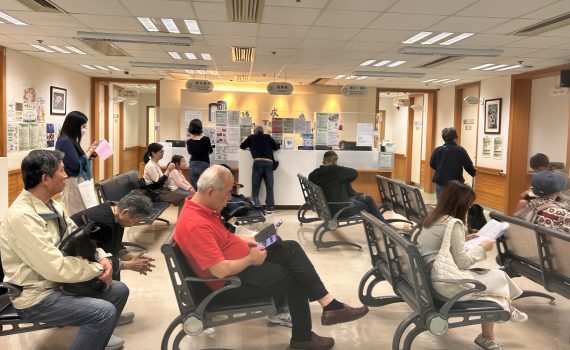
The Hong Kong government will inject another $500 million into the Chinese Medicine Development Fund to promote research, training and international publicity, Financial Secretary Paul Chan Mo-po announced in the budget speech today, as the government continues to promote Chinese medicine in the city. Cheung King-ho, an associate professor in Chinese Medicine from Hong Kong Baptist University, said the Chinese Medicine Development Fund financially supported research and promotion, rather than focusing on developing basic scientific knowledge as in the past. As the only Chinese Medicine school in Hong Kong, HKBU regularly gets awarded money from the fund. “Our school has been collaborating with large scientific organizations, such as Microsoft and NVIDIA, assisting in the process of drug selection with artificial intelligence for industry development,” Cheung said. Chinese medicine students can train in western medical centres as part of the government’s plan to integrate Chinese and western medical practices, announced by the government in February. Chung Yan-ching, 21, a local Chinese medicine student said, “We hope to be included and be trusted in the medical system with government’s policy support.” Most bachelor degree students in Chinese medicine at HKBU, the city’s only school for Traditional Chinese Medicine,are local students, with less than one-tenth overseas or mainland students, said Cheung. “Training Chinese medicine professionals in Hong Kong has served as a transitional process of acquiring knowledge from the longer historical development on the mainland from different lineages, appearing as a supplement and extension of industry,” Cheung said. As the mainland system is more mature, local students are required to do an internship in Guangzhou, Cheung added. A mainland PhD student in Chinese medicine from HKBU, Yang Hanhang, 26, said that fewer mainland students come to Hong Kong to study traditional Chinese medicine because there are already many famous traditional Chinese medicine universities …

Hong Kong’s last Eurasian otters spark a conservation race
- 2025-12-26
- Health & Environment
- The Young Reporter
- By: Lou ZhengzhengEdited by: LIU Yutong
- 2025-12-26
North of Lantau Island, waves crashed against coastal rocks. In February 2024, a team from Kadoorie Farm and Botanic Garden discovered a white, crumbly solid — the first Eurasian otter feces recorded there in half a century. Back at the lab, Aiko Leong Kwok-yi, a 30-year-old conservation staff at the Fauna Conservation Department under the KFBG, handled the sample for DNA testing, leaning in to sniff its scent. “Otter faeces do not smell foul, they smell salty like dried salted fish. When fresh, it smells like tea, jasmine tea, not stinky at all,” Leong said. The discovery on Lantau Island has ignited a fragile hope for Eurasian otters clinging to survival in the city. With only seven individuals remaining, primarily in the Mai Po and Inner Deep Bay Wetlands, the otters are at extremely high risk of extinction. In response, KFBG, the only local team dedicated to otter conservation, launched a two-and-a-half-year Eurasian otters research project on Dec. 1 this year. The project received HK$2.2 million funding from the Civil Engineering and Development Department. The study will deepen understanding of the distribution and status of otters, identify habitats and threats of it within Lantau Island, beginning with the collection of feces samples. Leong, who joined the team in 2020 and now leads the project, set her sights on animal research after reading about legendary conservationist Jane Goodall at the age of 11. “Jane Goodall’s story just hit me that there are people who can work with animals every day. I found my life’s purpose at that moment,” Leong said. “From that day on, I've been heading straight in this way, never turning any corners,” Leong added. The path has been physically demanding. During early fieldwork, she navigated slippery coastal rocks, once nearly falling into the sea. “I asked myself, why …

Gen Z disconnect from social media for “digital detox”
- 2025-12-13
- Health & Environment
- The Young Reporter
- By: Lan Xinbei、Fu RongEdited by: ALISHIBA MATLOOB、CAO Jiawen、AO Wei Ying Vinci
- 2025-12-13
https://youtu.be/6y8g3Gm9_BA Reported by Audrey Fu Rong, Betty Lan Xinbei Edited by Alishiba matloob Aloosh, Carmen Cao Jiawen, Vinci Ao Wei-ying Video Description : Research shows social media increases Gen Z’s anxiety. The idea of "digital detox" is emerging as a trend among Gen Zs to combat mental health damage due to comparisons of doomscrolling. Betty Lan, one of our TYR reporters, embarks on a 24-hour digital detox challenge. Staying away from electronic devices, she was not adapted without them before experiencing different activities with her friends.

Kwong Fuk relief stations overflow with supplies amid Tai Po fire response
- 2025-11-28
- Society
- The Young Reporter
- By: Yu Yan PuiEdited by: AO Wei Ying Vinci、SIU Tsz Hang
- 2025-11-28
Supply stations at Kwong Fuk Estate brimmed with essentials at noon as volunteers urged donors to hold off, confirming sufficient stocks for residents displaced by the Tai Po blaze. The stations offered various supplies, including solid meals, drinks, first aid medicine, adhesive bandages, masks, paper underwear, and shampoo. A group of secondary school students from the nearby Wong Shiu Chi Secondary School, in uniforms, handed out snacks and fruit at the station. One student told the reporter that they offered displaced residents freshly cooked vegetarian lunchboxes and hot tea provided by local restaurants in the neighborhood . “Prescription grains and blankets for pets can be obtained. We want to deliver them to people in need as soon as possible,” said Tracy Wong, 30, a volunteer at a pet supplies booth on site. The pet supplies booth called on the public to stop sending more cat and dog food as it had sufficient resources collected. Other booths worked on sorting clothes, separating heavy winter garments from lighter clothes on the ground. Additional services at the stations included blood pressure checks and counseling sessions to comfort residents.