
#housing
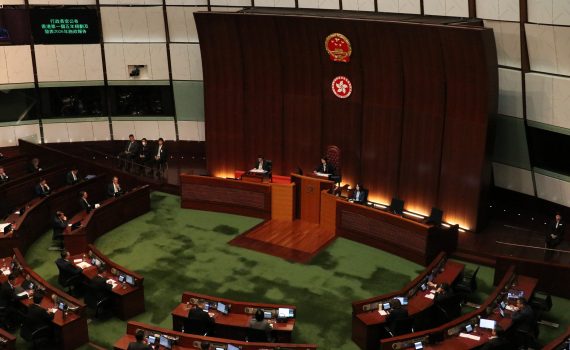
Policy Address 2026: Hong Kong targets over 35,000 public housing units a year
- 2026-09-17
- Business
- By: LI Yuzhou Asher、HU Mudi 胡沐迪、GUO Tongyao 郭童瑶Edited by: Zhou Xinying、LIN Xiaoyou、Wang Yunqi
- 2026-09-17
AI summary: Hong Kong plans to produce over 35,000 public housing units a year on average over five years starting in 2027/28. Increased supply could shorten housing queues, but one academic said tackling wealth and income inequality is also essential. The government is also tackling public housing abuse. Hong Kong will continue to increase public housing supply and combat public rental housing (PRH) abuse, Chief Executive John Lee Ka‑chiu said in his Policy Address 2026 on Wednesday. “The current-term Government has laid a solid foundation for, and is entering the harvesting phase of, public housing production, ” Lee said. “In the next five years, from 2027-28, public housing production will exceed 35,000 units a year on average.” HO Hang-kei, an Adjunct Associate Professor in the Department of Anthropology at The Chinese University of Hong Kong whose research interests include housing policy, commented that ramping up PRH supply is a positive measure. “I think this is great because, as we know, Hong Kong has been experiencing a shortage of public housing units, so as you can see from previous figures, the queue was very long,” Ho said. “And I think by having more supply, I think it's going to decrease the waiting time for many people actually need them, especially a lot of people are now kind of in the use of temporary housing.” Ho said that there would be some short-term kind of pain, such as a fiscal deficit. But over the medium to long term, he thought the increase in housing supply would benefit Hong Kong. More stable housing could help residents feel more secure about their work, education and other aspects of their lives, he said. However, Dong Ding, an Assistant Professor in the Department of Accountancy, Economics and Finance at Hong Kong Baptist University, said that more …
Housing differences between Singapore and Hong Kong, here’s what you need to know
- 2022-11-15
- Society
- The Young Reporter
- By: Ming Min AW YONG、Yuhe WANGEdited by: Nick Yang
- 2022-11-15
Hong Kong and Singapore, two small and open Asian economies, have different degrees of housing ownership. Hong Kong has ranked first place in the least affordable housing markets among 92 cities since 2010, according to Demographia International Housing Affordability, yet Singapore ranked 40th on the latest list. More than 113,000 residents left Hong Kong in 2021, marking a 1.6% population decline, the biggest population drop since the record. Ample living space, brighter economic prospects and affordable housing prices were the top three reasons why people left the city, according to the research by the Hong Kong Institute of Asia-Pacific Studies in 2021. However, the population of Singapore, which has one of the highest homeownership rates in a market economy, grew by 3.4% last year. Here are four aspects you need to know about differences in housing issues between Hong Kong and Singapore. What percentage of the population owns a house in each economy? Hong Kong In Hong Kong, 49.8% of the population owned a house in 2021, meaning only about 3.6 million people owned a house in 2021. Currently, there are 2,657,800 domestic households in Hong Kong. The average household size in the territory is two members per household. Singapore As a country with more than 5.6 million people, Singapore has a higher population density than Hong Kong. Yet, nearly 90% of the population owned property in 2021 in the state, according to the Department of Statistics of Singapore, with three members living in one house on average. How many public and private housing units are there in each country? Hong Kong Hong Kong had a total of 2,960,000 living quarters last year. About 60% of properties are private permanent quarters, which are housing estates developed by private developers. Around 40% of the quarters are public rental housing units …

Policy address 2022: 30,000 public housing units to be provided under new housing policy
- 2022-10-19
- Politics
- The Young Reporter
- By: Rex Cheuk、Mei Ching LEE、Nga Ying LAUEdited by: Kiki Lo、Kelly Pang
- 2022-10-19
Solving the housing problem is the government’s top priority, Chief Executive John Lee Ka-chiu said in his first policy address today, announcing a new policy to provide 30,000 light public housing units in five years. “To deal with the problem of inadequate accommodation including subdivided flats, we need breakthroughs in housing supply and solutions to address the long-term problem of housing shortage,” Lee said. The “Light Public Housing” scheme allows Hongkongers who have been waiting for public housing units for three years or more to apply for an earlier allocation of the new units featuring basic facilities with lower rent. Lee said priority will be given to family applicants. The new scheme is expected to increase the city’s total public housing supply by 25% and shorten the waiting time by one and a half years by taking into account the total supply of light and traditional public housing. “The target is to cap the waiting time at the existing level of about six years and shorten it to about four and a half years in four years’ time,” Lee said. He added that the authorities will work closely with different government departments in enhancing the quantity, speed, efficiency and quality to shorten the waiting time for public housing. However, the deputy director of the Society of Community Organisation, Sze Lai-shan, said she would like to see a further reduction in waiting time for public housing. “Although reducing the waiting time to four and a half years should already be a challenging task, we hope the waiting time for public housing can be reduced to three years,” said Sze. Wong Kin-yip, 36, a construction worker living in a subdivided unit, is not satisfied with the introduction of light public housing. “The light public housing …