
Culture & Leisure
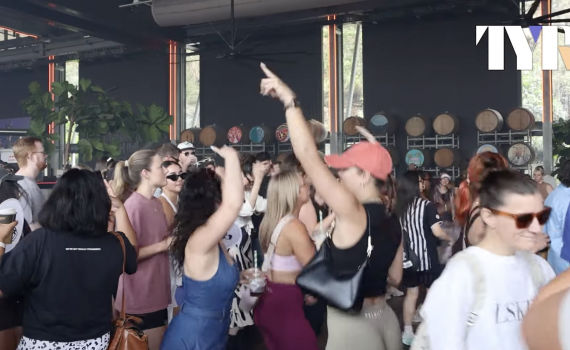
No more clubs and wine: the rise of morning rave in Australia
- 2025-12-16
- Society
- The Young Reporter
- By: CHAU Wing YauEdited by: KURNIAWAN Trista Vania、LAI Uen Ling
- 2025-12-16
Young Australians are leading a new trend all over social media, focusing on alcohol-free socialising and personal wellness. The trend is on the news everywhere in Australia. Data shows 76% of 1000 young Australians, aged 18-24, prefer to socialise without alcohol. Meanwhile, one in four Australians has reduced their alcohol consumption over the past year. Instead of bars and clubs, people in Brisbane, Sydney, and Melbourne are flocking to cafes and bakeries hosting 8 am morning raves to kick off the day feeling fresh and energised.
Remnants of the City of Victoria: from colonial boundary stones to modern hiking landmarks
- 2025-12-11
- Culture & Leisure
- The Young Reporter
- By: CHEN Xiyun、FENG Zhenpeng、Li YinhengEdited by: YANG Haicen
- 2025-12-11
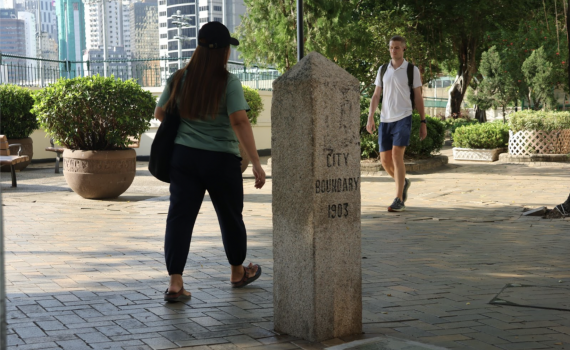
Along the shaded fitness path on Broadwood Road in Happy Valley, a weathered stone stands quietly by the trail. “City Boundary, 1903,” reads its surface, reminding pedestrians of the remnants of Hong Kong’s colonial past. “I'm not sure what they are, but they lie along my running route, so I always treat them as rest stops and jogging milestones,” said Solo Chan, 56, a hiking fan who walks along Broadwood Road daily. “Every time I meet a new one, I pause and search for the recreational spot recommended nearby, so that I can decide the next leg of my trip,” Chan added. “It has become a great pleasure of mine during the daily morning runs.” These stone monuments, now over a century old, were erected in 1903 by the British colonial government to delineate the limits of the early developed administrative area on the north shore of Hong Kong Island, called the City of Victoria, according to the Development Bureau. The stones are crafted from hard granite, with a square columnar body and a pointed pyramidal top. They were originally designed to be approximately 1.3 meters high, but current records indicate that some stones are between 98 centimetres and 1 metre in height. The boundary the stones mark is still legally defined in the Interpretation and General Clauses Ordinance, and include what Chinese residents commonly refer to as the “Four Circuits and Nine Yeuks,” the colonial-era predecessor of today’s Central and Western District and Wan Chai District, according to official records from the Lands Department. Although the city’s boundaries have since expanded and no longer carry significance in city planning, they offer tangible links to the history of Hong Kong’s urban development, the Development Bureau added. Now, they have become landmarks for hikers to check in. “People look for boundary …

“I’m raising the child I once was”: why young Chinese find healing in personified pet parks
- 2025-12-11
- Society
- The Young Reporter
- By: Li ZhongyiEdited by: YANG Haicen
- 2025-12-11
Outside a small pet barbershop, a brown poodle stood on a grooming table while a groomer trimmed its coat. On the fresh grassland a short distance away, a Border Collie ran through a line of training obstacles, landing steadily after each jump. Nearby, a Teddy dog sat in a stroller, waiting for its afternoon snack as its owner stood beside it. This scenario was taking place in reality in a pet entertainment park named LOHAS located at the top floor of China plaza in China Guangzhou’s Yuexiu district. Opened at the end of 2025, the park is the first-of-its-kind in Guangzhou, pet-themed entertainment zone that comes with a hotel, club, barbershop, grocery store, coffee shop and even a “marriage corner” for pets. Hegla Li, 26, and her one-year-old Border Collie, Doubao, are one of the first customers at LOHAS. “I am always afraid my little one might get lonely and depressed at home, so I took him to the pet entertainment park, basically to help him make more furry friends,” she said. Li, single and unmarried, has no plan for having a child and recently put on hold her plans of furthering her studies of medicine and travelling around the world, all for her furry friends. “To me, my dog is the emotional anchor that brings me comfort. Doubao gives happiness, energy and vitality and I would like to give him my company, money and anything that I think is interesting and worthy to him in return,” She said. There are many young Chinese like Li who would much rather devote their energy and resources on pets rather than building a family. Since 2020, the birth rates of China have been continuously declining and dropped to an all-time low of 6.39% in 2023, according to the National Bureau of Statistics …
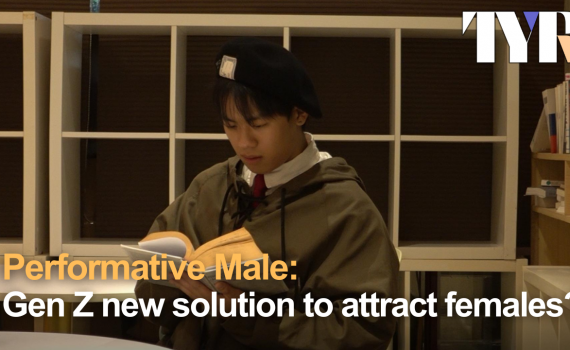
Performative Male: Gen Z new solution to attract female?
- 2025-12-11
- Culture & Leisure
- The Young Reporter
- By: FENG Zhenpeng、Li YinhengEdited by: LAI Uen Ling、LI Sin Tung
- 2025-12-11
“Performative male”, a western Gen Z pop trend begins to enter Asia. Young people have unique attitudes and views towards performative male in Hong Kong. TYR spoke to Gen Zers and psychological expert to know more about what behind the new trend. Reported by Stephen Feng Zhenpeng, Henry Li Yinheng Edited by Elaine Lai Uen-ling, Tricia Li Sin-tung
More than a toy: how plush “babies” fill an emotional void for Gen Z
- 2025-12-10
- Culture & Leisure
- By: Ye Enyi、ZHENG XinyiEdited by: LIU Yutong
- 2025-12-10
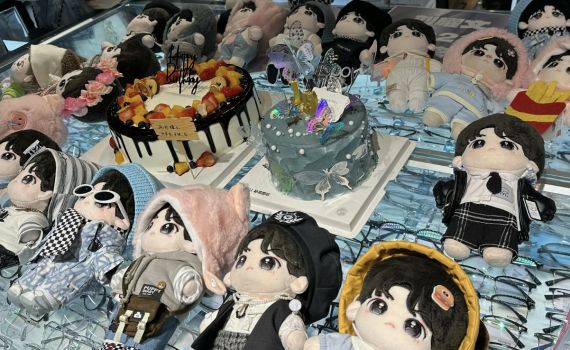
Yin Yunjie, a 24-year-old financial accountant, not only owns plush toys, but also raised them. She talked to it, celebrated its birthday with a cake and worried about it like a parent. Her “baby” is a cotton doll modeled after her idol, Liu Yaowen from the leading popular boy group in mainland China, Teens in Times, also known as TNT. “When I leave for work, I say goodbye. When I come home, I hug him first,” she said. “If I don’t come back at night, I’m afraid he’ll be scared sleeping alone and feel lonely.” “It truly became an indispensable part of my life,” she added. Yin represents a growing Gen Z trend of "cyber parenting," where plush toys like Labubu, Chiikawa, and Jellycat are raised as emotional companions rather than mere collectibles or decorations. This shift is emerging alongside the rapidly expanding plush toy market, which is projected to grow at a compound annual growth rate of 8.1% from 2025 to 2032, led by the Asia-Pacific region at 9.6%, according to Persistence Market Research. In addition, Gen Z builds identities and communities around their plush “babies”. These toys provide comfort and a sense of stable connection, filling a gap left by fragmented real-world relationships, according to Wong Ho-chun, 29, assistant professor of sociology and social policy department at Lingnan University. While millennials and Gen X might cherish stuffed animals for comfort or decoration, Gen Z engages in “cyber parenting,” said Wong. “The contemporary world is fragmented and high-pressure, demanding constant multitasking and production,” Wong said. “But dolls are always there to be with them and ‘listen’ to their thoughts as the outside world changes quickly.” “In this context, plush toys fill a void, serving as both an emotional comfort and a compensation for diminished social interaction,” Wong added. Yin …

Taiwan's president Lai Ching-te deeply moved by A Foggy Tale, a film on Taiwan’s White Terror
- 2025-11-22
- Society
- The Young Reporter
- By: CHAN Wing YiuEdited by: Wing Chi HO、AU YEUNG Jim
- 2025-11-22
TAIPEI, Taiwan – Taiwan’s President Lai Ching-te attended the screening of A Foggy Tale, a Taiwanese film about the era under authoritarian rule, in the Xinyi District on Friday. The historical drama is about Taiwan’s White Terror period, the political suppression from the 1950s to 1990s when Taiwan was ruled by the Kuomintang. The film follows a girl from Chiayi, who travels to Taipei alone to collect her brother’s remains and meets a former soldier, now working as a rickshaw driver. After the screening, Lai said to the audience that he was deeply moved by the film, set in 1951, the year he was born. “In that era of the White Terror, many people might have had nothing at all, except courage, they only wanted to step out of the thick mist and see a bright future, they had no conditions, no resources—only courage,” Lai said. “Back then it was 1954, and now it is 2025. We have come this far through the sacrifices and dedication of many people,” Lai said. “I truly hope that everyone who watches this film can understand how difficult the past was, and that we must all cherish the achievements of today as we move toward a better future.” “White Terror” refers to the political suppression of dissidents carried out by the Kuomintang from 1949 to 1992, which included mass arrests, interrogations, trials and imprisonments and even executions of suspected communist spies or independence advocates, according to the National Human Rights Museum of Taiwan. The Kuomintang lifted the Martial Law in 1987 with the “Temporary Provisions Effective During the Period of National Mobilisation the Communists Rebellion” repealed in 1991, according to the National Human Rights Museum, putting an end to the era of political suppression and the restriction of civil and political rights in Taiwan. …
Reviving Yim Tin Tsai heritage: Arts festival rekindles traditional values at Sai Kung
- 2025-11-10
- Society
- By: Yu Yan PuiEdited by: CHAN Wing Yiu
- 2025-11-10
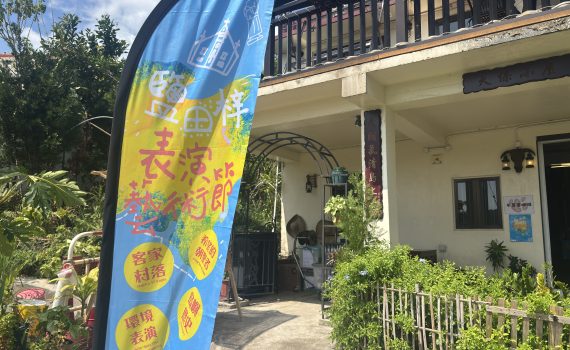
With just a short ferry ride away from Sai Kung pier, visitors get to hop onto a small island rich in diverse culture as it seeks to rekindle heritage with a grassroots arts festival despite government funding having dried up. This community-powered event emerged after the government’s three-year “Sai Kung Hoi Arts Festival” pilot programme ended this year. This has prompted local villagers of Yim Tin Tsai to initiate a self-financed arts festival in the hope that they could pass on the heritage by drawing continuous attention to their homeland of 300 years. According to the Tourism Commission, the recently concluded Sai Kung Hoi Arts Festival was an expanded version of the earlier Yim Tin Tsai Arts Festival, which began in 2019. The project was estimated to have cost HK$47 million, and brought in at least 230,000 visitors over the years. These festivals integrated local arts, cultural heritage and natural scenery to promote Yim Tin Tsai as a green tourism spot. Wong Chi-cho, former commissioner for Tourism, said in a government statement that the project introduced Yim Tin Tsai as the ‘back garden of Hong Kong’, showcasing its unique blend of Chinese Hakka culture, Western Catholic tradition, and rich ecology. Actress Emma Chan Chung-yan, 28, is a ninth-generation Yim Tin Tsai villager and is driving this new grassroots art festival. “It’s a beautiful place grown alongside Hong Kong with nine generations of locals, it deserves to be preserved,” Chan said. Chan said she was driven by a vision to see the island once again immersed in performances as she worried that her hometown could be otherwise forgotten. “As an artist, hosting this arts festival feels like I can combine my passion and my mission,” Chan said. “Our festival uses ‘hope’ as the main theme, which expresses villagers' wishes for cultural …

Wong Tai Sin's human oracle: how fortune-tellers endure the challenge posed by AI
- 2025-11-07
- Culture & Leisure
- The Young Reporter
- By: YANG ShuyiEdited by: WANG Jing
- 2025-11-07
The 73-year-old Frankie Chan Wang-yuen is not your average fortune teller at Wong Tai Sin Temple, especially in an age where AI can decode insights into your destiny in just seconds using traditional Chinese fortune-telling concepts. Below the large, dark green Chinese shop sign – founded in 1940 – is a small, lime-green, A4-size paper with four lines of English in Arial font that reads: Frankie Chan, spiritual therapist, M.A. (Social Work), English and Putonghua. That is about all one needs to know how Chan’s fortune-stick reading service would differ from his peers at Wong Tai Sin Temple. Chan inherited the fortune-telling store from his mother and ran it for 15 years after retiring from a lifelong career in social work focusing on children and mental health. In the face of pervasive anxiety in a post-pandemic era and demand for insights to control uncertain life circumstances, Chan said he could offer a bit more than just straightforward fortune-telling. Most of his early life revolved around the proximity of Wong Tai Sin, a Taoist temple offering worship and fortune-stick reading service. It remains one of Hong Kong’s most popular tourist destinations and also a place where he discovered the connections between traditional Chinese fortune-telling concepts and spiritual guidance via building connections with his customers. "Many of my customers have been coming since my mother's time," said Chan."They keep returning because of the deep connections we've built over the years." Like many, Chan too was faced with the impact of technological advancement, where traditional fortune-telling was outsourced to large artificial reasoning models that could generate insights using a wide range of Chinese astrological models. According to a report published by the Chinese online media outlet 36 Kr on Aug. 25, about 60% of respondents, who are mostly aged under 35, have used …
From street to stall: How Kwun Tong’s evicted hawkers fight for survival
- 2025-11-05
- Society
- The Young Reporter
- By: LAU Ka YanEdited by: LI Sin Tung
- 2025-11-05
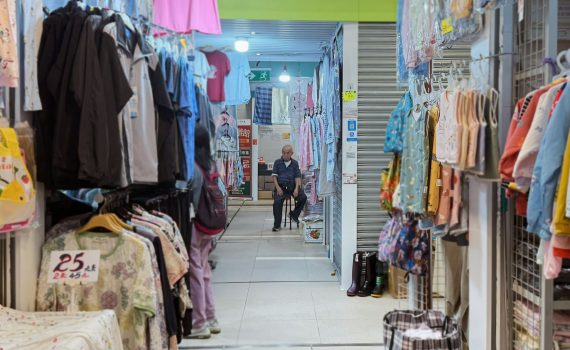
Beneath Kwun Tong's gentrified Yue Man Square lies a descending escalator that leads one to a ghost market. Despite bright lighting and air conditioning, the Yue Man Hawker Bazaar is drawing only a handful of visitors each day to the basement market selling household supplies. Off-seasoned pyjamas and bath towels are seen hanging on store fronts where shop owners idled by, barely making any sales. This is a stark contrast to the former street vendors who used to huddle up in the heart of Kwun Tong’s hustle and bustle while making a living to sustain their families. Since 2021, more than 100 stalls have been relocated to the Yue Man Hawker Bazaar, which was designed to support hawkers’ livelihood. But they complained that its hidden basement location and a surging popularity with online sales have made their businesses no longer sustainable. Although there are efforts to revive the market, its once-vibrant atmosphere was killed in the process. Fung Kwong-wai, 88, is a stall owner in Kwun Tong who has been selling mostly pyjamas for all ages for over 50 years. “I can only make a hundred dollars a day. It is not enough, as even lunch now costs at least HK$40,” said Fung. Many hawkers, like Fung, face a similar situation at Yue Man Hawker Bazaar. “No one comes here except for some neighbours occasionally,” said Janet Chan, 50, another old stall owner who sells daily items including combs, hair ties and pouches at the bazaar. Lau Sze-ying, 80, has been an owner who sells Chinese New Year couplets and red pockets for over 50 years. “Half of the day goes by, and only two to three people out of every 10 people who take the escalators down may buy things here. Most of the people who come are usually …
Sham Tseng: A place defined by its geese
- 2025-11-04
- Society
- The Young Reporter
- By: Wing Chi HOEdited by: Chun Hei LUK
- 2025-11-04
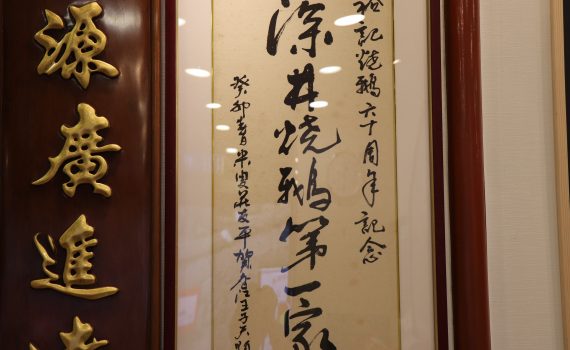
In the heart of Tsuen Wan, along the coastline with streets lined with banyan trees and village houses, lies a name that has become known for a particular dish: roasted goose. The neighbourhood of Sham Tseng is synonymous with the traditional dish and is often seen in its television advertisement. Yue Kee Roasted Goose Restaurant, founded by Ng Chun-yam in 1958, caters to factory workers with its charcoal-roasted Guangdong geese, made from recipes passed down through two generations. Ng’s eldest daughter, Ng Juan-hua, who is now the owner of the family business, started working in the restaurant at age 12. She said she gave up further education to help her parents run the shop, allowing her younger siblings to continue their studies. On June 4, 1992, a level 3 fire broke out at Yu Kee Restaurant. The owners, Ng and his wife, died in the fire. Since then, Ng Juan-hua took on the role of second-generation leader and worked with her siblings to revitalise Yu Kee. Now, Ng Juan-hua’s son, Ng Guo-han, runs the operations. In the kitchen, a fortress of heat and focused energy, head chef Lee Ming-kwok is a man of few words but action. His canvas is a goose, his tools are time and fire. He cooks and chops 50 to 100 geese daily. The process includes marinating the geese for several hours, air-drying them, and roasting them for about 45 minutes to an hour. The dish stands out due to the blend of spices and the chef’s technique. Lee has worked at Yu Kee for over a decade. The large oven contains burning charcoal at the bottom, and the goose hangs suspended above it, slowly roasting as the heat rises and envelops the meat, ensuring an even cooking process. “Many places use gas or electric ovens …