
Culture & Leisure
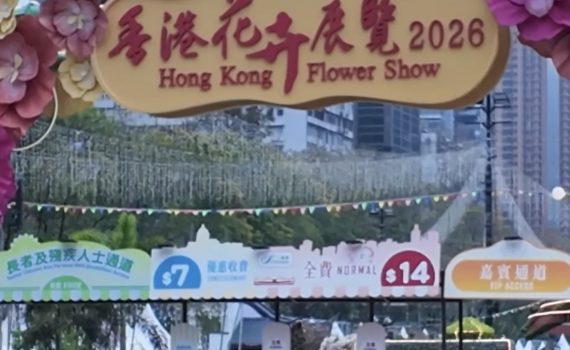
Different regional cultures blooms at HK Flower Show 2026
- 2026-03-23
- Society
- The Young Reporter
- By: XIE Xinni Cindy、Cao BeiyuEdited by: Lou Zhengzheng
- 2026-03-23
The Hong Kong Flower Show 2026 is hosted at Victoria Park from Mar 20 to 29. This year, the show features approximately 400,000 flowers, including about 40,000 violets as the main attraction. Exhibitors from 236 organisations across 10 countries and regions participated in this year’s show, showcasing flowers that represent the unique characteristics, traditions, and cultures. Follow the link below to watch the full reel: https://www.instagram.com/reel/DWNs67AE-Eu/?igsh=MTcweXg2MjcyNW91aA==

Budget 2026: Hong Kong continues harbourfront construction, drawing in visitors
- 2026-02-25
- Politics
- The Young Reporter
- By: Baguio Anne、RONG Miu Tung ShellyEdited by: Lan Xinbei
- 2026-02-25
Hong Kong will continue to develop the harbourfront to attract tourists, Financial Secretary Paul Chan Mo-po announced in the budget speech on Wednesday, while also giving the Tourism Board HK$1.6 billion. With the opening of a waterfront site in Hung Hom by next month, the Kowloon promenade will be extended to 15 kilometers, Chan said. The government will also consider a new pedestrian harbourfront walkway in Kennedy Town. According to data from the Hong Kong Tourism Board, the number of visitors to Hong Kong in January reached 7.23 million, an increase of 9.6%, with overseas visitors increasing by 16.4%. The West Kowloon Cultural District on the harbour attracts many tourists. Eddie Massonique, a 25-year-old tourist from France, said he came to M+ recommended by friends, but what attracted him the most to West Kowloon was the seaside scenery. Anastashiia Armoldova, 32, a tourist from Ukraine, said she found the West Kowloon area by accident. “I think the Hong Kong government should strengthen publicity, such as advertising at the airport, to let more tourists and citizens know about this place,” she added. “My friends and I came here specifically to watch the sunset. The environment is very comfortable, and the scenery is good,” a local 14-year-old student, Ebbie Wong said. “But the transportation is not very convenient, and there are too few dining options; we have to walk far to buy food.” The Artpark in the district hosts many restaurants, but most are more expensive than local neighborhood cafes. Two 21-year-old students from Guangzhou, Wesly Peng and Gu Chuqi, said that this area is crowded. “We're looking for a restaurant, but the restaurants here are clearly very busy, with long queues,” said Peng. Gu said the government could add some minibus routes between Austin Station and the West Kowloon Cultural District …

Lunar New Year flower market kicks off in Mong Kok
- 2026-02-14
- Culture & Leisure
- The Young Reporter
- By: CHEUNG Ka Yi Ann、ZHANG Jiahe RoysEdited by: ZHANG Yiping
- 2026-02-14
The Mong Kok Lunar New Year flower market opened today at Fa Hui Park. This fair will run for 7 days until 1 February, the first day of the Lunar New Year. The fair features a total of 136 stalls, including 64 flower stalls, 66 decoration stalls, and 16 fast-food stalls. Follow the link below to watch the full reel: https://youtube.com/shorts/YC8vugA2QpI?feature=share

More than 7,000 kilometres from home: how Chinese expats adapt to life in Saudi Arabia
- 2026-02-14
- Culture & Leisure
- The Young Reporter
- By: LAI Uen Ling、MAO AnqiEdited by: Robin Ewing
- 2026-02-14
RIYDAH, Saudi Arabia – Saudi Arabia is attracting more foreign residents than ever, with the number of non-Saudi residents climbing to about 15.7 million in 2024 — More than 2 million increase from the year before. Most come from South and Southeast Asia and neighbouring Arab countries. But among them are a growing number of Chinese expats, professionals working hard to adapt to life in historically one of the most religious and socially conservative countries in the world. This January, our reporters visited Riyadh to talk to people from mainland China and Taiwan who have come to the capital city for work, family or new opportunities. We discover how they are navigating daily life, forming connections and carving out a sense of home. #SaudiArabia #ExpatLife #ChineseExpats #Riyadh #LifeInSaudi
Dry stall rent reaches three-year high in lunar new year fair
- 2026-02-12
- Culture & Leisure
- The Young Reporter
- By: Man Cheok Lam Lorraine、Baguio AnneEdited by: CHENG Tsz Sen Sean
- 2026-02-12
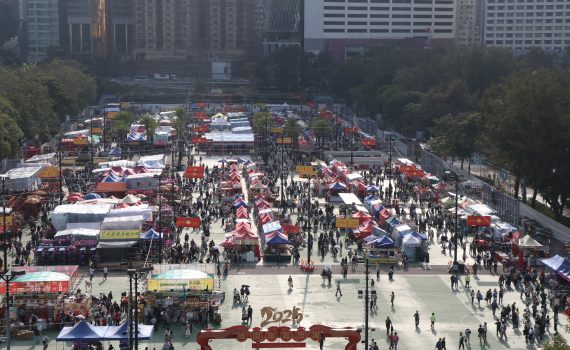
Dry stall holders at the city’s largest Lunar New Year Fair at Victoria Park are facing the highest rent since the return of dry goods stalls in the 2024 fair. The government reintroduced dry goods booths after a four-year suspension after the dry stalls were canceled due to crowd control reasons in 2020. In the following years, they were canceled due to the pandemic. According to the Food and Environmental Hygiene Department, this year’s fair had an average bid of HK$17,847 for a regular-sized dry stall, a 52.5% increase compared to last year. Icy Lo, 22, a Japanese goods seller, has been at the fair since last year. Lo said her rent this year has increased by around HK$4000-$5000. She added her sales on the first day were fine, and more people will be at the fair after normal working hours. Belle Chan, 25, a local nursing student, sells traditional Hong Kong snacks with her family. This is her fourth time holding a stall at Victoria Park. “The rent has gone up. Last year's rent was just around HK$8,000.” Chan said. Chan said more people are going to the fair when compared to the early post-COVID years, leading to higher bidding prices for a store. This year, her stall moved from the corner to the aisle and she worried this would worsen their sales. Despite the increased cost, some still wanted to try running a store. Kenny Cheung, 25, returned to Victoria Park to sell lion dance-themed merchandise after a seven-year absence. He said the rent was similar when he was last here. “I didn’t come to make a lot of money, but to enjoy the atmosphere and promote traditional culture,” Cheung said. Yeung Ying-kei, 18, a local student, visiting the fair for the first time with her friend from …
Champion cracks men’s rock-paper-scissors “paper” habit amid 1000-people competition
- 2026-02-10
- Culture & Leisure
- The Young Reporter
- By: ZHENG Yuan Elaine、ZHENG WU AnnyEdited by: Lan Xinbei
- 2026-02-10
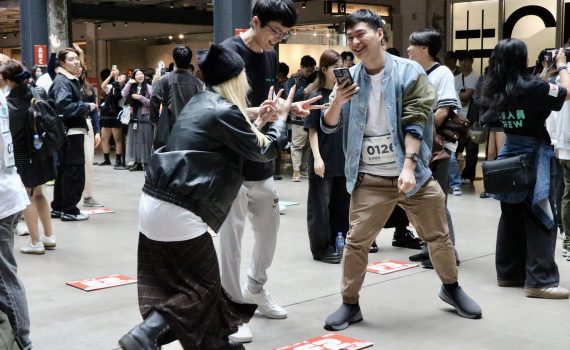
More than a thousand people took part in the city’s first large-scale rock-paper-scissors competition, with 32-year-old Polly Kong crowned champion after observing many male players tended to start with “paper.” In the final round, Kong defeated Lam Tsz-fung, the organiser of the event, who had been crowned "Boxing Champion" due to his consecutive victories on a YouTube series. “A secret to winning was that I found male players tend to start with paper,” Kong said. “I also kept an eye on opponents’ moves to guess their next gestures.” The first rock-paper-scissors competition was held at The Mills in Tsuen Wan, drawing over a thousand people, who ditched their phones and came face-to-face to play. Organised by former Trial & Error members, the competition used a standard best of five elimination format. Lam said people often play rock-paper-scissors casually, but rarely compete with it strategically. “In the Cuttlefish Game segment of the YouTube show Trial & Error, I was fully immersed in the Rock-Paper-Scissors game and was determined to win,” he said. “This interesting experience sparked the idea of sharing, and so I organised this competition," he added. The rock-paper-scissors event was more than a competition, it also revived the nostalgic memories for Hongkongers of the classic face-to-face play. Participants said the event recalled other classic face-face games like the hand-guessing drinking game Fifteen-Twenty and “Tong Ci Dau,” a close-contact partner game. The lively atmosphere drew participants from different age groups and industries. Celebrities and influencers, such as actress Li Man-yi and singer Lee Hoi-kiu, also participated in the competition. “I’m really exhilarated today. I can't believe the game got me jumping up and down," Lee said. Many parents attended the event with their children. A father-son duo stood out, with the father winning three group stage rounds and the son …
Flea market closes after 17 years saddened locals
- 2026-02-04
- Culture & Leisure
- The Young Reporter
- By: LI Cin Hang Olivia、CHAN Hiu YingEdited by: CHAN Hiu Ying
- 2026-02-04
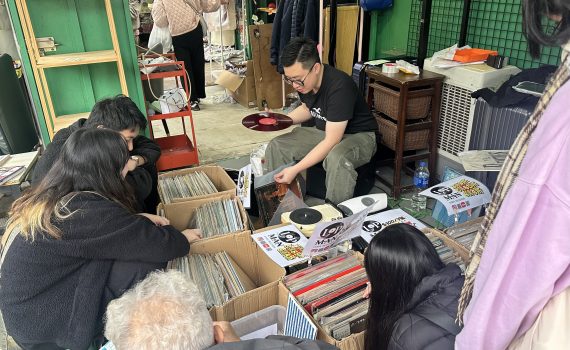
Reported by: Talja Blumenthal, Olivia LI Cin-hang, Kate Chan Hiu-ying Edited by: Kate Chan Hiu-ying A flea market in Kam Tin closed permanently on Jan. 31 after 17 years of operation due to the development plan of the Northern Link, leaving many visitors and merchants saddened as they attended its farewell. Located a few meters away from Kam Sheung Road Station, the Kam Sheung Road Flea Market has been a local landmark, renowned for selling nostalgic snacks, second-hand items and handmade clothes across nearly 200 colourful stalls every weekend since 2008. "I feel lost about not coming here on weekends anymore," said Liu Chau-king, 68, who has sold handmade crafts at the market for 17 years. Liu is reluctant to leave as she has become close friends with some merchants and customers. "I've known some of them since they were kids and I watched them grow into adults." Liu said she is considering moving to a new bazaar or selling her products in her daughter's shop in the future. A few stalls away from Liu’s stall, Tiffany Lam, a 50-year-old apparel manufacturer, said that discussing fashion styling with female customers who frequently visited her booth was part of her life after 16 years of the market, and now has come to an end. Lam said she will not continue her business after the closure as she plans to retire. A longtime local visitor, Connie Wong, 60, said this flea market cannot be replaced. "This place is special because what they sell is very unique and nostalgic, so it’s a pity that it is shutting down.” "There used to be many flea markets in Hong Kong, but now one of the larger ones is gone as well,"she said. After the closure of the Kam Sheung Road Flea Market, only a few …
Pet the insect: Mantis exhibition sparks interest among pet buyers
- 2026-02-03
- Society
- The Young Reporter
- By: LI Jinyang Carlos、RONG Miu Tung ShellyEdited by: CHEN Ziyu
- 2026-02-03
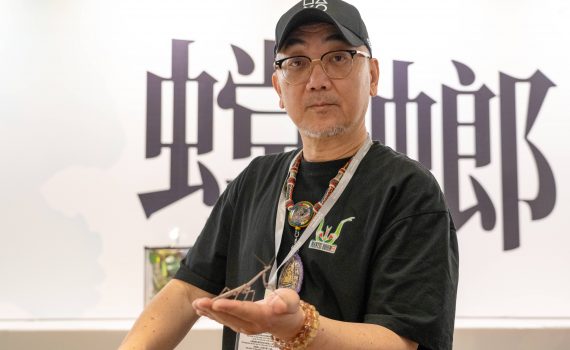
Visitors gathered around rows of glass cages to observe the live mantises at the annual Hong Kong Pet Show, held at the Hong Kong Convention and Exhibition Centre from Jan. 29 to Feb. 1. The exhibition aims to show the unique charm of mantises as a kind of pet, breaking the public’s stereotypes towards mantises, said Lai Kai-keh, 61, who is responsible for marketing and sourcing of mantises. “There are many misunderstandings about insects in Hong Kong. For instance, stick insects can actually be kept as pets,” Lai said. Over 50 species of mantises were displayed, including more than 10 new varieties, such as the colourful Metallyticus mantis and the impressive Peruvian shield mantis. All mantises were provided by the organisation “Mantis Forest”. Lai said education is more important than promotion. “We don’t encourage impulsive ownership if owners do not really understand this species. They should learn more about mantises,” he added. He added the ownership of insect pets has increased. “There are already more than 300 members in the Hong Kong mantis association on Facebook.” Visitors were interested in the mantis's camouflage and the setup of its breeding cage. Some booths were crowded with people looking for those well-hidden mantises. Some traditional pet lovers were considering keeping mantises for the first time due to their beauty, both in stature and active posture. “The special posture and its tiny size are really eye-catching," said Canny Heoi, a cat owner who was attracted by the petal-like limbs and elegant posture of the orchid mantis. “For a city known for its love of cats and dogs, this special mantis exhibition proved that even the smallest species can be the spotlight of the public,” Lai said.
Doha’s Falcon Souq keeps a century-old tradition alive
- 2026-01-29
- Photo Essay
- The Young Reporter
- By: LAI Uen Ling、Dake LiuEdited by: Robin Ewing
- 2026-01-29
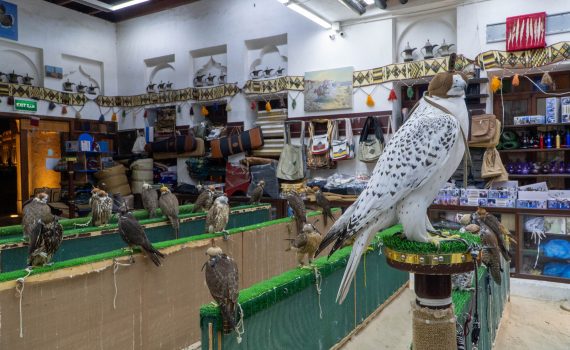
DOHA, Qatar Jan 14 – Falconry is one of the world’s oldest hunting traditions with a documented history spanning over 4,000 years. Introduced from Central Asia around the 7th century, Bedouin tribes of the Arabian Peninsula relied on falcons’ speed, sharp eyesight and innate hunting instincts to survive in the harsh desert, long before the rise of modern urbanisation. Today, this practical survival skill has evolved into a revered cultural tradition embedded in local folklore, poetry and royal customs. The Falcon market at Doha’s Souq Waqif is more than just a marketplace for local enthusiasts. It is a living landmark where visitors can experience firsthand the legacy of falconry in Qatari culture. Aziz, 65, is the owner of a falcon shop in the market. Originally from Pakistan, he came to Qatar in 1993. In 2012, Aziz opened his first falcon shop. He has since expanded to three shops in Qatar and employs 22 workers including three of his sons. According to Aziz, a falcon can fetch prices anywhere from 2,000 up to 1.75 million Qatari riyals (around HK$4,280 to HK$3,600,000). Among his collection, the most unique falcon is Rambo, a Gyrfalcon bred in Germany. With mostly white feathers and brown spots, this bird belongs to one of the largest birds of prey in the falcon family. In ancient times, northern emperors prized them for their outstanding hunting skills.
Fans flock to Kai Tak commercial district as Blackpink concert doubles Hong Kong restaurant revenue
- 2026-01-28
- Culture & Leisure
- The Young Reporter
- By: LIU Rui Reena、Baguio AnneEdited by: Lan Xinbei
- 2026-01-28
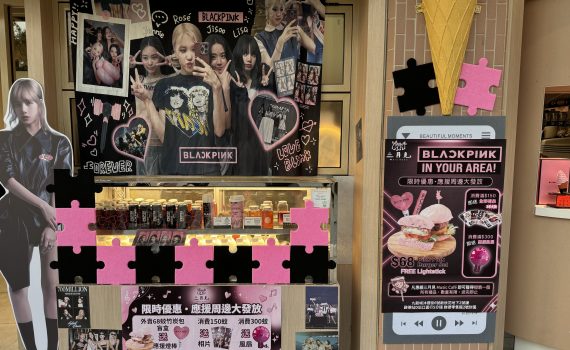
Restaurants near the Kai Tak Stadium in Hong Kong saw a surge in business during K-pop powerhouse Blackpink’s concert weekend, with many reporting a 100% increase in customers compared with usual days. The globally popular Korean girl group Blackpink held the final stop of their "Deadline" world tour at the Kai Tak Stadium from Jan. 24 to 26. The event not only created a vibrant scene inside the venue, but also significantly boosted the surrounding commercial consumption. Since Friday, excitement filled the area around Kai Tak MTR station, where crowds of fans dressed in black-and-pink outfits and carrying Blackpink’s signature hammer light stick gathered. Inside the station concourse, some of the group’s best-known tracks – including “Kill This Love” and “How You Like That” – played to welcome concertgoers. Many fans chose to dine in the surrounding area before entering, boosting the popularity of the commercial district. Hongkongers Jadie Wong and Emily Lee, who attended the show, said they waited nearly an hour in line for a table at a restaurant inside the Airside, a shopping complex near the stadium. “The restaurant is very busy today with a large number of customers,” they added. Several eateries around the stadium launched themed promotions to draw in fans. "Garden of Eatin," located near the sports arena, introduced limited edition items such as a "Pink Burger" and Earl Grey tea served in Blackpink-style cups. Owner Edward Tsang said these special items were designed specifically for Blackpink fans. “This type of limited-time product was very popular during Blackpink concerts, with customer traffic increasing by 80% to 100%,” he added. Tsang expected the momentum to continue with upcoming shows at Kai Tak, including a concert by K-pop boy band Seventeen on Feb. 28. A barbecue restaurant “Gyu-Kaku” located in a shopping mall near the Kai …