
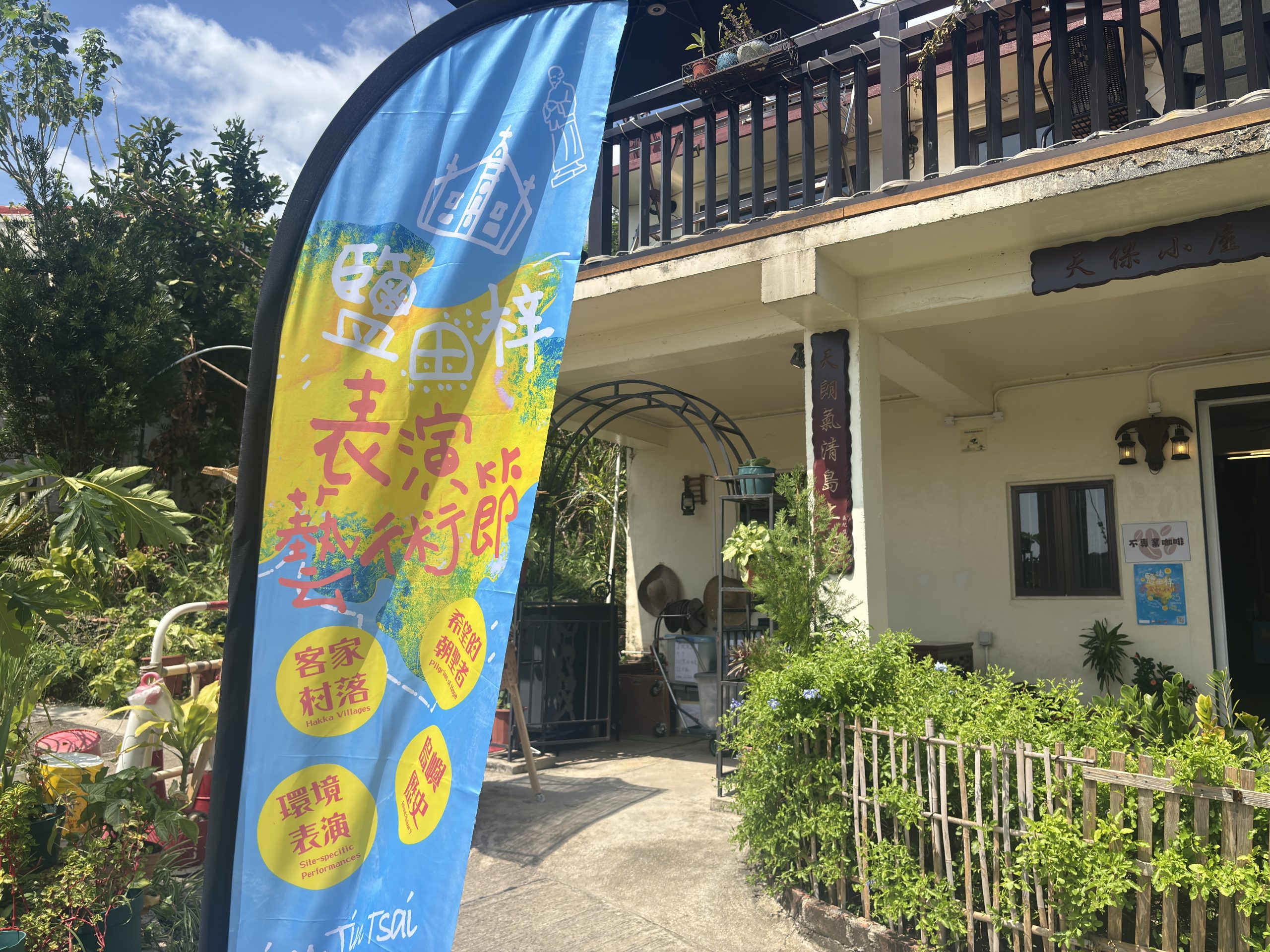
With just a short ferry ride away from Sai Kung pier, visitors get to hop onto a small island rich in diverse culture as it seeks to rekindle heritage with a grassroots arts festival despite government funding having dried up.
This community-powered event emerged after the government’s three-year “Sai Kung Hoi Arts Festival” pilot programme ended this year. This has prompted local villagers of Yim Tin Tsai to initiate a self-financed arts festival in the hope that they could pass on the heritage by drawing continuous attention to their homeland of 300 years.
According to the Tourism Commission, the recently concluded Sai Kung Hoi Arts Festival was an expanded version of the earlier Yim Tin Tsai Arts Festival, which began in 2019. The project was estimated to have cost HK$47 million, and brought in at least 230,000 visitors over the years.
These festivals integrated local arts, cultural heritage and natural scenery to promote Yim Tin Tsai as a green tourism spot.
Wong Chi-cho, former commissioner for Tourism, said in a government statement that the project introduced Yim Tin Tsai as the ‘back garden of Hong Kong’, showcasing its unique blend of Chinese Hakka culture, Western Catholic tradition, and rich ecology.
Actress Emma Chan Chung-yan, 28, is a ninth-generation Yim Tin Tsai villager and is driving this new grassroots art festival.
“It’s a beautiful place grown alongside Hong Kong with nine generations of locals, it deserves to be preserved,” Chan said.
Chan said she was driven by a vision to see the island once again immersed in performances as she worried that her hometown could be otherwise forgotten.
“As an artist, hosting this arts festival feels like I can combine my passion and my mission,” Chan said.
“Our festival uses ‘hope’ as the main theme, which expresses villagers' wishes for cultural preservation and local artists’ hopes for the development of diverse art forms,” she added.
One such form is environmental theatre, where performances are woven into the island’s historic sites, integrating actors seamlessly into the landscape.

Upon arriving at Yim Tin Tsai, visitors are greeted by a striking performance where artist Yip Sze-yu dances on the beach with tree branches from the island, expressing the theme of reconnecting with one’s homeland and a theme that echoes Chan’s own return.
Chan said she used to visit Yim Tin Tsai only twice a year, believing revitalisation was a responsibility for senior villagers. Having never lived on the island, she felt disconnected from her ancestral home.
“My uncle, who passed away a few years ago, was passionate about promoting the island. He often invited young villagers to return and volunteer as tour guides but I always turned him down,” said Chan.
“His passing made me realise that some things truly can’t wait, it’s time for me to carry on his mission,” she added.
While preparing for the events, Chan often interacted with the villagers, and now she’s remembered on the island as a descendant devoted to preserving its legacy through an art festival.
Chan added that she has gained much support from villagers, who hope to see youthful energy brought to the island by the emergence of the Arts Festival. She said she felt a greater sense of cohesion when communicating with them about her ideas.

“The core values of conservation in Yim Tin Tsai are ecological preservation, cultural heritage, and the religious, ” said Shek Kwo-fung, the coordinator of ecological conservation of Salt and Light Preservation Centre.
“The art festival is an innovative method for conservation, but it is vital to demonstrate these values, which are the common goal agreed by villagers,” Shek added.

Old conservation measures are still ongoing, such as guided tours, while young villagers seek new directions in art.
“Traditional ways of conservation relied on education and publicity. But with modern arts, the audience can be the recipient of conservation messages and co-create those messages through artwork,” said Professor Chan Chung Shing, principal investigator of the Yim Tin Tsai conservation project.

Visitors watch performances located on bridges, old piers, and places across Yim Tin Tsai.

The drama traces the island’s history from the decline of its salt-making industry and villagers’ departure by 1980. Villagers returned from abroad gathered, and restored the once-abandoned place twenty years later. The show carries a message that an island’s former glory hasn’t vanished, it has simply found a new way to exist and be remembered.


As Hong Kong’s last remaining salt field, which still produces salt locally, the cultural legacy salt has become a wellspring of artistic inspiration.
Artist Tso Quan-yau’s movement performance evoked the loss of original space due to land reclamation, as the identity of a dead sea animal. She utilised the local specialty of Yim Tin Tsai salt throughout her performance, and expressed the emotions of grief and anger when her home disappeared.

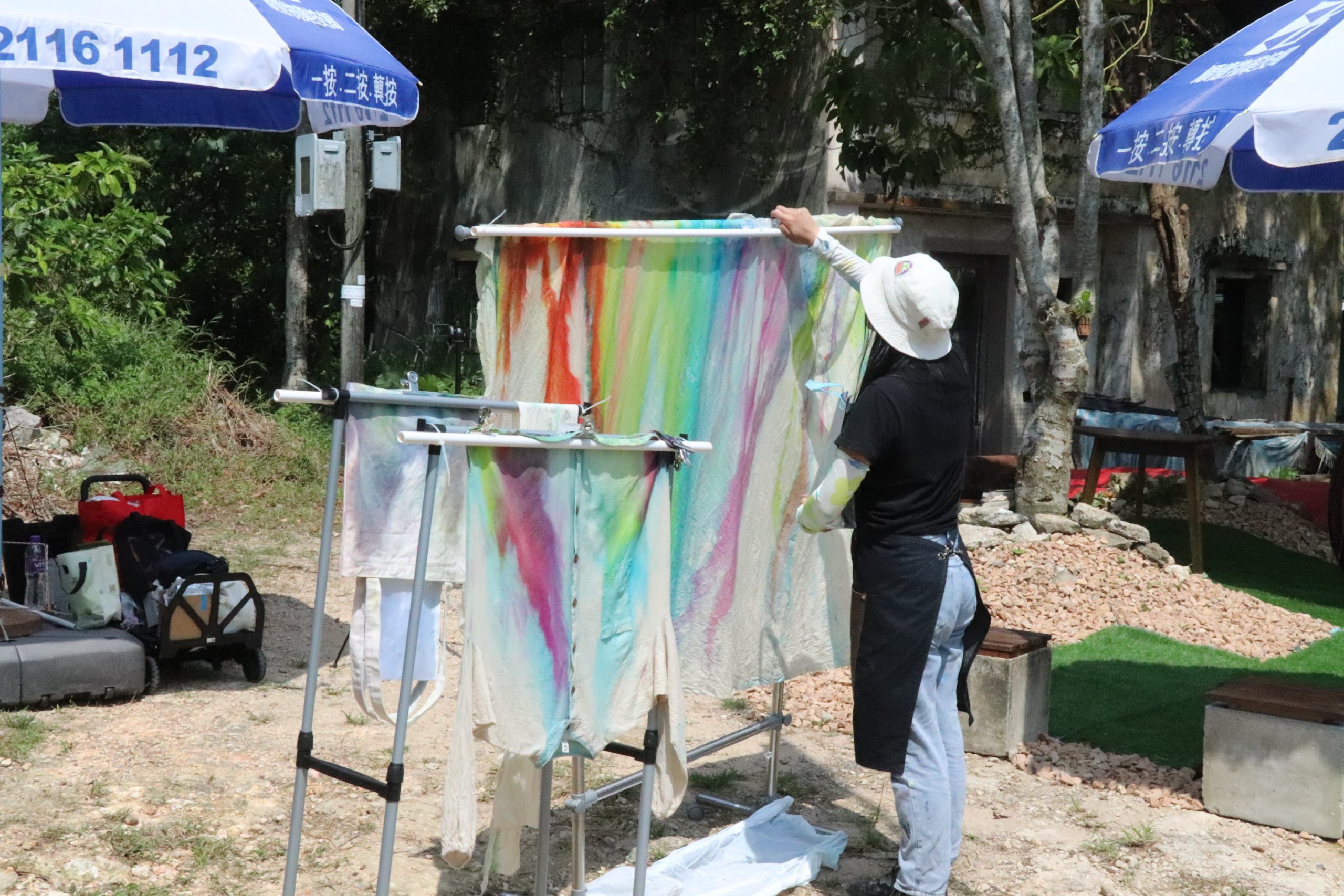
Currently, all performers are volunteers, and their shows are mostly free to the public.
Chan said the outdoor art festivals are nothing new abroad in foreign countries, yet they hardly exist in Hong Kong. Artists hope to motivate the government to organise art events.
Chan said that community-based events can accommodate small-scale performances and offer opportunities to all kinds of artists, regardless of their levels of experience, which is a benefit for artists. On the other hand, government-funded ones can construct art installations that require large budgets, which is something villagers cannot afford.
“Previous festivals covered expenditures for flight tickets, island-hopping, and performance support. This time, events are shortened and simplified, with a budget under HK$200,000,” Chan added.

Chan said they did not want their art festival to be a one-off event. Without financial support, she explained, she would have to save up on her own to keep it going, and with limited savings and time, it might not be feasible to hold it every year.
“We hope that besides remembering the art festival, people also remember the features and uniqueness of Yim Tin Tsai,” Chan said.
“This is my way of promoting Yim Tin Tsai and continuing the development of this small island,” she added.
《The Young Reporter》
The Young Reporter (TYR) started as a newspaper in 1969. Today, it is published across multiple media platforms and updated constantly to bring the latest news and analyses to its readers.
Hong Kong’s port battles to stay afloat amid green and digital shift
Local green institutions call for environmental conservation after super typhoon hit in Yuen Long

Comments