
Along the shaded fitness path on Broadwood Road in Happy Valley, a weathered stone stands quietly by the trail. “City Boundary, 1903,” reads its surface, reminding pedestrians of the remnants of Hong Kong’s colonial past.
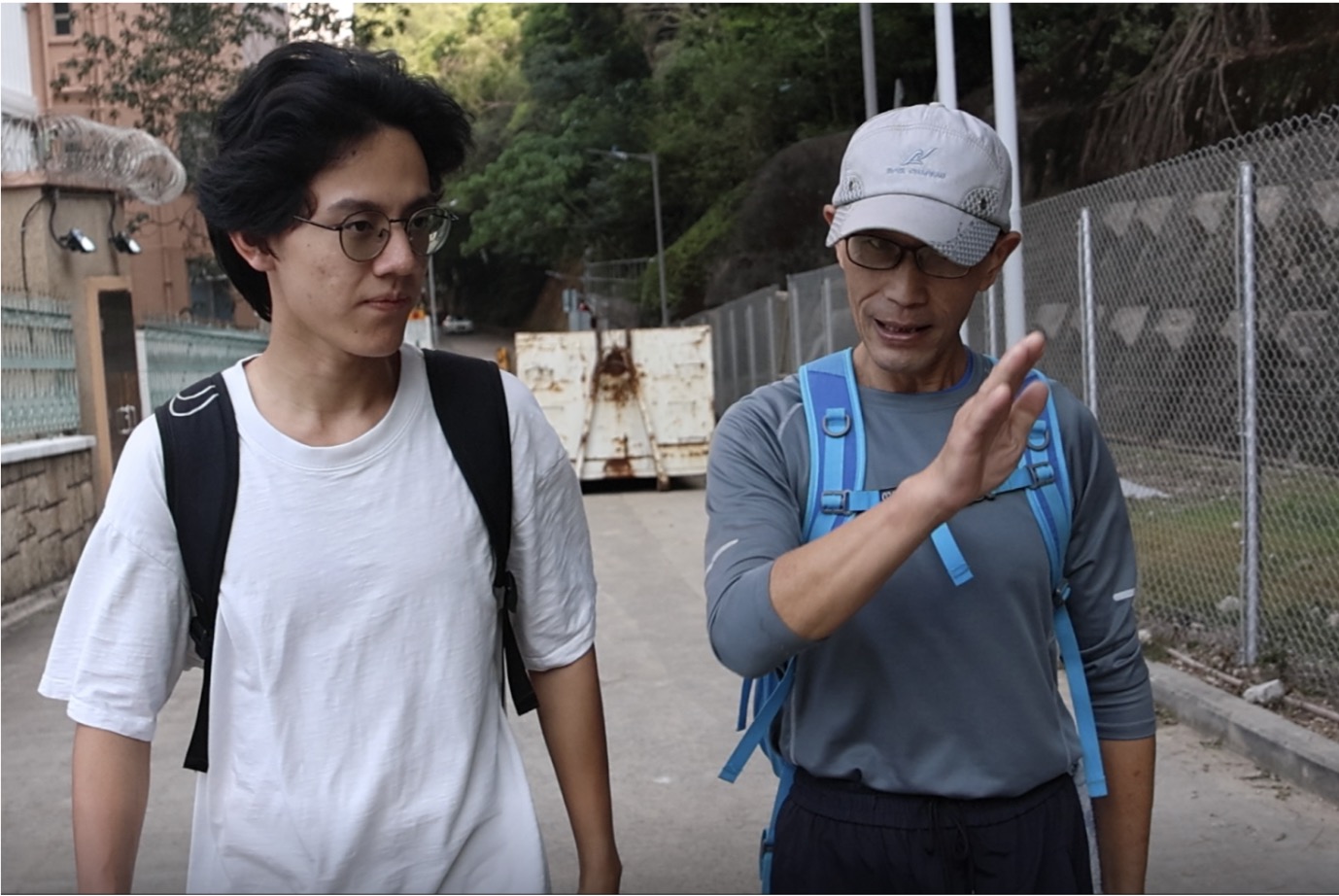
“I'm not sure what they are, but they lie along my running route, so I always treat them as rest stops and jogging milestones,” said Solo Chan, 56, a hiking fan who walks along Broadwood Road daily.
“Every time I meet a new one, I pause and search for the recreational spot recommended nearby, so that I can decide the next leg of my trip,” Chan added. “It has become a great pleasure of mine during the daily morning runs.”
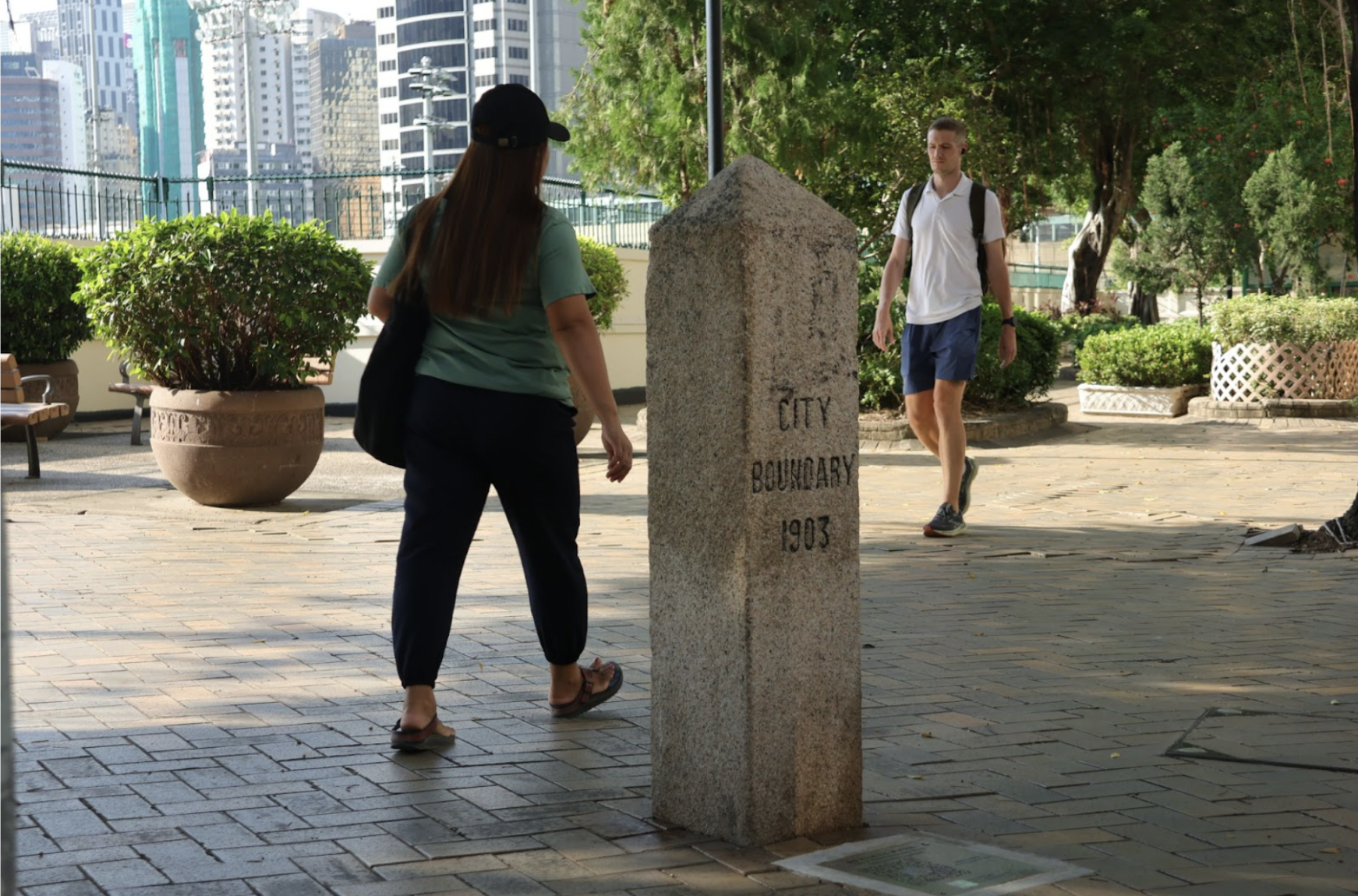
These stone monuments, now over a century old, were erected in 1903 by the British colonial government to delineate the limits of the early developed administrative area on the north shore of Hong Kong Island, called the City of Victoria, according to the Development Bureau.
The stones are crafted from hard granite, with a square columnar body and a pointed pyramidal top. They were originally designed to be approximately 1.3 meters high, but current records indicate that some stones are between 98 centimetres and 1 metre in height.
The boundary the stones mark is still legally defined in the Interpretation and General Clauses Ordinance, and include what Chinese residents commonly refer to as the “Four Circuits and Nine Yeuks,” the colonial-era predecessor of today’s Central and Western District and Wan Chai District, according to official records from the Lands Department.
Although the city’s boundaries have since expanded and no longer carry significance in city planning, they offer tangible links to the history of Hong Kong’s urban development, the Development Bureau added.
Now, they have become landmarks for hikers to check in.
“People look for boundary stones within their districts and have their unique ways of checking in,” Chan said. “I will take photos of boundary stones and post them online for the record.”
Time has not only eroded the surface of the boundary stones, but has even altered the original positions of some stones. The stone in Kennedy Town was moved from its original location to the temporary recreation ground on Sai Ning Street in 1978, losing its significance as a boundary marker.
Nine existing boundary stones have been located and recorded on the Land Department’s map, stretching from Happy Valley in the east to Kennedy Town in the west.
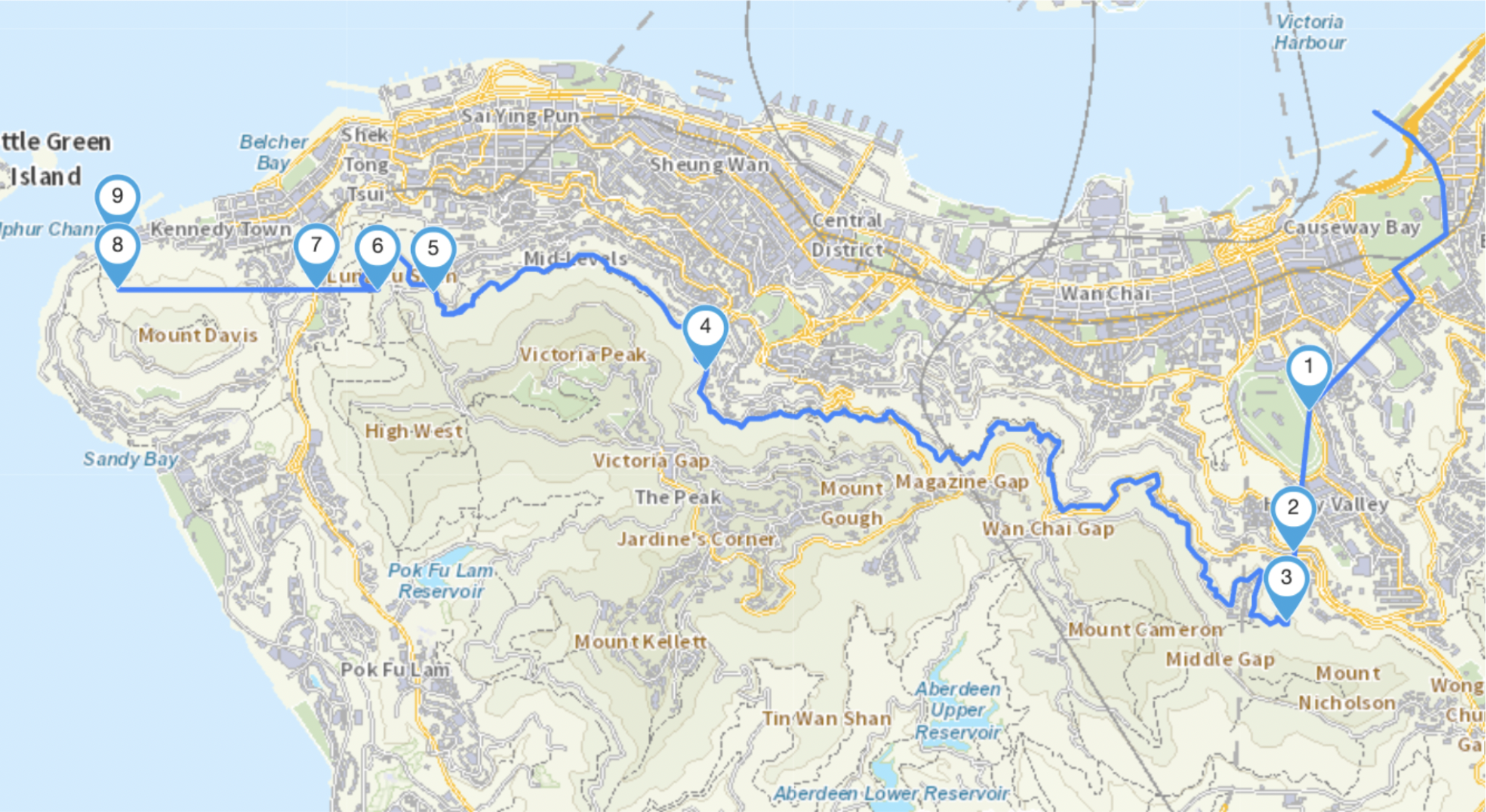
The boundary stone originally located on Magazine Gap Road was recorded as lost in June 2007, the only stone that has been lost.
According to a statement given by the Antiquities and Monument Office to the Legislative Council in Oct. 2007, the government said the boundary stones will be protected.
An official from the Development Bureau told TYR the government has established a dedicated office for the study, inspection and documentation of boundary stones with potential heritage value. And work that might affect the boundary stones must first be run by the Antiquities and Monuments Office.
The Office has also listed the boundary stones under “government historic sites,” according to the Lands Department's website.
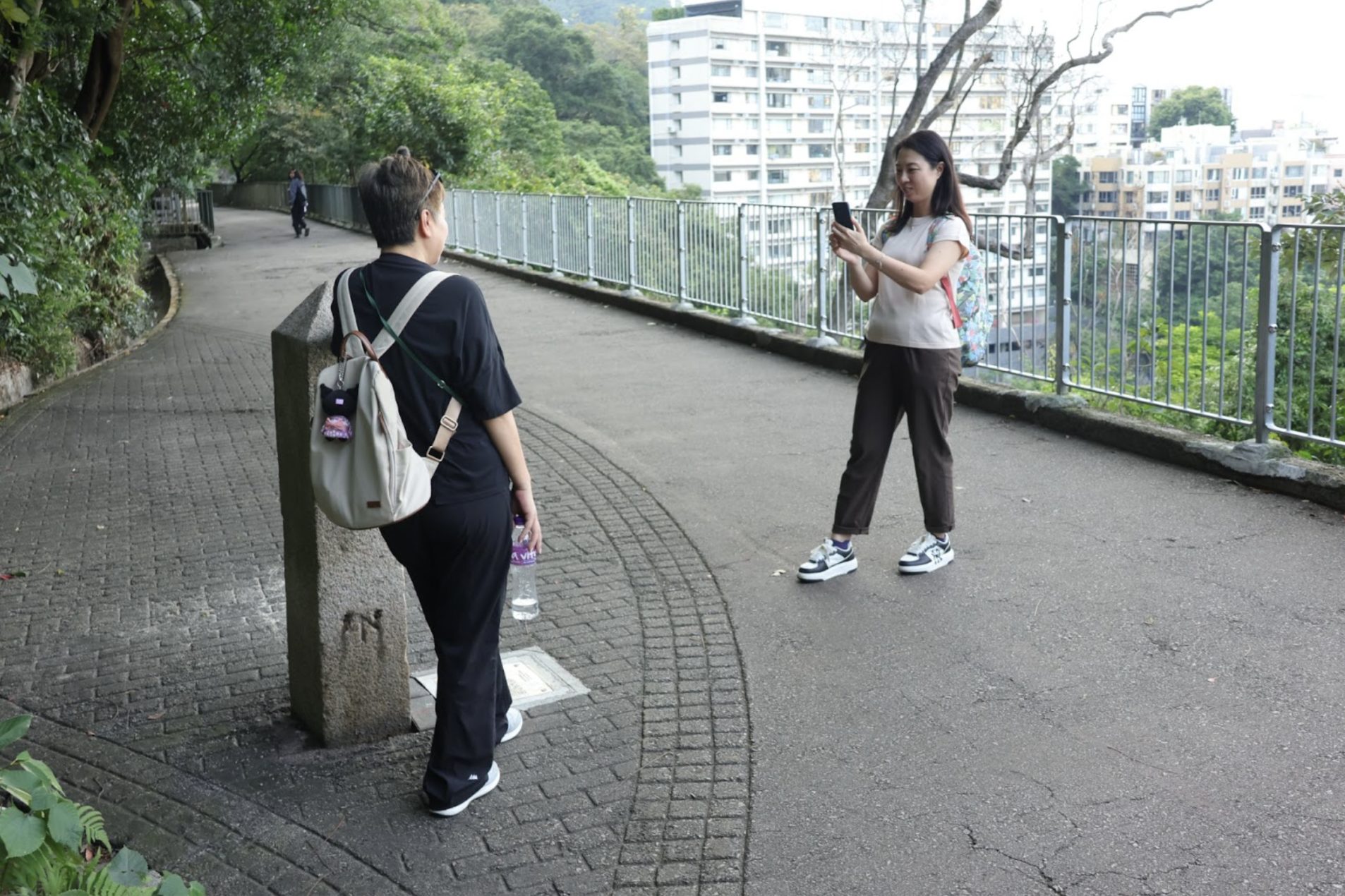
Mandy Wang, 50, on Bowen Road to see the stone marking the old eastern boundary, said it was her first time seeing a boundary stone in real life.
“Following the video to the boundary stone gives me a sense of satisfaction, like ‘Wow, I finally found it,” Wang said.
“Instead of leaving stones for us to search for ourselves, the government should enhance the publicity, so that we would deliberately go and take a look,” said Wang.
In addition to boundary stones, there are many historical sites from the British colonial era in the city today.
“Beyond looking for boundary stones, people will also check in when encountering unusual street names, such as streets with T-shaped street signs, and share their interesting findings online,” Chan added.
The 1881 Heritage building, formerly the Marine Police Headquarters, is a shopping mall and hotel in Tsim Sha Tsui. The former Central Police Station and Victoria Prison in Tai Kwun have been converted into museums and house numerous restaurants, bars and retail shops. Several artillery fortifications on Hong Kong Island have been preserved for public sightseeing and education.
Zhang Junyi, a scholar from the Chinese Academy of Social Sciences researching Hong Kong history, said the 156-year British colonial history has left a profound impact on Hong Kong society.
Initially called Queenstown, it was renamed Victoria City in honour of Queen Victoria. “Though the names changed over time, the colonial memories were inherited, carried by cultural relics like the boundary stones,” Zhang said.
“These relics should be preserved and protected as much as possible,” Zhang said.
Though the government currently has no plans to develop the boundary stones as a tourist attraction, the Lands Department has published a thematic webpage entitled “City of Victoria Boundary Stones” to provide information about the boundary stones to the public, according to officials from the Antiquities and Monuments Office.
Wang said that few of her peers know the history behind the boundary stones. She is worried that the younger generation will know even less or even completely forget.
“History should be made known to the public. No matter who occupied this place previously, this history should not be easily forgotten,” Wang said.
《The Young Reporter》
The Young Reporter (TYR) started as a newspaper in 1969. Today, it is published across multiple media platforms and updated constantly to bring the latest news and analyses to its readers.

“I’m raising the child I once was”: why young Chinese find healing in personified pet parks

Gen Z disconnect from social media for “digital detox”


Comments