
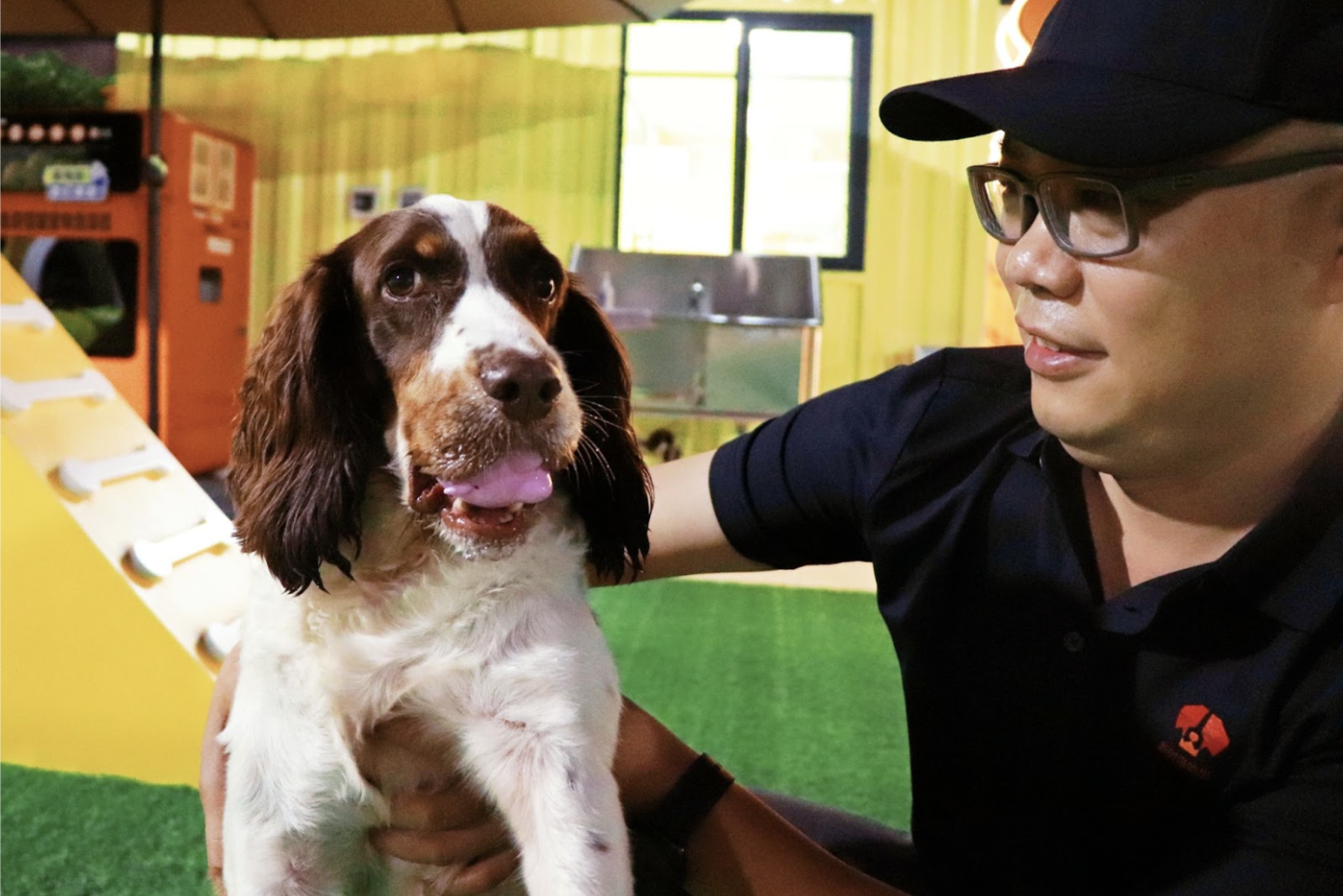
Outside a small pet barbershop, a brown poodle stood on a grooming table while a groomer trimmed its coat. On the fresh grassland a short distance away, a Border Collie ran through a line of training obstacles, landing steadily after each jump. Nearby, a Teddy dog sat in a stroller, waiting for its afternoon snack as its owner stood beside it.
This scenario was taking place in reality in a pet entertainment park named LOHAS located at the top floor of China plaza in China Guangzhou’s Yuexiu district. Opened at the end of 2025, the park is the first-of-its-kind in Guangzhou, pet-themed entertainment zone that comes with a hotel, club, barbershop, grocery store, coffee shop and even a “marriage corner” for pets.
Hegla Li, 26, and her one-year-old Border Collie, Doubao, are one of the first customers at LOHAS.
“I am always afraid my little one might get lonely and depressed at home, so I took him to the pet entertainment park, basically to help him make more furry friends,” she said.
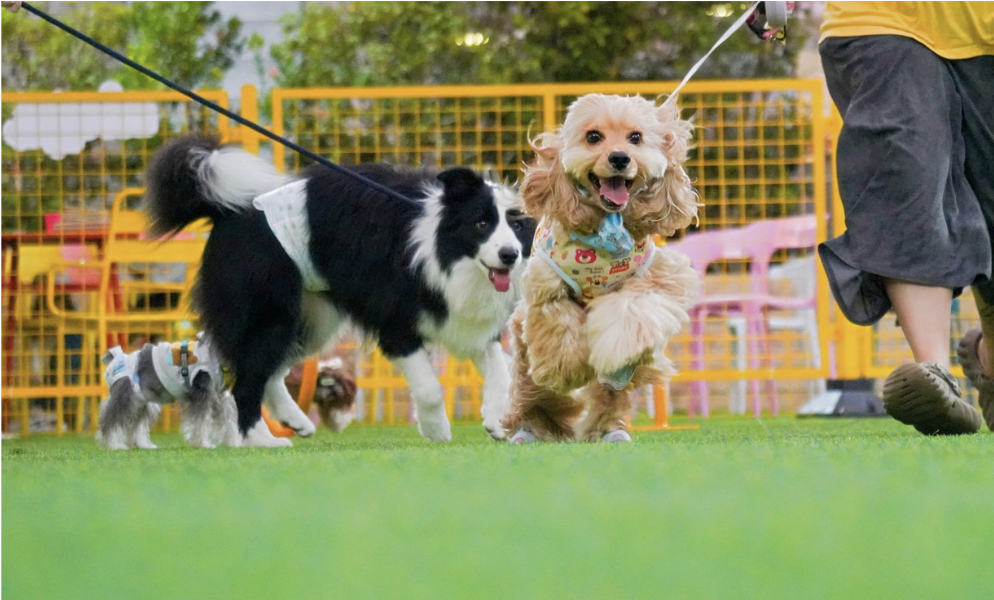
Li, single and unmarried, has no plan for having a child and recently put on hold her plans of furthering her studies of medicine and travelling around the world, all for her furry friends.
“To me, my dog is the emotional anchor that brings me comfort. Doubao gives happiness, energy and vitality and I would like to give him my company, money and anything that I think is interesting and worthy to him in return,” She said.
There are many young Chinese like Li who would much rather devote their energy and resources on pets rather than building a family. Since 2020, the birth rates of China have been continuously declining and dropped to an all-time low of 6.39% in 2023, according to the National Bureau of Statistics of China.
In 2025, the number of pets in China is expected to exceed the number of infants under the age of four for the first time, according to a Goldman Sachs research. By 2030, China is expected to have over 70 million pets and 40 million fewer children under the age of four.
The childfree trend has been followed by the rise of the pet-economy. According to an industry report released by KPMG China in June 2025, pet-related markets in China are scaled up to CNY81.14 billion (HK$ 87.63 billion) in 2025. In 2023, pet supplies and pet services together account for 19.3% of industry market share, ranking in the third place.
In the meantime, the 1990s and 2000s generations together accounted for 67.7% of the market share, becoming the dominant force in China’s pet consumption market.
“Young people aged 20-30 with pets have a great interest in trying out new pet services and have high enthusiasm in sharing their pets' stories on social media,” said Louis Kwok, 38, the public relations manager of the LOHAS Pet Park.
During the start-up phase, customers paying CNY68 (HK$74.8) can get a two-time entrance for full services in LOHAS.
“Personified establishments like barbershops, dessert shops, cafes, and kindergartens perfectly hit customers' cute spots,” Kwok said.
While a pet entertainment park is no longer a novelty, Kwok said the growing number of young people choosing not to have children and treating their pets as their kids is now driving a new wave of more personified pet spaces.

Kwok explained that the idea of "personified" now goes far beyond basic grooming or boarding. Under one roof, pets can access a range of services that resemble human social life, such as breed-specific gatherings, matchmaking events, and even fashion walks. The park, he said, reflects how pet care is evolving in response to a generation seeking emotional fulfilment through its animals.
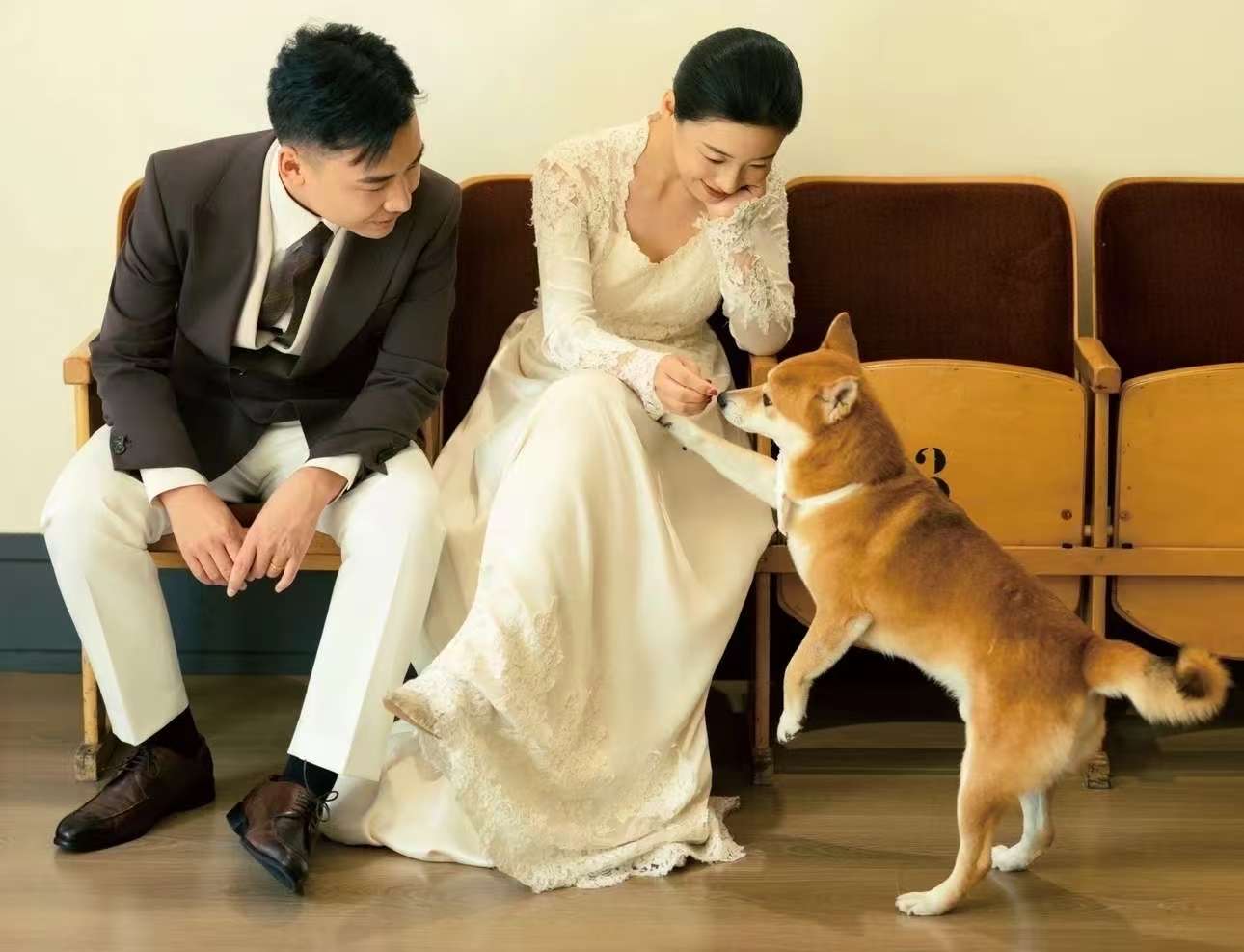
Ji Sai, 28, owner of a 5-year-old Shiba Inu, just tied the knot with her husband last year. She's not planning on having a child in recent years, and she quoted herself quite into the "couple with a dog" lifestyle.
“Pet amusement park is exactly the place to create more joint memories,” said Ji.
“Considering dogs need exercise, we've always taken ours to regular parks, mountains or open grass areas for walks.”
But as she mentioned, personified dog parks are different. “It allows dogs to have fun, and they also allow us, as humans, to understand that joy in ways that feel new and relatable.”
“Watching him play really does feel like watching my own child. In truth, he’s already a member of our family,” she added.
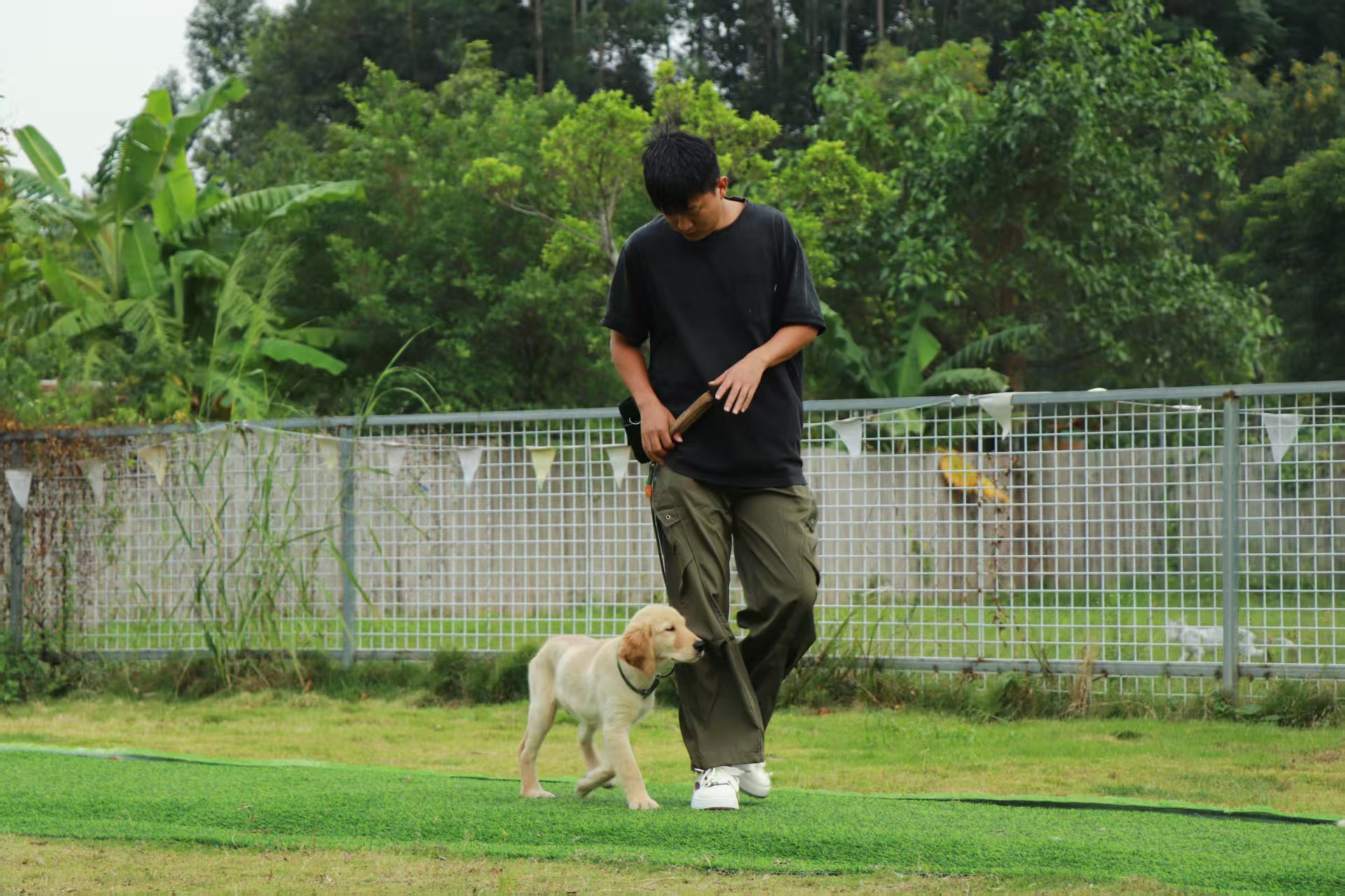
In Shiqiao, Panyu district, a suburban area of Guangzhou, professional trainer Li Junsheng is also rethinking to transform his traditional dog training centre.
Menson Pets Entertainment Park was originally a dog training centre that aimed to correct misbehaving dogs. Influenced and inspired by Gen Z personalised pet culture on social media, the dog trainer is planning to refurbish it into a dog day care centre.
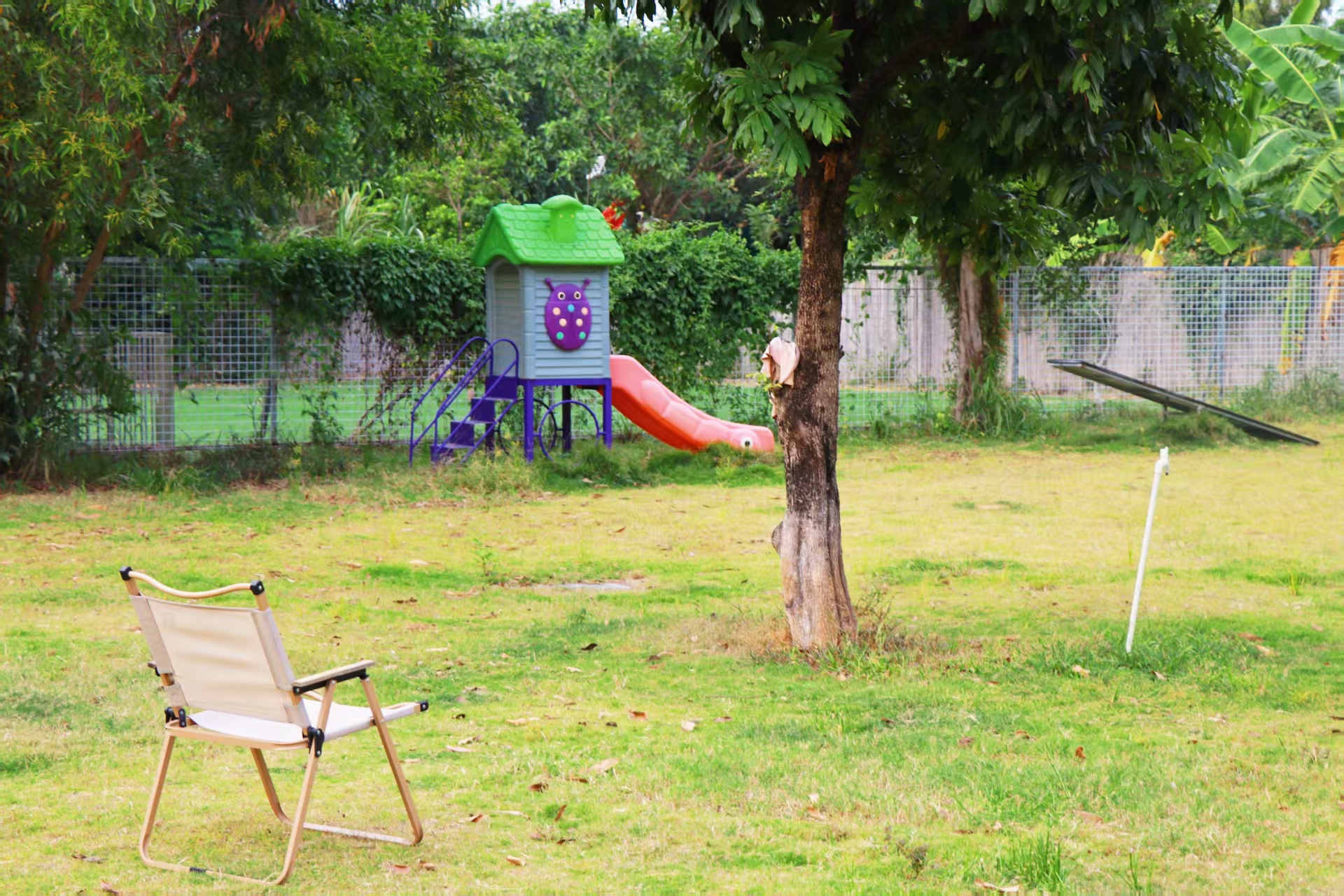
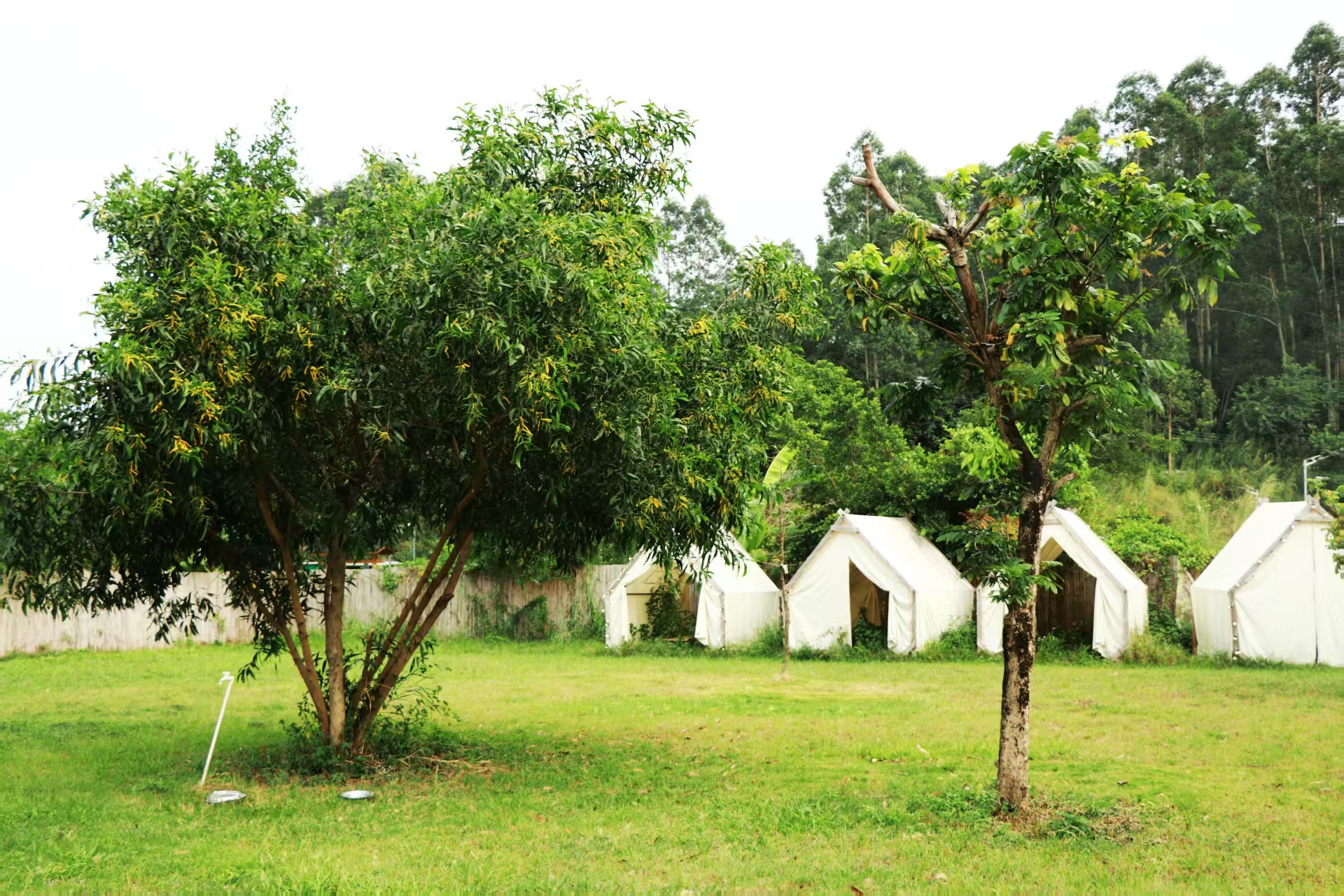
The 3,000 square metre training centre is covered in natural grass and divided into three sections, including a living area, playground and training compound and a garden.
“More and more young people would like to pay for those pet personified services such as pet restaurants, pet cafes or pet daycare to gain emotional support,” said Li.
The price of Menson Park dog daycare service is CNY75 (HK$ 82.5) per day. Now, they have added facilities such as slides and swings, making dogs' time at the “kennels” more enjoyable.
“We are still in the process of perfecting our service that can offer emotional value to our customers".
Li mentioned that this autumn festival, they have tried to make dog mooncakes for dogs in the park.
Li has considered transforming the single-purpose behavioural training centre into a pet daycare facility. “During weekday working hours when owners are at work, we address behavioural issues while offering boarding services and organising recreational activities for the dogs.”
“The idea is to have staff drive a ‘school bus’ each morning to pick up the dogs—just like children heading to class. In the evening, the bus would send the dogs home according to their owners’ work schedules,” he said.
The dog school bus idea was originally derived from an American couple in 2015, and it once went viral on social media.
“Originally, I did not have much interest in this kind of ‘treating pets as children’ culture, providing pets with human service, it seemed too fancy,” said Windy Lee, 53, one of the customers of Menson Park.
“But as I scrolled through short videos on social media, viewing countless young people taking their pets to kindergarten and letting those furry friends have fun. I must admit I'm rather tempted,” she said.
King Chan, the founder of LOHAS park and the brand, said the pet economy is essentially the “loneliness economy.”
“With socio-economic development and the rise of individualism, more young people are choosing to avoid relationships, marriage, and childbirth, prioritising their own lifestyle. Pets have thus become crucial sources of emotional support and companionship,” said Chan.
In fact, China has been actively promoting its three-child policy since 2021, introducing incentives such as extended marriage and maternity leave and increased birth subsidies, yet the results have been far from significant.
“Compared to the high cost and effort required to raise a child and provide them with an ideal upbringing, fulfilling a similar psychological desire through a pet involves much lower cost and effort,” Chan said.
“It’s like low effort parenting,” said Ji. “You don’t need to coax him, teach him or guide him the way you would a child, just watching him is enough to make you happy.”
For Doubao’s owner, owning a dog represents an emotional projection of their idealised childhood. She never had the opportunity to own a puppy of her own when she was young, because of her parents’ restriction.
“But now that I am capable, I can decide on my own, and I have resolved to treat the younger me well,” she said.
Li marked the pet parks service that may hold greater significance for people than for dogs. “I mean, Doubao was happy, but this happiness had no difference when he was taken to any random squares where dog friends were gathering,” she added. “The main purpose is to provide emotional value to humans-- we do feel comfort within that environment.”
A pet park is a place where these furry kids truly become the “children” of the young people who care for them, and where those young people get to be the kind of parents they always imagined. For Helga Li, in looking after her own fur baby, she is also taking care of the younger self.
“I suppose, in a way, it’s also a tribute to the child I once was,” Li added.
《The Young Reporter》
The Young Reporter (TYR) started as a newspaper in 1969. Today, it is published across multiple media platforms and updated constantly to bring the latest news and analyses to its readers.
Performative Male: Gen Z new solution to attract female?

Remnants of the City of Victoria: from colonial boundary stones to modern hiking landmarks


Comments