
The 73-year-old Frankie Chan Wang-yuen is not your average fortune teller at Wong Tai Sin Temple, especially in an age where AI can decode insights into your destiny in just seconds using traditional Chinese fortune-telling concepts.
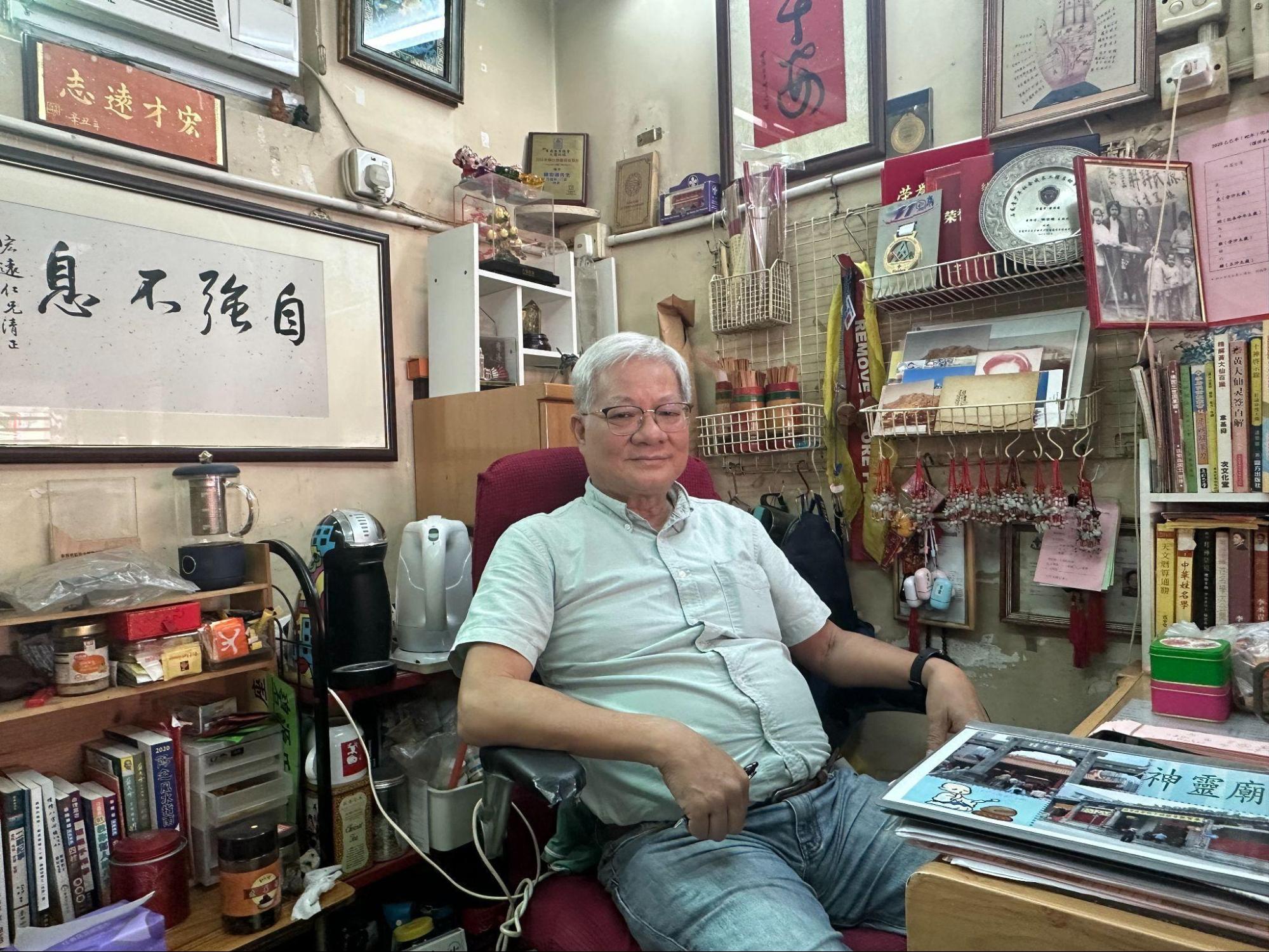
Below the large, dark green Chinese shop sign – founded in 1940 – is a small, lime-green, A4-size paper with four lines of English in Arial font that reads: Frankie Chan, spiritual therapist, M.A. (Social Work), English and Putonghua.
That is about all one needs to know how Chan’s fortune-stick reading service would differ from his peers at Wong Tai Sin Temple.
Chan inherited the fortune-telling store from his mother and ran it for 15 years after retiring from a lifelong career in social work focusing on children and mental health.
In the face of pervasive anxiety in a post-pandemic era and demand for insights to control uncertain life circumstances, Chan said he could offer a bit more than just straightforward fortune-telling.
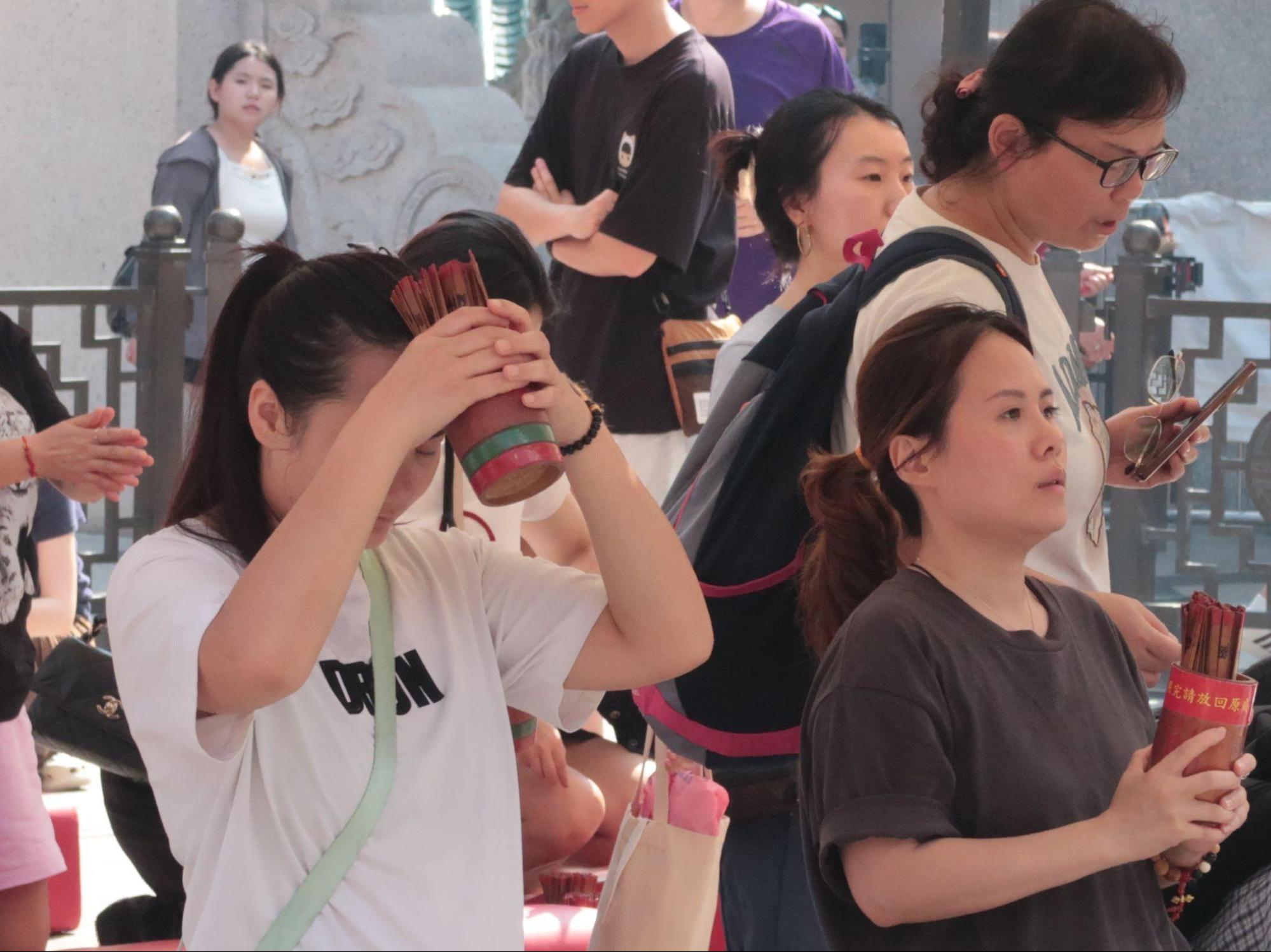
Most of his early life revolved around the proximity of Wong Tai Sin, a Taoist temple offering worship and fortune-stick reading service. It remains one of Hong Kong’s most popular tourist destinations and also a place where he discovered the connections between traditional Chinese fortune-telling concepts and spiritual guidance via building connections with his customers.
"Many of my customers have been coming since my mother's time," said Chan."They keep returning because of the deep connections we've built over the years."
Like many, Chan too was faced with the impact of technological advancement, where traditional fortune-telling was outsourced to large artificial reasoning models that could generate insights using a wide range of Chinese astrological models.
According to a report published by the Chinese online media outlet 36 Kr on Aug. 25, about 60% of respondents, who are mostly aged under 35, have used AI for fortune-telling.
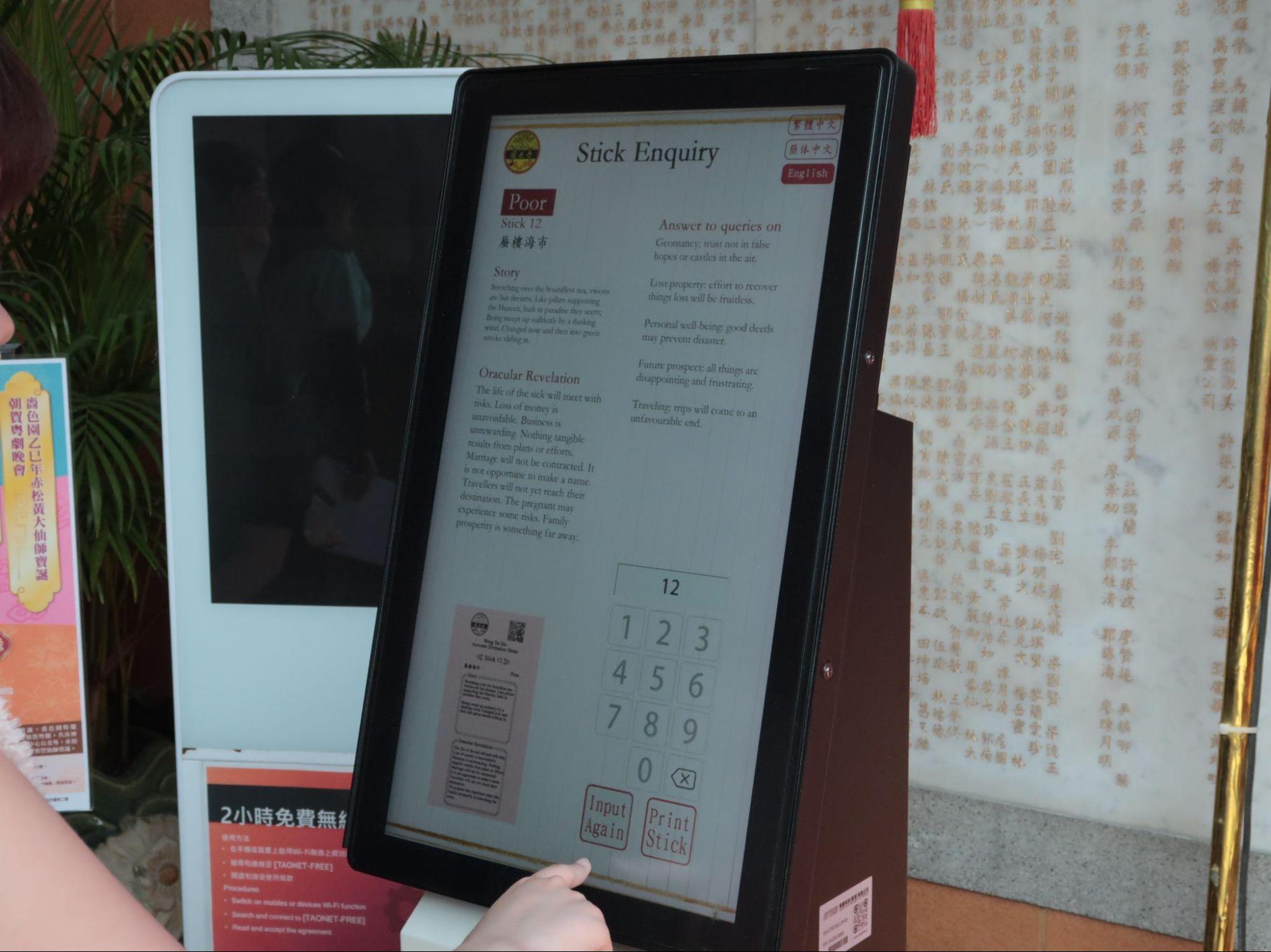
Even Wong Tai Sin Temple operators have launched an online Fortune Stick Interpretation service where people can input the stick number they drew at the temple and seek a detailed reading from its website about their fate.
The march of development has spurred not only the rise of digital fortune-telling but also a fundamental shift in the interests of the young.
According to Lo Lok-yin, assistant professor in the Department of Chinese Language and Linguistics at Hong Kong Metropolitan University, Hong Kong youth's participation in traditional Taoist and Buddhist religions has dropped dramatically over the past decade.
“In the past, people depended on deities when they feared the future, but now with advanced technology, we feel that science is more reliable, so deities have been pushed to a secondary position,” said Lo.
The decline of the “Wong Tai Sin remedy” is proof of this trend. People used to obtain prescriptions from the remedy through drawing fortune sticks, regardless of their symptoms.
"While this may sound strange now, it was very common in the past, due to limited medical resources. However, seeking medical advice through fortune telling is no longer needed as society has developed," said Lo.
Katy Pang, 24, represents the divided loyalties of this new generation. For minor questions, she turns to AI. But for life’s more complicated crisis involving love and career, she makes the trip to Wong Tai Sin Temple.
“Fortune-telling at a stall is more like emotional support to me. It gives me practical advice, confidence, and emotional value,” Pang said.
Lo said that the essence of fortune-telling culture lies not only in the content of fortune sticks, but also in the interaction between the fortune-teller and the seeker.
This was echoed by Chan.
“People come with complex emotions. How can AI comfort them without building human connections?" said Chan.
He recalled a client who came asking about his father’s health, who was a terminal cancer patient in the ICU. After carefully interpreting the fortune stick, Chan realised that the situation was not optimistic.
“In this kind of situation, I didn’t tell him the result directly, and I just asked him to be mentally prepared,” Chan said.
He spent half an hour discussing life and death with the client, aiming to calm the client’s anxiety and give him the courage to face his father’s potential passing.
“I hoped these ways could help ease his emotions and give his spirit some comfort in such a difficult time,” he said.
Yet, digital fortune-telling cannot replicate this human interaction, nor the connection between people and cultural sites.
Lo said that besides the connections between people, technology cannot replace the significance of physical companionship. The atmosphere of Wong Tai Sin Temple and the fortune-telling stalls creates a sense of cultural connection and trust.
“For clients, the fortune-teller in that space symbolises authority and expertise, whereas AI responses cannot bring the same sense of conviction,” Lo said.
Hong Kong has seen numerous attempts to digitise intangible cultural heritage. One example is that four temples under the Tung Wah Group of Hospitals opened online registration for the “loan from the Goddess of Mercy” during the pandemic.
Many people attended the online ceremony, but when the government permitted in-person religious activities, people quickly turned to face-to-face fortune telling.
Lo said this indicates that the culture is difficult to digitise as the interaction between people and places is one of its defining features.
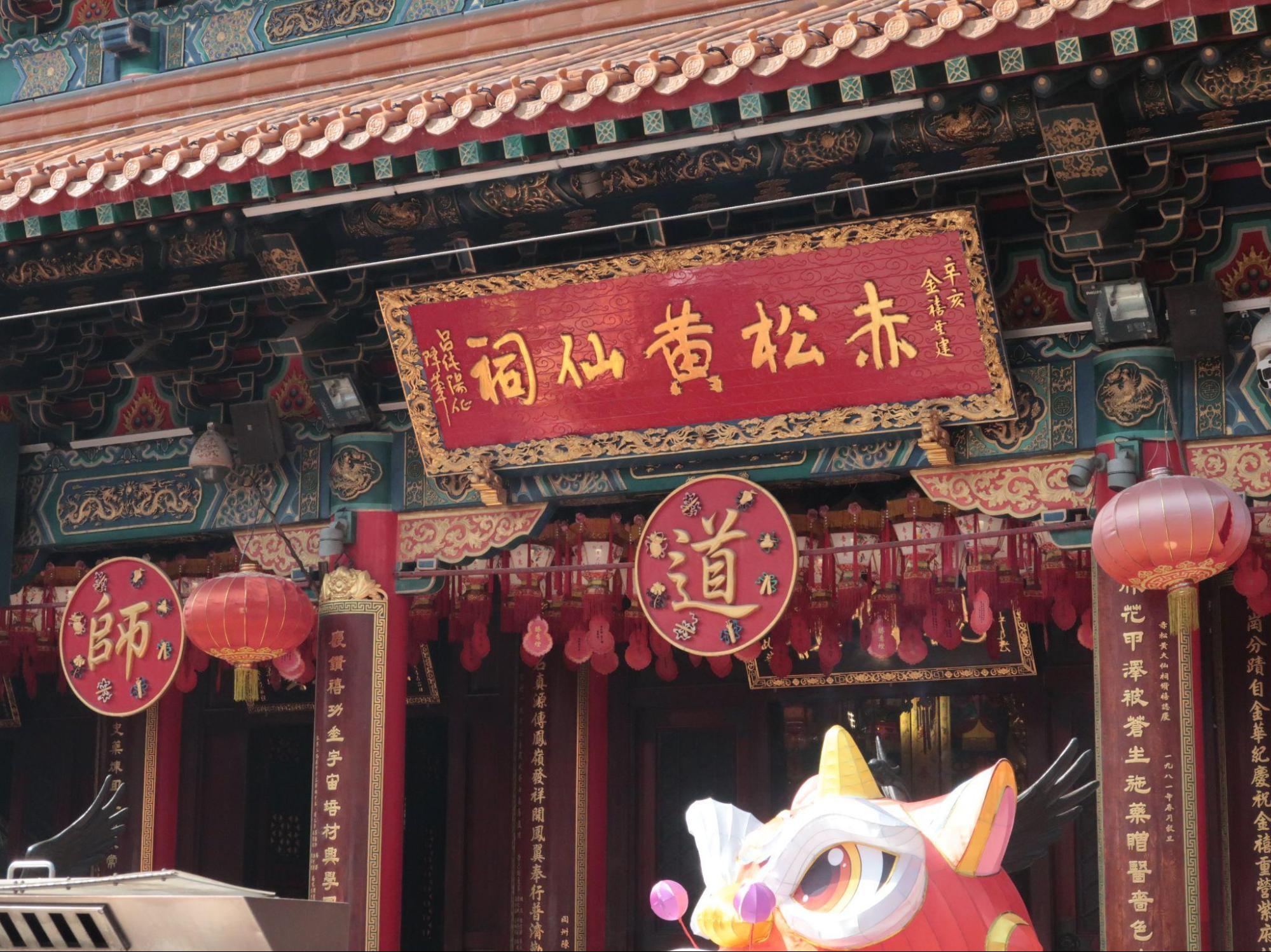
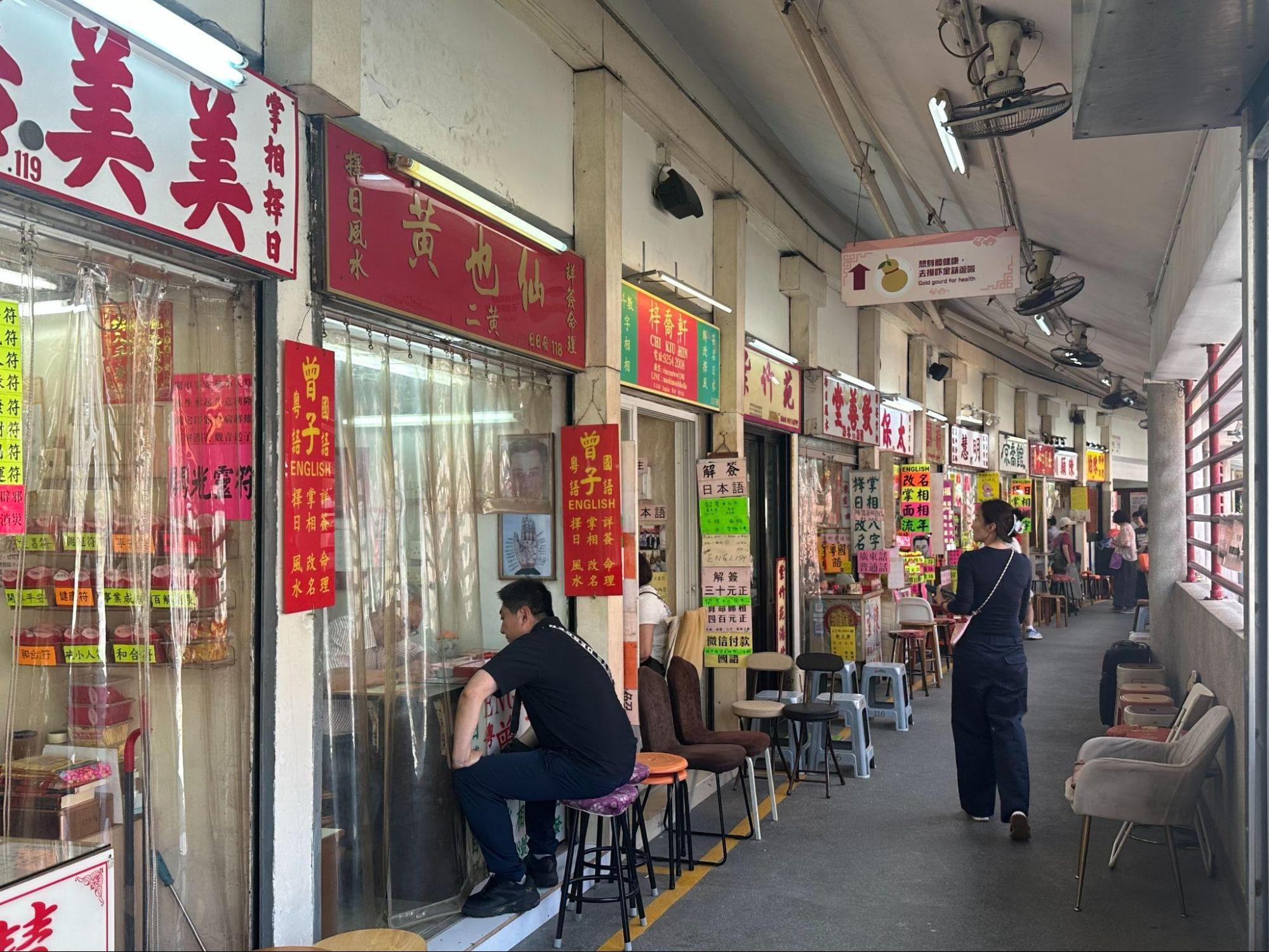
Wong Mei-fan is the operations manager at the Wong Tai Sin Fortune-telling & Oblation Arcade. She has been working there for 18 years and has witnessed the changes throughout the years.
“During festivals, the corridors of these two floors are always packed with people of all ages from different countries,” said Wong.
From her daily observations, more and more young people have been visiting fortune-telling stalls since the pandemic ended.
To attract more patrons to fortune-telling stalls, Wong and her colleagues have launched a series of initiatives, such as providing training courses to fortune-tellers and encouraging them to establish their own social media accounts.
Chan created a Xiaohongshu account amid this social media promotion trend and started to share his daily life and amusing stories from his fortune-telling experiences.
This sparked interest among netizens, with many commenting that they intended to seek his fortune-telling services.
“Making money is not my primary goal. What matters most to me is helping clients to resolve the challenges through divine guidance,” Chan said.
《The Young Reporter》
The Young Reporter (TYR) started as a newspaper in 1969. Today, it is published across multiple media platforms and updated constantly to bring the latest news and analyses to its readers.
Wan Chai District hub for Hong Kong’s LGBTQ community
Australia sees a 20-year dip in Hong Kong students' enrolment as preferences shift

Comments