
The number of Hong Kong students studying in Australia has dropped to a 20-year low, according to government data, signalling a shift in study abroad preferences among Hong Kong students.
Data from Australia’s Department of Home Affairs reveals a stark decline: only 1,766 student visas were issued to Hongkongers in the 2024-2025 period – less than a quarter of the total from two decades ago.
The trend is part of a broader downturn in new enrolments from key markets. Mainland Chinese students newly enrolled at Australian universities in the same period also fell by 2.4% to 41,442, contributing to a 17% year-on-year national drop in new international students reported in August 2025, according to Australia’s Department of Education.
Despite this, the total number of international students studying in Australia remained unchanged. This could be a result of an influx of students arriving from countries like Bangladesh, Nepal, and Sri Lanka, and the continued presence of returning students.

Hongkongers have long favoured Australia for its high-ranking universities, friendly immigration policies, and minimal time difference from home. However, observers have noted a combination of factors that are diverting Hong Kong students elsewhere.
Willy Kwong, a Hong Kong-based migration agent, said the drop is partly due to the expansion of tertiary education opportunities in Hong Kong, which has reduced the need for students to study abroad.
Australia has been known among Hong Kong students as a popular backdoor into competitive fields. Health-science majors such as physiotherapy, veterinary studies and environmental studies have been particularly popular as admission is often more accessible than Hong Kong.
Kristy Lau, a Melbourne-based education consultant, said many secondary students were drawn to Australian universities as a more accessible alternative to highly competitive local programmes in Hong Kong.
“The acceptance rates of these [health-science related] majors at Australian universities are relatively low, and there are way more institutes providing spots, so it's just a little bit easier to get into compared to Hong Kong,” she said.
For popular majors at the Hong Kong Polytechnic University, like physiotherapy, the intake requires a DSE score of 33.5 out of 35 from the five best subjects, while Australian universities such as The University of Queensland require only a DSE score of 25 and an IELTS score of 7.

But now, tertiary education opportunities in Hong Kong are expanding.
Kwong said programmes like occupational therapy are now offered in Tung Wah College.
The cost of living of studying abroad is also a concern for Hong Kong students.
In Australia, the annual living cost for undergraduate students can range from AU$26,800 (HK$135,071) to AU$82,700 (HK$416,806), according to IDP, a global education company.
“It’s not easy for parents to commit to a three-year investment,” Kwong said.
The decline of Hongkongers studying overseas not only happened in Australia, but also in the United Kingdom and the United States.
In 2024, only 7.8% of Hong Kong secondary school graduates opted to study abroad. Of these, 647 chose the UK, and 67 chose the US, marking a significant drop from 2012, when 1,081 students went to the UK and 551 to the US.
Mainland China is now the top choice for undergraduate studies outside Hong Kong, according to a 2024 survey by Hong Kong’s Education Bureau, partly due to lower living costs and tuition fees.
Kwong added that with more tertiary education options emerging in Hong Kong and a struggling economy limiting purchasing power, fewer Hongkongers are choosing to immigrate overseas.

Another reason behind the decline may be the new immigration policies in Australia in 2025, which include a set cap of 270,000 incoming international students and a 25% increase in student visa application fees to AU$2,000 (HK$10,080).
Previously, many Hongkongers were attracted by the migration opportunities Australia offers.
In 2020, Australia introduced a specific Hong Kong visa stream, with easier pathways to permanent residency.
Hongkongers can apply for permanent residency after residing in Australia for around three to four years, depending on the eligible temporary work visa or graduate visa that they hold.
Hong Kong students can also receive an additional five years of work permit after completing their studies.
Now, Hong Kong students are worried that the uncertainty shrouding the stream might lead to closure.
Queenie Siu, a PhD student from the Australian National University researching Hong Kong student migration, said the current stream has no “set end date”.
“Many fear that they may have missed the optimal window to pursue this migration route,” said Siu.
“Concerns persist that, upon completing their degrees, they may face limited options for securing permanent residency in Australia.”
She added that many students choose majors on Australia’s skills migration list of highly-demanded occupations, such as nursing, dentistry, or occupational therapy.
“They are strategically selecting their programme because if the Hong Kong Stream were to close in the future, they would still have the option to apply for the skilled migration program as an alternative, given that the occupations in this list are in high demand in Australia," Siu said.
Rosie Chan, 23, previously studied hotel management in Australia but has now opted to study nursing for an easier path to citizenship.
She said Australia has a better work-life balance because the patient load is not as high as in Hong Kong.
“You probably only get a maximum of five patients for a nurse if you are working in a private hospital,” she said.
Tom Siu, 31, a massage therapist from Hong Kong, is also planning to study a master's degree in psychology in Australia for migration.
“Hong Kong is no longer a livable place for me due to its changing political environment. It’s not too late for me to complete a master's degree there,” he said, adding that he will pursue his career for a residence in Australia and might not return to Hong Kong in the future.
One of Australia’s cities, Melbourne, ranks as the 4th most livable city in the world, while Hong Kong ranks as the 44th, according to the Global Liveability Index 2025.
He said he completed his bachelor’s degree overseas, as he dislikes Hong Kong’s ‘spoonfeeding’ education growing up locally.
“The atmosphere of studying in Hong Kong versus overseas universities is incomparable,” he said.
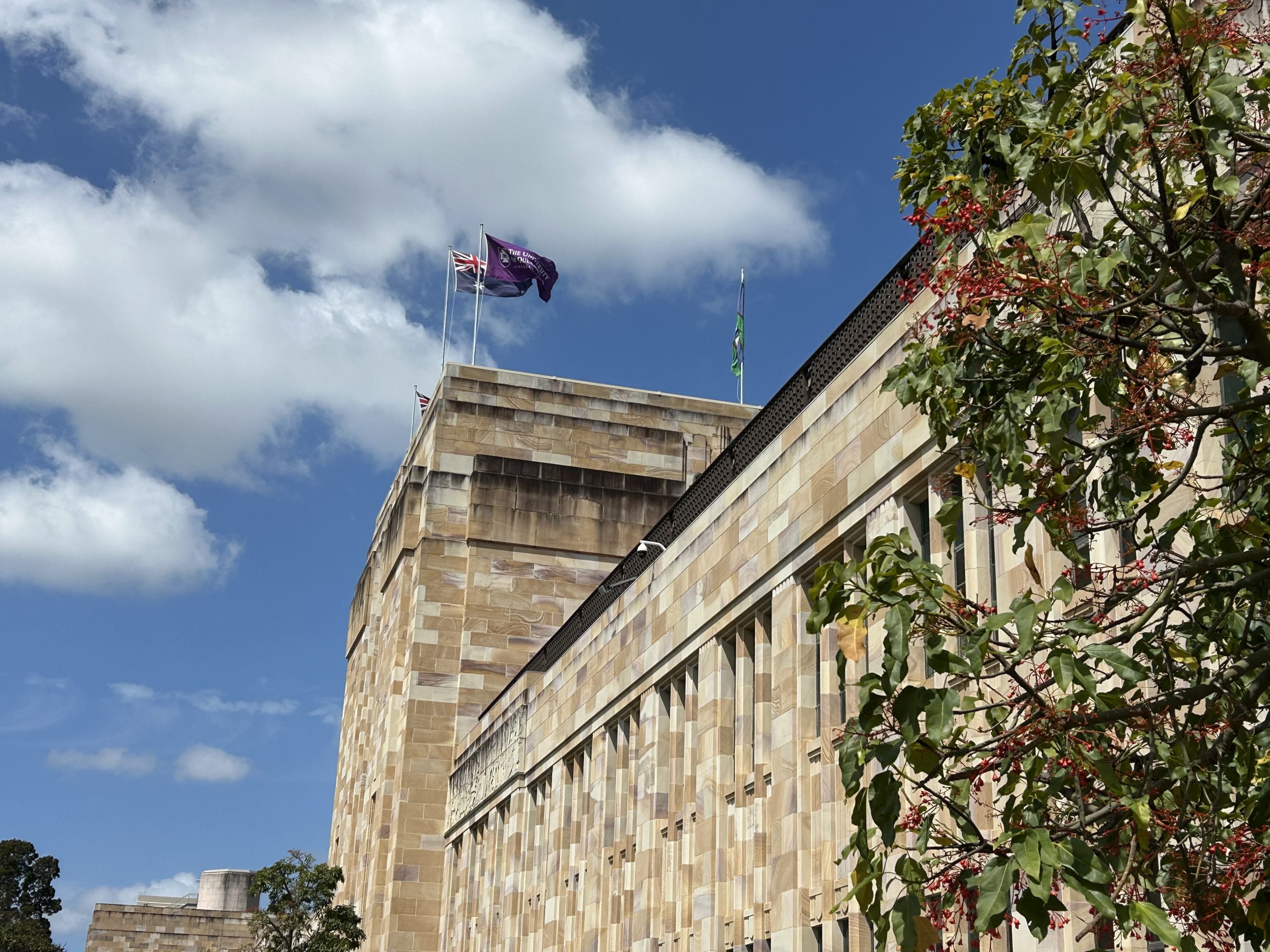
Despite the decline of the Hong Kong students, Australia would still be attractive if it maintains a decent worldwide ranking, according to Queenie Siu.
“As long as Australia’s universities are still having institutionalised support, such as providing placement for students to get local working experience, Australia is still going to be an attractive place for Hong Kong students,” she added.
Siu believes that Australia is still a more favourable destination for Hong Kong students among the UK, the US and Canada, in terms of safety, political environment and the closest time zone.
“Within these four countries, Australia is also regarded as an embracing multicultural country itself.”
《The Young Reporter》
The Young Reporter (TYR) started as a newspaper in 1969. Today, it is published across multiple media platforms and updated constantly to bring the latest news and analyses to its readers.

Wong Tai Sin's human oracle: how fortune-tellers endure the challenge posed by AI
Hong Kong’s port battles to stay afloat amid green and digital shift


Comments