
On a Saturday night, men in t-shirts and tank tops and a few women sip cocktails and chat in Hong Kong’s highest and one of its most popular gay bars, Bing Bing, on the 22nd floor of the Oliv building in Causeway Bay.
“Bing Bing is a safe space for us,” said Felicia Ho Chui-man, 49, a straight woman who was at the bar. “To my gay friends, Bing Bing is what they are used to and the most comfortable with.”
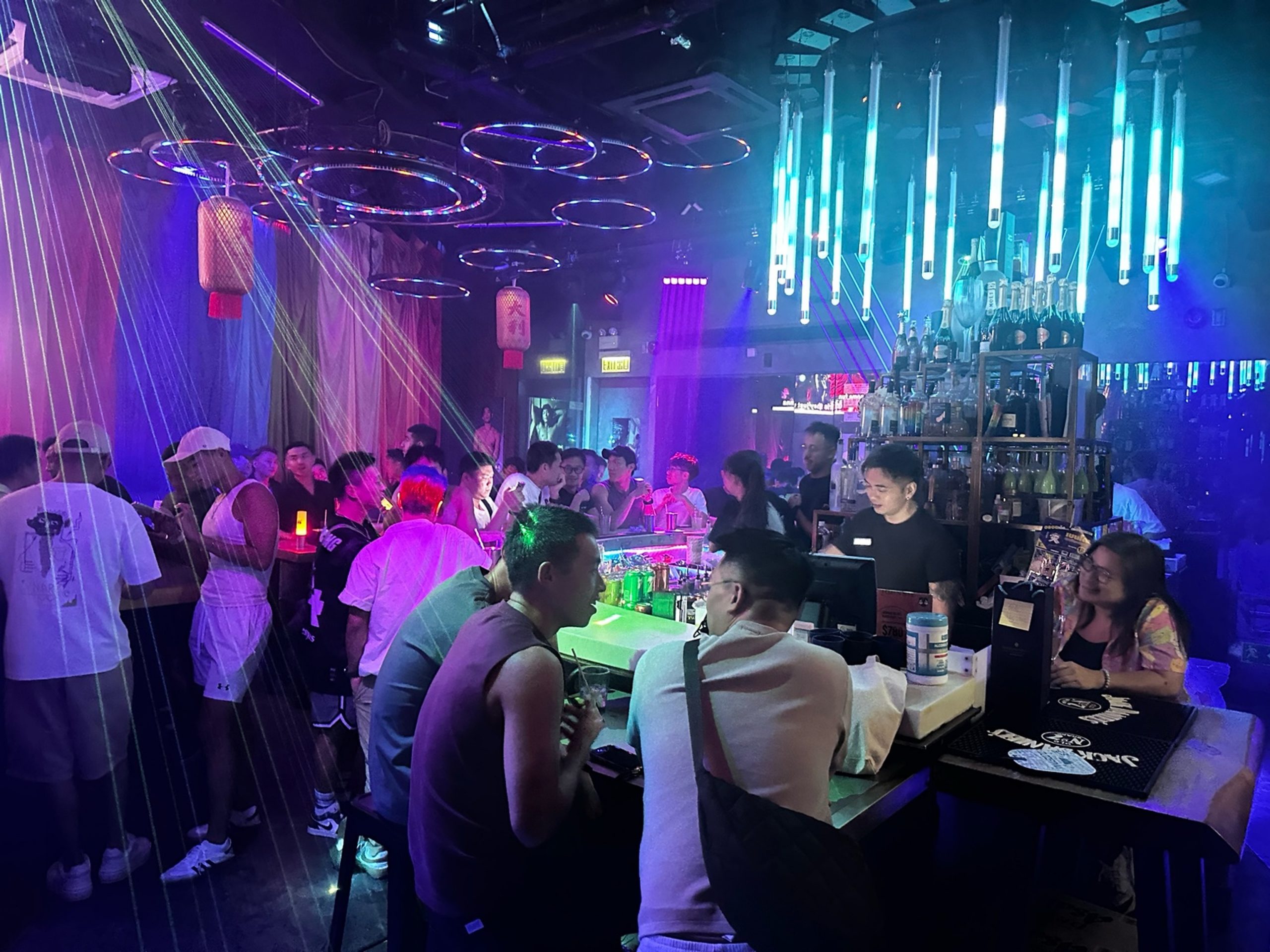
Bing Bing, located in the Wan Chai district, is known for its eight years of history, Korean pop music and affordable cocktails. Together with the several gay bars in the district and those in the neighbouring Central and Western District, they form a hub for the LGBTQ+ community in Hong Kong.
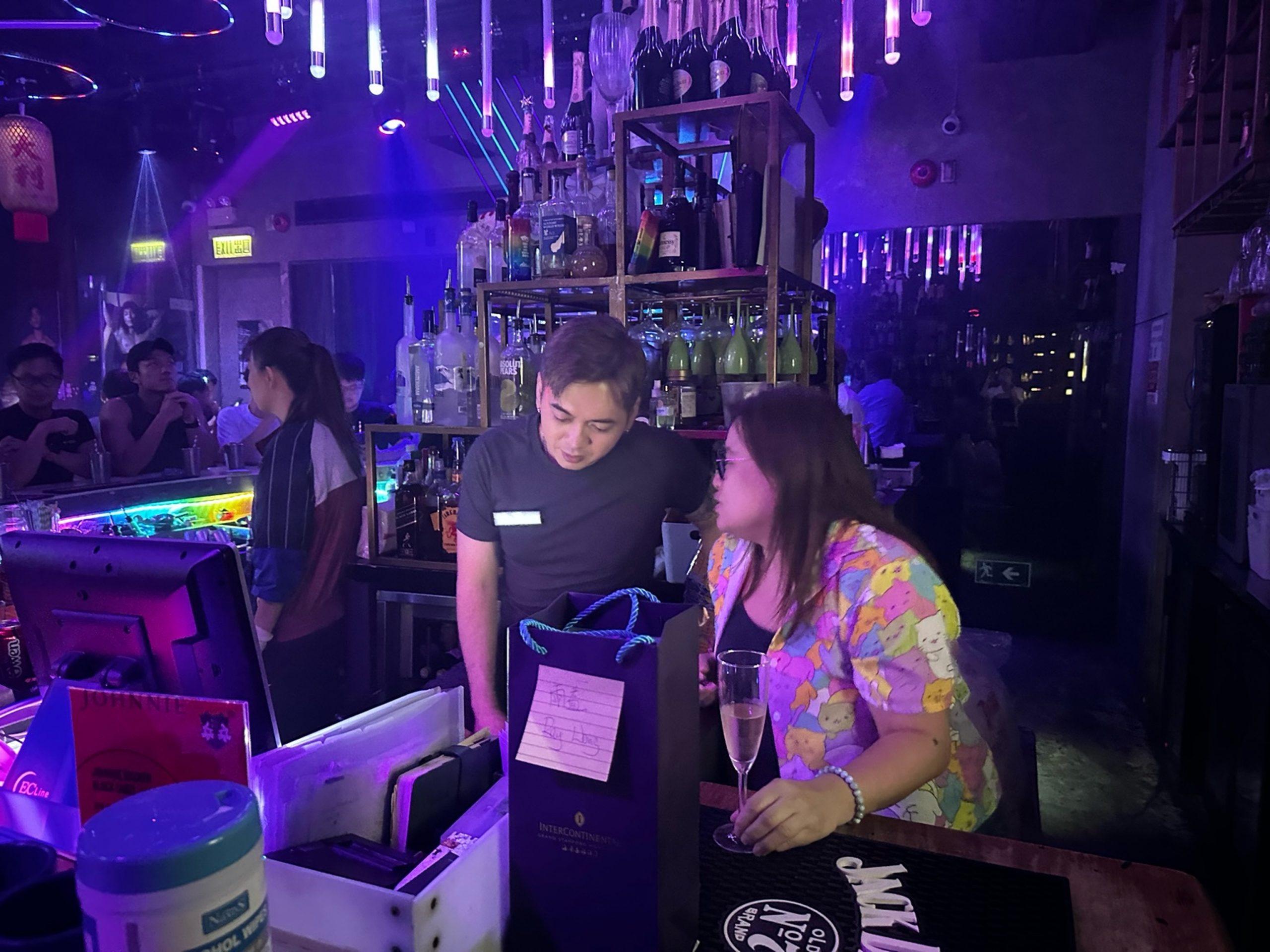
“We try to provide a private space for gay community, to connect and to share all the support and fear,” said Yim Kai-kong, the manager of Bing Bing for the last seven years.
Wu, the chairman of GayHK_caring, an NGO that helps local gay teenagers and students, said one of the reasons why gay people go to the Wan Chai district for entertainment, especially nightlife, is its deep historical roots.”
According to the Hong Kong Public Records Office, nightlife in Wan Chai can be traced back to the Japanese occupation period from 1941 to 1945. At the time, Wan Chai district was a designated “entertainment area.”
During the Korean War from 1950 to 1953, Hong Kong began to receive servicemen from the United States who were on leave. Bars and nightclubs in Wan Chai prospered when Americans from the United Nations Command landed at a small pier on Fenwick Street that was demolished in 2022.
Published in 1957, British writer Richard Mason's book “The World of Suzie Wong” portrayed the life of a bar girl in Wan Chai, which was followed by a successful stage show on Broadway and the West End of London and a hit film version in 1960.
The story created Wan Chai’s image as an entertainment center for nightclubs and bar girls, which has lasted decades.
Following the decriminalisation of homosexuality in Hong Kong in 1991, the district also became the hub it is today for the LGBTQ+ community.
“Most LGBTQ+ parades and events happen in Wan Chai district as well,” said Wu.
Hong Kong’s first pride parade began in 2008. As it gained momentum, the march took an annual November slot, typically starting off from Victoria Park in Causeway Bay, passing through the Wan Chai neighborhood and finishing at Edinburgh Place in Central.
“The gay community needs a nonjudging space to grow,” said Wu. “With lower population density and higher educational backgrounds, people in Wan Chai are relatively open and willing to show understanding towards the LGBTQ community.”
The population density of Wan Chai district is 15,791 person per square kilometre, which is more than half of the 44,458 and 59,704 person per square kilometre in Yau Tsim Mong and Kwun Tong, according to the population report by Esri China Hong Kong Limited in 2021.
The growing openness aligns with Hong Kong’s broader legal stance in equality. “The Basic Law guarantees equal human rights for all communities,” said Regina Ip Lau Suk-yee, a LegCo member, at an LGBTQ event in Causeway Bay in September,”and makes clear that discrimination has no place in Hong Kong.”
《The Young Reporter》
The Young Reporter (TYR) started as a newspaper in 1969. Today, it is published across multiple media platforms and updated constantly to bring the latest news and analyses to its readers.
Advocate pushes Hong Kong to see refugees with compassion amid global backlash

Wong Tai Sin's human oracle: how fortune-tellers endure the challenge posed by AI


Comments