
Hong Kong hopes to speed up the development of a newly constructed park on the border that is cooperatively managed by Hong Kong and Shenzhen, as part of the government’s focus on innovation and technology, said John Lee Ka-chiu in today's Policy Address.
The park’s layout has yet to be finalised even as the first batch of enterprises has already taken up residence in the Hetao Shenzhen-Hong Kong Science and Technology Innovation Cooperation Zone.
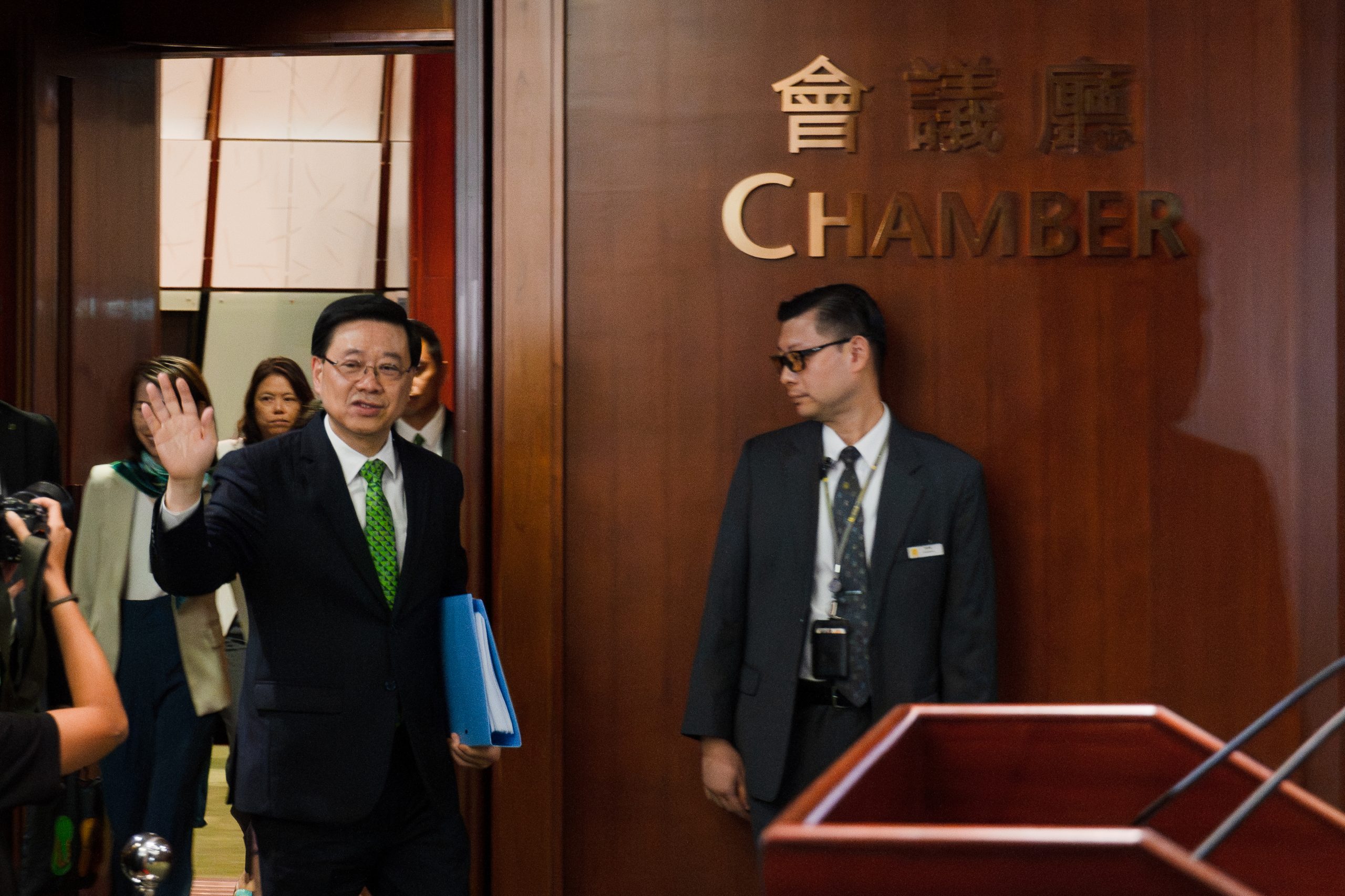
“We will finalise the Park’s overall layout and consider offering workspaces flexibly to companies under the ‘moving in while construction is underway’ approach; that will enable them to move in earlier without having to wait for the completion of the entire park's construction,” said Lee.
The new tenants include companies and talents specializing in life and health technology, microelectronics, new energy, AI and other pillar industries. This is connected to the government’s broader plan to develop Hong Kong into a global AI hub.
The second phase of construction, which includes another five buildings in addition to the current three, will be completed progressively from 2027, Lee said.
According to reports from Chinese state media, companies including The Hong Kong and China Gas Company, RoadAGI, Ping An Technology, and Siemens Energy have established a presence in the park.
The Cooperation Zone will be used as a dedicated hub for cutting-edge research in biomedicine, artificial intelligence, applied mathematics and new materials.
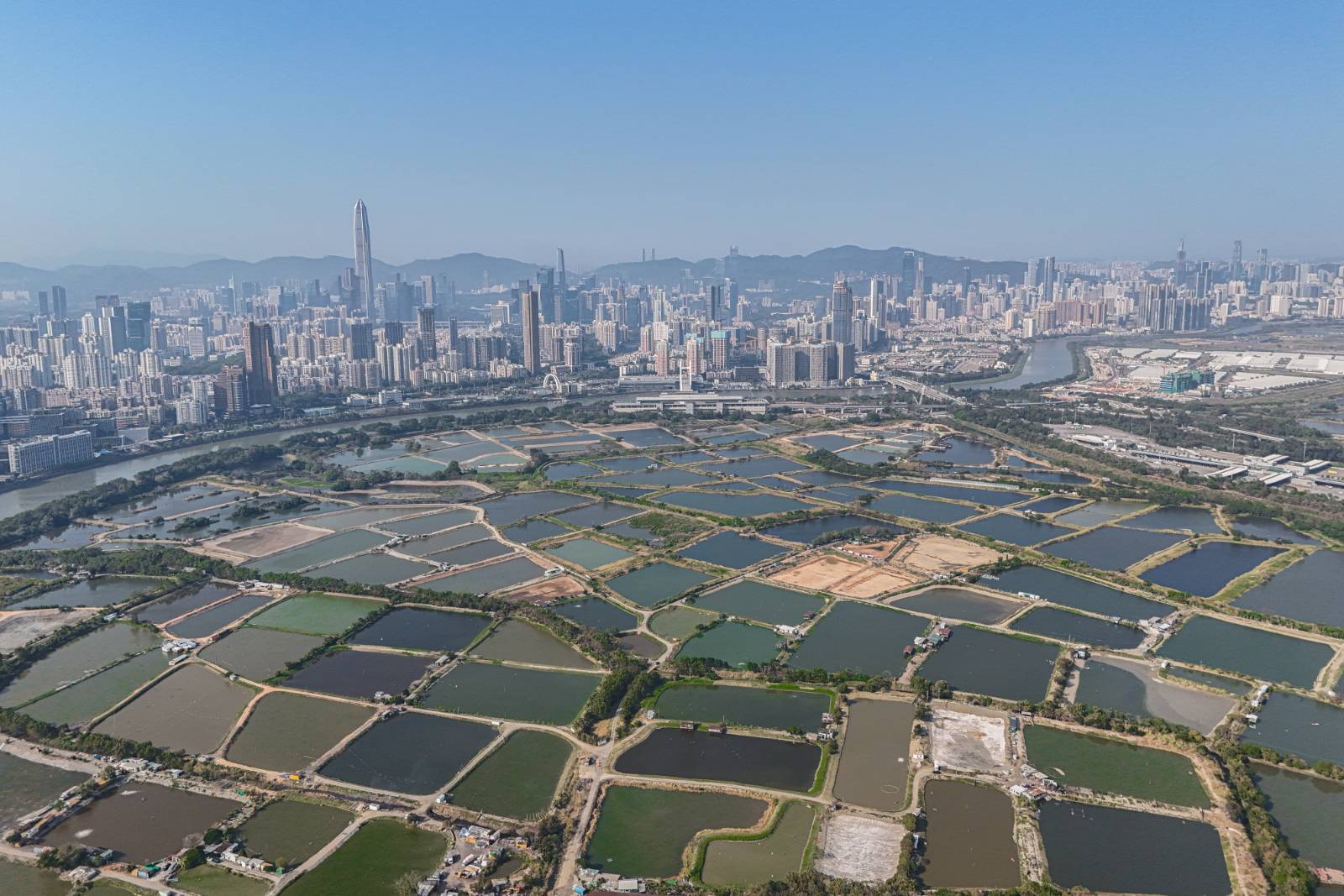
Earlier this year, Financial Secretary Paul Chan Mo-po highlighted in the 2025 budget plan that the government has earmarked HK$3.7 billion for the Hetao Innovation Zone, supporting the first-phase construction of infrastructure and public facilities, as it is one of the key projects in the Northern Metropolis development strategy.
Chan estimated that upon the full completion of Hong Kong Park, it will contribute approximately HK$52 billion annually to Hong Kong's economy and generate around 52,000 jobs.
“The existing hardware facilities help the companies get started more quickly,” said Wong Man-shing, a professor in the Chemistry Department at Hong Kong Baptist University and the founder of an innovative biotechnology start-up.
Wong said whether the cooperation zone aims to attract well-established companies or those incubated start-ups, it needs to be equipped not only with hardware capabilities but also with the software—that is, the corresponding talent in the specific fields.
In last year’s policy address, a series of facilitation measures were introduced to boost the development of the Hetao zone, including promoting cross-border exchanges between people, adopting low-altitude unmanned transport across the border and enhancing cross-border financial convenience.
Wong said funding has to come first; that’s what draws people in, and then they can probably shift to other issues, such as circulation of supplies and data. “For companies focusing on life sciences, the funding required for clinical trials is substantial,” he added.
The first cohort of doctoral students has joined Hetao College, a newly established national-level platform for scientific research and education within the park.
“The college provides approximately 100,000 yuan subsidies annually for each student, with a free single-room student dormitory, excellent infrastructure guaranteed,” said Zeno Luo, a PhD in Large Language Models from the Chinese University of Hong Kong (Shenzhen), who was admitted by Hetao College this year.
Luo said the college provides great research resources and strong AI computing support, for instance, 2,000 petaflops of computing power, with an average of eight computing cards per person. “This means that, if we were given sufficient data, we could train a model like DeepSeek-V3 within two weeks,” he added.
Lin Yangxiao, a PhD in computer science from the University of Hong Kong, received an offer from the Hetao Academy this summer.“Companies sit on large, sometimes unique, technical caches that academia has not yet noticed, and they bring in real-world problems that open brand-new research directions,” said Lin.
The Hetao Hong Kong Park plans to further leverage the advantages of the “one country, two systems”, strengthening its local AI data advantages and support AI application testing and innovation, Lee said.
“With our advantages in scientific research, capital, data, and talent, together with abundant use cases,” he said.
《The Young Reporter》
The Young Reporter (TYR) started as a newspaper in 1969. Today, it is published across multiple media platforms and updated constantly to bring the latest news and analyses to its readers.
Chief Executive John Lee Ka-chiu delivers Policy Address 2025
Policy Address 2025: Leveraging Kai Tak Sports Park to popularise sports in Hong Kong


Comments