
Politics
South Korea Presidential Election 2025: Students Embrace AI's Future Potential While Questioning Candidates' Preparedness for Tech Leadership
- 2025-06-03
- Politics
- By: Wang YunqiEdited by: BO Chuxuan
- 2025-06-03
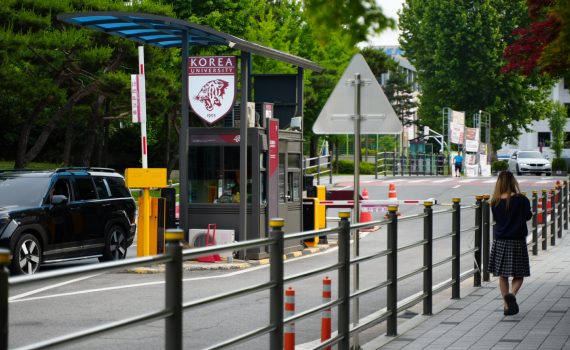
Young voters in South Korea expressed different views on increasing funding for AI development, as some presidential candidates have mentioned AI in their speeches, amid the country's rising financial input for technology research and development. “I think it’s kind of a waste of money because we already have technologies like GPT, and China has DeepSeek. Developing AI requires a lot of information and money,” said Kim Jun Young, an English Education student at Korea University. “Still, we don’t really have sufficient resources to compete on the same level,” she added. Park (assume name), 26, majored in computer science, has also expressed doubts about the practicality and feasibility of AI policies proposed by different candidates. “ I’m doubtful whether they can achieve meaningful advancements in this field,” he said, adding that he thinks many candidates do not understand AI much. South Korea recently increased the research and development budget for 2025 by 16.1 percent year-on-year to a record high of KRW 24.8 trillion (HK$ 141.4 billion) with a focus on cutting-edge technologies such as artificial intelligence (AI), biotechnology, and quantum technology. The ambitious investment aims to position South Korea as a global leader in these fields. Lee Jae-myung, the presidential candidate of the Democratic Party, who leads the poll, has identified AI, renewable energy, and the cultural industries as essential tools for addressing South Korea’s economic challenges meanwhile Kim Moon-soo, first runner-up in the poll, from the conservative People Power Party, promote himself by creating a joint fund to boost AI development. Meanwhile, Lee Jun-seok, the youngest candidate among all, representing the Reform New Party, emphasises the importance of data freedom in AI development and highlights the role of Large Language Models (LLMs) in advancing the industry. AI has become a core driving force for national development, with applications spanning industries …
South Korea Presidential Election 2025: Young voters see the economy as one of their major concerns amid economic downturn
- 2025-06-02
- Politics
- By: BO ChuxuanEdited by: BO Chuxuan
- 2025-06-02
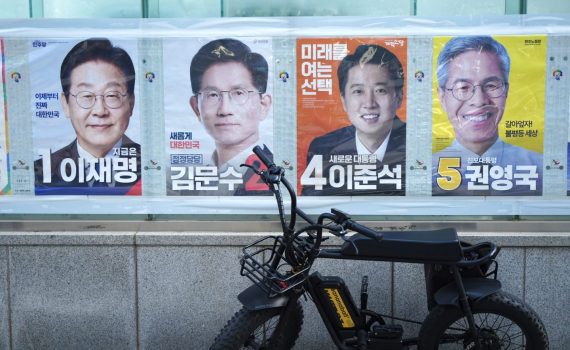
Young voters in Seoul consider the economy one of the major concerns heading into the South Korean 21st presidential election, which takes place on June 3, as South Korea’s central bank cut the basic interest rate by 25 basis points days before to counter the current economic downturn. “The current (economic) situation is really bad, everything is becoming more and more expensive,” said Victoria Kim, a psychology student at Yonsei University, who gave up travelling abroad but visited cities inside South Korea instead because of the depreciation of the South Korean won. South Korea's won weakened sharply after ex-president Yoon Suk Yeol declared emergency martial law, causing a democratic crisis in the country on Dec. 3, 2024, and hit a record low in nearly 16 years after Trump’s declaration of a 25 percent tariff against Korea-manufactured goods in April. While the South Korean benchmark stock index, KOSPI, moved higher and broke a 10-month record high at 2,720.64 on May 29, boosted by tech shares, which strengthened the won against the USD, this was mainly triggered by the US trade court’s blockade of Trump’s global tariffs. For Kim, the economic uncertainty extends beyond travel decisions to her everyday expenses. “I like to be a vegetarian and eat lots of veg and fruit at home, and with the recent price rises it’s a burden to buy and eat,” said Kim, working part-time in Seoul apart form college right now. Being eager to enjoy cultural life, Kim must continue working to save money, which makes her feel frustrated and negatively impacts her mental well-being. Jerry (assumed name), a student in the Korea University department of Humanities, sees social welfare for low-income groups as the key issue in his vote, and is looking for substantial and implementable funding policies to support the research and …

Budget 2025 Key Takeaways: Balance public expenditure and maintain Hong Kong’s competitiveness
- 2025-03-03
- Society
- The Young Reporter
- By: AO Wei Ying Vinci、CHAN Wing YiuEdited by: AO Wei Ying Vinci
- 2025-03-03
Hong Kong’s Financial Secretary Paul Chan Mo-po delivered the 2025-2026 Budget speech on Wednesday. He said that “strictly containing public expenditure is a must” and it is crucial to strive for a balance among restoring fiscal balance and lowering potential impacts that may arise. For the coming fiscal year, the total government expenditure will increase by about 8.9% to HK$822.3 billion, while the total government revenue is estimated to be HK$659.4 billion. Chan expects that there will be a deficit of HK$67 billion for the year, and fiscal reserves will decrease to HK$580.3 billion. Here are the key takeaways of this year’s budget plan.

German Election 2025: Tension in central Berlin as election approaches
- 2025-03-01
- Society
- The Young Reporter
- By: MA Tsz Chiu Oscar、LAI Uen LingEdited by: AU YEUNG Jim
- 2025-03-01
Far-right supporters demonstrated against left-wing extremism while antifa supporters called out the rise of fascism in the city centre of Berlin on Feb. 22, one day before Germany’s federal election. One of the right-wing protests was organised by Ferhat Sentürk, the founder and leader of a far-right party, Bürgerliche Allianz Für Deutschland, or Civic Alliance for Germany, formerly a member of Alternative for Germany, or AfD. A group of far-right supporters marched from Dorothea-Schlegel-Platz near Friedrichstraße Station to Berlin Central Station waving the national flag of Germany. Meanwhile, another group of antifa supporters gathered in Schiffbauerdamm to protest against the far-right supporters. Police set up blockades on both sides of the far-right demonstration route to prevent clashes. “If you have a child as a woman, you may not be able to have a legal abortion because some populists and moralists believe that our self-determination does not matter,” said Penelope Alva Frank, a LGBTQ activist, during a speech in the antifa protest. “We have to show that we resist as German people against this far-right propaganda, and this far-right movement is against human rights,” said Marianna, a Green party and antifa supporter who did not disclose her surname because of privacy concerns. Despite police interventions, some antifa supporters managed to block far-right protesters on Hannoversche Strasse for about an hour. The Young Reporter reached out to a number of far-right supporters during their demonstration, but they claimed they do not speak English. The far-right AfD gained widespread support in states that were formerly part of East Germany and nearly doubled their seats to 152 in the Bundestag, according to the Federal Returning Officer. The Christian Democratic Union and Christian Social Union in Bavaria, a centre-right alliance, won 208 seats and became the dominant force in the Bundestag. The incumbent governing coalition, …
German Election 2025: Right-wing parties take over parliament with record high turnout
- 2025-02-27
- Society
- The Young Reporter
- By: LAI Uen Ling、MA Tsz Chiu OscarEdited by: AU YEUNG Jim
- 2025-02-27
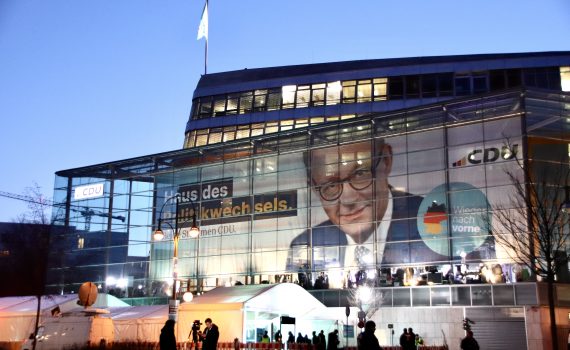
Germany shifts to the right after reaching a voter turnout of 82.5% in the 2025 federal election, a record high since the unification of Germany. On Sunday, voters elected a new Bundestag, the lower house of parliament. The Christian Democratic Union of Germany and the Christian Social Union in Bavaria, commonly known as CDU/CSU, a centre-right political alliance, top the election result taking 208 seats with 28.5% of the votes. The far-right nationalist party, Alternative for Germany, or AfD, comes in second with a record 20.8% votes. It now holds 152 seats, according to The Federal Returning Officer. Friedrich Merz, the chancellor candidate of CDU/CSU, is set to become Germany's next leader,and will put together a governing coalition. Prior to the election, CDU/CSU was the largest opposition party in the Bundestag. CDU represented the alliance in 15 of the 16 states, while CSU only contested in the southeastern state of Bavaria. Mark Schneider, CEO of a startup company and a member of CDU, said he believes the party can form a strong government that is able to make clear decisions. “Germany is facing a downshift in the economy. We are not in the best moment,” Schneider said. “Europe has a lot of challenges, including the war in Ukraine. But the last three years of the government were very weak.” He said he would prefer not to have a coalition government, but he suggested the CDU should ally with the Free Democratic Party, another centre-right political party. FDP lost all of its current 92 seats with only 4.33% of the votes, and failed to meet the 5% threshold needed for parliamentary representation. CDU/CSU’s election campaign promised a crackdown on immigration and a deregulation of Germany’s ailing economy. The country’s GDP has decreased for two consecutive years, according to the Federal Statistical …

Budget 2025: One-year civil servants pay freeze
- 2025-02-26
- Politics
- The Young Reporter
- By: Fu Rong、Chun Hei LUKEdited by: Wing Chi HO
- 2025-02-26
More than 170,000 civil servants and all members of the executive, legislative and judicial branches of the government will not see a pay rise for a year. Up to 10,000 civil service posts will be axed. (February 26, 2025).
Budget 2025: Improved financial connectivity to boost Hong Kong’s role as RMB trading hub
- 2025-02-26
- Politics
- The Young Reporter
- By: CHEN Ziyu、ZHENG XinyiEdited by: CAO Jiawen
- 2025-02-26
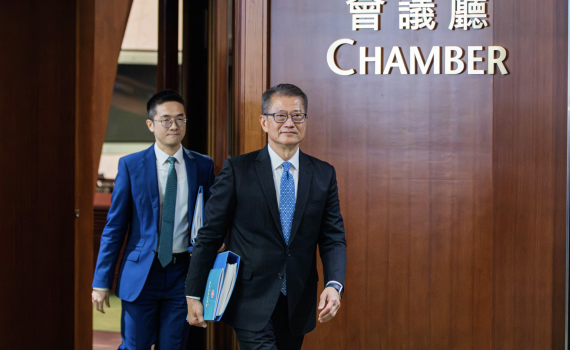
Financial Secretary Paul Chan Mo-po has proposed to enhance Hong Kong’s position as a Renminbi trading hub. The People’s Bank of China and the Hong Kong Monetary Authority will start working together to provide “round-the-clock” and “real-time” small-value cross-boundary remittance services for residents of Hong Kong and the mainland as soon as the middle of this year. “The HKMA will launch an RMB Trade Financing Liquidity Facility for banks as a stable source of relatively lower-cost funds to support banks in providing RMB trade finance services to their corporate customers. The new facility has a total size of 100 billion yuan,” Chan said. According to a report from the Society for Worldwide Interbank Financial Telecommunication, the value of RMB payments increased 2.1% compared to December 2024. Hong Kong handled 78.67% of RMB payments excluding the mainland. Inconvenient renminbi remittance service has been problematic for mainland residents and Hongkongers alike. XiXi Chen, 23, is a mainland student at the University of Hong Kong. “The driver pulled me out because I did not have any cash. It is quite embarrassing,” said Chen. “ I am happy that the government will implement the remittance service so that I will not have to wait for payment.” Cory Choi, 22, a Hongkonger who worked at American International Assurance said before COVID-19, shopping and consumption in the mainland was quite inconvenient. “I was accustomed to bringing a lot of cash. When I tried to pay, the shops told me they did not have change for me,” said Choi. “But since last year, I found I could go to the mainland to shop by just bringing my phone and my Home Return Permit. The e-payment methods in Hong Kong can also be used in the mainland,” Choi added. According to WeChat Pay Hong Kong, more than 3.64 …
Ukrainian journalists defend local voices as war with Russia enters third year
- 2025-02-21
- Society
- The Young Reporter
- By: LAI Uen LingEdited by: AU YEUNG Jim
- 2025-02-21
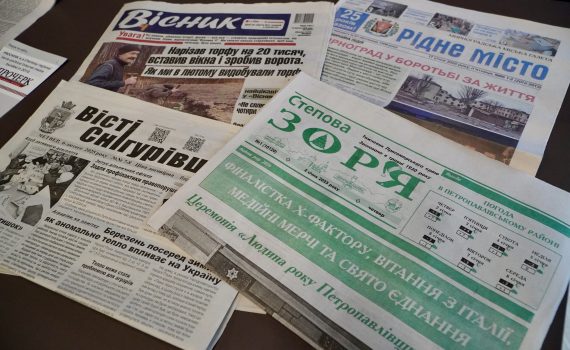
Ukrainian journalists at the frontline regions of the Russia-Ukraine war shared their challenges in wartime reporting at a seminar at the Danish School of Media and Journalism. Organised by Nordic Journalism Center, a group of Ukrainian journalists were invited to share their experience in operating newsrooms in wartime Ukraine as the war with Russia enters into a third year. Oleksiy Soldatenko, programme director of the Institute for Regional Media and Information of Ukraine, said journalism in Ukraine has been struggling with the lack of funding and human resources. “We have no equipment, we have energy cuts and blackouts, but we understand that we are part of this profession and we need to work within professional standards," Soldatenko said. He added although working with communities in destroyed cities is difficult, some regional newspapers continue to reach readers. “We work for our communities, but sometimes communities are not there,” Soldatenko said. “We have cities and towns that are completely destroyed, like Pahmo, but the newspaper from Pahmo is still working and going, trying to reach their people wherever they are, across Ukraine and in other countries of the world.” Iryna Synik, editor of Stepova Zorya, a local newspaper based in Russian-occupied Petropavlivka in southern Ukraine, relies on online subscriptions to support operations. Synik said there is no room for depression because she and her only colleague have to edit and produce all the news pieces. But she remains motivated to run the 95-year-old local newspaper. "Because we are a local newspaper, we can tell stories that would not appear in the national news," Synik said. Marharyta Halich, editor of regional TV broadcaster Suspilne Zaporizhzhya, said finding interesting stories during wartime is challenging because people are tired of hearing negative news about destruction and casualties. Halich said she constantly feels empty and depressed …

Increasing use of social media for news risks overloading users’ mental well-being
- 2024-12-21
- Society
- The Young Reporter
- By: AU YEUNG Jim、AO Wei Ying VinciEdited by: KONG Tsz Yuen
- 2024-12-21
Conor James Walker, 22, a university student majoring in history and politics, gets his daily news from websites such as the BBC and Al Jazeera. He said the current amount of information online is detrimental to his mental health. “A lot of information online, and it doesn’t matter whether it’s true or not, is mostly quite depressing subjects,” said Walker. “Fear of war, disease, disasters, and how politics rarely has a good story that comes out of it, no matter what country you look at,” he said. “It can take quite a mental toll on any individual,” said Walker. Walker added that he is less likely to read social media news unless it appears on his social media feed. “There’s the thing with social media,” said Walker, “which is anything can be said by anyone, and it turns out there’s a good chance it may not be true.” According to a report from the UK Office of Communications (Ofcom), the country’s telecommunications watchdog, 82% of those aged 16-24 years relied on social media for news, while only 28% of those aged 55 years do so. The report added that of all Britons aged 16 or above, 52% now consider social media their primary news source, whereas 51% still watch news on television via main broadcasters. This means online media has overtaken television as the biggest source of news. The American Psychological Association describes that constant feed of negative news as “media saturation overload.” Online platforms, especially social media, have algorithms that feed users more of the same to drive views and engagement. Bryan Mclaughlin, an associate professor in the College of Media and Communication at Texas Tech University, said that social media access leads to people being constantly caught up on the news. “If you don't have social media, even …

US Election 2024: Star-studded campaigns lack real impact on voter decisions
- 2024-11-19
- Politics
- By: Yau To LUM、Wai Sum CHEUNGEdited by: Wai Sum CHEUNG、Yau To LUM
- 2024-11-19
Just after the US presidential debate on Sept 11, Taylor Swift wrote to her 280 million Instagram followers to declare her support for Vice President Kamala Harris saying she “fights for the rights and causes I believe need a warrior to champion them”. View this post on Instagram A post shared by Taylor Swift (@taylorswift) The next month, superstar Beyoncé made a surprise appearance at Harris’s Houston rally in the closing days of the campaign. In addition to tech billionaire Elon Musk, popular podcast host Joe Rogan and Oscar-winning director Mel Gibson endorsed former President Donald Trump. Controversial influencer Logan Paul even interviewed Trump on his podcast “Impaulsive” in June. During the presidential election campaign, a constellation of A-list celebrities leapt from the stage to the political arena, rallying behind both presidential candidates. However, despite the star-studded spectacle, Harris’s disappointing election results suggested that such an approach may be less effective than anticipated. The trend of celebrity endorsements is not new in American politics. In the 2016 and 2020 elections, notable figures such as Lady Gaga and Jay-Z campaigned for Hillary Clinton and Joe Biden respectively. John Affleck, Department Head for Journalism at Pennsylvania State University, said that many seek to portray themselves as socially responsible. “There’s a public service aspect. I’m a good person, putting out these democratic values, asking people to vote,” he said. Affleck added that some celebrities hope to connect with fans who share their beliefs, enhancing their visibility. “Someone may not know you that well but then you espouse this political viewpoint. And I might also have that political viewpoint, so I might be more likely to listen to your record,” he said. Matt McAllister, a professor at Pennsylvania State University, said that the surge in social media has transformed how celebrities communicate …