
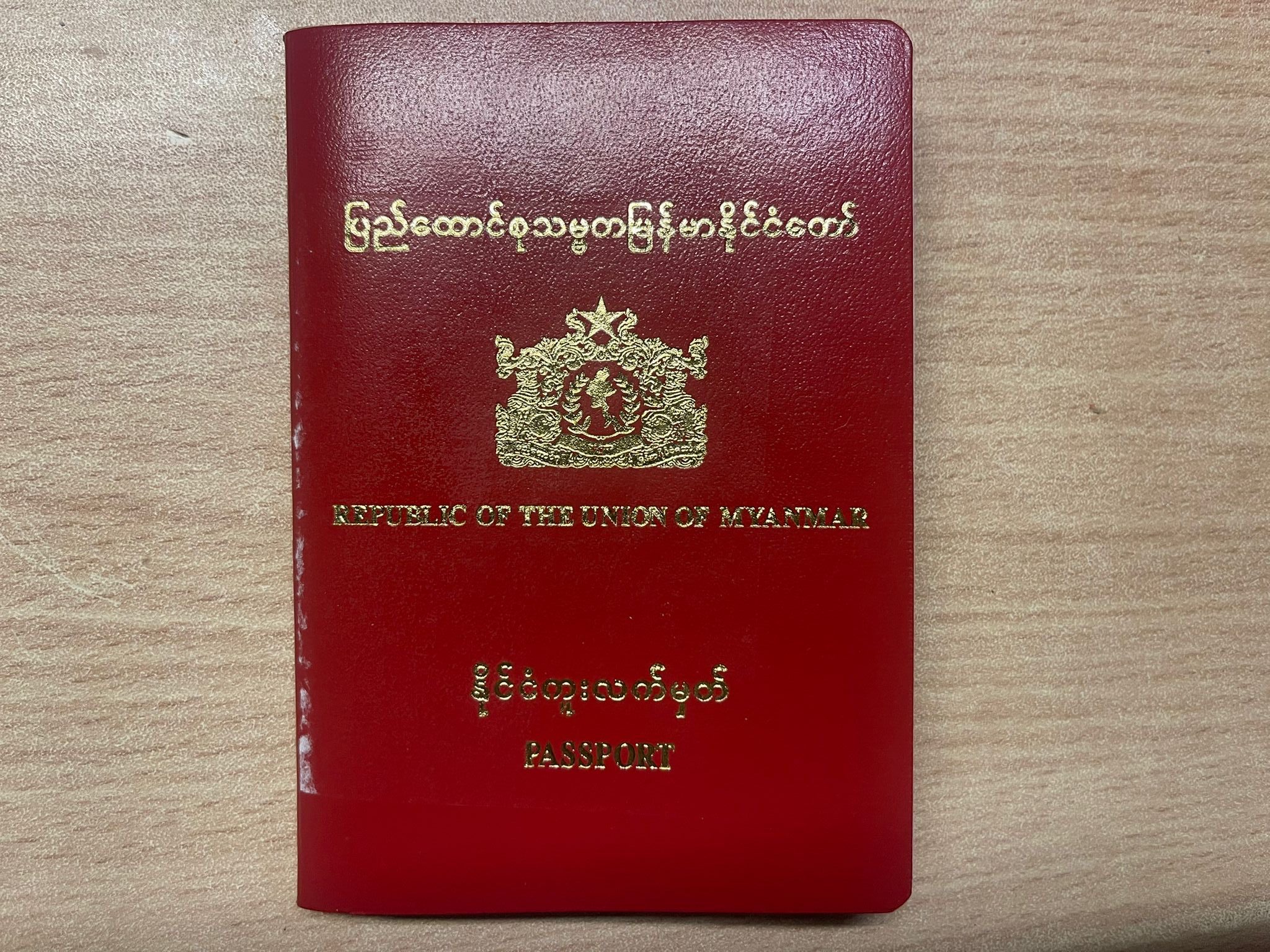
In early 2023, 28-year-old Scarlett, not her real name, queued up to enter Thailand at the Thai-Myanmar border, clutching her passport as she waited for her turn at the checkpoint.
This was not for studying abroad, but an escape for survival. She feared that staying longer would permanently strip her of the possibility of leaving legally.
“If my passport were scanned at the airport, I am afraid that it would be flagged,” said Scarlett. “That’s why I chose to leave from the Thai-Myanmar border,” she said, referring to its less stringent procedures.
When she stepped up to the counter, the officer flipped through her red passport and looked at her briefly.
“Okay, next,” said the immigration officer.
He waved her through without running the passport through a scanner. Scarlett exited the gate and dared not slow down until she reached Thailand.
Since the 2021 military coup, Myanmar’s passport system has increasingly functioned as a tool of exit control rather than merely a document for international travel. According to a 2025 report by the Danish Immigration Service, Myanmar authorities have circulated files of blacklisted people to airports and border checkpoints, allowing immigration officers to identify individuals and bar them from leaving the country with a passport scan.
Those barred from leaving include participants in the Civil Disobedience Movement — a nationwide non-violent protest campaign that started in February 2021, in which civil servants went on strike in protest of military rule following the coup.
More than 417,000 civil servants had joined the movement, according to an official brief from the National Unity Government of Myanmar. The movement was even nominated for the Nobel Peace Prize in 2022.
Scarlett was one of them.
Before the 2021 movement, she worked as a doctor at a public hospital. After the military seized power, she joined the Civil Disobedience Movement by refusing to return to her position at a military-controlled hospital.
“They sent me three letters, telling me to return to work,” Scarlett said. “I was officially fired when I didn’t comply. Later, I began hearing through personal connections that my passport might have been placed on a blacklist.”
Scarlett was one of many whose passports have become the subject of heightened scrutiny.
For those navigating international travel after the coup, holding a valid passport is no longer enough. The subcategory printed inside the passport can also influence how immigration officers assess a traveller’s eligibility to depart.
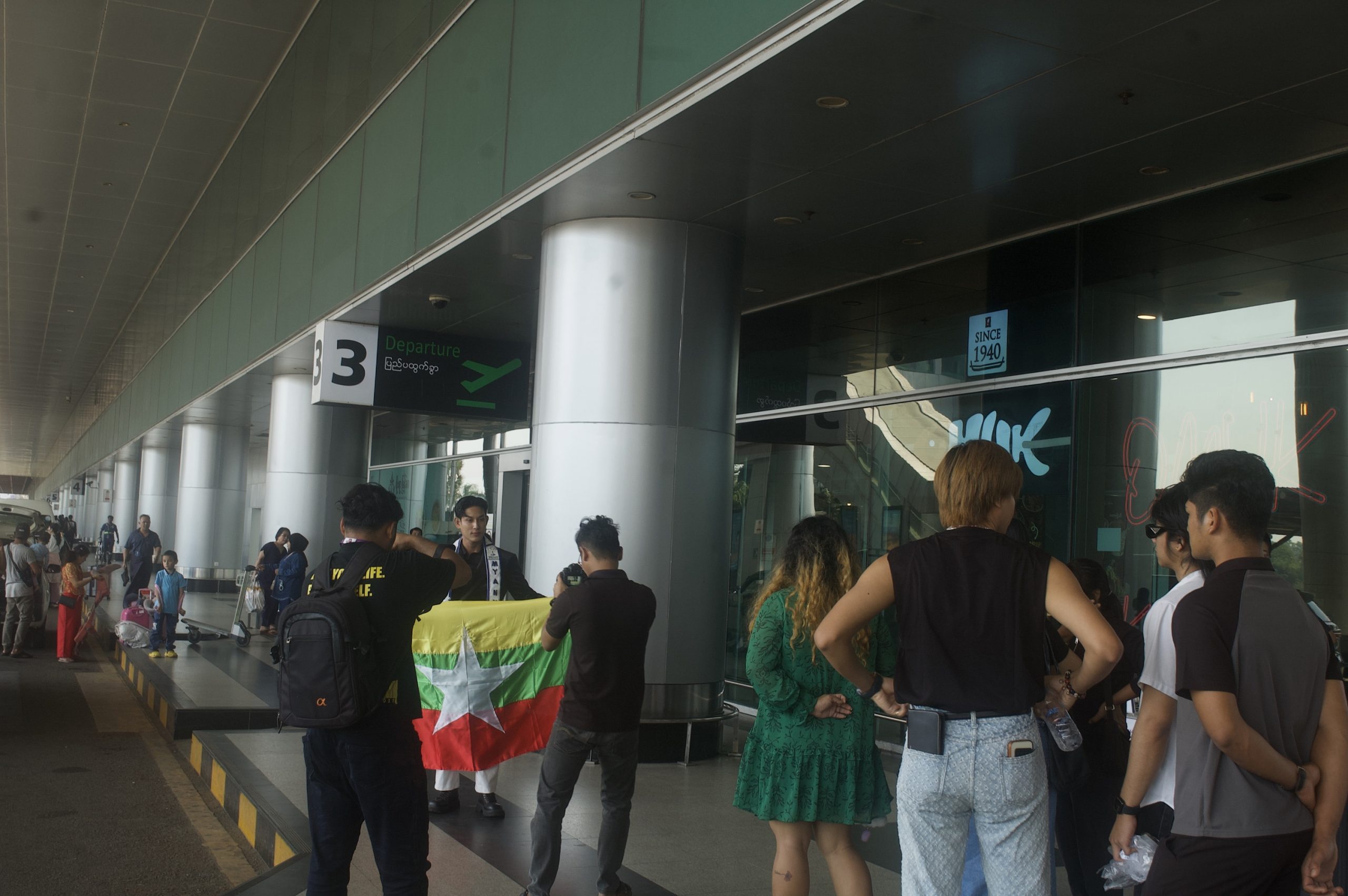
Unlike most countries that issue three main types of passports — ordinary, official and diplomatic — Myanmar uses a highly specific nine-type system. Civilian passports are divided into seven subcategories based on the purpose of travel, according to the official website of the Myanmar Passport Issuing Office.
These passports range from visiting purposes and overseas job seekers to those issued for students, seamen, business travellers, religious workers, and dependents.
Even for travellers who are not blacklisted, these classifications can shape how mobility is managed, how passport renewals are processed, and what additional approvals are required before departure.
In January 2026, the Ministry of Labour issued a notice stating that Job Passport holders must apply for overseas departure clearance at least five working days in advance, and that they would only be permitted to leave after their names were posted on the ministry’s social media platforms, even if they had all necessary documentation for overseas employment.
Because of this system, the choice of passport category becomes a strategic one for some applicants.
Theo, not his real name, a 21-year-old social science student from Myanmar now studying on a full scholarship at Hong Kong Baptist University, said he applied for a Visit Passport when he left for Hong Kong despite being eligible for an education one because of restrictions that may be placed on such passport holders when leaving the country.
“Education Passport holders are only allowed to go overseas for educational purposes,” Theo said. “They can’t travel to other countries for short visits from Myanmar.”
Choosing a more flexible category, he said, felt safer.
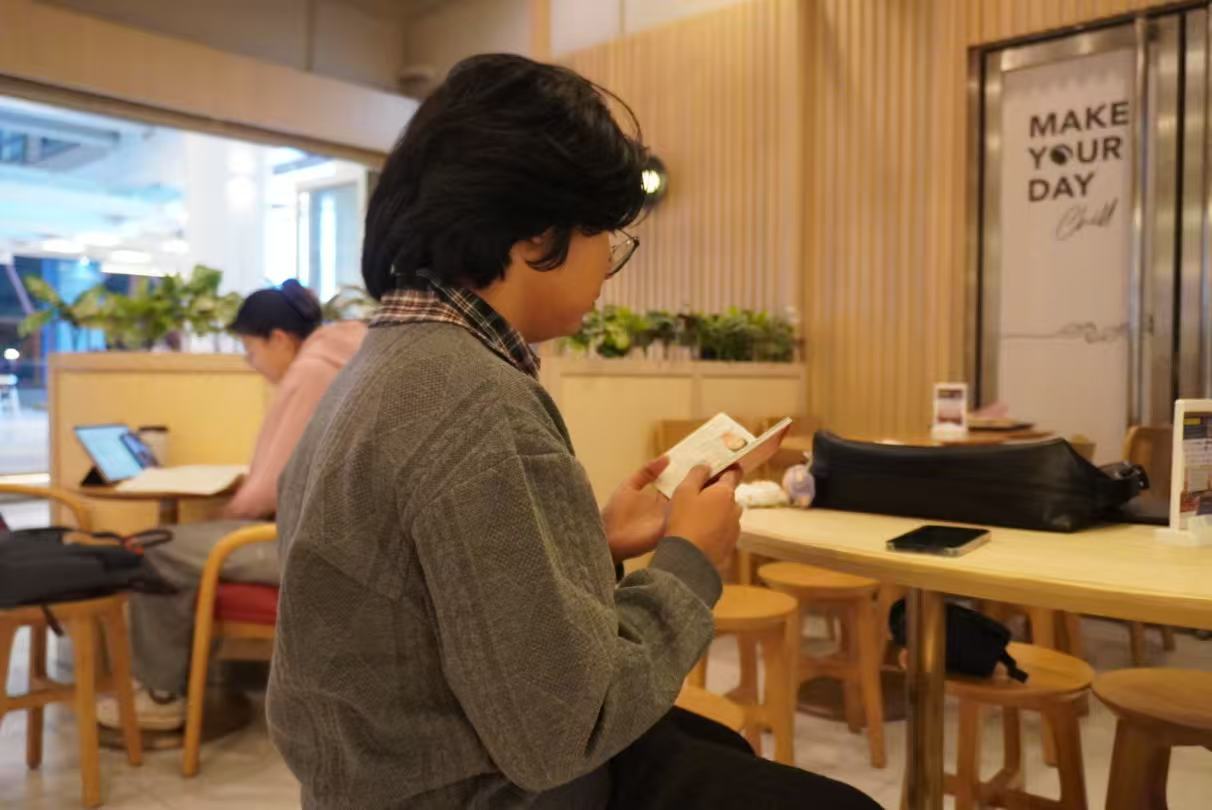
The restrictions do not just stop at rules and regulations regarding international travel. For many people, obtaining or renewing a passport can be a challenging task.
Mary, not her real name, a 25-year-old student from Myanmar who is currently studying in Hong Kong Baptist University, encountered those difficulties before she was due to begin her studies in Hong Kong in 2023.
She needed to renew her passport for her visa applications just as authorities closed all passport offices across Myanmar. With no indication of when services would resume, she was forced to buy a Buddhist tour package to Bodh Gaya, India. At that time, authorities were only processing passport applications for those going on that pilgrimage tour.
“I had already received my offer from school and needed a new passport,” Mary said. “There was no other choice.”
The trip cost her around HK$10,000.
These additional costs, coupled with less than transparent procedures have created barriers for many people seeking to leave the country.
Data from the Myanmar Youth Survey 2024 show that almost half of the respondents interested in migration do not have valid travel documentation, and more than 90% have never possessed such documents, according to the United Nations Development Programme.
Sai Htong Kham, a 33-year-old PhD student from Myanmar at the Department of Asian and Policy Studies at the The Education University of Hong Kong, said that the tightening of passport controls since 2021 might go beyond simply preventing brain drain.
“The brain drain argument is valid to some extent,” Sai said. “But it’s not merely about stopping people from leaving. It’s also about keeping people under their monitoring and controlling those who might resist the government.”

As of March 2026, more than 22,000 people remain detained for pro-democracy related offences, according to the daily reports from Assistance Association for Political Prisoners, many of whom were members of the Civil Disobedience Movement.
Scarlett said that if her passport had been scanned at the border that day in 2023, she might have joined the thousands now behind bars.
《The Young Reporter》
The Young Reporter (TYR) started as a newspaper in 1969. Today, it is published across multiple media platforms and updated constantly to bring the latest news and analyses to its readers.
Space Museum cancels lunar eclipse viewing due to bad weather

Record gold prices push mainland firms to seek overseas markets at Hong Kong International Jewellery Show


Comments