

[Cover Story]Cash in on charitable donations
- 2014-03-17
- Politics
- 2014-03-17
Reported by Tsau Jin Cheng, Karen Leung and Natalie Leung The absence of a centralised charity law in Hong Kong has led to legal loopholes exploited by individuals and organisations to generate income through bogus fundraising. Two years ago, a man bought a pack of Chinese sausages that cost $480 from a fundraising booth on a housing estate called Lung Poon Court in Diamond Hill. The man found no donation boxes for collecting proceeds but gave the hawker his money, all the while thinking that it would be used for charitable purposes. He later found out through his neighbours that the hawker rented the area to set up a booth to do his own business, rather than to raise funds for the Tung Wah Group of Hospitals, one of Hong Kong's most reputable charitable organizations providing a wide range of welfare services. Tung Wah invites volunteers from both the public and private sectors – including housing estates such as Lung Poon Court – to help in raising funds for its Tung Wah Charity Gala held annually in Hong Kong. The incident violated Tung Wah's rules of fundraising and Lung Poon Court was suspended from engaging in Tung Wah's fundraising activities for at least three years. Lawmakers have pointed to the absence of legislation and a commission overseeing charities in Hong Kong. "People are punished for inappropriate fundraising only when it has been discovered and reported to the police," said Ms Tam Heung-man, a district councilor who represents Wong Tai Sin. "There isn't any approval process for determining which organizations will be allowed to hold fundraising activities or what kind of charitable events they are," said Ms Tam. She added that the same group of people who had disguised themselves as fundraisers signed up to volunteer with Tung Wah in their charity …

The Artistically Wild and Wacky Manifestation
- 2014-03-17
- Culture & Leisure
- The Young Reporter
- 2014-03-17
Performance artists in Hong Kong are struggling to overcome public misconceptions of performance art and to advance social causes through it.

[Cover Story]Young men ringing doorbells of sex workers
- 2014-03-17
- 2014-03-17
Reported by Alice Wan, Aske Cheong and Yupina Ng Young men financially and emotionally strained by committed romantic relationships find brothels a way out. Amidst the mellow glow of a pink neon light stand Peter and his friends, who are gulping beers by the curb of a dim street. Having emptied the last can, the group goes straight into a narrow doorway flanked by shops and up the stairs, which lead them to a night of affordable, commitment-free lustful company. "I'd rather pay for someone who agrees to have sex with me for sure. Dating is expensive," said Peter, a 26-year-old logistics worker who frequents brothels. He is one of the young men in the city who ring the doorbells of sex workers to spare themselves the financial and emotional investment into a committed romantic relationship. Experts say the media may have played a role in the preference for sex workers to a girlfriend and warn the sexuality may take its toll on young men's psychological well-being. Forty-two per cent of young adults aged 18 to 32 said they could not afford dating and getting married, a survey by the APM mall revealed in January. Even having one-night stands with girls picked up at nightclubs was not as good as visiting sex workers, Peter said. "You have to buy those girls drinks. I would rather spend the same amount of money on sex services." Ching Ching, a 26-year-old sex worker, told The Young Reporter she understood why young men saw patronising a sex worker as more "economic." "Coming to us is absolutely cheaper," she said. "Even if you are lucky enough to have a girlfriend who doesn't ask for money, you still have to spend quite a lot on regular dates with her, like going to movies, not to mention on …

[Chenglish] Chunyun implies more than mass migration
- 2014-03-17
- 2014-03-17
Epic traffic jams in many Chinese cities and in the country's capital city, Beijing, in particular, has been in the press for years. No matter if it is because of bad weather, road construction, school year commencement or weekend rush, even a trivial matter can virtually bring the municipal traffic to a halt, leaving tens of thousands of drivers stranded on the street. Journalists are already callous to endless complaints against these year-round scenarios and ironically have started to report on empty roads instead of routinised congestion. Together with uniform shutdown of government houses and private businesses, the bizarreness of city-wide smooth traffic marks the week-long Chinese New Year celebration – the height of Chunyun, when hundreds of millions of urban dwellers migrate back to their hometown for family reunions. Dubbed as the largest scale of human migration in the world, Chunyun, literally translated as spring commute, refers to the massive exodus of Chinese people returning home from work or study elsewhere during the spring festival. It forms an annual stress test for the country's transportation system. The two biggest national "golden-week" holidays in China, namely the Lunar New Year and national day celebrations that each last for one week, are often compared to each other. Both of them give people enough time to travel to a more distant place, but it is Chunyun that evokes people's emotional bonds to their family and poses a near mandatory duty for all Chinese people to go home, regardless of how much they earn. Of course, the well-off class can afford to go anywhere on either occasion, but for the giant army of lowly-paid migrant workers who have been consciously saving every penny that they pocketed, a sightseeing trip during the national day celebration seems too luxurious. They prefer to work overtime in …

Drugged up, Settled down
- 2014-03-17
- People
- 2014-03-17
A chat with the longest resident in Christiania provides a glimpse of life in Denmark's self-proclaimed autonomous neighbourhood known as a safe haven for hipsters and drug sales.

China market shut to international e-cigarette companies
- 2014-03-14
- Business
- 2014-03-14
International electronic cigarette companies encounter barriers to entry in China, where their products are made.

Plug the Personal Data Leak
- 2014-03-14
- Politics
- 2014-03-14
A protracted delay in implementing a key clause of the city's data protection legislation has raised alarm amid heightened risk of private information leakage.

Rabbit refuge struggles to re-home surrendered bunnies
- 2014-01-16
- 2014-01-16
Hong Kong's only rabbit care centre has been overladen as pet rabbits given up by owners outnumber suitable adoptive and foster families by a large margin.
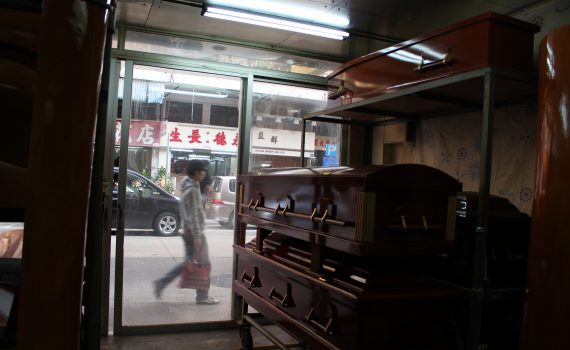
Hong Kong is not a good place to die
- 2014-01-16
- 2014-01-16
Not only does the city lack burial sites, it has also begun to run out of space for cremated ashes.

[Cover Story]In art we pace urban development
- 2014-01-15
- Culture & Leisure
- The Young Reporter
- 2014-01-15
Local artist swims against the current of development and turns Sik On Street into his gallery.