
Environment

France reports more than 5,000 deaths after June heatwave
- 2026-07-25
- By: XIE Xinni CindyEdited by: FENG Zhenpeng
- 2026-07-25
The French national health agency said on Wednesday it recorded 5,764 excess deaths between June 17 and July 2, 36.2% higher than normal, during the June heatwave. The World Meteorological Organization's weather forecast shows that Paris will experience temperatures exceeding 30 degrees Celsius again next week. According to the French meteorological service, 2026 was France’s hottest June on record. Paris hit 40.9 degrees Celsius on June 24, which broke the capital’s June temperature record. Jennifer Yu, 22, a US tourist in Paris, said it’s her first time in France and she can hardly breathe due to the hot weather. Rémy Jarry, 48, a Paris resident, said some Parisians without air conditioning cool down in public parks or swim in urban canals. “It's really too hot in Paris this year...It feels like France has not seen such extreme heat since I was a child,” Jarry said. The World Weather Attribution reported this summer had the most severe and widespread heat wave in Europe ever, but only 25% of households are equipped with air conditioning. Sylvain, 43, a French teacher who lives in Paris and declined to provide his last name, said he drove to rural towns after work to escape the urban heat island effect. He said he does not use household air conditioning because it harms the environment. But due to the increasing numbers of hot days, he said he might change his mind. The World Weather Attribution also said that fossil fuel emissions have rapidly exacerbated heatwaves in Europe in just a few decades. “We only started facing such extreme heat regularly in recent years, which shows environmental issues are growing increasingly severe,” Sylvain said.

Hong Kong’s first secondhand fashion festival pushes for environmental friendly
- 2026-03-30
- The Young Reporter
- By: CHEUNG Ka Yi Ann、XIE Xinni CindyEdited by: Fu Rong
- 2026-03-30
The first secondhand fashion festival “Secondhand Easter” opened today in Wan Chai Hopewell Centre, running three days until 29th March 2026. The event features a marketplace, pop-up clothing swap, upcycling workshop and also garment repair and maintenance services. It aims to address Hong Kong’s textile waste crisis, using Easter Festival as a theme to symbolise giving secondhand clothes a new birth. Follow the link below to watch the full reel: https://youtube.com/shorts/5xwSgY1CdYo?si=uISP1f2Z5kIQJZXz

Hong Kong Eco Expo Asia 2025: Cost concerns shadow ESG push as Hong Kong firms seek greener image
- 2025-11-04
- Business
- By: ZHONG Xinyun、CHEN Yongru、LIN XiaoyouEdited by: WANG Ruoshui、BO Chuxuan
- 2025-11-04
The 20th edition of 2025 Eco Expo Asia wrapped up on Friday at Hong Kong AsiaWorld-Expo, with exhibiting firms promoting Environmental, Social, and Governance (ESG) transformation for a better image. Carmen Lau, the assistant marketing manager at ESGreen, an ESG-driven motor tech firm, said that as people pay increasing attention to environmental issues, such as extreme weather conditions, the company will prioritise ESG practices to enhance its brand image. Markus Ho, the sustainability strategies manager of Allied Environmental Consultants Limited, a sustainability and environmental consulting firm, said companies such as real estate developers or those in the financial industry can better promote ESG-related actions when they have extra resources due to their relatively abundant resources. “As a business platform for ESG and sustainable solutions, the Expo will showcase the latest products and technologies in new energy, green living, and environmental protection,” said Jenny Koo, HKTDC Deputy Executive Director, at a press conference in early October ahead of the event. According to a study by Hong Kong Trade Development released this June, the city gained 64.2 points in the ESG Index, with respondents from Mainland China giving the highest rating of 69.1, underscoring the city's reputation as an ESG business hub. The banking and financial services sector had the highest percentage of practitioners engaged in sourcing or providing ESG solutions, followed by the fashion industry and the international trade and manufacturing industries. Cost is one of the challenges companies face when implementing ESG standards. “(The aspect that) is difficult to advance is probably the cost,” said Lau. “It is necessary for that company to invest first, and then there will be profits.” Oscar Chan, the product owner of Green AI Technology Limited, a company that uses AI to track the quantity and weight of recycled items, also highlighted cost concerns. “At …
Typhoon Ragasa: Windthrown trees blocked several roads in Wong Tai Sin
- 2025-09-27
- Society
- The Young Reporter
- By: AO Wei Ying Vinci、LAU Ka YanEdited by: AU YEUNG Jim
- 2025-09-27
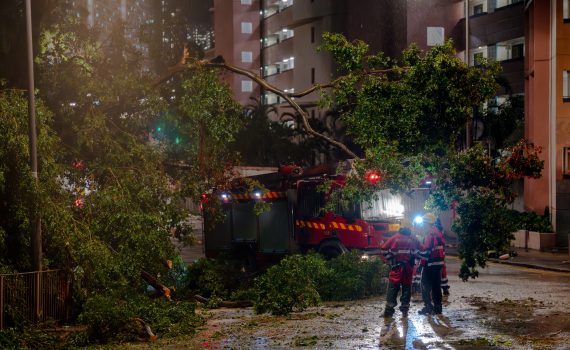
Super typhoon Ragasa hit Hong Kong on Wednesday, bringing gale and heavy rainfall to the city. The Observatory issued the highest-level T10 signal to alert the public about the extreme weather conditions. Staff members from the Fire Services Department and the Leisure and Cultural Services Department examined the road blockage by fallen trees in Wong Tai Sin during Wednesday evening after the T8 signal was cancelled. Workers continued clearing remaining debris in Diamond Hill on Thursday morning. The government's 1823 call centre, the Fire Services Department and the Leisure and Cultural Services Department had received 1,224 reports of fallen trees as of 8pm on Wednesday. The Hospital Authority said 101 people were injured during the typhoon period. Individuals concerned received the necessary medical treatment at the Accident and Emergency departments of designated public hospitals.
Super Typhoon Ragasa set the second-longest T10 signal in Hong Kong since 1999
- 2025-09-26
- Society
- The Young Reporter
- By: ALISHIBA MATLOOB、LAU Ka Yan、Ye Enyi、Wing Chi HO、MA Tsz Chiu OscarEdited by: WONG Hong Ni、ZHANG Yiping
- 2025-09-26
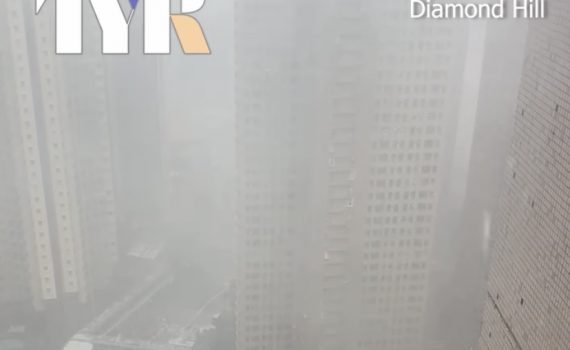
Super typhoon Regasa swept past Hong Kong on Sept. 24, resulting in a T10 storm warning that lasted for 10 hours and 40 minutes, the second-longest in history. 90 injuries were reported by the Hospital Authority, and over 600 flights were cancelled in Hong Kong. As typhoon Ragasa moved west, our reporters filmed the typhoon from different locations around the city. Follow this link to watch the full reel: https://www.instagram.com/reel/DPBA7dpk5kD/?utm_source=ig_web_copy_link&igsh=MzRlODBiNWFlZA==
Typhoon Ragasa: Tuen Mun light rail service disrupted, fallen trees block roads
- 2025-09-26
- Society
- The Young Reporter
- By: SIU Tsz Hang、CHENG Tsz Sen SeanEdited by: AO Wei Ying Vinci
- 2025-09-26
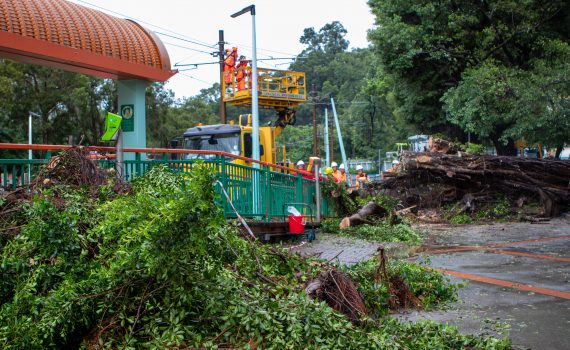
Super typhoon Ragasa slammed Hong Kong with strong winds and torrential rain with the Observatory issuing the highest-level 10 signal at 2:40 am on Wednesday. The typhoon has left 101 people injured during the typhoon period, according to the Hospital Authority as of 8pm. They received medical treatments at the Accident and Emergency departments of public hospitals. According to the government, the 1823 Call Centre, the Fire Services Department and the Leisure and Cultural Services Department received 1,224 reports of fallen trees as of 8pm. The Drainage Services Department received 22 reports of flooding, while the Civil Engineering and Development Department received four reports of landslides as of 8pm. Light Rail stops, including Prime View, Tai Hing (South), and Shek Pai are disrupted due to extensive damage.
Typhoon Ragasa: Items scattered around Sha Tin after the storm
- 2025-09-26
- Society
- The Young Reporter
- By: MA Tsz Chiu Oscar、SIU Tsz HangEdited by: AO Wei Ying Vinci
- 2025-09-26
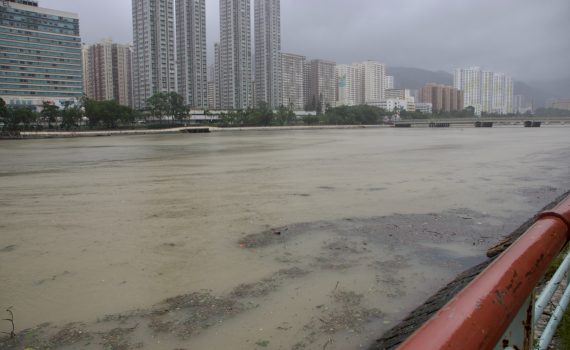
Super Typhoon Ragasa battered Hong Kong heavily on Wednesday, with the T10 signal issued at 2:40am hoisted for over 10 hours. The Hospital Authority said 101 people were injured during the storm. The Government’s 1823 Call Centre, the Fire Services Department and the Leisure and Cultural Services Department received 1,224 reports of fallen trees in total. As of 8pm on Wednesday, the Drainage Services Department received 22 reports of flooding, while the Civil Engineering and Development Department received four reports of landslides. In Sha Tin district, the storm surge affected from Ragasa flooded both sides of Shing Mun River under T10 signal. Debris, branches and leaves were washed along the river banks. Strong winds also brought down trees, blocking roads, bikeways and pedestrian paths. Some MTR outdoor sections were disrupted by fallen trees and damaged overhead cables as well. East Rail Line service remained out of service until the evening at around 6:45pm.
Super Typhoon Ragasa lands in China from the southeast, bringing new experiences to cities’ new arrivals
- 2025-09-25
- Society
- The Young Reporter
- By: Fu RongEdited by: WANG Ludan
- 2025-09-25
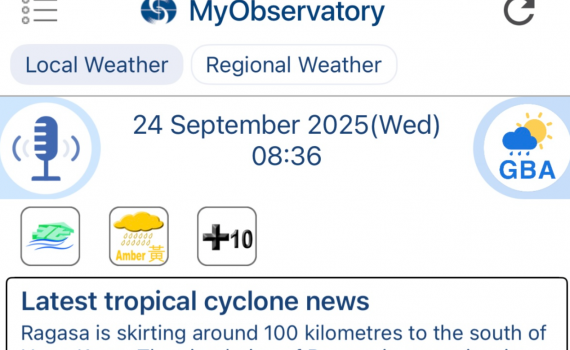
The Greater Bay area takes the heat of super Typhoon Ragasa, the most intense storm in 2025, as it sweeps across all the regions on Wednesday, prompting a No. 10 hurricane signal in Hong Kong. The ferocious wind and sudden rainfall bring an unprecedented experience for cities’ newcomers. After Typhoon Mangkhut in 2018, Ragasa is expected to be the strongest typhoon in Hong Kong’s history, according to the former observatory director Shun Chi-ming on Tuesday. According to the Hong Kong Observatory, Typhoon Ragasa sustained a maximum wind speed of 195 kilometres per hour, which makes it more intense than Super Typhoon Mangkhut in 2018, which recorded a maximum wind speed of 185 kilometres per hour. Chen Guowei, a 24-year-old physiotherapist born and raised in Yunnan Dehong, came to Shenzhen Dapeng New Area after graduating last year. “I have never seen a real typhoon before. It’s really crazy,” said Chen, living in the hotel next to the beach provided by his company. Prompted by the weather forecast and messages from families and corporations, he decided to move into the hotel inside Taikang Home Penguyaun, the elderly community he works in. “I don’t really have to work during the typhoon and can live in this expensive hotel, which costs about 500 yuan a night,” Chen said in the video interview. Dubsy Eli, a Nigerian international student at City University of Hong Kong, is also experiencing his first T10 typhoon. “It’s not my first typhoon, but it’s the biggest one. I bought so many fruits to survive,” Dubsy said in a video interview, waking up several times at night to check the weather outside his apartment in Prince Edward. “Back in my hometown, we only experienced heavy winds. But raining with big winds is so exciting for me,” said Dubsy. He is …
Super Typhoon Ragasa: Daily life and extraordinary measures in Zhuhai before the storm
- 2025-09-24
- Society
- The Young Reporter
- By: ZHENG XinyiEdited by: AU YEUNG Jim
- 2025-09-24
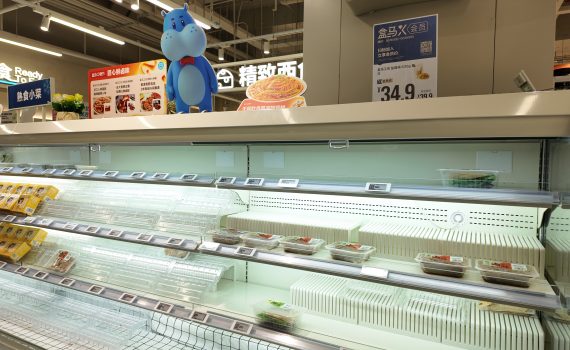
ZHUHAI, China -- Zhuhai residents rushed to markets to buy daily necessities and food supplies on Monday, following the super typhoon warning issued by the China Meteorological Administration as Typhoon Ragasa approaches. The China Meteorological Administration announced that Ragasa has developed into the strongest typhoon in the world this year. Multiple regions in Guangdong have issued notices for the suspension of classes, work, production, transportation, and business operations. “Before coming here, we heard that a typhoon was approaching. We had experienced typhoons before when we were in Ningbo, and thought it would pass quickly,” said Lu Jingxi, 28, a full-time housewife. “This is the first time I have brought my family to Zhuhai for a trip, and I don’t want to have any regrets,” said Lu. “It wasn’t until we saw the official announcements, posts shared by friends on social media, and received notices from the hotel about lockdown management that we realised how serious this typhoon was,” Lu said. “We still wanted to take my family for a walk along the seaside within a safe area, to enjoy the breeze and spend some time together,” Lu added. “Before, the typhoon didn’t make me feel worried because the sky was clear and sunny,” said Carla Duisebay, 20, an exchange student from Kazakhstan. “Before coming to China, I had never experienced a typhoon.” “The campus supermarket and several nearby stores have run out of fresh vegetables, fruit, meat, and even instant noodles and bread. Seeing this emergency situation was really shocking to me,” Duisebay said. “I will try to open the window a little to feel the typhoon—it’s a special experience for me,” Duisebay added. Zhuhai Municipal Bureau of Commerce initiated a city-wide essential goods supply monitoring mechanism, carrying out dynamic tracking of circulation in key supermarkets, wholesale markets, and slaughterhouses …
Kruger's backstory: the conservationists protecting South Africa’s wildlife
- 2025-09-20
- By: Dake Liu、Wenhui Li、Wing Yan Chan、Ruqing ChenEdited by: Robin Ewing
- 2025-09-20
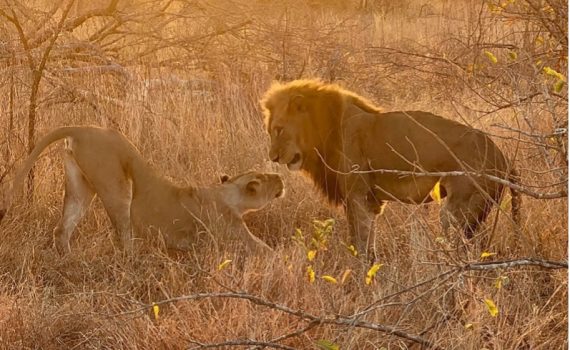
This project is part of an independent reporting trip by HKBU journalism students to South Africa this summer to explore animal conservation efforts in the lead up to World Rhino Day on Sept 22. GREATER KRUGER AREA, South Africa – The moment we locked eyes with two tawny lions from our open-sided vehicle in Kruger National Park in South Africa, the world fell away. Their necks were brushing softly, as if they were murmuring secrets to each other. The wind rustled the grass, and cameras clicked nonstop. In that raw, heart-stopping silence, we felt the ancient pulse of Africa, a jolt of pure wildness. Kruger National Park is one of Africa’s remaining lion strongholds. In August in the park, many of the animals on the African savanna are on the move, but poachers are also lying in wait, ready to strike. As a group of student journalists who love wildlife and nature, we came to South Africa to see what efforts people here have been making to protect animals in Kruger National Park and the Greater Kruger Area. The official park, South Africa's largest wildlife reserve and one of the largest in Africa, covers approximately two million hectares of vast wilderness. It is a crucial sanctuary for biodiversity, a place where the coveted “Big Five” – lion, leopard, elephant, rhinos and Cape buffalo – can be spotted. Every year, millions of visitors are drawn here, eager to experience a close encounter with them. The park lies inside of the Greater Kruger Area, a large network of unfenced private and community-owned nature reserves that lies to the west, forming one contiguous, massive wildlife ecosystem. These private reserves share no fences with Kruger National Park, allowing wildlife to roam freely across the entire region. Yet what feels like untouched wilderness is in …