
Society
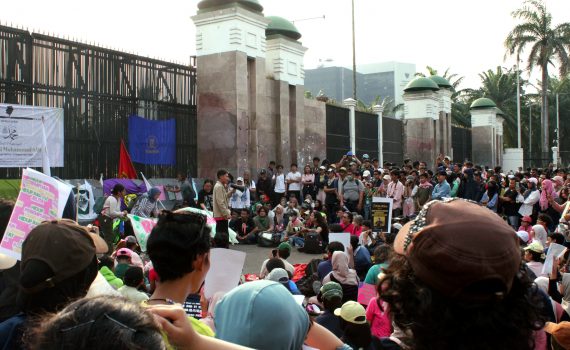
What Sparked Indonesia’s Violent Protests and What It Means for Democracy
- 2025-09-19
- Society
- The Young Reporter
- By: KURNIAWAN Trista VaniaEdited by: LAI Uen Ling
- 2025-09-19
Thousands of protesters swarmed the streets of Jakarta on Aug. 25, outraged by Parliament’s approval of a new monthly housing allowance that is ten times the minimum monthly wage in Indonesia. Within a week, what began as questions over economic imbalances turned into violent protests in 20 major cities against police brutality, demands for the protection of vulnerable communities, and worries about the future of Indonesia’s democracy. From Aug. 25 to 31, the Indonesian Legal Aid Foundation reported more than 3,000 people were arrested and 10 were killed. Despite a government response, people are still unsatisfied and fighting for democracy. The Underlying Cause Tito Ambyo, an Indonesian journalist and journalism lecturer at the Royal Melbourne Institute of Technology, said the political and economic frustrations have been growing since people expected reformation after the violent protests in 1998. In May 1998, a riot broke out due to economic inequality, corruption, and the authoritarian rule of President Suharto. It escalated to the targeting and attacks of Chinese Indonesians and the destruction of public property. “After the 1998 riots and our president stepped down, we won. But the next leaders were disappointment after disappointment,” he said. In 2012, former President Susilo Bambang Yudhoyono’s cabinet faced corruption allegations, with his ministers, including the Chairman of the House of Representatives, indicted by the Corruption Eradication Commission. Ex-President Joko Widodo’s government passed a job creation law aimed at easing work regulations and encouraging investment in 2020. However, it sparked public protests because the bill was seen as weakening workers’ rights and opportunities. He described the Indonesian elites in the government as “careless” and “callous” with their actions. Protesters took to the streets on Aug. 25 after the House of Representatives announced the members of parliament would receive a monthly housing allowance of 50 million rupiah (HK$23,676). …
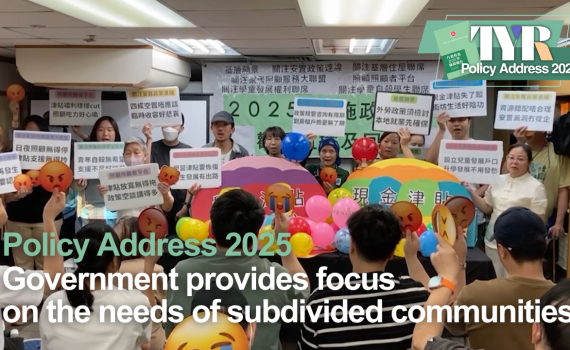
Policy Address 2025: Government provides sufficient focus on the needs of subdivided communities amid continued poverty concerns
- 2025-09-19
- Society
- The Young Reporter
- By: Chun Hei LUK、Wing Chi HOEdited by: CHAN Wing Yiu
- 2025-09-19
As the Chief Executive prepares to unveil the 2025 Policy Address, poverty reduction is in the spotlight, especially regarding Hong Kong’s subdivided flats. Concern for Grassroots' Livelihood Alliance emphasizes that the government has given little attention to the specific needs and wants of subdivided flat users. Our reporter Gigi Ho explores how proposed initiatives aim to support vulnerable communities. This address could be crucial in the fight against poverty, emphasizing the urgent need for effective policies to uplift marginalized citizens and improve their quality of life. (Sept 17, 2025) Reported By: Gigi Ho Wing-chi, Anson Luk Chun-hei Edited By: Yoyo Chan Wing-yiu
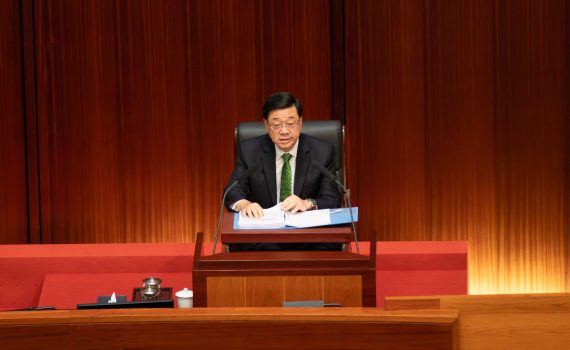
Policy Address 2025: Pundits criticised industry mismatch despite the city’s Top Talent Scheme has contributed HK$34 billion to local economy
- 2025-09-17
- Society
- The Young Reporter
- By: FENG Zhenpeng、Li YinhengEdited by: LIU Yutong
- 2025-09-17
Chief executive John Lee Ka-chiu defended the controversial top talent scheme in his latest policy address but observers urged the government to address the talent mismatch by bringing in more high-tech elites. The Top Talent Pass Scheme generated around HK$34 billion a year for the local economy, accounting for approximately 1.2% of economic growth, said Chief Executive John Lee Ka-chiu, in the policy address on Wednesday. This is the first time the Hong Kong government has quantified the scheme’s economic contribution to the city in light of mounting criticism against the scheme being abused. Former chief executive Leung Chun-ying criticised last month that most applicants did not settle in Hong Kong, but returned to the mainland with their families after obtaining Hong Kong identity cards. When delivering the 2025 Policy Address, Lee said Hong Kong attracted over 230, 000 talents to work and live in the city under a number of new talent talent admission policies, including the TTPS. About 14,000 of TTPS applicants, or 54%, had their visas renewed. “Of them, 95% receive a monthly income higher than the local median income of about $20,000, and 50% earn a monthly income nearly double that amount. This reflects a strong demand for TTPS talents and the market's willingness to offer higher salaries to attract them,” Lee said most of the admitted talents to Hong Kong are relatively young, with 70% being under 40 years old, which helps to address the challenge of the aging population. However, observers did not see a picture-perfect reality. Lawmaker Wendy Hong Wen said Hong Kong lacks high-end tech talents but the TTPS is mainly bringing in talents from the finance sector. “To address the mismatch between the talent supply and industry demand, the government should adopt a demand-driven approach by enabling companies to directly search for …

Brisbane’s West End celebrates Kurilpa Derby with parade and festivities
- 2025-09-17
- Society
- The Young Reporter
- By: CHAU Wing YauEdited by: CHAN Wing Yiu
- 2025-09-17
BRISBANE, Australia — The 2025 Kurilpa Derby took place on 14 September, continuing an 18-year tradition in the West End suburb in Brisbane, Australia. The word “Kurilpa” means “home of the water rat”, showing the West End suburb’s history as a natural habitat for water rats and a place where First Nations people once lived. The West End Community Association organises the parade annually in recognition of Indigenous heritage and celebrates the community’s spirit. Participants decorated their wheels in various creative styles and dressed up for the parade. A series of activities following the Kurilpa Derby parade, including a doggy fashion parade, Samba performance and live music. Follow the link below to watch the full reel: https://youtube.com/shorts/vOYWsjYb81Q?si=i10rLg1kZpImBD-d
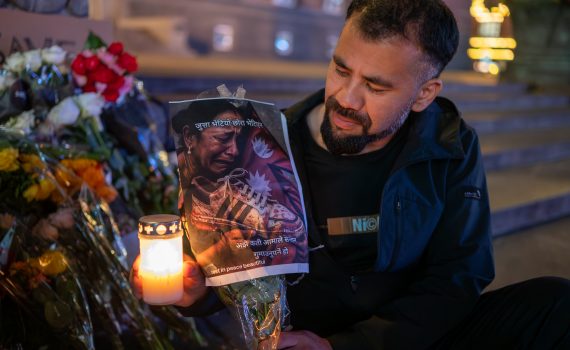
Nepali people protest and pay tribute at Copenhagen’s City Hall and Nepal Embassy
- 2025-09-13
- Society
- The Young Reporter
- By: LEUNG Chi NgaiEdited by: AO Wei Ying Vinci
- 2025-09-13
Flowers, candles, and handwritten cardboard signs sat on the stairs of a public square in the city centre of Copenhagen to commemorate more than 50 Nepali protesters who died protesting against the government in Nepal on Monday and Tuesday. Hundreds of Nepalis living in Copenhagen gathered at the City Hall Square on Tuesday evening, said Jyotindra Thapa Ais, 29, a Nepali living in Copenhagen who attended the gathering. On Wednesday morning, 23 Nepalis gathered again outside the Nepal Embassy to protest Nepal government policies, youth unemployment and a lack of opportunities and to pay tribute to the dead protesters. The protest, which started against a social media ban in Nepal, has escalated into a deadly conflict involving tens of thousands of mostly young people taking to the streets of Kathmandu. More than 50 Nepali protesters, mainly students and young people, have died from clashes with security forces and police, according to the BBC. The Nepali Supreme Court, parliament and other major government buildings were set on fire. Houses that belong to government officials were raided by demonstrators. The dissent has created a power vacuum in the Nepali government, as the prime minister, ministers and high-ranking members of political parties resigned. Bel Gurung, 50, from Nepal who lives in Copenhagen, said he initiated the two events in Copenhagen on Tuesday morning, after hearing requests from Nepalis in Copenhagen to raise their voices. “No corruption, no violence, no injustice” were the key messages Gurung and other protesters spread, he said. “When you speak a voice, the true voice, it doesn't matter how loud or how small it was. That spread all over the world to the right people, to the right country,” he said. Jyotindra said: “Today was just for the death of the students, and we were not focusing on other …
Music, beer, and sweat: Copenhagen metro turns into a dancefloor for locals
- 2025-09-10
- Society
- The Young Reporter
- By: LEUNG Chi NgaiEdited by: AO Wei Ying Vinci
- 2025-09-10
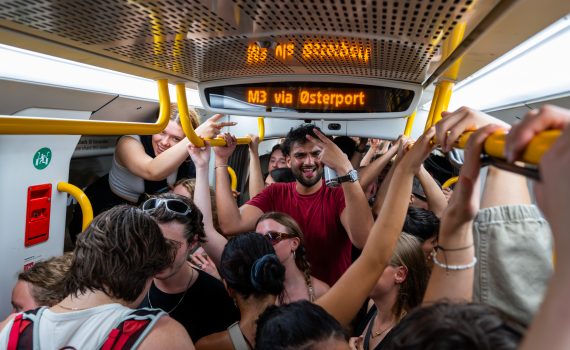
COPENHAGEN, Denmark – Hundreds of revelers danced to electronic music with beer in an hours-long metro party in Denmark’s capital of Copenhagen on Sept. 7. The rave took place in a running metro train circulating the Copenhagen City Circle Line from 8:30pm to 11pm, with people joining or leaving at any station. Four music artists played live techno music, with big speakers installed in each car. Some party-goers brought beer along with them on the train. Metro staff regulated the flow of passengers at the gates to prevent overcrowding. Augustinas, 20, from Lithuania, said he has a broad interest in different music genres and is a fan of Peachlyfe, one of the DJs at the event. “I just want to have a great time. I want to dance. I want to listen to some good stuff,” he said before entering the metro party. The metro party is one of the events of the 2025 Strøm Festival, an annual festival since 2006 that promotes electronic music to both Danes and international audiences. Around one-fifth of Nordic listeners chose “dance & electronic” as their favourite music genres, according to a 2020 study by YouGov, an international market research and data analytics firm. “We often present electronic music in unconventional settings: urban spaces, nature and other unexpected places where audiences do not typically expect to encounter electronic music,” said a spokesperson for the non-profit Strøm, which organizes the festival, in an email interview. Theo Pallesen, 21, a Danish local resident, found himself passing through one extra station due to the crowds. “I was at the right station and tried to squeeze off and suddenly the door shut and then I was stuck just right in the middle of the party, where people were jumping, sweating and drinking alcohol,” he said.

Hong Kong’s first hot air balloons festival deflates as balloon rides cancelled
- 2025-09-06
- Society
- The Young Reporter
- By: SIU Tsz Hang、CHENG Tsz Sen SeanEdited by: LAI Uen Ling
- 2025-09-06
The opening of Hong Kong’s first hot air balloon festival was marked by disappointment as the planned balloon ride was cancelled. Scheduled from September 4 to 7, the festival initially promised “Tethered Ride Experience” allows guests to enjoy views on hot air balloons. The government said it declined to issue the permit for the experience due to safety concerns. Follow the link below to watch the full reel: https://youtube.com/shorts/DAos7mQwVMI?si=pSBmlk8bXAsWvRC1

LGBT-friendly gyms provide safe environment for non-binary bodybuilders
- 2025-06-23
- Society
- The Young Reporter
- By: SIU Tsz Hang、CHEN XiyunEdited by: Lok Tung LAU
- 2025-06-23
https://youtu.be/Wi2mom2R6YU?si=SogYzdgx6cBC7SVv There are more than 10 LGBT-friendly gyms in Hong Kong, targeting the LGBT+ community in Hong Kong. It is to provide a comfortable place for the LGBT and to ensure they feel safe and secure. Reported by Henry Siu Tsz-hang, Richard Chen Xiyun Edited by Canny Lau Lok-tung
Confusion over navigation app at Osaka Expo 2025
- 2025-06-09
- Society
- The Young Reporter
- By: ZHANG Yiping、CAO JiawenEdited by: CAO Jiawen、ZHANG Yiping
- 2025-06-09
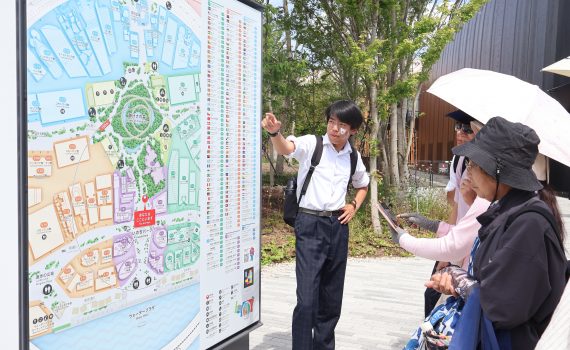
OSAKA – Osaka Expo 2025 is supposed to showcase futuristic technologies, but some visitors experience were confused by the official app which was meant to offer with navigation and language support. The app, called “EXPO 2025 Visitors”, has a 2.3/5 rating on Google Play with over 500k downloads, with many users complaining about the slow function, clunky interface, and glitchy performance. “It would be nice if they had a map with the pavilion names on the app, because we have to click on every button to see what it is,” said Frank Johnson, 37, a tourist from the United States. “First we used the maps on the website and then the maps on the app, but we kept getting lost,” said Helen Okoro from the United States. “It’s because there aren’t really any signs with pavilion names in general.” Tourists can buy a paper map for 200 yen at the venue, but the line is usually very long. According to the official website, the map is not distributed free of charge due to sustainability concerns. Across the venue, groups of volunteers are placed to help visitors find their way. “Lots of tourists need help with directions in the venue,” said a Japanese volunteer who chose not to reveal her name for fear of getting into trouble. “It is generally circular, so it’s hard to tell the direction,” she added. Angela Zhou, a Chinese visitor aged 28, said the paths inside the venue are confusing. “Google Maps is much more useful compared to their official app,” she said. “It allows you to directly search for each pavilion and head straight to it, while the official app is slow.” “Many of the app’s functions require you to visit the website on a browser. For example, clicking on the booking button on the …

Photo Gallery: South Koreans choose their new president after six months of political chaos
- 2025-06-05
- Society
- The Young Reporter
- By: Wang Yunqi、BO ChuxuanEdited by: BO Chuxuan
- 2025-06-05
SEOUL – The South Korean presidential election wrapped up with liberal party leader Lee Jae-myung winning the presidency and being sworn in on June 4, bringing an end to six months of political chaos since martial law. Lee Jae-myung won with 49.42% share of votes, amounting to 17,287,500 ballots, the largest number of votes in South Korean presidential election history, according to Yonhap News Agency, while voter turnout reached 79.38%, the highest since 1997, reflecting a high level of public mobilisation. Besides Lee’s victory, Kim Moon-soo, leader of the conservative People Power Party, received 41.15% of the vote, as the previous party leader’s martial law declaration received wide criticism, with Lee Jun-seok of the Reform New Party securing 8.34% of the votes, who emphasised on political reform and youth empowerment. The remaining two candidates, Kwon Young-guk and Song Jin-ho, received 0.98% and 0.1% of the votes, respectively. According to a May poll conducted by Gallup, there were notable differences in support rates across age groups. Lee Jae-myung enjoyed higher support among people in their 40s and 50s, while Kim Moon-soo was more favoured by those in their 60s and 70s. And Lee Jun-seok received relatively greater support among younger voters. South Korea faced significant disruptions in high-level diplomatic activity following ex-president Yoon declaring martial law on Dec. 3, 2024, with domestic investors suffering “roller coaster” fluctuation of both the stock market and currency, also driven by the tariff policy initiated by US President Donald Trump. With concerns for the country’s social and security landscape raised, Lee outlined five key missions for his administration during his victory speech, including ending internal conflict, achieving national unity, revitalising the national economy, ensuring national security, and maintaining stability on the Korean Peninsula. “This is a world where things like martial law shouldn’t exist”, said …