
Society
Hong Kong celebrates 76th Chinese National Day
- 2025-10-01
- Society
- The Young Reporter
- By: AO Wei Ying Vinci、MA Tsz Chiu OscarEdited by: NG Natasha Goa Sheng
- 2025-10-01
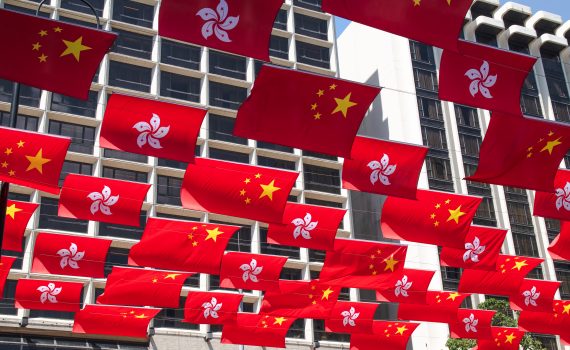
Flags and banners are displayed around Hong Kong while celebrating China's 76th National Day on October 1, 2025. Hong Kong’s regional flag and Chinese national flag were raised at the ceremony held in Wan Chai’s Golden Bauhinia Square at 8am today to celebrate the 76th anniversary of the founding of the People's Republic of China. Ceremony attendees including Chief Executive John Lee Ka-chiu and other government officials. The public watched the ceremony at a distance from Wan Chai Ferry Pier, as the government announced no public viewing area for the ceremony. Lee Ka-chun, 16, who is a local student, said he secured a spot with his friends at the Wan Chai Ferry Pier observation deck at around 7am. He said it is a pity that he can only view the ceremony through his telephoto lens on a camera today, citing his past flag-raising viewing at the Tiananmen Square allowed him to be nearer to the ceremony, after passing through security checks. During the national anthem, two helicopters hanging a Chinese national flag flew over Victoria Harbour, while ships under the Police and the Fire Services Department sailed along the harbour. It is the first time Kai Tak Sports Park hosted a flag-raising ceremony, outside the city’s largest stadium at 11am. Free ice cream and beverages were distributed near the venue by the park’s authorities. Leah Zhang, 27, travelled from Jiangmen to Hong Kong for two days during the National Day Golden Week. She said she came across a social media post on RedNote about the flag-raising ceremony at Kai Tak. “I thought more people would be here to see the flag-raising ceremony. There are only limited promotions from the Kai Tak Sports Park, which could be the reason,” said Zhang. A firework display is held at 8pm on the same …
Typhoon Ragasa: Windthrown trees blocked several roads in Wong Tai Sin
- 2025-09-27
- Society
- The Young Reporter
- By: AO Wei Ying Vinci、LAU Ka YanEdited by: AU YEUNG Jim
- 2025-09-27
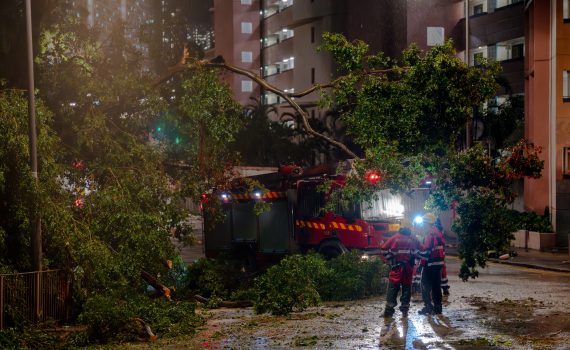
Super typhoon Ragasa hit Hong Kong on Wednesday, bringing gale and heavy rainfall to the city. The Observatory issued the highest-level T10 signal to alert the public about the extreme weather conditions. Staff members from the Fire Services Department and the Leisure and Cultural Services Department examined the road blockage by fallen trees in Wong Tai Sin during Wednesday evening after the T8 signal was cancelled. Workers continued clearing remaining debris in Diamond Hill on Thursday morning. The government's 1823 call centre, the Fire Services Department and the Leisure and Cultural Services Department had received 1,224 reports of fallen trees as of 8pm on Wednesday. The Hospital Authority said 101 people were injured during the typhoon period. Individuals concerned received the necessary medical treatment at the Accident and Emergency departments of designated public hospitals.
Super Typhoon Ragasa set the second-longest T10 signal in Hong Kong since 1999
- 2025-09-26
- Society
- The Young Reporter
- By: ALISHIBA MATLOOB、LAU Ka Yan、Ye Enyi、Wing Chi HO、MA Tsz Chiu OscarEdited by: WONG Hong Ni、ZHANG Yiping
- 2025-09-26
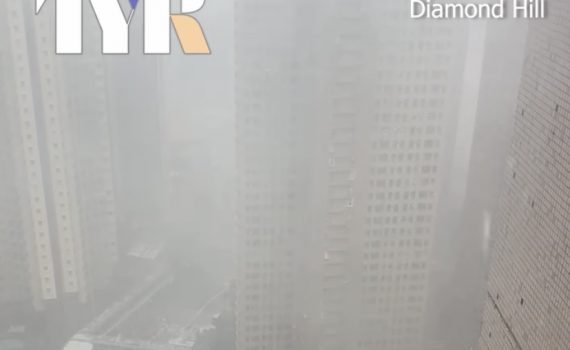
Super typhoon Regasa swept past Hong Kong on Sept. 24, resulting in a T10 storm warning that lasted for 10 hours and 40 minutes, the second-longest in history. 90 injuries were reported by the Hospital Authority, and over 600 flights were cancelled in Hong Kong. As typhoon Ragasa moved west, our reporters filmed the typhoon from different locations around the city. Follow this link to watch the full reel: https://www.instagram.com/reel/DPBA7dpk5kD/?utm_source=ig_web_copy_link&igsh=MzRlODBiNWFlZA==
Typhoon Ragasa: Tuen Mun light rail service disrupted, fallen trees block roads
- 2025-09-26
- Society
- The Young Reporter
- By: SIU Tsz Hang、CHENG Tsz Sen SeanEdited by: AO Wei Ying Vinci
- 2025-09-26
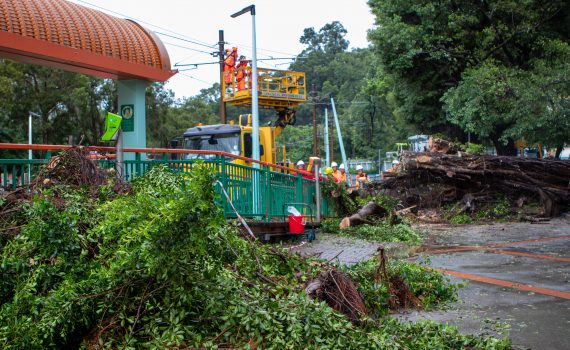
Super typhoon Ragasa slammed Hong Kong with strong winds and torrential rain with the Observatory issuing the highest-level 10 signal at 2:40 am on Wednesday. The typhoon has left 101 people injured during the typhoon period, according to the Hospital Authority as of 8pm. They received medical treatments at the Accident and Emergency departments of public hospitals. According to the government, the 1823 Call Centre, the Fire Services Department and the Leisure and Cultural Services Department received 1,224 reports of fallen trees as of 8pm. The Drainage Services Department received 22 reports of flooding, while the Civil Engineering and Development Department received four reports of landslides as of 8pm. Light Rail stops, including Prime View, Tai Hing (South), and Shek Pai are disrupted due to extensive damage.
Typhoon Ragasa: Items scattered around Sha Tin after the storm
- 2025-09-26
- Society
- The Young Reporter
- By: MA Tsz Chiu Oscar、SIU Tsz HangEdited by: AO Wei Ying Vinci
- 2025-09-26
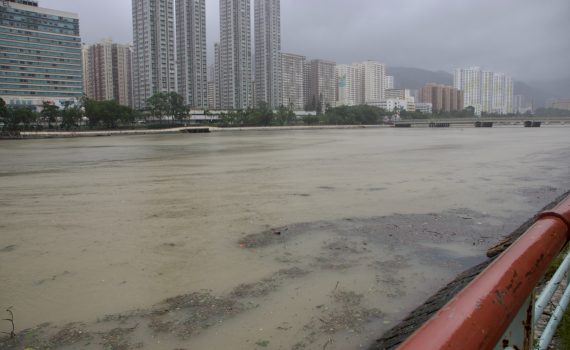
Super Typhoon Ragasa battered Hong Kong heavily on Wednesday, with the T10 signal issued at 2:40am hoisted for over 10 hours. The Hospital Authority said 101 people were injured during the storm. The Government’s 1823 Call Centre, the Fire Services Department and the Leisure and Cultural Services Department received 1,224 reports of fallen trees in total. As of 8pm on Wednesday, the Drainage Services Department received 22 reports of flooding, while the Civil Engineering and Development Department received four reports of landslides. In Sha Tin district, the storm surge affected from Ragasa flooded both sides of Shing Mun River under T10 signal. Debris, branches and leaves were washed along the river banks. Strong winds also brought down trees, blocking roads, bikeways and pedestrian paths. Some MTR outdoor sections were disrupted by fallen trees and damaged overhead cables as well. East Rail Line service remained out of service until the evening at around 6:45pm.
Super Typhoon Ragasa lands in China from the southeast, bringing new experiences to cities’ new arrivals
- 2025-09-25
- Society
- The Young Reporter
- By: Fu RongEdited by: WANG Ludan
- 2025-09-25
The Greater Bay area takes the heat of super Typhoon Ragasa, the most intense storm in 2025, as it sweeps across all the regions on Wednesday, prompting a No. 10 hurricane signal in Hong Kong. The ferocious wind and sudden rainfall bring an unprecedented experience for cities’ newcomers. After Typhoon Mangkhut in 2018, Ragasa is expected to be the strongest typhoon in Hong Kong’s history, according to the former observatory director Shun Chi-ming on Tuesday. According to the Hong Kong Observatory, Typhoon Ragasa sustained a maximum wind speed of 195 kilometres per hour, which makes it more intense than Super Typhoon Mangkhut in 2018, which recorded a maximum wind speed of 185 kilometres per hour. Chen Guowei, a 24-year-old physiotherapist born and raised in Yunnan Dehong, came to Shenzhen Dapeng New Area after graduating last year. “I have never seen a real typhoon before. It’s really crazy,” said Chen, living in the hotel next to the beach provided by his company. Prompted by the weather forecast and messages from families and corporations, he decided to move into the hotel inside Taikang Home Penguyaun, the elderly community he works in. “I don’t really have to work during the typhoon and can live in this expensive hotel, which costs about 500 yuan a night,” Chen said in the video interview. Dubsy Eli, a Nigerian international student at City University of Hong Kong, is also experiencing his first T10 typhoon. “It’s not my first typhoon, but it’s the biggest one. I bought so many fruits to survive,” Dubsy said in a video interview, waking up several times at night to check the weather outside his apartment in Prince Edward. “Back in my hometown, we only experienced heavy winds. But raining with big winds is so exciting for me,” said Dubsy. He is …

Typhoon Ragasa: Safety measures ahead of strong winds and potential flooding
- 2025-09-25
- Society
- The Young Reporter
- By: MA Tsz Chiu OscarEdited by: AO Wei Ying Vinci
- 2025-09-25
Different safety measures were conducted in Hong Kong in advance on Monday and Tuesday to minimise destruction by the ongoing Super Typhoon Ragasa. The Hong Kong government held a press conference about the typhoon-related measures on Monday and warned the public of the flood risks in several black spots. These include Kwong Fuk Road in Tai Po, Shing Mun River and other low-lying areas. Sandbags and water barriers were set up around the hazard-prone spots to prevent floods. The government announced some flood-prone pedestrian tunnels would be closed during the storm. Many residents in Hong Kong also worked on their own safety measures. Windows were taped to add strength and lessen damages caused by strong wind. The Hong Kong Observatory issued the T10 hurricane signal at 2:40am, which lasted until 1:20pm on Wednesday, making this year the first time having two T10 signals within a year since 1964.
Super Typhoon Ragasa: Daily life and extraordinary measures in Zhuhai before the storm
- 2025-09-24
- Society
- The Young Reporter
- By: ZHENG XinyiEdited by: AU YEUNG Jim
- 2025-09-24
ZHUHAI, China -- Zhuhai residents rushed to markets to buy daily necessities and food supplies on Monday, following the super typhoon warning issued by the China Meteorological Administration as Typhoon Ragasa approaches. The China Meteorological Administration announced that Ragasa has developed into the strongest typhoon in the world this year. Multiple regions in Guangdong have issued notices for the suspension of classes, work, production, transportation, and business operations. “Before coming here, we heard that a typhoon was approaching. We had experienced typhoons before when we were in Ningbo, and thought it would pass quickly,” said Lu Jingxi, 28, a full-time housewife. “This is the first time I have brought my family to Zhuhai for a trip, and I don’t want to have any regrets,” said Lu. “It wasn’t until we saw the official announcements, posts shared by friends on social media, and received notices from the hotel about lockdown management that we realised how serious this typhoon was,” Lu said. “We still wanted to take my family for a walk along the seaside within a safe area, to enjoy the breeze and spend some time together,” Lu added. “Before, the typhoon didn’t make me feel worried because the sky was clear and sunny,” said Carla Duisebay, 20, an exchange student from Kazakhstan. “Before coming to China, I had never experienced a typhoon.” “The campus supermarket and several nearby stores have run out of fresh vegetables, fruit, meat, and even instant noodles and bread. Seeing this emergency situation was really shocking to me,” Duisebay said. “I will try to open the window a little to feel the typhoon—it’s a special experience for me,” Duisebay added. Zhuhai Municipal Bureau of Commerce initiated a city-wide essential goods supply monitoring mechanism, carrying out dynamic tracking of circulation in key supermarkets, wholesale markets, and slaughterhouses …

Super Typhoon Ragasa: Travellers stuck in airport after flight suspension
- 2025-09-24
- Society
- The Young Reporter
- By: AO Wei Ying Vinci、AU YEUNG JimEdited by: LI Sin Tung
- 2025-09-24
Hundreds of travellers remained stranded at Hong Kong International Airport from 6pm on Tuesday due to flight cancellations, after the Observatory issued the T8 warning signal for the approaching Super Typhoon Ragasa. All flights scheduled to depart after 6pm on Tuesday have been cancelled, as well as most flights scheduled to fly out after 5pm. Air France flight AF8404 to Amsterdam, originally scheduled to depart from Hong Kong at 10:45pm, was moved forward to board passengers at 4pm. Travellers are stuck at the airport as they await updates from their airlines, while take-offs and landings remain suspended until resumption from Thursday 6am, according to the Airport Authority. Jonas Humann, a traveller from Germany whose flight was originally scheduled for Tuesday evening, said he was confused about where to get information regarding the typhoon. Humann said he will be sleeping on a bench for the night, at the airport, as he could not find a staff member who could offer him help. “Qatar Airways isn’t paying for a hotel, and there are no meal vouchers or anything either, the hotels nearby are very pricey,” said Humann. Upon enquiries, the Qatar Airways customer service hotline said they are not responsible for handling any arrangements online, while there were no staff present at the Qatar help desk in Hong Kong International Airport on Tuesday at 7pm. A couple from Papua New Guinea, Vanessa and Ronald, said they are satisfied with the clear instructions given by the Hong Kong government. “We do appreciate the timely announcements that they have been given, and it's good to see that they're not trying to just create a mass panic,” said Vanessa. The customer service counter of the airport distributed small pillows to stranded travellers, and restaurants will operate normally throughout the 36 hours of flight suspension. Flight …
Typhoon Ragasa: Preparation of supplies before storm approaches
- 2025-09-23
- Society
- The Young Reporter
- By: AO Wei Ying Vinci、MA Tsz Chiu OscarEdited by: NG Natasha Goa Sheng
- 2025-09-23
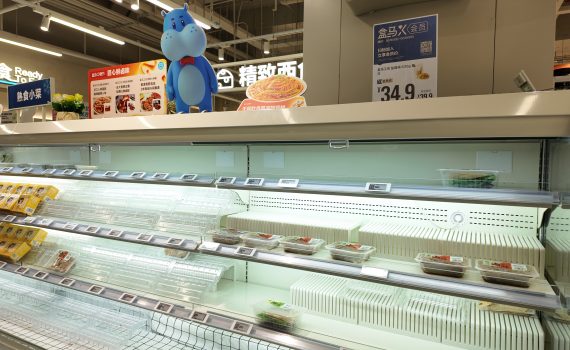
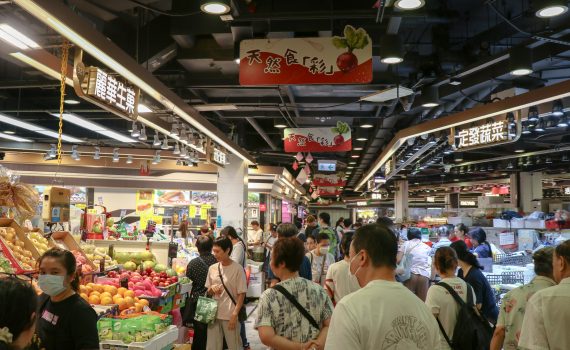
Residents in Hong Kong rushed to markets to purchase food and supplies on Monday and Tuesday, before the arrival of Super Typhoon Ragasa. The Hong Kong Observatory issued the T8 signal at 2:20pm on Tuesday, after a pre-T8 announcement on Monday when the T1 and T3 signals were hoisted. Markets were packed with people wanting to stock up food and supplies in advance before stores close. Products including bread, vegetables and fresh meat ran out of stock in many stores. As of 8:45pm on Tuesday, the Observatory estimated that Ragasa will be closest to Hong Kong on Wednesday morning. Higher signals will be considered for issuance from 11pm on Tuesday to 3am the following day. Our reporters visited markets and supermarkets in Kowloon, Sha Tin and Tai Po to capture how locals prepare for the storm.