
TOP STORIES
Budget 2025: Improved financial connectivity to boost Hong Kong’s role as RMB trading hub
- 2025-02-26
- Politics
- The Young Reporter
- By: CHEN Ziyu、ZHENG XinyiEdited by: CAO Jiawen
- 2025-02-26
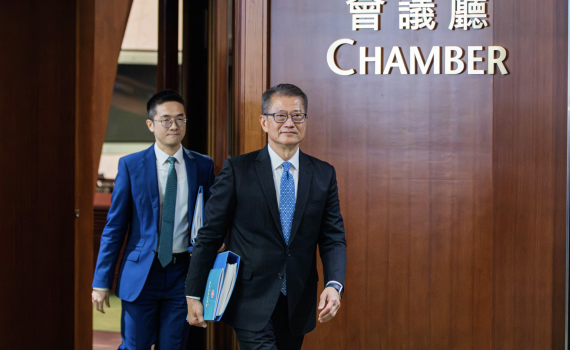
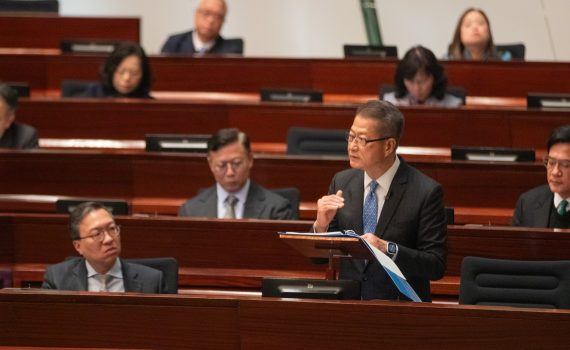
Financial Secretary Paul Chan Mo-po has proposed to enhance Hong Kong’s position as a Renminbi trading hub. The People’s Bank of China and the Hong Kong Monetary Authority will start working together to provide “round-the-clock” and “real-time” small-value cross-boundary remittance services for residents of Hong Kong and the mainland as soon as the middle of this year. “The HKMA will launch an RMB Trade Financing Liquidity Facility for banks as a stable source of relatively lower-cost funds to support banks in providing RMB trade finance services to their corporate customers. The new facility has a total size of 100 billion yuan,” Chan said. According to a report from the Society for Worldwide Interbank Financial Telecommunication, the value of RMB payments increased 2.1% compared to December 2024. Hong Kong handled 78.67% of RMB payments excluding the mainland. Inconvenient renminbi remittance service has been problematic for mainland residents and Hongkongers alike. XiXi Chen, 23, is a mainland student at the University of Hong Kong. “The driver pulled me out because I did not have any cash. It is quite embarrassing,” said Chen. “ I am happy that the government will implement the remittance service so that I will not have to wait for payment.” Cory Choi, 22, a Hongkonger who worked at American International Assurance said before COVID-19, shopping and consumption in the mainland was quite inconvenient. “I was accustomed to bringing a lot of cash. When I tried to pay, the shops told me they did not have change for me,” said Choi. “But since last year, I found I could go to the mainland to shop by just bringing my phone and my Home Return Permit. The e-payment methods in Hong Kong can also be used in the mainland,” Choi added. According to WeChat Pay Hong Kong, more than 3.64 …
Budget 2025: Budget disappoints elderly and grassroots
- 2025-02-26
- Society
- The Young Reporter
- By: CHENG Tsz Sen Sean、SIU Tsz HangEdited by: Cheuk Chi Maggie YEUNG
- 2025-02-26
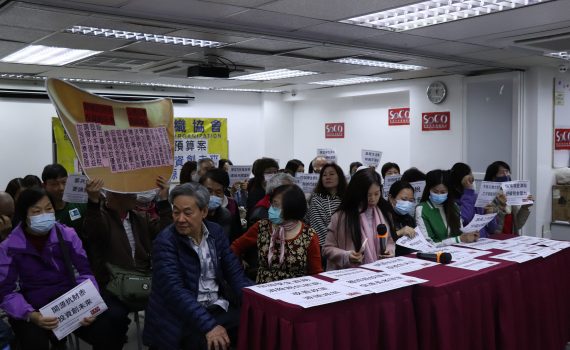
The Society for Community Organisation said today that the latest budget proposals are disappointing for Hong Kong’s grassroots and elderly communities. SOCO deputy director Sze Lai-shan said they had hoped for increases in welfare payments to caregivers, elderly people and single non-permanent residents. There is none of this in the budget. For the elderly, Financial Secretary Paul Chan Mo-po proposed to expand the Residential Care Service Voucher Scheme by 1,000 to 6,000 total and the number of vouchers under the Community Care Service Voucher Scheme by 1,000 to 12,000 total. He also promised to boost senior citizens’ buying power by providing an one-off allowance to eligible social security recipients, equal to half of the standard monthly rate for Comprehensive Social Security Assistance payments, Old Age Allowance, Old Age Living Allowance or Disability Allowance. This payment will range from around HK$1,000 to HK$3,600. But Sze said the budget plan is sacrificing the interest of elderly people. “Since elderly people are earning less money, they rely on the government’s support. The government should consider developing the economy without exploiting elderly people’s welfare,” Sze said. Construction worker Lee Cheuk-ming, 61, said the government should not be harsh on elderly people. “The government pointed its knife to the elderly in this budget plan. Freezing civil service workers' salaries is not enough. Cutting parts of their welfare to cover community support is what we want in this budget plan,” Lee said. Lily Kwan, 69, said that elderly people should receive more financial support despite the fiscal deficit. Kwan said that it is better to have the extra allowance than nothing, at least she can have one better meal. “The government should spend more on our living quality and sense of well-being,” she added.
Budget 2025: Talent admission schemes receive over 430,000 applications
- 2025-02-26
- The Young Reporter
- By: ZHONG Xinyun、CHEN XiyunEdited by: YANG Haicen
- 2025-02-26
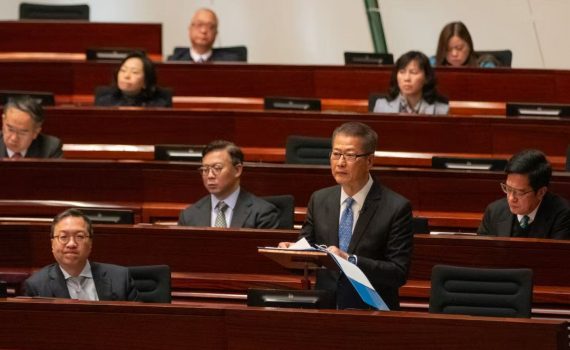
Various talent admission schemes have received more than 430,000 applications and approved more than 270,000 by the end of last year, said Financial Secretary Paul Chan Mo-po in the budget address today. “The budget is set to attract international talent and nurture local talent, reinforcing the city’s status as an international hub for high‑calibre talent,” Chan said. So far, 180,000 talents have arrived in Hong Kong since the scheme started two years ago. The budget also said Hong Kong will host the upcoming global talent summit early next year, and the government will introduce a scholarship targeting students from ASEAN and Belt & Road regions. “This equates to 10,000 new arrivals per month,” said Shang Hailong, Member of the Legislative Council and founder of the Top Talent Service Association. He added that because so many talents have arrived, some may have trouble finding jobs at first. Wan Jiachen, 26, settled in Hong Kong two years ago through the Top Talent Pass Scheme after graduating from Columbia University in the United States. It took him a few months to find work. “The house rent is really expensive and the cost of living is actually quite high,” said Wan, who found a job with the Bank of China. “It would be better if the government could arrange more similar accommodation for foreign talents or provide rental subsidies for foreign talents.” “It is hard to provide direct fiscal support for talents like housing welfare,” said Shang. “Because the median wage level of top talents is HK$50,000, which surpasses the requirements of incentives set for assisting local residents.” Non-local students who graduate from five of the city’s universities are also eligible for the top talent visa. Some of these students said it has been difficult to find a job in Hong Kong. “Hong Kong …
Budget 2025: Paul Chan eyes Kai Tak Sports Park to spur tourism
- 2025-02-26
- Society
- The Young Reporter
- By: ZHOU Yun、TANG SiqiEdited by: WANG Jing
- 2025-02-26
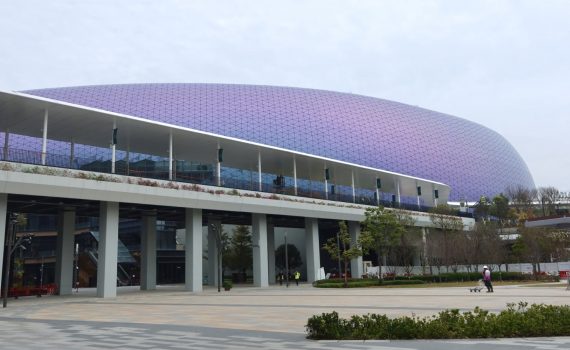
Financial Secretary Paul Chan Mo-po proposed in today’s budget speech that has his eyes on Kai Tak Sports Park to spur the tourism industry. “The Government has been supporting the staging of major international sports events in Hong Kong through "M" Mark System. We will adopt a more strategic approach in continuously attracting sports events which can bring significant economic benefits to Hong Kong, and are in discussion with LIV Golf which has been held in Hong Kong for two consecutive years to explore long-term partnership,” he told the Legislative Council this morning. Following the completion of five tests on the venue, including the ticketing system and crowd management, the park is set to officially open in three days. “The park will provide a world class venue for hosting international mega events, taking forward the development of culture, sports and tourism as an industry in Hong Kong,” said Chan. In 2024, 4.5 million visitors came to Hong Kong, an increase of 32.35% from 2023, according to the government figures. “Modern culture, such as sports events and concerts, are important elements in driving tourism today,” said Ervi Liusman, Senior Lecturer of Hotel and Tourism Management at the Chinese University of Hong Kong. The Kai Tak Sports Park has 50,000 seats, which is about four times more than that of the AsiaWorld-Expo. “Some international singers who want to hold concerts in Hong Kong gave up their bids due to venue size restrictions,” Liusman said. “But Kai Tak Sports Park offers a lot more space.” The park is the only venue in Hong Kong that meets the requirements of multiple international events, which can host sports and cultural activities under any weather conditions. Up till now, the park has contacted over 200 local and overseas sports and non-sports event organisers. About 50 companies …
Budget 2025: Waste-to-energy scheme and electric taxis in Green City plan
- 2025-02-26
- Society
- The Young Reporter
- By: CHEN Yongru、LIN XiaoyouEdited by: Lok Tung LAU
- 2025-02-26
Hong Kong Financial Secretary Paul Chan Mo-po announced this morning a plan to get rid of Hong Kong’s landfills. “I·PARK1”, the first waste-to-energy facility for treating municipal solid waste, will be commissioned this year. A second major facility, “I·PARK2”, is up for tender. Once completed, “I·PARK2” is expected to treat 6,000 tonnes of municipal solid waste per day. This year's Green City proposals also include fare reduction and recycling, green transformation of public transport, and smart green mass transit systems. To enhance waste reduction from the source, Chan said the government will allocate an additional HK$180 million to increase the number of smart food waste recycling bins and food waste collection facilities in residential buildings across Hong Kong, expand the recycling network, and increase the amount of waste collected. According to the Environmental Protection Department, “I·PARK1” advanced incineration technology, combined with mechanical sorting and recycling facilities to recover resources from municipal mixed waste and convert the generated heat into electricity, reducing pollutant emissions “Hong Kong is in urgent need of facilities such as I·PARK1 and I·PARK2 in order to convert waste into energy,” said Tsou Jin-yeu, the Founding Committee Member of the China Green Building (Hong Kong) Council. Leung Yee-tak, Chairman of the Asian Intelligent Building Association, said construction waste is still a problem. “Ash produced after incineration, including bottom ash and fly ash, needs to be properly disposed of.” Leung said. “At present, there is excess capacity of building materials in the mainland, the demand for furnace bottom ash is not high, and the treatment technology of fly ash is not mature.” “Although the facility is capable of generating electricity, the incineration process can still produce pollutants, so it needs to be strictly controlled,” he said. “Another key point to achieving energy saving is the user. The government should …
Budget 2025: HK$2 transport subsidy scheme capped at 240 trips a month
- 2025-02-26
- Society
- The Young Reporter
- By: LEUNG Chi Ngai、YAM Long Hei JamieEdited by: Chun Lim LEUNG
- 2025-02-26
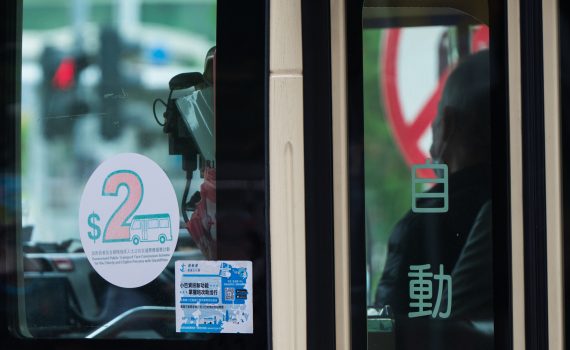
Passengers of public transport over 60 years old will have their HK$2 rides limited to 240 trips per month, Financial Secretary Paul Chan Mo-po proposed in this year’s budget speech. For trips below HK$10, eligible passengers will continue to pay HK$2, but for trips costing more than HK$10, they will have to pay 20% of the total fare. The updated scheme preserves the policy intent while striking a balance on “enhancing the sustainability of the scheme and minimising the impact on the beneficiaries,” said Chan. Government reimbursements to public transport operators is estimated to hit a record high of HK$5.4 billion in 2025-2026, more than tripled compared to HK$1.4 billion in 2021-2022, according to government figures. Currently, the HK$2 subsidy scheme which allows all permanent residents over 60 years old to take public transport for two dollars per trip comprises 0.7% of the total government recurrent expenditure. Dai Fung-wa, 80, who lives in Mei Tin Estate in Tai Wei, said the new policy is unfair to people over 70 years old. Dai said people between 65 and 70 years seldom take public transport after retirement. “You can still work in your 60s, but if you are over 70, you can only take care of your grandchildren at home,” Dai said. Government figures show that 49.4% of residents aged between 60 and 64 years were in the labour force in the past three months, compared to 13.7% of those over 64 years old. Government expenditure on the HK$2 scheme is more than doubled in 2022-2023 from HK$1.4 billion to HK$3 billion, when the eligibility age was lowered from 65 to 60, with extended coverage to include red minibuses, kaito ferries and trams. Lam Chun-sing, Legco member for the Federation of Hong Kong and Kowloon Labour Unions said subsidising transport for …
Budget 2025: Government proposes fiscal consolidation measures to cut expenses
- 2025-02-26
- The Young Reporter
- By: NG Natasha Goa Sheng、MAO AnqiEdited by: CHAN Wing Yiu
- 2025-02-26
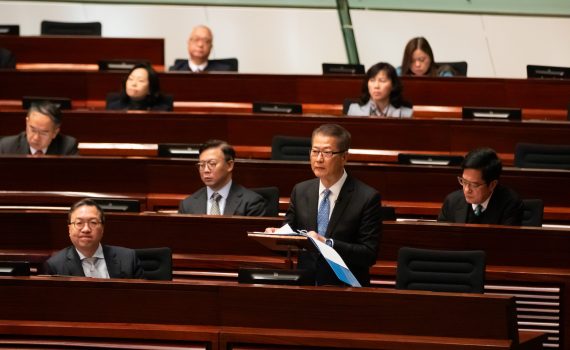
The government has proposed to cut 7% of government recurrent expenditure from now to the 2027-2028 fiscal year, Financial Secretary Paul Chan Mo-po said in the budget address this morning. A “reinforced version” of the financial consolidation programme is coming soon, with the purpose of restoring HK$6.2 billion of expenditure over the next five years. “Strictly containing public expenditure is a must, but we should proceed in a steady and prudent manner and be careful to find a balance among the various impacts that may arise in the process,” Chan said. In the 2024-2025 fiscal year, Hong Kong recorded a deficit of HK$87.2 billion, 60% higher than the forecasted deficit of HK$54.4 billion last year, according to the government. In this year’s budget, the total estimated expenditure stands at HK$639.7 billion, an increase of 2% from the previous year. Terence Chong Tai-leung, Professor of economics at the Chinese University of Hong Kong, said Hong Kong’s economic performance is not as bad as widely perceived. “Hong Kong’s financial expenses have always been stable. It is normal to observe deficit fluctuation throughout the business cycle,” he said. To reduce the deficit, Chong suggested the government can work on land sales and budget upper limits. “I suggest further dividing large areas of land into smaller ones, and then selling more of them to small- and medium-sized enterprises and overseas companies, instead of strengthening the local monopoly,” he said. Other proposals to reduce expenditure include increasing the rate of reduction of recurrent government expenditure from 1% to 2% in 2025-2026, under the premise of not affecting Comprehensive Social Security Assistance, Social Security Allowance and other statutory expenditures. The policy will be extended to 2027-2028 and is expected to save the government around HK$3.9 billion, HK$11.7 billion and HK$19.5 billion in the following three financial …

Themed restaurants offer new experiential consumption culture
- 2025-02-24
- Society
- The Young Reporter
- By: ZHOU Yun、LIN XiaoyouEdited by: CAO Jiawen
- 2025-02-24
At Ramen Iroha, a cartoon dog co-branded theme restaurant in Causeway Bay, Iris Lee, 20, takes pictures of the dishes and shares them on Instagram. “I’m a fan of Pochacoo,” Lee said. “I come here not just because the ramen is delicious but to experience being surrounded by lovely Pochacoo.” All the decorations in Ramen Iroha are filled with Pochacco elements, including the food itself. Soon after its launch in December 2024, an Instagram post on Ramen Iroha went viral, attracting long lines of customers. Cyrus Lin, 37, the founder of Ramen Iroha, said during the peak hours, consumers may have to wait in line for up to three hours. “Today’s consumers attach great importance to the experiential value of their purchases and seek emotional engagement and social interaction with brands,” Lin said. “I love Pochacco, I came specifically to check in after reading the promotion on Instagram,” said Donnie Yu, 27, a bank worker. “I will also share my dining experience on social media.” “In an era dominated by social media, I think sharing unique experiences has become an important consumption trend,” Yu added. “Sharing such experiential consumption experiences satisfies my emotional and social needs.” Ramen Iroha is one of many restaurants that have risen in fame in the city in recent months and co-branded with well-known intellectual property images. Since January, co-branded restaurants such as Kingsley Cafe × Snoopy, Black Wood LZAKAYA × Cinnamoroll, and ABURI EN × Attack on Titan have also been launched. “Along with the growth in the number of such restaurants, there is also a growing demand from consumers for immersive experiences in the catering industry,” Lin said. “Space layout, tableware design, dish placement, and even the service style of employees are all details that need to be improved.” Lin said Ramen Iroha will …
Economic downturn fuels claw machine entrepreneurship
- 2025-02-24
- Society
- The Young Reporter
- By: CHENG Tsz Sen Sean、SIU Tsz HangEdited by: Wing Chi HO
- 2025-02-24
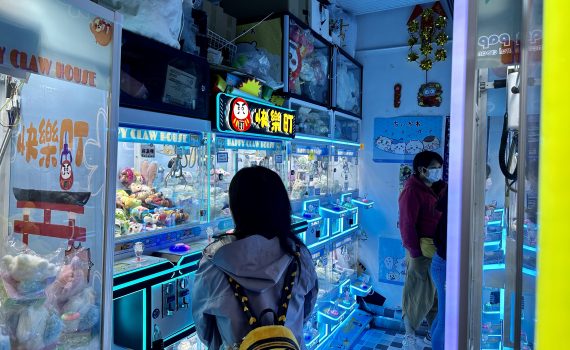
Claw machines, once a niche type of amusement, require minimal investment and management to operate, and now they are driving a new wave of entrepreneurship in Hong Kong’s bustling malls amid economic uncertainty. Claw machine arcades can stay open around the clock for which obsessed claw game lovers never have to stop. Recently, these machines have found their way into many shopping malls across Hong Kong, occupying previously vacant shop spaces and offering players a chance to win big prizes, such as a vacuum cleaner or a Nintendo Switch gaming console, for HK$5. The rental index of the Hong Kong retail property market has dropped by over 20 points after peaking in 2019, and the average rent for retail has been decreasing since then, according to the Rating and Valuation Department. Despite the fall, many commercial spaces remain vacant and claw machine arcades have become a short-term solution for both landlords and business starters. Anyone who can afford the rent, the machines and the prizes can open a claw machine arcade, as they require minimal staffing and maintenance. Alan Tang, 30, owner of a claw machine arcade in Yuen Long said all the machines in his shop were rented out in 2020, but only 60% of them are rented out now. His monthly income peaked at nearly HK$100,000 in 2020, but since then Tang has seen a 60% drop in revenue. As of the beginning of this year, machine rent ranges from HK$3,500 to HK$4,500, a 25% decrease from 2020. By comparison, fewer machines are being rented out. “Claw machines require little management, more people are joining this business as it brings a decent amount of profit,” Tang said. Tang added that the monthly rent for his store is about HK$50,000. Operating 24 …
Private shoppers face uncertain future in shifting consumer market
- 2025-02-24
- Society
- The Young Reporter
- By: Ruoyu LI、CAO SiyuanEdited by: Cheuk Chi Maggie YEUNG
- 2025-02-24
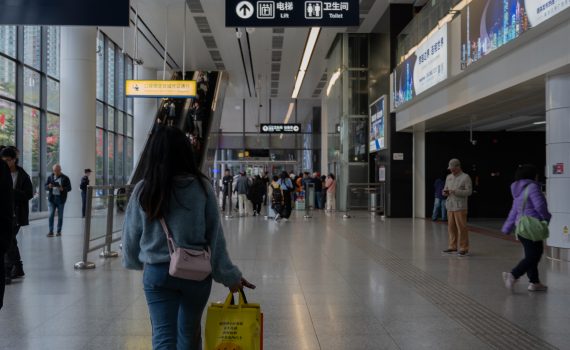
Holding bags of pastries from the well-known mainland bakery brand, Bao Shi Fu, 32-year-old housewife Li Lanlan, a Shenzhen resident, starts her daily routine. She prepares to deliver goods from Shenzhen to Hong Kong, ordered by Hong Kong customers, at Futian Port. “Daigou” are personal shoppers who take orders directly from customers, make the purchases for them and deliver the goods to them, all for a commission fee. Li started her daigou business right after the Lunar New Year, and is already getting a steady stream of orders, usually three to four orders a day. “As a housewife, I can only schedule one trip to Hong Kong each day to earn some pocket money,” Li said. A few years ago, daigous mainly purchased high-end goods such as milk powder in Hong Kong and brought them to the mainland. As consumption habits change, the trend is reserving. Nowadays, many daigous takes orders through social media, many of them delivering food or daily necessities directly from Shenzhen to Hong Kong. Hong Kong Immigration Department figures show that more than 81 million headcounts made the crossing between Shenzhen and Hong Kong last year. “As more people went to Shenzhen to spend their money, some people found it profitable to help deliver goods via ports, and there are plenty of accounts on RedNote doing reverse daigou,” said Li. People use social media platforms like RedNote and Facebook to find agents and place orders. These agents deliver the shopping to Hong Kong at agreed-upon MTR stations. Li usually earns around HK$200 to HK$300 a day. “If the client requires home delivery, I will charge HK$600 to HK$1000 for a single errand, depending on the distance,” said Li. "Some customers are quite generous with the delivery fees, especially for home delivery services. I once …