
TOP STORIES

Therapaws build trust and help people overcome negative thoughts
- 2024-12-14
- Society
- By: Cheuk Chi Maggie YEUNG、MAO AnqiEdited by: Wai Sum CHEUNG
- 2024-12-14
Surrounded by a lively group of primary school children eager to pet her, So So, a six-and-a-half-year-old Shih Tzu, radiates warmth and comfort. Known for her calm and empathetic nature, she has become a source of comfort for individuals experiencing emotional distress. So So is a qualified therapy dog and doctor pet. Her owner, Arale Leung, said her dog always enjoys helping people in need. “So So is not timid but accommodating,” she said. Recalling the moments when some kids reacted intensely during therapy sessions, Leung said So So was confident in handling the situation. “Her eyes were very determined like she seemed to say, ‘Don’t be afraid, I’ll help you’,” said Leung. Research by a group of animal science and biotechnology experts, published in the 2015 issue of the journal Science, found that interacting with animals can boost the release of oxytocin in the human body—a hormone associated with feelings of love, healing and social motivation. So So has been working as a therapaw at the Hong Kong Animal Assisted Therapy Association (HKAATA) for four years. Debbie Ngai Hui-fai founded the organization in 2013. She said during treatment, a handler, who usually owns the service dog, or ‘therapaw’, first guides the animal to help patients tear down their walls so that they are open to treatment. A therapist will observe the interaction between the patient and the animal, then find a suitable treatment plan to guide and intervene in the patient’s emotions. Government figures show that Hong Kong people’s depression index reached a new high in 2024, and the number of psychiatric patients has doubled over the past decade. In 2023-2024, there were 305,700 people with mental illness, leading to increased demand for outpatient services provided by specialist outpatient clinics, according to a government report. “We can see a …

ChatGPT as psychological counsellor: lifeline or limitation?
- 2024-12-11
- Society
- The Young Reporter
- By: YANG Haicen、WANG JingEdited by: Juncong SHUAI
- 2024-12-11
Anne Li, ( not her real name) ended her long Friday of classes in solitude, buying dinner from the vending machine outside her dorm and confiding in ChatGPT. “In high school, we had fixed classes and a group of friends who were always there for you. But now, every class and every person is different—it felt like no one stayed around for long,” Li said. The 18-year-old recently moved from Xi’an to study in Hong Kong. The transition turned her from an outgoing personality into a quiet and reserved individual. “Sometimes I thought I might be depressed, but I was too scared to go to the clinic. What if I am really sick?” Li discovered posts on Xiaohongshu where others had shared their experiences using ChatGPT to talk about emotional struggles. Out of curiosity and a need for support, she began using the AI chatbot for emotional guidance in October last year. “It felt like a friend who would never betray or judge you,” Li said. “In many lonely moments, it truly gave me a sense of comfort and belonging.” Li is among a growing number of users who have turned to ChatGPT for emotional or psychological support. According to Xiaohongshu, searches for "using GPT for therapy" resulted in 4.3 million posts, while "GPT and psychotherapy" had over 330 posts. Initially created for tasks such as answering questions and providing recommendations, generative AI has evolved to handle more complex and personalised uses, including mental health support. OpenAI’s GPT-4.0, the latest version of the model, has become capable of engaging in fluent discussions and identifying users’ emotions through text. Character.ai, a platform where people can create chatbots based on fictional or real people, for example, introduced a chatbot called “Psychologist”, which is described as mental health specialists helping people improve their …
Hong Kong’s night economy push faces hurdles, bar operators mixed on future
- 2024-12-07
- People
- By: XIA Fan、WANG RuoshuiEdited by: WANG Ruoshui、XIA Fan
- 2024-12-07
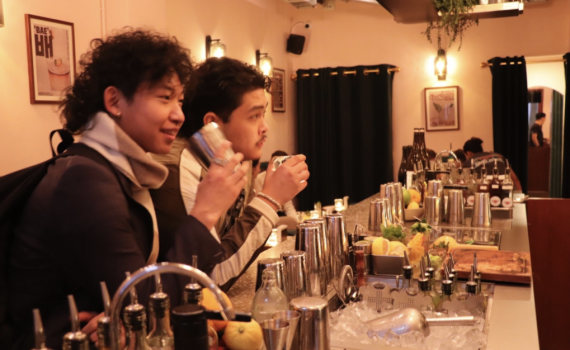
Bars in Central are eagerly waiting for customers as the city has been reviving its night economy ever since the pandemic. The government has launched a series of campaigns to boost spending and consumption at night, including a recent tax cut on imported liquor. John Kerwin Alanis, tender of Shop B- A Little Lab, is wiping the glasses to prepare for a new day. “Before the pandemic, at this time, people would fill my spot, ” said Alanis. No people visited the shop yet, he remained smiling while wiping the counter, “But things are getting better this year.” In mid-October, the Chief Executive of Hong Kong John-Lee Kachiu said in 2024’s policy address that the tax targeting importing liquor, referring to alcohol containing alcohol by volume (ABV) above 30%, was slashed to 10% from 100% for the portion above importing price $200, while the duty for portions below $200 remained the same. The movement aimed at “promoting the liquor trade and boosting the development of high value-added industries, including logistics and storage, tourism and high-end food and beverage consumption,” said Lee. Hong Kong experienced “cold winters” in retail and consumption in the post-pandemic era. The reduced tax was viewed as another effort to boost the local economy, though its effectiveness remains unclear. The bar and restaurant sector is one of the hardest hit by the pandemic in Hong Kong. According to the Hong Kong Census and Statistics Department, total bar revenue in the second quarter of this year was nearly HK$340 million, a drop of about 25% compared with the same period in 2019. “For us, we are getting the same prices from wholesalers for liquor so far, ” said Jimmy Singh, bar owner of ACED. “No difference at all. But if I can get lower prices, I will sell …

Reshaping the way consumers see food products
- 2024-12-06
- Society
- By: CHAN Wing Yiu、MA Tsz Chiu OscarEdited by: KONG Tsz Yuen
- 2024-12-06
About 3,300 tonnes of food waste were disposed of at landfills everyday, according to Environmental Protection Department figures in 2022. That’s about 30 percent of municipal solid waste. But a Friends of the Earth study found that at least 29 tonnes of food waste were still consumable, most of them were expired products thrown out by supermarkets. Several non-government organizations and social enterprises have been trying to cut down on the amount of food that ends up in landfills. GreenPrice, for example, focuses on reselling food that would soon expire but still safe to eat. They sell them at half price or less. Hon Chun-him, 27, one of the founders of GreenPrice, aims to eliminate waste and popularise a sustainable lifestyle. He was inspired by a visit to Food Angel, a food rescue NGO, where he received some discarded short-dated food donations. Hon and his partner founded GreenPrice in 2016 after they won some funding from a university social innovation competition. Today, GreenPrice has 12 branches around Hong Kong. Some are located in high-end places like Central or Tsuen Wan OP Mall, giving their brand a luxurious and trendy reputation. “We questioned the safety of the food at first, but then we learned more about the concept of “best-before” and realised the products are still safe to consume,” said Hon. Hon and his partners then developed the idea of redistributing short-dated and expired products. The Centre for Food Safety stated that the “best-before” date is about food quality. The food is expected to maintain its best taste and texture until this date, with proper storage. But the food is still safe to eat after this date, even though its quality could be compromised. “Used-by” dates relate to food safety, that is the last date on which it’s safe for …

College Students Seek Sleep Solutions Beyond Medication
- 2024-12-04
- Society
- The Young Reporter
- By: WANG Ludan、LIU YutongEdited by: Yuqi CHU
- 2024-12-04
At midnight, Guo Tongshun, 19, a second-year student from Hong Kong Baptist University, found himself exhausted but unable to sleep. After an hour of tossing and turning, his anxiety about getting up early made him more restless. In desperation, he gave up on sleeping and picked up his phone to watch videos. But the light of the phone and the fast-swiping videos made him more and more excited. At 3 am, he felt anxious but was no longer sleepy. He then took a melatonin tablet to try to sleep again. “It works well, but I am afraid to take more,” Guo said. “I hate the feeling of being weak and fuzzy after taking it, and I am worried that it would cause hormonal disruption.” Many university students in Hong Kong are overwhelmed by the problem of sleep disorders and sleep anxiety, caused by excessive screen time, heavy academic pressure and mental stress. Some of them take medication to combat sleep disorders, but they are also trying to explore other solutions. Sleep disorders can have multiple psychological and physical effects. People who suffer from it often do not have good sleep quality and sufficient sleep time, which may lead to function impairment and fatigue during the day, thus increasing the risk of anxiety, depression, high blood pressure, diabetes, and heart attack, according to the National Library of Medicine in the US. According to a "White Paper on the Sleep Health of Chinese Residents 2024" published by the Chinese Association for Sleep Research, more and more young people in China suffer from sleep disorders. According to the Paper, people aged between 14 and 34 are troubled by sleep difficulties, falling asleep after midnight on average, more than an hour later than those aged above 34. In Hong Kong, nearly 70% of local …

Scotland’s largest trade union body holds 40th anti-racism march in Glasgow
- 2024-12-01
- Society
- By: AU YEUNG JimEdited by: Hanzhi YANG、KONG Tsz Yuen
- 2024-12-01
Scotland’s Trade Union Centre (STUC) held its 40th annual anti-racism march and rally in Glasgow on Saint Andrew’s Day, Scotland's de facto national day. The event called for inclusivity, solidarity with refugees, and rejection of far-right ideologies. This year’s march celebrated the trade union’s 40 years of resilience in combating racism, particularly as immigration and far-right extremism have become pressing issues across Europe, according to the STUC. “Fascism is rising in Europe, and I think it’s important that people stand up against it,” said Caitlin Dransart, 25, a fresh university graduate. “As a white person, having quite a privilege in society, I think I have a responsibility to speak for people who are marginalised.” Founded in 1897, the STUC today represents over 550,000 workers through its 40 affiliated trade unions and 20 trade union councils. According to the union, it is recognised as Scotland's largest civil society organisation. The STUC began the tradition of organising mass anti-racism marches in 1983 when Scotland saw its first major anti-racist counter-protest in Glasgow, the country’s largest city. Gordon Davie, 75, a retired occupational therapist, said racism is still a major concern in the UK, and said if racism is not pushed back, it will lead to civil war and massive violence. “The driving force of racism today is fear, fear that is exploited and built upon by politicians,” said Davie. “Fear comes from people not being able to afford to buy a house and buy their groceries. All these are caused by the economic system, people are deprived, so they look for someone to blame and they blame immigration and refugees.” Davie said the major political parties in the UK are too complacent in addressing racism, and it is helping right-wing populist parties. “If they don’t address the issue much more strongly, then …

Legal and financial liabilities burdened Stakeholders as Hong Kong subdivided units policy revised
- 2024-11-30
- Business
- By: BO Chuxuan、ZHAO RuntongEdited by: ZHAO Runtong、BO Chuxuan
- 2024-11-30
“I don’t want to recall the depressed time when I lived in that cramped room and faced a narrow ceiling when getting up, doubting the meaning of my existence,” said Mou On-kei, 20, a university student who just moved out from her previous resident, a subdivided unit (SDU) in Yee Kuk Street, Sham Shui Po, an overcrowded neighbourhood in Hong Kong. In a room measuring less than 80 square feet, Mou paid HK$4,800 monthly for the previous SDU, where geckos, cockroaches, and rats appeared every month due to the squalid housing conditions, causing her severe acne problems. Among the other 220,000 residents of subdivided units in Hong Kong, like Mou, 41.6% have rodent problems, and 69.7% have cockroach problems. John Lee Ka-chiu, Hong Kong’s chief executive, proposed legislation in his policy speech in October to improve living conditions by phasing out subdivided houses smaller than 86 sq ft and converting them to basic housing units (BHU), up-to-standard units that have individual toilets and windows. There are 110,000 SDU households, of which approximately 30% (33,300 units) are required to be upgraded into basic housing units. “The lack of uniform standards for SDUs has led to greatly varying living conditions of different SDUs,” said Chen Lihong, a district council member in Sham Shui Po. Lee’s announcement aims to improve the SDUs’ environment, minimise potential safety hazards, safeguard tenants’ rights and interests, and enhance the sense of belonging of SDU tenants, Chen added. Lee’s announcement is align with Beijing’s hope of eradicate infamous SDUs and cage homes, as Xia Baolong, the top official on Hong Kong affairs said to solve this “deep-rooted problem” by 2049. Echoing the central instruction, Lee established a task force to tackle the SDU in the 2023 policy address, and set a series of minimum living standards as well …

Esports help build local Gen Z community
- 2024-11-29
- Society
- By: ALISHIBA MATLOOB、Wing Chi HOEdited by: Elif Lale AYHAN
- 2024-11-29
“In esports, working together is very important for success,” said Gen Z player Pong Ka-hei, 25, known as SiufatBB to his peers and the founder of the Hong Kong Griffin ESports Organization. Pong is also a professional player for the popular game Valorant and the champion of VALORANT Champions Tour 2022: Hong Kong & Taiwan Stage 2 Challengers. “Every team member, including me, is from a different place and family. Everyone has a unique background, but the challenge is to do our best as a team,” Pong said. Through their teamwork and shared passion, he believes Gen Z is actively building a supportive community in esports. Gen Z gamers can be spotted in Hong Kong. South Korean Esports powerhouse, fifth-time champion of League of Legends World Championship, T1, led by captain Lee Sang-hyeok (Faker), came to Hong Kong to host the HSBC One x T1 “League of One” party on Sept 29 at the Asiaworld Summit. Hundreds of fans got to watch them play against each other and also got to meet the players' family members. Being a fan of T1, Matthew Fai, said he made many lifelong friends through gaming, such as local competitions and online games. “One of my favourite games is League of Legends,” Fai said. The gaming community in Hong Kong has been growing since the early 2010s, particularly after significant events like local player Lau Wai Kin, known as Toyz, winning League of Legends: Season 2 World Championship in 2012. In 2018, the Hong Kong government invested HK$100 million to promote esports, showing strong support for gaming in the region. According to the market research website Market.us, the global esports market was valued at around US$1.8 billion (HK$13 billion) in 2022 but grew to around US$2.4 billion(HK$18 billion) the following year. Esports charts reported “League …

SF Holdings makes flat debut amid tepid market sentiment
- 2024-11-27
- Business
- By: XIA Fan、Yichun FangEdited by: Runqing LI
- 2024-11-27
SF Holdings ended on par with its offering price on Wednesday, its first trading day, after raising HK$5.83 billion in its initial public offering in the Hong Kong Exchange amid the sluggish investors’ confidence. The stock ended flat at its IPO price of HK$ 34.3, trading at a 25% discount on its A shares listed on the Shenzhen Stock Exchange. Peaking with a 3.5% increase to HK$ 35.5 after official trading, it cooled down to the same price as the opening price at the close. Trading under the 6936 code, the company is the first mainland Chinese company in the courier industry to conduct dual listing, known as “A+H” stock, issuing stocks for public subscription both in mainland China and Hong Kong. SF Holdings was officially listed in Shenzhen in 2017. “SF Holdings’ market cap is relatively big, and the weakening of yuan’s performance dampens international investors' risk appetite. These all added to the mediocre performance on its debut,” said Louis Wong, the director of Phillip Securities (HK). Zou Xin, the Associate Professor of the Department of Accountancy, Economics and Finance at Hong Kong Baptist University, said the unideal performance of SF today may be due to its time to debut in Hong Kong. Beijing’s earlier economic stimulus strategies have helped boost the market, fueling investors’ confidence. However, the market fever broke as no extra fiscal buffers were announced afterwards, and trade tensions increased after Donald Trump won the White House. “The market sentiment has been rather bloomy recently as the Hang Seng Index has hovered between 19,000 and 19,300, as a current tepid market can also influence investors’ mood,” added Wong. Hang Seng Index closed with a 2.32% increase at 19,603.13, while CSI 300, replicating the performance of the top 300 stocks in mainland China, rose 1.74% to 3,907.04 …

The Mental Health Struggles of Young Athletes in Hong Kong: Insights from the Field
- 2024-11-27
- Health & Environment
- The Young Reporter
- By: Ben Rong LiEdited by: Ka Man Wong
- 2024-11-27
The mental health crisis among young athletes in Hong Kong has become a pressing concern, with many facing significant psychological pressures as they strive for success in sports while managing academic commitments. A recent survey by the Hong Kong Sports Institute reveals that approximately 40% of young athletes aged 18-25 experience symptoms of anxiety, while 35% show signs of depression. These statistics highlight the urgent need to address mental health issues within the sports community. Young athletes are navigating a complex landscape where the demands of competitive sports often clash with their educational pursuits. Or Siu-yuen, a 20-year-old football player in the Wing Yee Football Team in the Hong Kong First Division League, shared his personal experiences with these pressures. “After graduating from secondary school, the pressure increased significantly because my academic performance was not ideal. This led me to enrol in a higher diploma program related to fitness and exercise nutrition. The challenge of balancing my studies and my football career leaves me feeling increasingly lost about my future,” he said. Or elaborated on the difficulty of pursuing his dream of becoming a professional footballer while managing his education. “The conditions for advancing to the Hong Kong Super League are tough, and to pursue my dream of becoming a professional footballer, I might have to sacrifice my studies. But currently, I feel stuck at a crossroads, unable to fully commit to either path,” he said. Or also expressed the familial pressures he faces, “My family expects me to finish my studies and start working soon, but my progress in football hasn’t reached a level where I can support myself. This creates immense pressure every time I engage with football, making me feel that if I don’t succeed, I might have to give up …