
By: Ye Enyi、ZHOU ShiqingEdited by: Cheuk Chi Maggie YEUNG
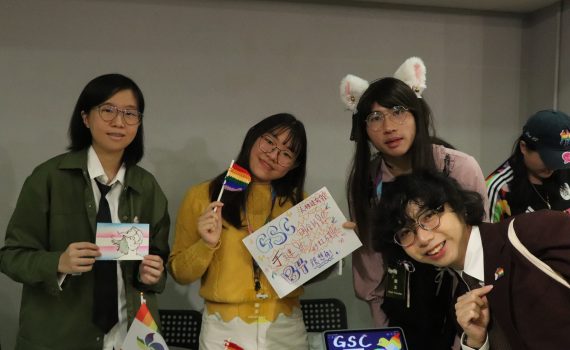
Hong Kong Pride returns as an indoor market for another year as parade remains cancelled
- 2025-12-01
- Society
- The Young Reporter
- By: Ye Enyi、ZHOU ShiqingEdited by: Cheuk Chi Maggie YEUNG
- 2025-12-01
The 2025 Hong Kong Pride Parade returned on Nov. 23 as an indoor Rainbow Market, focusing on end-of-life arrangements for same-sex partners and raising social awareness of the rights and needs of the LGBTQ community. This year’s theme, “No Frame for Love,” encourages the public to erase prejudice against the LGBTQ community, and embrace love in all its forms. Nearly 40 booths were set up by LGBTQ-inclusive businesses and organisations, selling merchandise and hosting sharing talks. Frankie So, 38, the director of Blessed Ministry Community Church, who has been with her same-sex partner for 21 years, said during previous street parades that traditional media and TV stations would report on the event continuously for only several days, while online platforms would keep the discussion going for over a month. “The event has changed indoors and news coverage lasts only a few days, so fewer people outside the LGBTQ community are aware of these activities,” she said. The previous Hong Kong Pride Parade took place in 2019. It was held as a rally after police rejected the organisers’ application due to public safety concerns. The 2020 parade was also cancelled due to COVID-19 restrictions and moved online. However, it was never held again, even after the pandemic ended. Steven Ho, 35, a volunteer of Grey and Pride, the first and only registered charitable organisation in Hong Kong that serves and looks after the well-being of older members of the LGBTQ community. “I used to hold banners to express my views during the parades,” he said. “There’s no longer a platform in the public discourse to speak to society about LGBTQ affairs, even the Rainbow market might be cancelled in the future,” said Ho. In Oct. 2023, the Court of Final Appeal ruled that the government must enact legislation establishing an alternative …
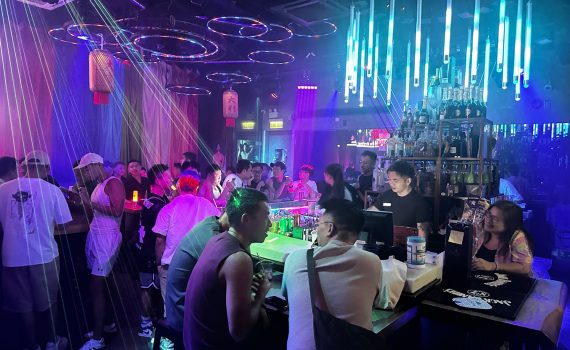
Wan Chai District hub for Hong Kong’s LGBTQ community
- 2025-11-06
- Society
- The Young Reporter
- By: Fu RongEdited by: Cheuk Chi Maggie YEUNG
- 2025-11-06
On a Saturday night, men in t-shirts and tank tops and a few women sip cocktails and chat in Hong Kong’s highest and one of its most popular gay bars, Bing Bing, on the 22nd floor of the Oliv building in Causeway Bay. “Bing Bing is a safe space for us,” said Felicia Ho Chui-man, 49, a straight woman who was at the bar. “To my gay friends, Bing Bing is what they are used to and the most comfortable with.” Bing Bing, located in the Wan Chai district, is known for its eight years of history, Korean pop music and affordable cocktails. Together with the several gay bars in the district and those in the neighbouring Central and Western District, they form a hub for the LGBTQ+ community in Hong Kong. “We try to provide a private space for gay community, to connect and to share all the support and fear,” said Yim Kai-kong, the manager of Bing Bing for the last seven years. Wu, the chairman of GayHK_caring, an NGO that helps local gay teenagers and students, said one of the reasons why gay people go to the Wan Chai district for entertainment, especially nightlife, is its deep historical roots.” According to the Hong Kong Public Records Office, nightlife in Wan Chai can be traced back to the Japanese occupation period from 1941 to 1945. At the time, Wan Chai district was a designated “entertainment area.” During the Korean War from 1950 to 1953, Hong Kong began to receive servicemen from the United States who were on leave. Bars and nightclubs in Wan Chai prospered when Americans from the United Nations Command landed at a small pier on Fenwick Street that was demolished in 2022. Published in 1957, British writer Richard Mason's book “The World of Suzie Wong” …

Advocate pushes Hong Kong to see refugees with compassion amid global backlash
- 2025-11-06
- Society
- The Young Reporter
- By: FENG Zhenpeng、Li YinhengEdited by: Cheuk Chi Maggie YEUNG
- 2025-11-06
Building public awareness about the hardships faced by 15,000 refugees and asylum seekers in Hong Kong remains a priority for the city, a rights group says. Speaking on the sidelines of the Home and Away charity football tournament it organised last week, Branches of Hope executive director Alexander Pforte said an intensifying global refugee resettlement challenge, fuelled by geopolitical tensions, anti-immigrant sentiment and populism, has compounded their clients’ hardships “exponentially”. “We can see this anywhere in the world. If you look at Europe and North America, which are the [primary] countries for resettlement, geopolitics and domestic politics [both] play a role…in fuelling rejection and reluctance to accept refugees and asylum seekers,” Pforte said. The annual tournament, which has been growing each year, attracted 29 teams last week to King’s Park, with about 580 players participating in this fourth consecutive edition. This year also marked the first time the tournament has branched out to youth, involving schools across Hong Kong to raise awareness of an issue it described as polarising. “Either people don’t know that there are refugees and asylum seekers in Hong Kong, or if they know, they think that they’re here illegally or don’t have a proper claim and that they have no right to be here,” Pforte said. As of September this year, Hong Kong’s Immigration Department received 1,925 applications for torture claims or non-refoulement protection. While the city does not grant asylum or legally recognise refugees, it has systematically screened asylum applications since late 2009. Of the 33,060 cases it has determined, only 379 or approximately 1% of those, have been successful. The majority of successful claimants have come from Pakistan, Yemen and Indonesia. Often, these non-refoulement claimants or refugees must wait for years, if not decades, for authorities to determine their cases. During this prolonged limbo, …
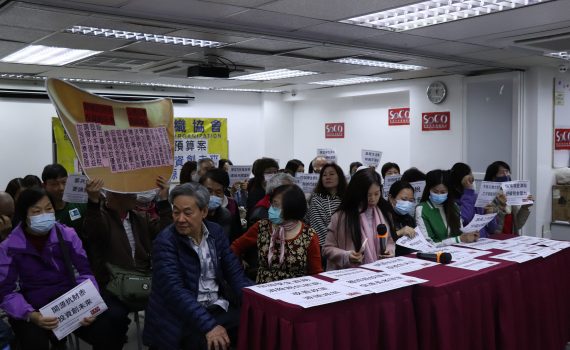
Budget 2025: Budget disappoints elderly and grassroots
- 2025-02-26
- Society
- The Young Reporter
- By: CHENG Tsz Sen Sean、SIU Tsz HangEdited by: Cheuk Chi Maggie YEUNG
- 2025-02-26
The Society for Community Organisation said today that the latest budget proposals are disappointing for Hong Kong’s grassroots and elderly communities. SOCO deputy director Sze Lai-shan said they had hoped for increases in welfare payments to caregivers, elderly people and single non-permanent residents. There is none of this in the budget. For the elderly, Financial Secretary Paul Chan Mo-po proposed to expand the Residential Care Service Voucher Scheme by 1,000 to 6,000 total and the number of vouchers under the Community Care Service Voucher Scheme by 1,000 to 12,000 total. He also promised to boost senior citizens’ buying power by providing an one-off allowance to eligible social security recipients, equal to half of the standard monthly rate for Comprehensive Social Security Assistance payments, Old Age Allowance, Old Age Living Allowance or Disability Allowance. This payment will range from around HK$1,000 to HK$3,600. But Sze said the budget plan is sacrificing the interest of elderly people. “Since elderly people are earning less money, they rely on the government’s support. The government should consider developing the economy without exploiting elderly people’s welfare,” Sze said. Construction worker Lee Cheuk-ming, 61, said the government should not be harsh on elderly people. “The government pointed its knife to the elderly in this budget plan. Freezing civil service workers' salaries is not enough. Cutting parts of their welfare to cover community support is what we want in this budget plan,” Lee said. Lily Kwan, 69, said that elderly people should receive more financial support despite the fiscal deficit. Kwan said that it is better to have the extra allowance than nothing, at least she can have one better meal. “The government should spend more on our living quality and sense of well-being,” she added.
Private shoppers face uncertain future in shifting consumer market
- 2025-02-24
- Society
- The Young Reporter
- By: Ruoyu LI、CAO SiyuanEdited by: Cheuk Chi Maggie YEUNG
- 2025-02-24
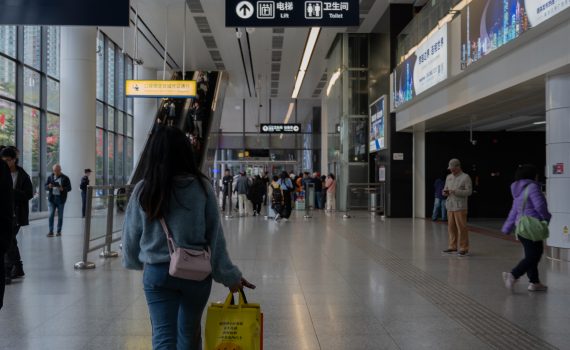
Holding bags of pastries from the well-known mainland bakery brand, Bao Shi Fu, 32-year-old housewife Li Lanlan, a Shenzhen resident, starts her daily routine. She prepares to deliver goods from Shenzhen to Hong Kong, ordered by Hong Kong customers, at Futian Port. “Daigou” are personal shoppers who take orders directly from customers, make the purchases for them and deliver the goods to them, all for a commission fee. Li started her daigou business right after the Lunar New Year, and is already getting a steady stream of orders, usually three to four orders a day. “As a housewife, I can only schedule one trip to Hong Kong each day to earn some pocket money,” Li said. A few years ago, daigous mainly purchased high-end goods such as milk powder in Hong Kong and brought them to the mainland. As consumption habits change, the trend is reserving. Nowadays, many daigous takes orders through social media, many of them delivering food or daily necessities directly from Shenzhen to Hong Kong. Hong Kong Immigration Department figures show that more than 81 million headcounts made the crossing between Shenzhen and Hong Kong last year. “As more people went to Shenzhen to spend their money, some people found it profitable to help deliver goods via ports, and there are plenty of accounts on RedNote doing reverse daigou,” said Li. People use social media platforms like RedNote and Facebook to find agents and place orders. These agents deliver the shopping to Hong Kong at agreed-upon MTR stations. Li usually earns around HK$200 to HK$300 a day. “If the client requires home delivery, I will charge HK$600 to HK$1000 for a single errand, depending on the distance,” said Li. "Some customers are quite generous with the delivery fees, especially for home delivery services. I once …