
Budget 2025/26

Chinese Gen Z shifts focus to lesser-known European destinations amid social media trend
- 2026-01-23
- Business
- By: XIA Fan、WANG RuoshuiEdited by: BO Chuxuan
- 2026-01-23
Big city lights? Too mainstream. Young Chinese travellers now prefer to crave the road less travelled. Chinese Gen Z travellers are ditching crowded classics for off-the-beaten-path destinations in Europe. The hunt is on for niche places that promise more profound, more authentic local experiences, turning once-mainstream spots into personalised immersions. Gen Z travellers, generally defined as those born from the mid-to-late 1990s to the early 2010s, favour cultural deep dives over cash-splashing consumption. They seek stories and experiences that resonate long after the trip ends. Wang Yang, 28, came to the Netherlands to visit the Van Gogh Museum on October 1 after learning on social media that the museum faced the risk of closure due to budget constraints. His reservation wouldn't load on his phone at first, but a tip from Rednote, a popular Chinese social media, helped him purchase a ticket at the entrance. “Enjoy your visits!” chirped the staff as Wang secured his ticket, sharing a warm grin with the ticket inspector—a moment that felt like a heartfelt welcome to this 28-year-old adventurer. His 22-day European odyssey, blending annual leave with the National Day Golden Week, cost him roughly 50,000 RMB—about a quarter of his yearly income. Departing from Xi’an, China, Wang and his friends didn’t book any travel agent’s service or pay for a local guide; instead, they followed tips and routines shared on social media platforms as a way to craft their personalised journey. “Europe’s cities pulse with a deeper cultural and historical soul than most places,” Wang explained. “That’s why I came back.” Ditching the well-trodden Barcelona-Paris-Rome circuit, Wang and his friends ventured to Europe’s hidden gems—the Czech Republic, Greece, Portugal, and the Netherlands—while revisiting Spain, a nostalgic nod to a trip six years prior. “Golden Week outbound demand in China is breaking records. We …
JD shares fall over 6% in Hong Kong as Q3 net income halves on new business losses
- 2025-11-14
- Business
- By: ZHOU Yun、TANG SiqiEdited by: Yichun Fang、BO Chuxuan
- 2025-11-14
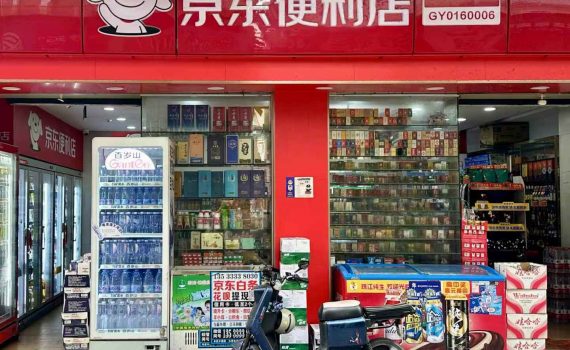
Chinese tech and service giant JD.com achieved revenue growth but it was offset by dramatic expenses, resulting in shareholders’ net income being chopped in half, as the Company released its third-quarter results on Thursday evening. Non-GAAP net income attributable to ordinary shareholders reduced by 56.1%, despite the company’s net revenue in Q3 reaching 299.1 billion yuan, up 14.9% year-on-year, with its core business, JD Retail, reporting 11.4% revenue growth to 250.6 billion yuan, as highlighted in the company’s statement. The operational loss of the company’s new business, including JD Food Delivery, JD Property, Jingxi, and overseas operations, widened dramatically more than 24 times from 615 million yuan to 15.7 billion yuan, mainly because of a 3.4 and 7.3 times increase in cost of revenue and operational expenses, respectively. Dual-listed in the US and Hong Kong, the company’s overall marketing expenses rose 110.5% year-on-year to 21.1 billion yuan this quarter. Kenny Wen, Executive Committee Member of the Hong Kong Society of Financial Analysts, said that the main reasons for the situation of increased revenue but decreased profit margin are the JD price subsidy policy and its large-scale investment in new businesses. As for the retail sector, Sandy Xu, Chief Executive Officer of JD.com, said that the electronics and home appliances category has been facing a high base since the second half of Q3, which is expected to continue in the short term, and it has been weighing on its growth momentum. Ian Shan, Chief Financial Officer of JD.com, said during the earnings conference call, in terms of investment in new businesses, JD will further enhance its supply, performance, and service, and bring greater growth potential through the expansion of product categories, customer groups, and regions. Under the code 9618 in the Hong Kong market, JD.com closed at HK$116.9 on Friday, dropping …

Zijin Gold price jumps nearly 70% on Hong Kong debut amid heated gold market
- 2025-09-30
- Business
- The Young Reporter
- By: ZHONG Xinyun、LIN XiaoyouEdited by: ZHAO Runtong、BO Chuxuan
- 2025-09-30
The international unit of a Chinese mining giant has raised almost HK$25 billion (US$3.22 billion), taking the crown as the second-largest Initial Public Offering in Hong Kong, and achieved a robust first-day performance on Tuesday amid a rising gold market. Priced at its IPO price of HK$71.59, Zijin Gold International(Zijin Gold), a subsidiary of Zijin Mining Group Co., Limited(Zijin Mining), saw a 68.5% jump to close at HK$120.6, after opening at HK$111.50 and reaching an intraday high of HK$123. Trading under code 02259, Zijin Gold sold 349 million shares globally during its IPO, with 90% of the shares allocated to international investors. The city’s investors received a 10% allocation of the total, resulting in a 240.7 times oversubscription, according to the firm’s allocation result announced on Monday. The Hang Seng Index added 0.87% to 26,855.56 as of market close. < img src="https://public.flourish.studio/visualisation/25390467/thumbnail" width="100%" alt="chart visualization" /> “In the Hong Kong capital market, pure-play-play gold mining mining listed companies are relatively scarce,” wrote Tang Yan, a risk director of Sunflower Investment, a Shanghai-based asset manager, in a written reply to the reporter. She added that what makes the company an attractive choice this scarcity for investors makes the company an attractive choice seeking gold exposure for investors seeking gold exposure. With a total of 29 cornerstone investors committing HK$12.47 billion (approximately US$1.6 billion), the company received solid support from prominent asset managers and investment giants, including GIC Private Limited, BlackRock, Schroders, UBS AM Singapore, Fidelity Hong Kong, and Millennium Management. The funds raised by the gold miner are primarily planned for the acquisition of the Raygorodok Gold Mine in Kazakhstan and the upgrade and construction of existing mines, accounting for aboutabout 33.4% and 50.1% respectively. Kenny Wen, Executive Committee Member of the Hong Kong Society of Financial Analysts, said that the …
Policy Address 2025: Pundits criticised industry mismatch despite the city’s Top Talent Scheme has contributed HK$34 billion to local economy
- 2025-09-17
- Society
- The Young Reporter
- By: FENG Zhenpeng、Li YinhengEdited by: LIU Yutong
- 2025-09-17
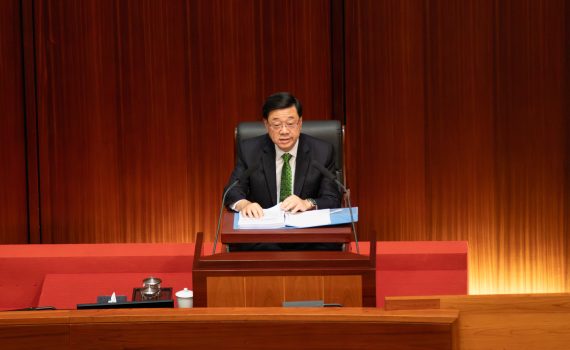
Chief executive John Lee Ka-chiu defended the controversial top talent scheme in his latest policy address but observers urged the government to address the talent mismatch by bringing in more high-tech elites. The Top Talent Pass Scheme generated around HK$34 billion a year for the local economy, accounting for approximately 1.2% of economic growth, said Chief Executive John Lee Ka-chiu, in the policy address on Wednesday. This is the first time the Hong Kong government has quantified the scheme’s economic contribution to the city in light of mounting criticism against the scheme being abused. Former chief executive Leung Chun-ying criticised last month that most applicants did not settle in Hong Kong, but returned to the mainland with their families after obtaining Hong Kong identity cards. When delivering the 2025 Policy Address, Lee said Hong Kong attracted over 230, 000 talents to work and live in the city under a number of new talent talent admission policies, including the TTPS. About 14,000 of TTPS applicants, or 54%, had their visas renewed. “Of them, 95% receive a monthly income higher than the local median income of about $20,000, and 50% earn a monthly income nearly double that amount. This reflects a strong demand for TTPS talents and the market's willingness to offer higher salaries to attract them,” Lee said most of the admitted talents to Hong Kong are relatively young, with 70% being under 40 years old, which helps to address the challenge of the aging population. However, observers did not see a picture-perfect reality. Lawmaker Wendy Hong Wen said Hong Kong lacks high-end tech talents but the TTPS is mainly bringing in talents from the finance sector. “To address the mismatch between the talent supply and industry demand, the government should adopt a demand-driven approach by enabling companies to directly search for …
Policy Address 2025: Hong Kong relaxes loan application period alleviating capital pressure for SMEs
- 2025-09-17
- Politics
- By: ZHONG Xinyun、LIN Xiaoyou、Yau Ka MingEdited by: ZHAO Runtong、BO Chuxuan
- 2025-09-17
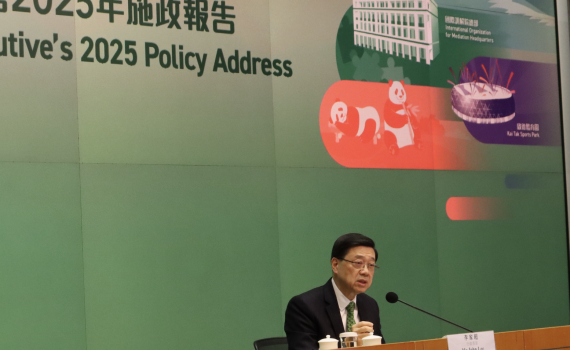
Hong Kong to reduce capital pressure for Small and Medium-sized Enterprises by extending principal payment as well as application for guarantee products, said John Lee Ka-chiu during his fourth Policy Address speech on Wednesday. Application period for principal moratorium arrangement and 80% of Guarantee Products under the SMEs Financing Guarantee Scheme will be extended for one year and two years, respectively, said Lee. “The biggest problem SMEs face is that they have no way to borrow money,” said Cheung Ki-ling, Associate Professor in the Department of Information Systems, Business Statistics & Operations Management at Hong Kong University of Science and Technology. He explained that the decrease in customers and consumption has led to a decrease in income, so they have less to pledge as collateral, making it difficult for banks to lend them money. “(These policies) give companies more opportunities to obtain government-guaranteed loans,” wrote Tam Yiu-chuen Sam, Steering Chairman of the Hong Kong Federation of Commerce for Small and Medium Enterprises, in a written response. He explained that the measures allow SMEs longer timeframes to apply for funding while easing their capital pressure. Previously, the government’s policy had postponed the application for principal moratorium for up to 12 months in November 2024. As of March 2025, the number of small and medium-sized enterprises was 356,128, according to the government website. However, Cheng Chung-pong, chairman of the Hong Kong Small and Medium Enterprises Association, called for more measures to support local SMEs. "The support for our small and medium-sized enterprises is not that great," said Cheng. "On the contrary, I have seen a lot of mention in the policy on how to help mainland businesses." “I think the government and banks still need to review which industries truly need priority support, to prevent the number of bankruptcies from increasing,” said …

2025 Japan World Expo: Kawaii culture fuels consumer spending
- 2025-06-07
- Business
- By: XIA Fan、ZHAO Runtong、WANG RuoshuiEdited by: WANG Ruoshui、ZHAO Runtong、XIA Fan
- 2025-06-07
The Osaka Expo 2025 kicked off on April 13 under the theme 'Designing Future Society for Our Lives,' featuring Myaku-Myaku, a multi-eyed, red-and-blue blob as its official mascot along with other global partners’ mascots reflecting their home countries’ culture, highlighting Japan's renowned and thriving ACG (anime, comics, and games) industry. Japan’s unique animation-producing environment catalyses “Kawaii Culture” (かわいい文化), which emphasizes appealing characters. The "performativity of cute," as anthropologist Christine Yano describes it, is deeply embedded in contemporary Japanese culture. In her book Pink Globalization: Hello Kitty’s Trek Across the Pacific, Yano explains that kawaii culture serves multiple roles: it’s a playful, personal mode of self-expression and identity, while also functioning as a potent tool for branding and cultural diplomacy. While Japan has this unique cultural phenomenon, many countries around the globe also have their mascot traditions, leading them to bring their mascots to the party. Outstanding examples ranged from the host country, Japan, to European countries such as Italy and Germany, as well as Asia, including China. Designed by children’s book author Kohei Yamashita through the government’s open call to the Japanese public, Japan’s mascot’s name—an onomatopoeia evoking a pulse — was also chosen from public submissions. Described as "creepy but cute", MYAKU-MYAKU has already sparked significant economic activity through popular merchandise and has greatly enhanced the exhibition's global visibility. At the spot, people lined up for hours to get official plush toys or related items. Visitors poured in to take group photos with the mascot. Elements of Myaku-Myaku can be seen around the exhibition, being part of the whole event. Sato Ryoko rushed to the satellite store of MARUZEN JUNKUDO right after her visit to the Japan Pavilion, spent over one hour waiting in line to get in, and won the first prize of a giant MYAKU-MYAKU plush toy …
South Korea Presidential Election 2025: Korean stocks surge more than 2% after the country’s new president announced
- 2025-06-04
- Business
- The Young Reporter
- By: BO Chuxuan、Wang YunqiEdited by: BO Chuxuan
- 2025-06-04
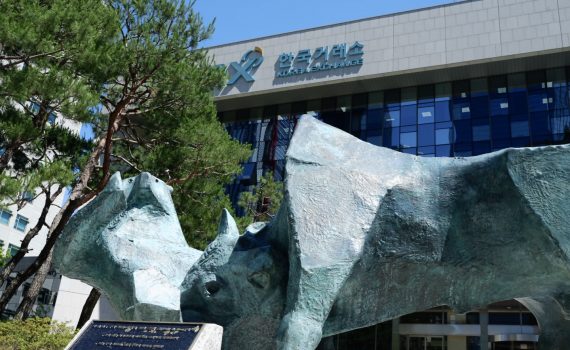
SEOUL –South Korea’s benchmark index surged 2.7% to 2770.84 at close on Wednesday (as of 3:30 p.m. local time) after Lee Jaemyung brought the presidential election to an end with his widely-expected victory at midnight. The Korea Stock Exchange KOSPI Index opened with a rise of 1.4% after a one-day recess due to the election holiday on June 3, reaching a closing high of 2770.84 – the highest level in over 10 months. The index has gained 20.8% since April lows triggered by concerns over Trump’s reciprocal tariff policies. Financial stocks saw significant gains today, with Bookook Securities surging more than 22% while Mirae Asset Securities, SKSquares, and Shinyoung Securities rose about 13%, charging the KOSPI higher. During his campaign, Lee Jae-myung proposed a series of financial policies, such as customised financial services for the underprivileged and debt relief for small business owners. Tech stocks are also leading gains among other component stocks. Chip and appliance maker Samsung Electronics gained 1.8% to 57,800 KRW, with the semiconductor manufacturer SK Hynix surged 4.8%, and aero engine-savvy Hanwha Aerospace gained 1.2%. Lee claimed his presidency and delivered a speech in front of the National Assembly, prioritising the revision of the economy and livelihood to alleviate economic hardship as his second priority in his incoming administration, following the restoration of democracy. “From the moment my victory is confirmed, I will devote every effort to recovering your livelihoods—quickly and decisively,” he said. Lee has also promised to boost the economy by increasing government spending, improving corporate governance, strengthening labour protection, and wrapping up the ongoing tariff talks and exchange rate negotiations with the Donald Trump administration, which may contribute to stabilising market sentiment. The South Korean won strengthened against major currencies on Wednesday, trading at around 1,363 per dollar and 946 per 100 yen as …
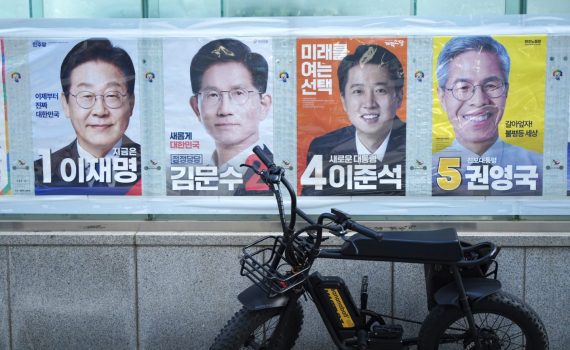
South Korea Presidential Election 2025: Young voters see the economy as one of their major concerns amid economic downturn
- 2025-06-02
- Politics
- By: BO ChuxuanEdited by: BO Chuxuan
- 2025-06-02
Young voters in Seoul consider the economy one of the major concerns heading into the South Korean 21st presidential election, which takes place on June 3, as South Korea’s central bank cut the basic interest rate by 25 basis points days before to counter the current economic downturn. “The current (economic) situation is really bad, everything is becoming more and more expensive,” said Victoria Kim, a psychology student at Yonsei University, who gave up travelling abroad but visited cities inside South Korea instead because of the depreciation of the South Korean won. South Korea's won weakened sharply after ex-president Yoon Suk Yeol declared emergency martial law, causing a democratic crisis in the country on Dec. 3, 2024, and hit a record low in nearly 16 years after Trump’s declaration of a 25 percent tariff against Korea-manufactured goods in April. While the South Korean benchmark stock index, KOSPI, moved higher and broke a 10-month record high at 2,720.64 on May 29, boosted by tech shares, which strengthened the won against the USD, this was mainly triggered by the US trade court’s blockade of Trump’s global tariffs. For Kim, the economic uncertainty extends beyond travel decisions to her everyday expenses. “I like to be a vegetarian and eat lots of veg and fruit at home, and with the recent price rises it’s a burden to buy and eat,” said Kim, working part-time in Seoul apart form college right now. Being eager to enjoy cultural life, Kim must continue working to save money, which makes her feel frustrated and negatively impacts her mental well-being. Jerry (assumed name), a student in the Korea University department of Humanities, sees social welfare for low-income groups as the key issue in his vote, and is looking for substantial and implementable funding policies to support the research and …
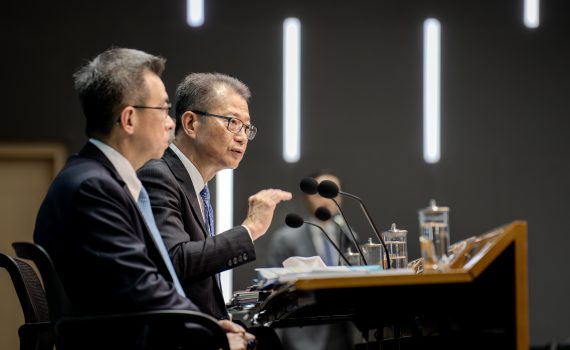
Budget 2025: Hong Kong to issue third tranche of tokenised bonds and boost digital bonds market
- 2025-02-26
- Business
- By: Haoming Zhou、WANG RuoshuiEdited by: BO Chuxuan
- 2025-02-26
Hong Kong will continue to encourage the issuance of digital bonds through the Digital Bond Grant Scheme and prepare the third tranche of tokenised bond issuance, said Paul Chan, the financial secretary, at his 2025 Budget Speech on Wednesday. The government will explore measures to enhance the wider adoption of bond tokenisation and tokenising traditional bonds, said Chan. “Any movement conducive to the promotion of digital bonds is a good thing,” said Simon Lee, a member of the Legislative Council of Hong Kong, “there has to be enough diversified products to activate the market, so that Hong Kong's position in the financial market can be consolidated.” HKMA has issued two batches of tokenised green bonds, HK$ 800 million in February of 2023 and around HK$ 6 billion in February of 2024, enabling tokenisation to move beyond the proof-of-concept stage to the practical application level. Tokenised bonds, issued and traded with blockchain technology, are a type of digital bond, which globally has reached an issuance value of US$3.9 billion (HK$ 30 billion) by the end of March 2023, according to the Hong Kong Monetary Authority. To encourage more institutions to participate in the issuance of digital bonds, the Digital Bond Grant Scheme (DBGS), a three-years grant scheme of up to HK$2.5 million to cover the eligible digital bond issuance costs, was announced in November last year, after first introduced on Oct. 16, 2024, in the 2024 Policy Address. The echo comes in quick succession as Singapore launched Global-Asia Digital Bond Grant Scheme (G-ADBGS), a five-year digital-bonds-supporting scheme, to promote the issuance of digital bonds in January 2025. “I would consider tokenised bonds as a very good way to invest,” said Chen Shiyi, a virtual asset investor from mainland China who works at Pleasanton Ventures Limited, …
Hong Kong officials' pay freeze as government addresses fiscal deficit
- 2025-02-26
- Business
- By: ZHAO Runtong、Yichun FangEdited by: XIA Fan
- 2025-02-26
The Hong Kong government plans to freeze salaries of all executive, legislative, judicial and district council staff in fiscal year 2025-26, said Financial Secretary Paul Chan Mo-po in the budget speech today. “This(salary freeze) includes the chief executive and politically appointed officials; the non-official members of the executive council; members of the civil service; the president, all members, and secretariat of the Legislative Council; chief justice of the Court of Final Appeal, judges of the courts at all levels; and other members of the judiciary; and members of the District Councils,” said Chan. The Financial Secretary further announced that the civil service establishment will be cut by 2% each fiscal year from 2026-27 to 2027-28, a total of about 10,000 positions. "The government took the improvement of economic conditions and room for private market salary increase into consideration,” said Chan in the press conference, “freezing civil servants’ salaries is more appropriate than cutting them.” Reported as HK$87.2 billion for the fiscal year 2024-25, the expected consolidated budget deficit nearly doubles the government's initial forecast. On the other hand, Hong Kong hired approximately 173,000 civil servants to serve about 7 million population, while in comparison, Singapore employed about 86,000 workforces for around 5 million residents. “It (a pay freeze) is a sign of commitment to reduce expenditure,” said Linda Li Che-lan, Associate Head of Public and International Affairs at the City University of Hong Kong. “But we cannot rely on a pay freeze for civil servants to effectively cover the deficit.” Leung Chau-ting, the chairman of Hong Kong Federation of Civil Service Unions, worries that a pay freeze for public servants would cause a chain-reaction. “The decision can trigger large-scale wage freezes across industries following the authorities’ move, causing harm to the benefits for other non-government employees,” said Leung. The salary …