
Economy
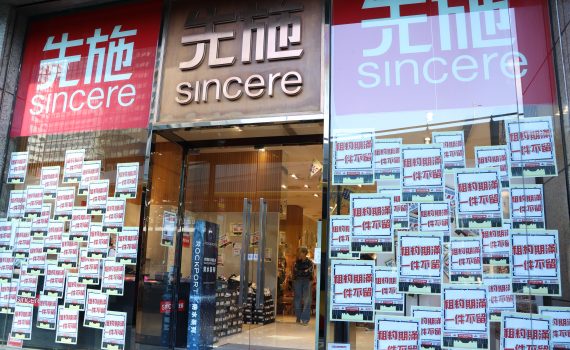
126-year-old Sincere to close Central store after lease renewal fails
- 2026-10-08
- Society
- By: SHI Puxuan Amy、MA Yifan ChloeEdited by: Fu Rong
- 2026-10-08
Hong Kong’s first Chinese-owned department store, Sincere, will close its Central store in early December after nearly 126 years of business, as it failed to renew its lease. The company is searching for new premises in Sheung Wan or Central for a new store, yet no suitable location has been found by Oct. 4, according to an official announcement by Sincere. Only a four-storey store in Mong Kok and an online store will be left in Hong Kong after the Central store closure. Lily Chan, 74, a customer who lives in Hong Kong Island, lamented the closure of Sincere’s Central store since it had been her top shopping destination for more than 50 years. “I started shopping in Sincere when I was only 20 years old,” she said. “Back then, few Hong Kong department stores like Sincere carried such a wide range of European brands, covering apparel, kitchenware, and furniture.” “I am unsure where I can go shopping after the store shuts down. The Mong Kok one is far from my home,” Chan added. Anny Lau, 42, said her family spanning from her parents down to her children had shopped here. “It carries memories for several generations since it is more than a century old,” she added. Ahead of the closure, the Central store is selling its remaining stock at discounted prices. A cleaner who has worked at the store for a year said customer numbers had been generally low, and only surged these days amid the sale. She declined to be named for fear of repercussions from the company. Sincere’s consolidated revenue dropped from around HK$146 million in 2023 to roughly HK$134 million in 2025, according to Sincere’s annual report. Heidi Cheung, 25, said she seldom shops at traditional department stores such as Sincere, as online shopping is more …
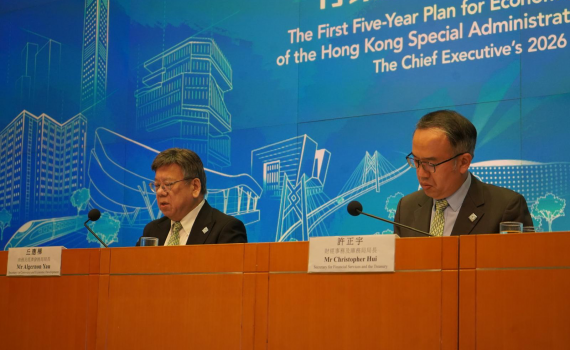
Hong Kong plans gold clearing system to strengthen role as trading hub
- 2026-09-19
- Business
- By: LIU Yingxi 劉穎熙、TANG Choi Luen 鄧載鑾、CHAN Cheuk Kiu 陳芍僑Edited by: TANG Siqi、Zhou Xinying、Wang Yunqi
- 2026-09-19
AI summary *Hong Kong plans to launch a central gold clearing and settlement system in the first quarter of 2027. *The Hong Kong Monetary Authority is also considering increasing the Exchange Fund’s gold holdings. *An independent commentator suggested limiting the combined allocation to gold, silver, hedge funds and bitcoin to 10% to 20% of a portfolio. Hong Kong plans to launch a central clearing and settlement system for gold in the first quarter of 2027 as part of efforts to build a modern, full-chain gold trading ecosystem, the government said at a press conference on Friday. The initiative was outlined in the city’s first five-year plan for economic and social development for 2026 to 2030 and the 2026 Policy Address. Christopher Hui Ching-yu, Secretary for Financial Services and the Treasury, said gold and commodities are among the new engines for Hong Kong's future market development. Hui said the precious metal clearing system had operated smoothly during its pilot phase. “In terms of the quantum of gold that's been deposited through the system, I would say it has also been material.” Hui added, “The material quantum of the gold being deposited through the system is also a good sign that our overall plan to build Hong Kong into the international gold market has been well‑recognized.” As of Sep. 17, the SPDR Gold Trust (02840) had a fund size of US$147.47 billion. In comparison, the Hang Seng Gold ETF (03170) had assets under management of US$220.77 million. Retail investors in Hong Kong are generally more concerned about investment choices, potential returns, and risks than the operation of clearing and settlement systems, said Kenny Wen, an independent stock commentator. Wen said gold could play a role in investment portfolios. He suggested limiting the combined allocation to investments such as gold, silver, hedge funds …
Policy Address 2026: Data visuals put Hong Kong’s new growth measures in context
- 2026-09-19
- Business
- By: Zhang Xuan、LIU Yingxi 劉穎熙、TANG Choi Luen 鄧載鑾Edited by: TANG Siqi、CHEN Yongru、Wang Yunqi
- 2026-09-19
AI summary: New listing measures target overseas and technology companies. Tourism initiatives aim to extend visitor stays and increase spending. IPO and family-office policies aim to attract global capital. Hong Kong Chief Executive John Lee Ka-chiu delivered the 2026 Policy Address on Wednesday alongside the city’s first Five-Year Plan, outlining various measures to strengthen the city's status as an international financial centre, boost tourism, and attract international capital and family offices. The following charts provide context on Hong Kong’s fiscal position, tourism development, family-office policies and IPO market. Fiscal position provides the policy backdrop The Five-Year Plan says the Budget will provide resources for implementing the Policy Address and the plan while safeguarding the government’s financial sustainability. Flourish chart Sources:Financial Services and the Treasury Bureau Hong Kong’s fiscal deficit before bond issuance and repayments is projected to fall to HK$78.2 billion in 2026–27 from HK$188.3 billion in 2022–23. Tourism measures seek longer stays and higher spending Flourish chart Sources:partnerNet Flourish chart Sources:PartnerNet The 2026 Policy Address seeks to increase visitor spending and length of stay through “+ Tourism” initiatives. The Hong Kong Tourism Board will promote multi-destination itineraries with airlines and connect event organisers with retailers, restaurants and tourism-related organisations to provide ticket-stub offers. The government estimates that total tourism consumption related to inbound tourism will reach HK$238.1 billion in 2026, up about 9.5% year on year. According to The First Five-Year Plan for Economic and Social Development of the Hong Kong Special Administrative Region, by 2030, the proportion of non-Mainland visitors among overnight visitors is targeted to reach 40%. Family-office measures The 2026 Policy Address says the government will step up promotion following the passage of legislation enhancing preferential tax regimes for funds, single-family offices and carried interest. Flourish chart The target to assist no fewer …
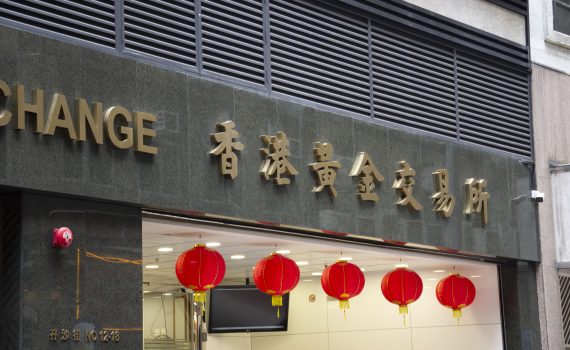
Budget 2026: Hong Kong reinforces its roles as international gold trading centre
- 2026-02-25
- Business
- The Young Reporter
- By: ZHANG Jiahe Roys、LI Jinyang CarlosEdited by: CHEN Ziyu
- 2026-02-25
Financial Secretary Paul Chan Mo-po announced that the government will establish Hong Kong as an international gold trading centre, providing relevant services including tax incentives, setting up industry associations and training for eligible gold trading institutions. Hong Kong plans to lift its gold storage capacity to over 2,000 tonnes within three years, according to Chan Ho-lim, the Under Secretary for Financial Services and the Treasury at the Hong Kong Gold Exchange 2026 opening ceremony. At the Asian Financial Forum on Jan.26., Hong Kong Financial Services and the Treasury Bureau signed a co‑operation agreement with the Shanghai Gold Exchange, establishing Hong Kong Precious Metals Central Settlement System Company Limited to create a gold settlement system. More than 10 banks, both local and overseas, will participate in the system to commence within the year. Hui Ching-yu, Secretary for Financial Services and the Treasury Bureau, said at the forum that gold is important under current geopolitical uncertainty and inflationary pressures. Lau Hou, 42, project manager of CNI Securities Group, said the key to increasing gold reserve capacity is whether Hong Kong could be a stronger physical hub in the Asia-pacific zone capable of storage, allocation, delivery and financing. “Hong Kong’s advantages lie in connecting the mainland with the international market, Asia-pacific time zone delivery, offshore RMB products and funding pools,” he said. “Through complementary cooperation with existing major international gold markets, participants can view Hong Kong as a key point in the global chain. This will increase the feasibility and attractivity of RMB-denominated gold productions, making market makers and institutions prefer to offer more products,” Lau added. Chan Wah, 25, local investor and lawyer, said he holds a wait-and-see attitude regarding the gold policy in today’s budget. “ I hope the government can prioritize training on market regulation and risk management, such as …
Hong Kong to issue first stablecoin licenses next month, CE says
- 2026-02-13
- Business
- The Young Reporter
- By: TANG Siqi、Zhou XinyingEdited by: Wang Yunqi、ZHOU Yun
- 2026-02-13
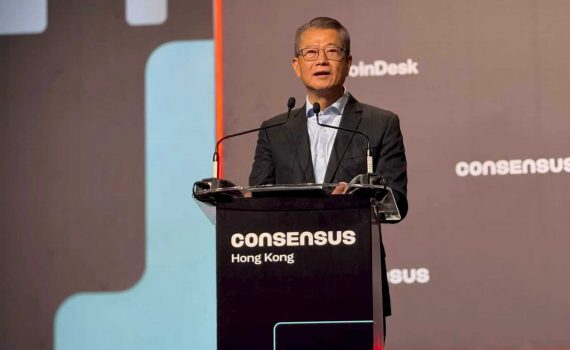
CoinDesk held Consensus 2026 on digital finance and emerging technologies from Tuesday to Thursday, with the acceleration of stablecoin license issuance becoming a highlight. “The Hong Kong Monetary Authority (HKMA) is actively processing licensing applications,” Chief Executive John Lee Ka-chiu said at the conference’s opening ceremony. “We believe the first batch of stablecoin issuer licenses will be issued within the next month.” Financial Secretary Paul Chan Mo-po said at the conference that stablecoins are helpful in easing funding pressure on the real economy, especially in payment and settlement. Hong Kong’s Stablecoins Ordinance, which took effect on August 1, 2025, establishes a licensing regime for issuers of fiat-referenced stablecoins in Hong Kong, placing the issuance and related activities of stablecoins under the formal regulatory oversight of the HKMA. In terms of the licensing criteria, Chan stressed that “we ensure that licensees have real-world use cases, a credible and sustainable business model, as well as strong regulatory compliance capabilities”. Chan also added that a small first batch of licenses will be issued in March, and more will follow subsequently. Sion Xiang, community manager at the decentralized finance protocol Phoenix, said that issuing stablecoin licences could boost the internationalisation of the domestic currency and strengthen its resilience against external shocks. However, Xiang pointed out potential risks that if banks or financial institutions use stablecoins as collateral, it could trigger a chain reaction of reserve imbalances across the financial system. In addition, he also mentioned that stablecoins may face the risk of de-pegging due to insufficient reserve assets. To address this threat, he emphasized the need for sufficient reserve assets, potentially through blockchain-based verification. Looking ahead, Hong Kong’s digital asset regulatory rollout will forge ahead, as Paul Chan stated that the government is also finalizing the details of new licensing regimes for digital asset …

Chinese Gen Z shifts focus to lesser-known European destinations amid social media trend
- 2026-01-23
- Business
- By: XIA Fan、WANG RuoshuiEdited by: BO Chuxuan
- 2026-01-23
Big city lights? Too mainstream. Young Chinese travellers now prefer to crave the road less travelled. Chinese Gen Z travellers are ditching crowded classics for off-the-beaten-path destinations in Europe. The hunt is on for niche places that promise more profound, more authentic local experiences, turning once-mainstream spots into personalised immersions. Gen Z travellers, generally defined as those born from the mid-to-late 1990s to the early 2010s, favour cultural deep dives over cash-splashing consumption. They seek stories and experiences that resonate long after the trip ends. Wang Yang, 28, came to the Netherlands to visit the Van Gogh Museum on October 1 after learning on social media that the museum faced the risk of closure due to budget constraints. His reservation wouldn't load on his phone at first, but a tip from Rednote, a popular Chinese social media, helped him purchase a ticket at the entrance. “Enjoy your visits!” chirped the staff as Wang secured his ticket, sharing a warm grin with the ticket inspector—a moment that felt like a heartfelt welcome to this 28-year-old adventurer. His 22-day European odyssey, blending annual leave with the National Day Golden Week, cost him roughly 50,000 RMB—about a quarter of his yearly income. Departing from Xi’an, China, Wang and his friends didn’t book any travel agent’s service or pay for a local guide; instead, they followed tips and routines shared on social media platforms as a way to craft their personalised journey. “Europe’s cities pulse with a deeper cultural and historical soul than most places,” Wang explained. “That’s why I came back.” Ditching the well-trodden Barcelona-Paris-Rome circuit, Wang and his friends ventured to Europe’s hidden gems—the Czech Republic, Greece, Portugal, and the Netherlands—while revisiting Spain, a nostalgic nod to a trip six years prior. “Golden Week outbound demand in China is breaking records. We …