
Lifestyle

Can Hong Kong make room for everyday cyclists?
- 2026-11-07
- Society
- The Young Reporter
- By: Yutong Su、Pann Hnin Nay ChiEdited by: QIN Ziyang
- 2026-11-07
For Martin Turner, the chairman of the Hong Kong Cycling Alliance, a trip to the bakery, a visit to a friend, and a stop to pay a bill can all fit into one bicycle journey. “When you’re on a bike, you’re part of the world,” said Turner, who cycles around Hong Kong nearly every day. “You’re out there, you’re in it, you can do all those things, and it’s enjoyable, healthy, and fun,” he added. Turner sees cycling as a practical way to navigate the city, not simply a recreational activity. But Turner’s experience is not the norm. In Hong Kong’s dense urban districts, fragmented cycle paths, steep slopes and roads shared with motor vehicles make everyday cycling difficult for many residents. That leaves dense areas, especially Hong Kong Island and Kowloon – areas with high population density and many short journeys – dependent on disconnected paths and roads shared with cars. For residents making short trips within these districts, cycling often remains an impractical option. “The city’s cycling infrastructure has largely been designed for recreation rather than commuting,” said Wang Donggen, Chair Professor and Head of the Department of Geography at Hong Kong Baptist University. Wang added that climatic conditions, which are usually hot and rainy, land limitations, and residents’ habits also hinder daily cycling commutes in Hong Kong. “For many people in Hong Kong, bicycles have mainly been leisure or sports equipment, not a means of daily transport,” Wang said. Government data support that point. According to the Transport Department’s Travel Characteristics Survey 2022 Final Report, 70% of cycling-only trips and 73% of cycling legs connected to other transport modes took place within the same district. The survey also found that 86% of cycling-only trips lasted 30 minutes or less. Yet most new cycle tracks are planned outside …

At Canada’s La Ronde, Forgotten Teddies turn childhood comfort into Halloween terror
- 2026-11-02
- Culture & Leisure
- By: RONG Miu Tung ShellyEdited by: Lan Xinbei
- 2026-11-02
Montreal, Canada - La Ronde has opened Les Oursons oubliés, a new Halloween scare zone that turns teddy bears into bloodied, twisted figures, drawing long queues and leaving some visitors unable to look at their own plush toys in the same way. The zone is part of La Ronde’s Fright Fest, which runs on selected dates from Oct. 3 to Nov.1. Set in a decaying carnival, the zone transforms once-cute stuffed animals into terrifying existence in the abandoned fairground. Dim lighting, fog, and carefully designed sets turn childhood comfort objects into figures that make visitors terrifying. Marily Tremblay, 18, walked out of La Ronde’s newest scare zone laughing, but admitted the twisted teddy bears had gotten under her skin. “This is gonna destroy my childhood,” Tremblay said, adding that she has slept with a teddy bear she received for her birthday for 10 years. For many visitors, the concept is both clever and entertaining. Tremblay and her friend Régis Banville, also 18, visited the zone together. Tremblay said the jump scares affected her more than she expected, causing her to react strongly. Banville said he was not easily frightened, but that Tremblay’s reaction made him scared. Both of them said the experience was relatively short and smooth compared with some of the tighter areas in the park, and said they would recommend it to friends as “unexpected” but manageable. Zineb, 16, said it was her first time experiencing a haunted attraction at La Ronde. “It’s not too scary, but I like it,” she said. She described the space as “beautiful” in its own strange way and said she would encourage friends to try it, as the mix of mild fear and visual interest left a positive impression on her. Amir, 26, dressed in a Batman costume, found the plush figures …
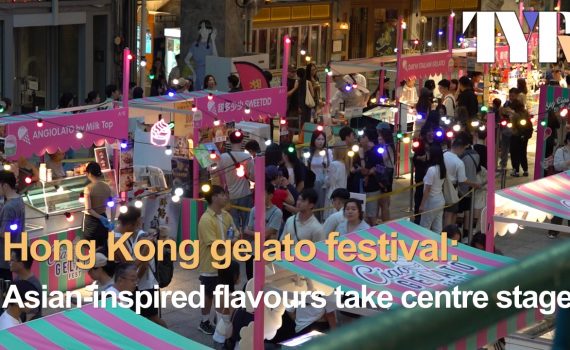
Asian-inspired flavours take centre stage at HK gelato festival
- 2026-10-08
- Society
- By: Baguio AnneEdited by: Fu Rong
- 2026-10-08
https://youtu.be/JclqSdmYdas?si=Aj4NY2NJcgZ9LKZ_ Reported by Linnea Hedman, Anne Baguio Edited by Audrey FU Rong Video description: Hong Kong’s largest gelato festival, Ciao! Gelato Fest 2026, has returned to PMQ in Central, bringing together 20 gelato brands from Hong Kong, Italy, Macau and Portugal. The festival features more than 30 limited-edition and debut flavours, including Asian-inspired creations such as Hong Kong French toast, pineapple bun and mochi. The event attracted long queues and a diverse crowd during the National Day Golden Week, with visitors from Hong Kong, mainland China, and more. According to PMQ, daily visitor traffic increased by 12 % compared with last year, averaging 12,000 visitors a day. With free admission, Ciao! Gelato Fest takes place at PMQ from Oct. 1 to 4 and Oct. 9 to 11.

126-year-old Sincere to close Central store after lease renewal fails
- 2026-10-08
- Society
- By: SHI Puxuan Amy、MA Yifan ChloeEdited by: Fu Rong
- 2026-10-08
Hong Kong’s first Chinese-owned department store, Sincere, will close its Central store in early December after nearly 126 years of business, as it failed to renew its lease. The company is searching for new premises in Sheung Wan or Central for a new store, yet no suitable location has been found by Oct. 4, according to an official announcement by Sincere. Only a four-storey store in Mong Kok and an online store will be left in Hong Kong after the Central store closure. Lily Chan, 74, a customer who lives in Hong Kong Island, lamented the closure of Sincere’s Central store since it had been her top shopping destination for more than 50 years. “I started shopping in Sincere when I was only 20 years old,” she said. “Back then, few Hong Kong department stores like Sincere carried such a wide range of European brands, covering apparel, kitchenware, and furniture.” “I am unsure where I can go shopping after the store shuts down. The Mong Kok one is far from my home,” Chan added. Anny Lau, 42, said her family spanning from her parents down to her children had shopped here. “It carries memories for several generations since it is more than a century old,” she added. Ahead of the closure, the Central store is selling its remaining stock at discounted prices. A cleaner who has worked at the store for a year said customer numbers had been generally low, and only surged these days amid the sale. She declined to be named for fear of repercussions from the company. Sincere’s consolidated revenue dropped from around HK$146 million in 2023 to roughly HK$134 million in 2025, according to Sincere’s annual report. Heidi Cheung, 25, said she seldom shops at traditional department stores such as Sincere, as online shopping is more …

Aberdeen Fire Dragon Festival returns with new elements
- 2026-09-28
- Culture & Leisure
- By: ZHENG WU Anny、XIE Xinni CindyEdited by: Lan Xinbei
- 2026-09-28
The Aberdeen Mid-Autumn Fire Dragon Festival was held at Aberdeen Centre and Wah Fu Estate on Sept. 25. The parade involved 13 troupes and nearly 600 participants. For the first time, a roller-skating dragon dance was performed by the WeSkate team, a local roller-skating organisation. Follow the link below to watch the full reel: https://youtube.com/shorts/UMZCHnG_dLU?si=hBsAeyfSFg4v-FI6
HKwalls 2026 innovates moving street art
- 2026-03-30
- Society
- The Young Reporter
- By: MA Yifan Chloe、SHI Puxuan AmyEdited by: Chun Lim LEUNG
- 2026-03-30
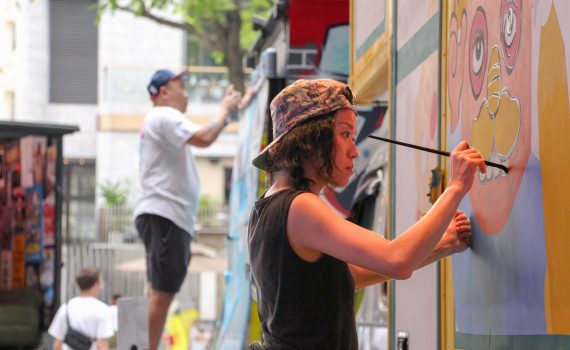
HKwalls Street Art Festival debuted its 11th edition from March 21 to 29 at the former Police Married Quarters in Central, turning Central and Western District into an open studio for street art. More than 20 local and international artists from 14 countries took part in workshops, art tours and traditional wall paintings, with the festival proposing a moving street art exhibition that allows artists to paint on trucks and let them roam across the city. Jason Dembski, co-founder of the HKwalls, said he had tried multiple channels to cooperate with truck owners willing to have their track be graffitied, including approaching individual truck owners on the street and contacting companies. “All the truck owners will keep the artwork for around three months,” he said. “Especially the drivers who are independent owners, they all seem very happy about the artwork and want to keep it for a long time.”. He added the project was an opportunity to integrate street art into more parts of Hong Kong. Ten artists jointly completed the graffiti or hand-painted designs for six trucks, which will later be used for regular cargo transportation. Taiwanese graffiti artist Leho, 30, said it was rare to have a chance to complete such a full-scale work on a truck. “It was usually identified as illegal graffiti in Hong Kong to paint on a vehicle," he said. Mooncasket, a 35-year-old local illustrator, painted on a truck for the first time. “I feel like the works that are created on small canvases might only sit inside a gallery or at home, while the audience could interact with my artworks and get more attention when there was a truck painting,” she said. Lindsey McAlister, 65, an artist who has attended the festival as a visitor for years, said she was looking forward to …
More than a toy: how plush “babies” fill an emotional void for Gen Z
- 2025-12-10
- Culture & Leisure
- By: Ye Enyi、ZHENG XinyiEdited by: LIU Yutong
- 2025-12-10
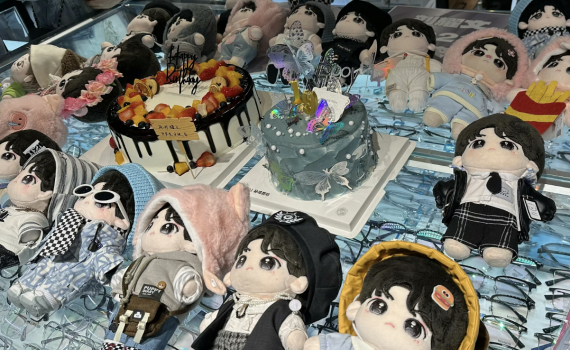
Yin Yunjie, a 24-year-old financial accountant, not only owns plush toys, but also raised them. She talked to it, celebrated its birthday with a cake and worried about it like a parent. Her “baby” is a cotton doll modeled after her idol, Liu Yaowen from the leading popular boy group in mainland China, Teens in Times, also known as TNT. “When I leave for work, I say goodbye. When I come home, I hug him first,” she said. “If I don’t come back at night, I’m afraid he’ll be scared sleeping alone and feel lonely.” “It truly became an indispensable part of my life,” she added. Yin represents a growing Gen Z trend of "cyber parenting," where plush toys like Labubu, Chiikawa, and Jellycat are raised as emotional companions rather than mere collectibles or decorations. This shift is emerging alongside the rapidly expanding plush toy market, which is projected to grow at a compound annual growth rate of 8.1% from 2025 to 2032, led by the Asia-Pacific region at 9.6%, according to Persistence Market Research. In addition, Gen Z builds identities and communities around their plush “babies”. These toys provide comfort and a sense of stable connection, filling a gap left by fragmented real-world relationships, according to Wong Ho-chun, 29, assistant professor of sociology and social policy department at Lingnan University. While millennials and Gen X might cherish stuffed animals for comfort or decoration, Gen Z engages in “cyber parenting,” said Wong. “The contemporary world is fragmented and high-pressure, demanding constant multitasking and production,” Wong said. “But dolls are always there to be with them and ‘listen’ to their thoughts as the outside world changes quickly.” “In this context, plush toys fill a void, serving as both an emotional comfort and a compensation for diminished social interaction,” Wong added. Yin …

Cultural currency: The economic power of “Goods” in Hong Kong's youth market
- 2025-03-02
- Culture & Leisure
- By: Yichun Fang、WANG RuoshuiEdited by: XIA Fan、BO Chuxuan
- 2025-03-02
Eager to buy a limited edition “goods” of Chiikawa, a Japanese anime character, Connie Fung was contacting a Japanese buyer on social media platforms to negotiate price and delivery details. "These characters aren’t just toys," Fung said, her eyes lighting up. "When I secure a rare piece by buying an edition, it's like winning a cultural badge of honour." Fung, a university student, spends around HK$5,000 a year on collecting Chiikawa-related items. Like Fung, Ada Liu is also a fan of Chiikawa, who hangs the figure on her bag, noting that many fans do this as a form of identity. “We can start a conversation easily while shopping in a goods store, as ‘goods’ helped us identify each other–You are also a fan of a certain series,” said Liu. In the context of Anime, Comics, and Games (ACG) culture, “goods” refer to merchandise derived from Intellectual Properties, including items such as badges, dolls, figures, cards, etc. These IP-related items are adored by ACG fans as cultural currency to show their identity and devotion to virtual characters. The passion for collecting goods has heated the wave of “goods economy,” signalling a new consumption trend that “pays for emotional value.” The popularity of the “goods economy” has even caught the attention of Financial Secretary Paul Chan Mo-po, who addressed it in his weekly blog entry. He noted that the rapidly emerging “goods economy” has successfully attracted young people's attention and tapped into their enormous spending power, estimated to be in the hundreds of billions of dollars. “Goods economy” is not only visible on the streets of Hong Kong, but has also entered the city’s capital market. For example, Pop Mart, a Chinese toy company that leads in merchandising Intellectual Properties and was listed in HKEX five years ago, performed exceptionally well in …

Budget 2025: Hong Kong Tourism Board to receive funds to boost local art and culture development
- 2025-02-26
- Society
- The Young Reporter
- By: CHAN Hiu Ying、LAU Ka YanEdited by: CHEN Yik Nam、LI Sin Tung
- 2025-02-26
The government will inject HK$1.235 billion into the Hong Kong Tourism Board to promote a series of distinctive tourism products, Financial Secretary Paul Chan Mo-po announced in the budget speech on Wednesday. The Board signed a three-year partnership agreement with international art fair Art Basel to establish immersive experience zones of Hong Kong culture at all four of their shows around the world, strengthening Hong Kong's connection with the global art scene, said Chan. Hundreds of thousands attended Art Basel last year in Europe, the US and Hong Kong. “Art Basel will attract foreign tourists or celebrities, which will bring economic benefit to Hong Kong,” said Kwok Wai-keung, 46, a member of the Legislative Council and Hong Kong Federation of Trade Unions. “I am pretty surprised that the Hong Kong government would put so much support for cultural activities, such as holding Art Basel and developing different types of tourism,” said Carmen Chan, 33, a Canadian tourist. “But I am glad because these activities can help us get to know Hong Kong better, especially to allow my daughter to be exposed to a more diverse culture,” Carmen Chan said. Kwok said that Hong Kong needs to improve technology for tourists. “Hong Kong does not have a special app to facilitate tourists and locals to search for related tourism, such as ‘dianping.com’ [a public review app] from the mainland,” Kwok said. “So Hong Kong needs to work harder to create a platform for visitors to see comprehensive feedback from attractions and restaurants.” “The distinctive tourism projects that the government aims to promote in 2025, including panda, horse-racing and eco‑tourism, must incorporate local cultures that are difficult for other regions to replicate, in order to attract more tourists effectively,” Kwok said. Some have criticised the West Kowloon Cultural District, which is designed …

11 trail runners finish 2025 Hong Kong Four Trails with new rules
- 2025-02-03
- Photo Essay
- The Young Reporter
- By: LEUNG Chi NgaiEdited by: Chun Lim LEUNG
- 2025-02-03
15 trail runners from Asia gathered from Jan. 29 to Jan. 31 to participate in the annual Hong Kong Four Trails Ultra Challenge (HK4TUC), along the MacLehose Trail, Wilson Trail, Hong Kong Trail and Lantau Trail. Runners who finish the 298 kilometers trail within 60 hours and 72 hours are classified as "finishers" and "survivors" respectively, according to the official site. The challenge kicked off at Tuen Mun on Jan. 29 at 9:44 pm. This year, there were 11 survivors, and for the first time since 2016, there were no finishers. Andre Blumberg, the founder of the HK4TUC was not surprised with the result. "This challenge was very difficult.You can't really take anything for granted," he said. Nugo Yamanath Limbu, 46, a Nepalese runner living in Hong Kong, was a finisher twice in 2020 and 2023. This year, he was the first to finish at 10:32 am on Feb. 1. It took him 60:49 hours. Nugo was happy though he wished he could have done better. “I spent 19 hours in Lantau Trail because of bad weather,” he said, “everybody made me enjoy it. It was nothing like that three years ago.” “It is impossible to check the phone when there is no watch allowed in long distance running,” said Nugo. Runners were prohibited from wearing any smartwatches this year in order to raise the difficulty of the challenge. "I don't think that's such a big deal," said Andre, "it may be a bit of a reminder that we've all become a bit too reliant on technology,". Takashi Wakiya, a Japanese runner who was in Hong Kong for the first time, finished the challenge within 67:44 hours. "The steps in Hong Kong were more steady and the inclination was much higher, compared to similar trails in Japan.” He said. “The …