
TOP STORIES
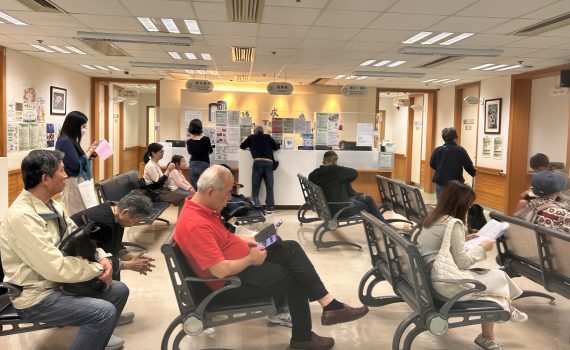
Budget 2026: Hong Kong boosts Chinese medicine industry to drive local growth
- 2026-02-25
- Health & Environment
- The Young Reporter
- By: Yu Yan Pui、Ye EnyiEdited by: ZHOU Shiqing
- 2026-02-25
The Hong Kong government will inject another $500 million into the Chinese Medicine Development Fund to promote research, training and international publicity, Financial Secretary Paul Chan Mo-po announced in the budget speech today, as the government continues to promote Chinese medicine in the city. Cheung King-ho, an associate professor in Chinese Medicine from Hong Kong Baptist University, said the Chinese Medicine Development Fund financially supported research and promotion, rather than focusing on developing basic scientific knowledge as in the past. As the only Chinese Medicine school in Hong Kong, HKBU regularly gets awarded money from the fund. “Our school has been collaborating with large scientific organizations, such as Microsoft and NVIDIA, assisting in the process of drug selection with artificial intelligence for industry development,” Cheung said. Chinese medicine students can train in western medical centres as part of the government’s plan to integrate Chinese and western medical practices, announced by the government in February. Chung Yan-ching, 21, a local Chinese medicine student said, “We hope to be included and be trusted in the medical system with government’s policy support.” Most bachelor degree students in Chinese medicine at HKBU, the city’s only school for Traditional Chinese Medicine,are local students, with less than one-tenth overseas or mainland students, said Cheung. “Training Chinese medicine professionals in Hong Kong has served as a transitional process of acquiring knowledge from the longer historical development on the mainland from different lineages, appearing as a supplement and extension of industry,” Cheung said. As the mainland system is more mature, local students are required to do an internship in Guangzhou, Cheung added. A mainland PhD student in Chinese medicine from HKBU, Yang Hanhang, 26, said that fewer mainland students come to Hong Kong to study traditional Chinese medicine because there are already many famous traditional Chinese medicine universities …
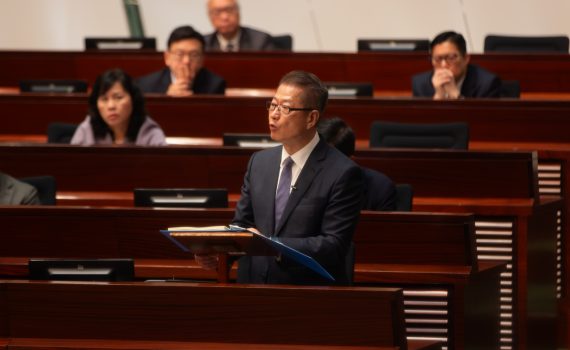
Budget 2026: Consolidate account records surplus ahead of reinforcing fiscal programme
- 2026-02-25
- The Young Reporter
- By: Chun Lim LEUNGEdited by: CHENG Tsz Sen Sean
- 2026-02-25
Hong Kong government cashed in a HK$2.9 billion surplus in the last fiscal year sustaining a three-year deficit. Speaking in his budget speech Wednesday, Financial Secretary Paul Chan Mo-po attributed the surplus to a surge of HK$50 billion revenue from stamp duty and profit tax as the stock market and local economy rebounded. This surplus came a year earlier than expected which is expected to remain until 2028. Chan added that the city would issue an additional HK$160 to 220 billion worth of government bonds every year, in the course of next five years. Another HK$150 billion from Hong Kong’s foreign exchange fund would be earmarked to pay for the Northern Metropolis project. Edward Lau Kwok-fan, advisory committee on Northern Metropolis, said in a statement that the issuance of bonds can help fund mega infrastructure. “It allows the government to advance strategic projects such as the Northern Metropolis while maintaining fiscal stability and aligning long-term investment with long-term returns,” Lau stated. Billy Mak Sui-choi, associate professor of the department of accountancy, economics and finance at Hong Kong Baptist University, said the government can consider developing the infrastructure in phases to prevent another deficit. “Investing infrastructure is mandatory to boost economic activity as it supports a variety of industries of talent, land and property,” Mak said. “If we divide the mega construction in five years, the spending will be relatively lower than paying it all at once. The government may then sell the land or property in the same district to achieve financial sustainability," Mak said. In his budget speech, Chan said the government has to strictly control the government expenditure by reducing 10,000 civil servant hires before June 2027. Adrian Pedro Ho King-hong, LegCo member for the New People’s party, said he was not surprised to see the surplus earlier …
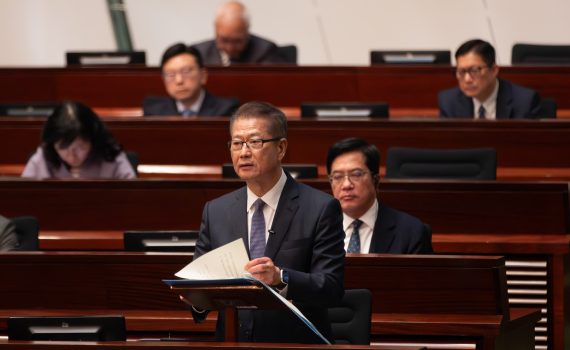
Budget 2026: Hong Kong reduces taxes to attract enterprises and investment
- 2026-02-25
- Business
- The Young Reporter
- By: YANG Shuyi、Cao BeiyuEdited by: QIN Ziyang
- 2026-02-25
To further attract enterprises to Hong Kong, the government will adjust preferential tax rates to 8.25% or 5%, depending on the company. Financial Secretary Paul Chan Mo-po said that the government will introduce policy tools, which also include land grant arrangements and financial subsidies, for new enterprises. The amendment bill will be introduced this year. The government introduced a framework for preferential policies to promote industry and investment in last year’s policy address. According to the Census and Statistics Department, the number of companies in Hong Kong with parent companies located outside Hong Kong has increased from 9,049 to 11,070 in four years, an increase of 22.3%. Yang Xiaofeng, one of the founders of Chengdu Vifortek Healthcare Technology Co., Ltd, said the company has plans to set up in Hong Kong. “Tax incentives can significantly reduce the operating costs of our research and development center, enabling us to attract more international talent,” said Yang. Yang added that tax incentives have solidified their company's resolve to use Hong Kong as a base to expand globally. “Taxes don't concern me much as a small business owner, since our business is now only marginally profitable,” said Wu Xiaoli, the founder of Tang Le Le Trading Limited, a mainland toy company set up in Hong Kong in August 2024, adding that she’s more concerned with rental and labour costs. Wu said Hong Kong offers more opportunities for growth and this is a core demand for enterprises. According to Ryan Ip, vice president of Our Hong Kong Foundation, a think tank focused on economic development, said the most common difficulties for enterprises that want to establish themselves in Hong Kong are that they are unfamiliar with local procedures for registration, office space and team building. He added that to solve this difficulty, the government should …
Budget 2026: Hong Kong plans to attract more family offices for the ultra rich
- 2026-02-25
- Politics
- The Young Reporter
- By: Ng Wing Sum Jodie、PENG Yixin NaomiEdited by: ZHENG Xinyi
- 2026-02-25
Hong Kong Financial Secretary Paul Chan Mo-po proposed a tax regime augmentation, aiming to attract more family offices, which manage money for ultra wealthy individuals. “Tax regime coverage will expand the scope of funds to specific ‘funds-of-one’, as well as classifying digital assets, precious metals, and specific commodities as investments with tax concession eligibility,” said Chan. Chan added the changes will take effect from the year of assessment 2025/26. A family office is a private wealth management company established by ultra-high-net-worth individuals, responsible for the day-to-day management of family assets. According to Chan Ho-lim, Under Secretary for the Treasury Bureau, single family offices generally refer to institutions established by a single family for wealth, family affairs, and long-term equity investment management. Multi-family offices, on the other hand, are licensed companies that “serve more than one high-net-worth family” by providing outsourced services and are “typically established and run as commercial ventures”. There are 3,384 single family offices in Hong Kong, according to research from Deloitte. According to Financial Services and the Treasury Bureau, this is a 25% increase from 2023. Half of the current offices are serving families with more than US$51 million of accumulated wealth. Since 2023, the Hong Kong government has issued a policy statement supporting the development of a global ecosystem for family offices and asset owners, promoting the growth of the industry. The bureau also said a single office contributes approximately HK$12.6 billion annually to the local economy through operating expenses alone, directly creating over 10,000 full-time professional positions, covering high-value-added fields such as financial advisors, legal and accounting. Yu Ann, 36, Co-Founder of Jadewell Family, a multi-family office, said, compared with banks and securities firms that have a single perspective, family offices can provide a comprehensive view and risk analysis across banks and even platforms, …
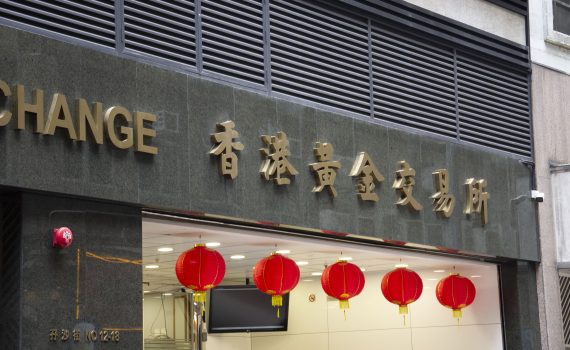
Budget 2026: Hong Kong reinforces its roles as international gold trading centre
- 2026-02-25
- Business
- The Young Reporter
- By: ZHANG Jiahe Roys、LI Jinyang CarlosEdited by: CHEN Ziyu
- 2026-02-25
Financial Secretary Paul Chan Mo-po announced that the government will establish Hong Kong as an international gold trading centre, providing relevant services including tax incentives, setting up industry associations and training for eligible gold trading institutions. Hong Kong plans to lift its gold storage capacity to over 2,000 tonnes within three years, according to Chan Ho-lim, the Under Secretary for Financial Services and the Treasury at the Hong Kong Gold Exchange 2026 opening ceremony. At the Asian Financial Forum on Jan.26., Hong Kong Financial Services and the Treasury Bureau signed a co‑operation agreement with the Shanghai Gold Exchange, establishing Hong Kong Precious Metals Central Settlement System Company Limited to create a gold settlement system. More than 10 banks, both local and overseas, will participate in the system to commence within the year. Hui Ching-yu, Secretary for Financial Services and the Treasury Bureau, said at the forum that gold is important under current geopolitical uncertainty and inflationary pressures. Lau Hou, 42, project manager of CNI Securities Group, said the key to increasing gold reserve capacity is whether Hong Kong could be a stronger physical hub in the Asia-pacific zone capable of storage, allocation, delivery and financing. “Hong Kong’s advantages lie in connecting the mainland with the international market, Asia-pacific time zone delivery, offshore RMB products and funding pools,” he said. “Through complementary cooperation with existing major international gold markets, participants can view Hong Kong as a key point in the global chain. This will increase the feasibility and attractivity of RMB-denominated gold productions, making market makers and institutions prefer to offer more products,” Lau added. Chan Wah, 25, local investor and lawyer, said he holds a wait-and-see attitude regarding the gold policy in today’s budget. “ I hope the government can prioritize training on market regulation and risk management, such as …
Budget 2026: Hong Kong continues harbourfront construction, drawing in visitors
- 2026-02-25
- Politics
- The Young Reporter
- By: Baguio Anne、RONG Miu Tung ShellyEdited by: Lan Xinbei
- 2026-02-25
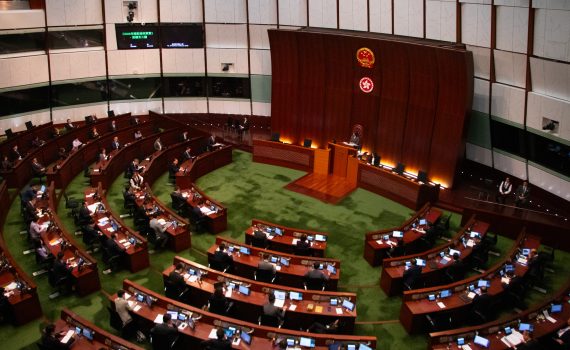
Hong Kong will continue to develop the harbourfront to attract tourists, Financial Secretary Paul Chan Mo-po announced in the budget speech on Wednesday, while also giving the Tourism Board HK$1.6 billion. With the opening of a waterfront site in Hung Hom by next month, the Kowloon promenade will be extended to 15 kilometers, Chan said. The government will also consider a new pedestrian harbourfront walkway in Kennedy Town. According to data from the Hong Kong Tourism Board, the number of visitors to Hong Kong in January reached 7.23 million, an increase of 9.6%, with overseas visitors increasing by 16.4%. The West Kowloon Cultural District on the harbour attracts many tourists. Eddie Massonique, a 25-year-old tourist from France, said he came to M+ recommended by friends, but what attracted him the most to West Kowloon was the seaside scenery. Anastashiia Armoldova, 32, a tourist from Ukraine, said she found the West Kowloon area by accident. “I think the Hong Kong government should strengthen publicity, such as advertising at the airport, to let more tourists and citizens know about this place,” she added. “My friends and I came here specifically to watch the sunset. The environment is very comfortable, and the scenery is good,” a local 14-year-old student, Ebbie Wong said. “But the transportation is not very convenient, and there are too few dining options; we have to walk far to buy food.” The Artpark in the district hosts many restaurants, but most are more expensive than local neighborhood cafes. Two 21-year-old students from Guangzhou, Wesly Peng and Gu Chuqi, said that this area is crowded. “We're looking for a restaurant, but the restaurants here are clearly very busy, with long queues,” said Peng. Gu said the government could add some minibus routes between Austin Station and the West Kowloon Cultural District …
Budget 2026: Hong Kong to continue to attract global talent while nurturing locals
- 2026-02-25
- Society
- The Young Reporter
- By: SHI Puxuan Amy、WU Sitan ElaineEdited by: ZHANG Yiping
- 2026-02-25
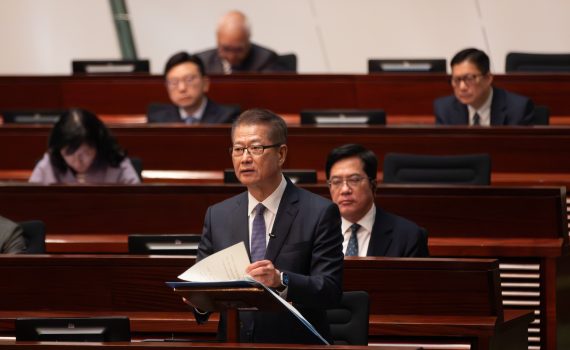
Hong Kong will step up efforts in attracting top global talents while nurturing local talents, said Financial Secretary Paul Chan Mo-po in his budget speech on Wednesday. Chan said that the government would continue to advance the current scheme. But gave no details on how they would increase recruitment. Critics of the government’s Top Talent Pass Scheme, a mechanism targeting high-income earners and top graduates, say the scheme takes jobs away from locals, while nearly half of external talents didn’t choose to extend their visas. “The Top Talent Pass Scheme draws over 100,000 global elites, contributing to Hong Kong's economic development,” Chan said, adding that the government particularly seeks to attract leading scientific research experts. The Top Talent Scheme was estimated to contribute about HK$34 billion to Hong Kong’s economy annually, equivalent to around 1.2% of the city’s GDP, according to the Labour and Welfare Bureau. Bibi Lam, 26, said that when she first arrived in Hong Kong through the Top Talent Pass Scheme after graduating from a university in Australia three years ago, she felt a great deal of pressure in finding affordable housing and a job. “I need to pay HK$8,500 per month for a small flat of less than 20 square metres while everything is expensive. It felt suffocating,” said Lam. “I think the biggest difficulty when I just arrived in Hong Kong was finding my first job,” Lam said, adding that many people she knows eventually had to leave Hong Kong after failing to secure employment. Her first job as an administrative assistant required frequent overtime and involved work unrelated to her marketing background. “It felt like being boiled slowly in warm water,” she said. She finally found a satisfactory job in marketing in August last year after several job changes and said she will stay …
Financial Secretary delivers 2026-27 budget speech
- 2026-02-25
- The Young Reporter
- By: ZHENG WU Anny、SIU Tsz HangEdited by: SIU Tsz Hang
- 2026-02-25
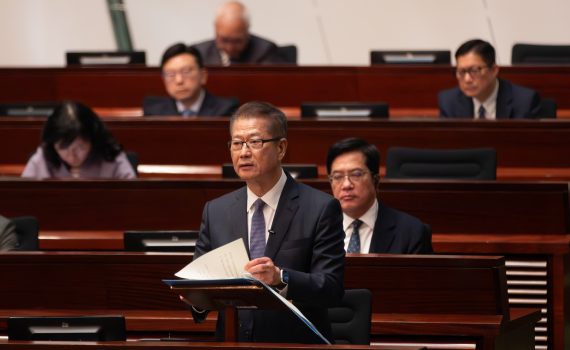
Financial Secretary Paul Chan Mo-po on Wednesday delivered his budget speech to the Legislative Council. This year’s budget mainly focuses on several areas including promoting technology and artificial intelligence development, deepening financial co‑operation in the Greater Bay Area, consolidating the SAR’s position as a gold trading hub and strengthening the market system. New initiatives include a new light festival show, first registration tax concessions for electric private cars, as well as Wang Fuk Court fire support programmes. The secretary started his speech by noting the tax revenue has increased over the past year due to a booming stock and capital market. He forecasted the economic growth for this fiscal year would be 2.5% to 3.5%, slightly lower than last year's 3.5%. It also covers measures for trade, logistics, aviation, tourism, culture and sports, creative industries, intellectual property trading and nurturing talent, funding for tourism projects and training schemes, land and housing policies, as well as Wang Fuk Court fire support programmes.

Lunar New Year flower market kicks off in Mong Kok
- 2026-02-14
- Culture & Leisure
- The Young Reporter
- By: CHEUNG Ka Yi Ann、ZHANG Jiahe RoysEdited by: ZHANG Yiping
- 2026-02-14
The Mong Kok Lunar New Year flower market opened today at Fa Hui Park. This fair will run for 7 days until 1 February, the first day of the Lunar New Year. The fair features a total of 136 stalls, including 64 flower stalls, 66 decoration stalls, and 16 fast-food stalls. Follow the link below to watch the full reel: https://youtube.com/shorts/YC8vugA2QpI?feature=share
More than 7,000 kilometres from home: how Chinese expats adapt to life in Saudi Arabia
- 2026-02-14
- Culture & Leisure
- The Young Reporter
- By: LAI Uen Ling、MAO AnqiEdited by: Robin Ewing
- 2026-02-14
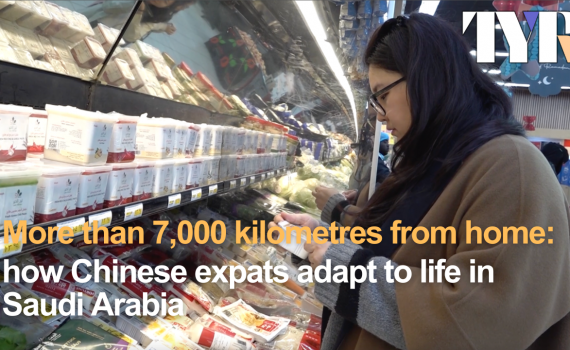
RIYDAH, Saudi Arabia – Saudi Arabia is attracting more foreign residents than ever, with the number of non-Saudi residents climbing to about 15.7 million in 2024 — More than 2 million increase from the year before. Most come from South and Southeast Asia and neighbouring Arab countries. But among them are a growing number of Chinese expats, professionals working hard to adapt to life in historically one of the most religious and socially conservative countries in the world. This January, our reporters visited Riyadh to talk to people from mainland China and Taiwan who have come to the capital city for work, family or new opportunities. We discover how they are navigating daily life, forming connections and carving out a sense of home. #SaudiArabia #ExpatLife #ChineseExpats #Riyadh #LifeInSaudi