
TOP STORIES
HK Sign Language Day draws 2,400, as organisers push for public understanding
- 2026-09-20
- Society
- The Young Reporter
- By: YAM Long Hei JamieEdited by: LAU Ka Yan
- 2026-09-20
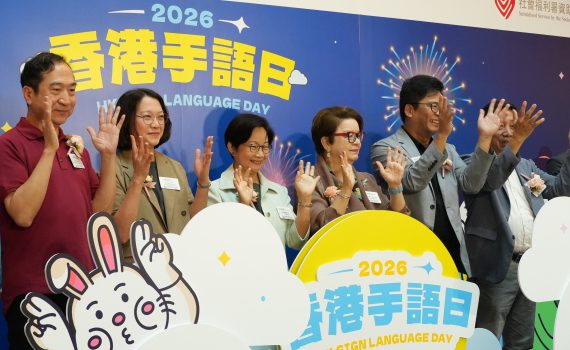
About 2,400 visitors joined the first day of Hong Kong Sign Language Day in Tsuen Wan on Saturday, as organisers hoped to encourage greater public understanding of Hong Kong Sign Language and deaf culture. The two-day event, organised by the Hong Kong Society for the Deaf, includes sign language workshops, stalls run by deaf people and interactive games. The event, featuring workshops that taught signs related to the upcoming Mid-Autumn festival, such as “moon cake”, “the moon” and “the moon rabbit,” comes ahead of the International Sign Language Day on Sept. 23. Cheung Hon-wah, director of the Hong Kong Society for the Deaf, said the event aimed to help the public discover how interesting sign language can be. “We want more members of the public to understand sign language and promote barrier-free communication,” he said. Cheung said he hoped the event would encourage more people to become professional sign language interpreters, urging the government to create more interpreter jobs in public services, such as hospitals, so the public would better recognise the need and in turn attract more people to the profession. “A deaf person needs sign language interpretation on many occasions, but we can find that the number of professional sign language interpreters is not enough,” Cheung said. The Hong Kong Council of Social Service lists 53 professional sign language interpreters in the city, a figure that falls short of the roughly 6,000 people who use Hong Kong Sign Language as their primary form of communication, according to the Census and Statistics Department. Deaf attendee Ah Tan said it is very difficult for deaf people to find jobs, and that support for deaf employment is insufficient. “Especially when the employer knows that you cannot hear, they will not know how to communicate with you,” Ah Tan said. She added …

Policy Address 2026: Government to relax regulations for cross-border yachts
- 2026-09-17
- Society
- The Young Reporter
- By: WU Sitan Elaine、PENG Yixin NaomiEdited by: LAU Ka Yan
- 2026-09-17
Video description: The Policy Address 2026 sets out new plans to take forward Hong Kong's yacht economy, including expanded Greater Bay Area cross-border cruising arrangements and streamlined certification for visiting yacht captains. Industry stakeholders are calling for further investment in supporting infrastructure and marine services to underpin the sector's long-term growth.
University Towns heart of new Northern Metropolis
- 2026-09-17
- By: Gengjing HuangEdited by: Robin Ewing
- 2026-09-17
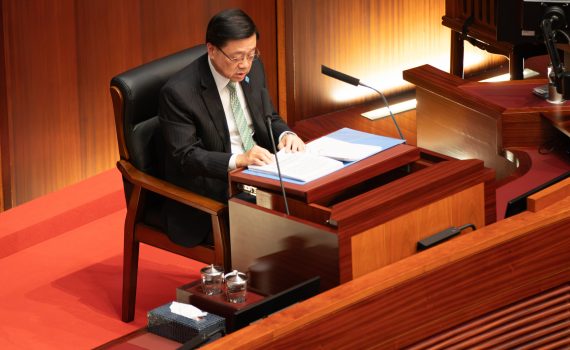
Chief Executive John Lee Ka-chiu identified the three university towns as the focus of the Northern Metropolis development in yesterday’s policy address, adding that the land reserved for the towns has been expanded. Lee said the campuses of the three university towns – San Tin, Hung Shui Kiu and Ta Kwu Ling – will be about 300 hectares, triple the previous announcement. With the technology area, the industry area and the living community area, the overall land use will exceed 1,000 hectares. The aim of the towns is “to foster the integrated development of education, technology and talent," Lee said in the address. Hung Shui Kiu will be developed first, according to the Five-Year Plan that Lee delivered before the address. The campus site will be allocated this year, and institutions will move in between 2027 and 2028. The nearby Hung Shui Kiu MTR station is expected to open in 2030. The government will provide financial support for universities including waiving land premiums and offering HK$10 billion in loans. Universities are expected to self-finance campus operations. They can use their reserves or employ flexible funding model to attract social and market capital, such as issuing bonds, according to the plan. Terence Chong Tai-Leung, the Executive Director of the Lau Chor Tak Institute of Global Economics and Finance at the Chinese University of Hong Kong, said he worried whether universities have sufficient funding to set up operations in the Northern Metropolis. This is “the biggest uncertainty,” Chong said. Nineteen local universities have applied for setting up operations in the university towns, and mainland and overseas institutions also have expressed interest. Only the new medical school of The Hong Kong University of Science and Technology is confirmed. It will be built in the San Tin university town.
Policy Address 2026: Hong Kong targets over 35,000 public housing units a year
- 2026-09-17
- Business
- By: LI Yuzhou Asher、HU Mudi 胡沐迪、GUO Tongyao 郭童瑶Edited by: Zhou Xinying、LIN Xiaoyou、Wang Yunqi
- 2026-09-17
AI summary: Hong Kong plans to produce over 35,000 public housing units a year on average over five years starting in 2027/28. Increased supply could shorten housing queues, but one academic said tackling wealth and income inequality is also essential. The government is also tackling public housing abuse. Hong Kong will continue to increase public housing supply and combat public rental housing (PRH) abuse, Chief Executive John Lee Ka‑chiu said in his Policy Address 2026 on Wednesday. “The current-term Government has laid a solid foundation for, and is entering the harvesting phase of, public housing production, ” Lee said. “In the next five years, from 2027-28, public housing production will exceed 35,000 units a year on average.” HO Hang-kei, an Adjunct Associate Professor in the Department of Anthropology at The Chinese University of Hong Kong whose research interests include housing policy, commented that ramping up PRH supply is a positive measure. “I think this is great because, as we know, Hong Kong has been experiencing a shortage of public housing units, so as you can see from previous figures, the queue was very long,” Ho said. “And I think by having more supply, I think it's going to decrease the waiting time for many people actually need them, especially a lot of people are now kind of in the use of temporary housing.” Ho said that there would be some short-term kind of pain, such as a fiscal deficit. But over the medium to long term, he thought the increase in housing supply would benefit Hong Kong. More stable housing could help residents feel more secure about their work, education and other aspects of their lives, he said. However, Dong Ding, an Assistant Professor in the Department of Accountancy, Economics and Finance at Hong Kong Baptist University, said that more …

Policy Address 2026: Two AI models identify Offshore RMB business as a key theme
- 2026-09-17
- Business
- By: Xi Yuke Jackie、CHU Ka Ying Ashley 朱家瀅、CHAN Cheuk Kiu 陳芍僑Edited by: ZHOU Yun、ZHONG Xinyun、Wang Yunqi
- 2026-09-17
Hong Kong will consolidate its status as a global financial centre by deepening offshore renminbi (RMB) business and capital markets, said Chief Executive John Lee Ka-chiu during his Policy Address speech on Wednesday. When used to analyze the international financial centre sector, AI models Gemini and Doubao converged on consolidating Hong Kong's role as a global offshore RMB hub as the premier priority within this domain. Doubao prioritised the offshore RMB hub for its immediate, actionable measures, whereas Gemini framed it as Hong Kong’s core strategic advantage amid shifting global trade patterns and emerging-market de-dollarisation. Hong Kong is the world’s largest offshore RMB business hub, Lee said in the policy address. He also said the government will continue to boost market development in the following five areas: Enhance Liquidity, Expand the Dim Sum Bond Market, Diversified Products, Diversify Risk Management Tools and Asset Uses and Deepen External Collaboration and Promotion. On new initiatives, Doubao and Gemini identified identical core upgrades. These include expanding the RMB Business Facility to RMB 500 billion with tenors of up to three years , introducing the Hong Kong Monetary Authority’s seven-day liquidity tender, launching the Hong Kong Exchanges and Clearing Limited Offshore RMB Bond Index, and adding RMB counters to Southbound Stock Connect. According to data from the Hong Kong Monetary Authority (HKMA), the size of the RMB business facility increased fivefold from October 2025 to July 2026. The Policy Address mentioned that the facility channels funds to regions such as the Association of Southeast Asian Nations (ASEAN), the Middle East and Europe. Alongside the 2026 Policy Address, Lee also released Hong Kong’s First Five-Year Plan (2026–2030), which establishes the medium-to-long-term blueprint to strengthen governance, accelerate Northern Metropolis development, align with national strategies, and drive sustainable economic and social growth. Both AIs agreed that the …
Policy Address 2026: Hong Kong set to provide 30,000 career opportunities to stimulate employment for youth
- 2026-09-16
- Politics
- By: Baguio Anne、Pann Hnin Nay ChiEdited by: Fu Rong
- 2026-09-16
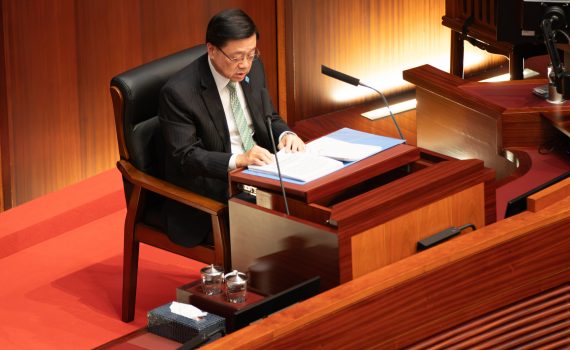
Hong Kong will subsidise 30,000 new employment opportunities through internships and full-time jobs for those with limited experience, Chief Executive John Lee Ka-chiu said at the 2026 Policy Address. This initiative is under the new “30,000 Youth Employment and Internship Programme” and it aims to facilitate career opportunities among fresh graduates and university students over a period of two years starting from the first quarter of 2027. Of these, 10,000 full-time jobs will target fresh graduates entering the workforce for the first time. The number of job vacancies open for university graduates fell to a five-year low last year, according to a May report by the Research Office of the Legislative Council Secretariat. The report also attributed the rise in the unemployment rate of those aged between 15 to 24 to the high proportion of first-time job seekers who lack work experience. Within the programme, 10,000 internships for STEM will be offered over two years. Alizhan Ibrayev, 22, from Kazakhstan, who graduated with a bachelor's degree in chemistry from Hong Kong Baptist University this year, interned at “A Grade Energy Limited”, a company based in the Hong Kong Science and Technology Park. Ibrayev said that internship opportunities at the Science Park are very popular, especially for STEM students. Hong Kong Science & Technology Parks Corporation, set up by the Hong Kong government in Shatin in 2001, is home to more than 2,400 technology companies, many of which offer student internships. Ibrayev mentioned that after his internship, he was offered a full-time position at the Park, but declined it to pursue his PhD at the Hong Kong University of Science and Technology. He added that other graduates in his cohort are struggling to find part-time or full-time jobs. Hong Kong’s entire labour market has seen a decline in employment, according to …
Policy Address 2026: Hong Kong government to call for private sector bids to build student housing
- 2026-09-16
- Society
- By: MA Yifan Chloe、SHI Puxuan AmyEdited by: CHEN Xiyun
- 2026-09-16
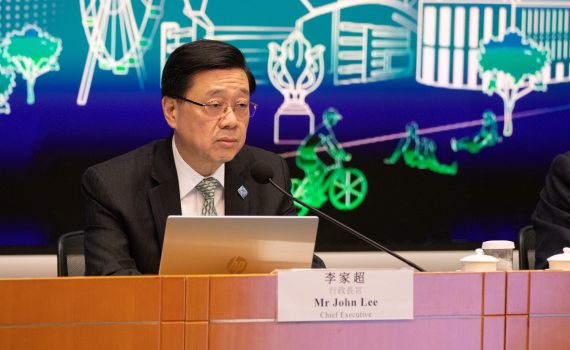
The Development Bureau will put the first student-hostel designated site up for sale this financial year, Chief Executive John Lee Ka-chiu said in today’s policy address. The tendered land will be from Kai Tak, Siu Lek Yuen, Shatin or Tung Chung East, according to the February release of LegCo, with no further details released. The land-selling initiative comes under the Hostels in the City Scheme, jointly launched by the Development Bureau and Education Bureau in July last year, and encourages dormitory developers from private sectors. The scheme was previously limited to the conversion of office buildings and hotels into student housings when introduced in the policy address last year. Ho Hang-kei, a professor researching housing policy at the Chinese University of Hong Kong, said, developing new sites, as opposed to converting existing buildings, will compete for limited construction human resources in the market. He added that it may curb the number of building projects that can commence in the same period. “But in the medium term, I think that’s going to be quite an attractive position, given the steady stream of students and high occupancy rate,” he said. As of April, existing market-run student hostel projects have recorded an occupancy rate of between 98% and 100%, according to the report from Jones Lang LaSalle. Sun Yichen, 22, a master student at City University of Hong Kong, moved into the Yuè Residence in Kowloon in August this year since she failed to secure a place in the on-campus hall in June. Sun thinks that the hostel needs better security arrangements. “It’s very late for me to finish the class at 10 p.m. every night,” she said. “Temple Street draws heavy foot traffic after dark, and there is only one security guard on duty downstairs at the dormitory,” she added. TYR reporters …
Policy Address 2026: Hong Kong moves forward with shift to digital trade
- 2026-09-16
- Business
- The Young Reporter
- By: XIE Xinni Cindy、LO In Fei FayeEdited by: Li Yinheng
- 2026-09-16
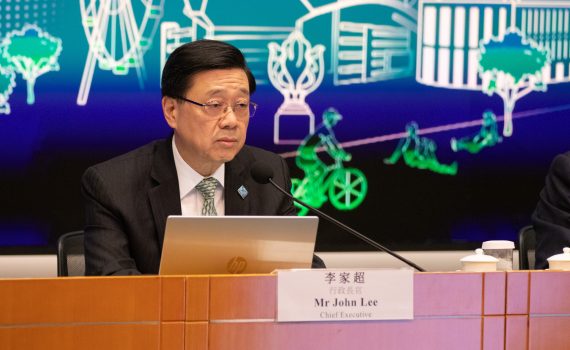
Hong Kong is accelerating its digital trade initiatives by expanding paperless trade documentation and freight data sharing platforms, Chief Executive John Lee Ka-chiu said in the policy address today. The government confirmed its goal of granting electronic trade documents the same legal validity as traditional paper documents in a response to the Legislative Council in April. “The government will introduce a bill on facilitating the digitalisation of ‘business‑to‑business’ trade documents,” Lee said. The Hong Kong Monetary Authority launched the Cargox pilot programme in May in collaboration with 21 major banks and leveraged the previously established Commercial Data Interchange infrastructure, with both programmes facilitating digital trade. Philip Li, manager of ICBC (Asia) Market Financing Department, said banks have more channels to access business data from small and medium-sized enterprises through these digital trade information platforms. “These third-party digital platforms add greater credibility to corporate information,” Li said. According to HKMA's research, the infrastructure narrows information gaps between banks and SMEs, helping smaller firms, especially young startups, obtain better loan terms with lower interest rates and less collateral required. Dong Xiaole, founder of Fortunae Limited, said everything in the trading process is becoming digitised, but the number of steps involved may have increased. “For instance, simply stamping a document is so easy, just one quick action, whereas electronic seals require more creation and verification steps,” Dong said. Chan Ka Ming, the Chief Operation Officer of Meat the Next Research and Development Company Limited, said when using electronic systems to process food customs declaration documents, it is necessary to backtrack and redo steps after an initial attempt, resulting in repetitive actions. “Regarding the CDI and Cargox launched by HKMA, we have only looked into it so far and haven't actually tried using these tools yet,” Chan added. According to the policy address, digitisation …
Policy Address 2026: HK$10 billion loan ‘not enough’ for building new campus site, after John Lee announced the development of Northern Metropolis University Town
- 2026-09-16
- Society
- The Young Reporter
- By: ZHENG WU Anny、ZHENG Yuan ElaineEdited by: CHAU Wing Yau
- 2026-09-16
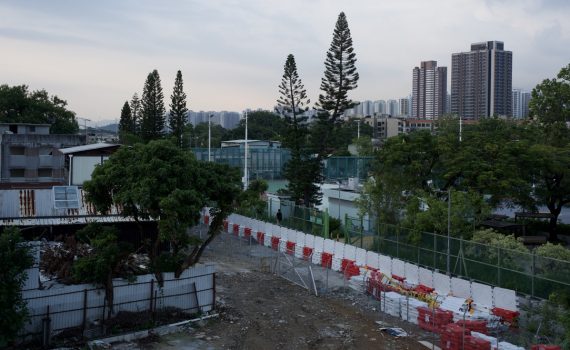
The new university town in the Northern Metropolis Development area will be expanded, Lee said today in the policy address, but universities, which are expected to fund new campuses, say the government is not offering enough money for building costs. In April, the government announced a low-interest loan scheme with HK$10 billion reserved to support universities in building campuses in the new development area. Dr Albert Chau, the Vice-President (Teaching and Learning) at Hong Kong Baptist University, said the low-interest loan is “not enough”. “Our university may build new laboratories and buildings, and the required funding is substantial, despite a HK$10 billion loan for universities.” Nineteen universities have submitted proposals for building a new campus in NMUT, Choi Yuk-lin, the secretary for Education of Hong Kong, said in a press conference in June. If all the proposals are accepted, each university would receive an average of around HK$500 million. According to the University Engagement Office of HKBU, its new Jockey Club Campus of Creativity, which opened in 2024 on its Kowloon Tong campus, cost HK$2.22 billion for 7,430 square metres, far exceeding HK$500 million. Zhou Haoming, a post-graduate student at the University of Hong Kong, said he is concerned that universities may raise tuition fees to fill the funding gap. “Government loans are a policy concession, but the school will ultimately have to put up the money for construction,”he said. Chau said that the tuition fee at HKBU will only be raised to meet inflation and won’t be a major way to gather funding for expanding the campus site. “We have no reason to transfer the burden of university development to our students. We should set proper tuition figures which students can afford. This is our social responsibility,” Chau said. Universities are expected to seek funds by utilising reserves or …
Policy Address 2026: Government to step up Chinese-language support for ethnic minority students
- 2026-09-16
- Society
- The Young Reporter
- By: Cao Beiyu、Man Cheok Lam LorraineEdited by: FENG Zhenpeng
- 2026-09-16
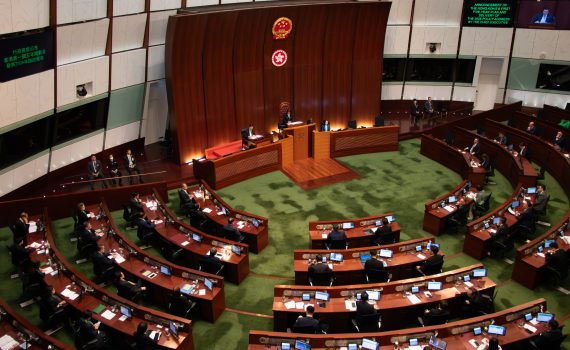
Chief Executive John Lee Ka-chiu said the government will adopt learning materials tailored for non-Chinese-speaking students and also provide them after-school Chinese language courses from Primary One to Secondary Three. The materials will help them pass two Chinese language standardised tests, which will help them integrate into the community and have more job opportunities. Based on the 2021 Population Census, ethnic minorities make up 8.4% of the population in Hong Kong. Among ethnic minorities under the age of 14, 35% to 38% are unable to read or write Chinese. Bahart Nangia, former director of the Support Service Centre for Ethnic Minorities and an Indian-Hong Konger, said, “language is the biggest barrier amongst ethnic minorities. Cantonese is not easy to learn.” He said for example, MTR staff may not be able to communicate in English if they need help. Chinese classes in schools are not “fully equipped to be teaching minorities with a cultural dynamic difference,” said Jeffery Andrews, one of the founders of the Diversity Hub, a multi-cultural community space in Hong Kong, as well as the first ethnic minority social worker in Hong Kong. Andrews said the government has put many resources into ethnic minority policies for the last 15 to 20 years but the framework for implementing Chinese as a second language in schools is still weak. Alishiba Matloob Aloosh, a Pakistani Hongkonger podcaster and a former TYR reporter who now works for RTHK Radio 3, said the government should put more effort into tackling the real adjustment issues behind why, even after learning the language, some people still find it hard to adapt in daily life. Discrimination, workplace barriers and difficulties with inclusion in schools and the community are all issues that need addressing. In the policy address, Lee said the scheme for ethnic minorities to serve …