
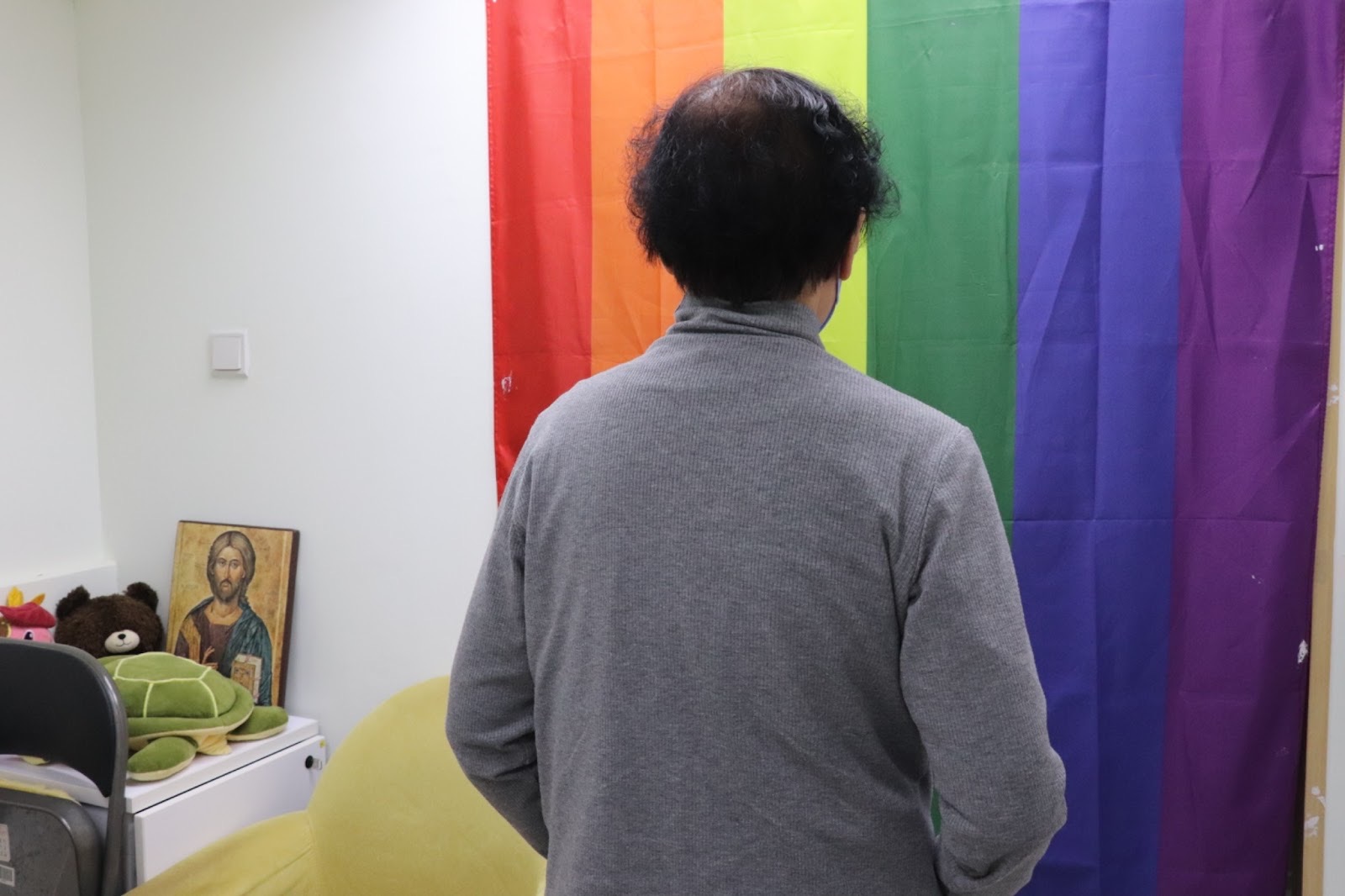
Ah Moon, 55, who does not want to reveal her real name, initially had no intention of making decisions about legal safeguards for herself and her same-sex partner related to end-of-life matters.
She began to consider these issues more consciously during a hospital stay in 2002, while she was in a relationship with her ex-girlfriend.
“I was afraid of what would happen if I never woke up again, so I drafted a few pages of plans on blank paper myself after discharge,” she said.
Hong Kong does not legally recognise same-sex marriages. Ah Moon said because her family does not care about her relationship, she worries that her wishes after death will not be honoured.
In September, the Legislative Council rejected a bill to legally recognise same-sex partnerships by a large majority, leaving same-sex couples to rely on fragmented legal documents and personal requests to protect end-of-life decisions such as inheritance, medical choices and funeral arrangements.
Rufina Ng, a senior associate at Hastings & Co, a law firm that offers free legal consultation for the LGBTQ community, said same-sex partners are highly recommended to plan in advance for end-of-life, though they still face limitations.
Ng said the most common end-of-life legal challenges faced by same-sex couples in Hong Kong are claiming the body and inheritance, particularly if there is no will or there is conflict between the surviving partner and the deceased’s family.
“Same-sex couples lack the legal status of spouses or family members under Hong Kong’s legal framework. When one partner dies without a will, the surviving one currently has no inheritance rights and other relatives may also oppose their handling of funeral arrangements,” she said.
Hong Kong’s current inheritance laws only recognise spouses and a few other relatives. Unmarried partners, whether same-sex or not, receive no legal protection. However, same-sex couples married abroad in countries that recognise these marriages — about 40 countries — receive some protection under the Intestates’ Estates Ordinance.
Jensen Yiu, the co-founder of Alongside, Hong Kong’s first social enterprise providing inclusive and diverse life and death services, said same-sex partners can only play a role as roommates or friends when it comes to end-of-life issues.
“When one dies, the other is easily evicted by the family and lacks even the right to keep personal belongings of their partner or attend their funeral without a will,” Yiu said.

However, Ng said even with a will, the surviving partner may still face challenges from other relatives of the deceased.
“If the will doesn’t provide for other family members, they may file a lawsuit to challenge the will, alleging that the deceased was unduly influenced when making the will or that the will failed to consider the needs of family members,” she said.
“Particularly if the family of the deceased was not aware of or disapproved of the partner's orientation, they may be less willing to mediate or resolve the dispute," Kenneth Yung, the managing partner at Hastings & Co, said.
There are three legal documents in Hong Kong for end-of-life planning, known locally as “the three instruments of peace”: enduring powers of attorney, advance medical directives and wills. Same-sex couples can also receive protection from these documents.
Ng said when individuals are of sound mind, they can sign an advance medical directive in advance stating whether they will receive life-sustaining treatments such as CPR, blood transfusions and oxygen therapy in the future if they have become mentally incapable and unable to communicate with doctors.
“If a person becomes mentally incapable, an enduring power of attorney allows their partner to manage their finances, medical expenses, mortgage payments and rent,” Erica Kwan, a partner at Hastings & Co, said.
For same-sex couples, Kwan said that an advanced medical directive can help ease the decision-making burden on the other partner when there is no prospect of recovery.
“These arrangements can help them cope with grief by reducing the risk of arguments with family members over critical decisions at an already emotionally distressing time,” she added.
Kwan said that child custody and guardianship issues affecting same-sex couples remain complex and they are reviewing ways to strengthen protections for children and partners within the existing legal framework.
“Hong Kong has always upheld the rule of law, and even the Court of Final Appeal has stated that legislation should protect this right, yet nothing has been accomplished. This makes me begin to doubt where the rule of law truly lies in Hong Kong,” Ah Moon said.
She believes that even if marriage is not recognised, an alternative framework should be established to grant same-sex couples basic rights to healthcare, inheritance and funeral arrangements.
“We are not asking for extra benefits. We simply want the basic protections that everyone has,” she said.
《The Young Reporter》
The Young Reporter (TYR) started as a newspaper in 1969. Today, it is published across multiple media platforms and updated constantly to bring the latest news and analyses to its readers.
Chops, sidekicks and smashes: Professional wrestlers wreck the ring at Chai Wan
Animal rights activists protest HKTVmall’s parent firm over animal experimentation projects


Comments